
In the vast and often intricate world of finance, few concepts are as fundamental and impactful as equity stock. For many, it represents the very cornerstone of wealth creation, a gateway to participating in the growth and prosperity of established companies and burgeoning enterprises alike. Yet, despite its pervasive presence in financial news and investment discussions, the precise nature of equity stock, its mechanics, and its implications can remain elusive to the uninitiated.
At its core, equity stock, often simply referred to as “stock” or “shares,” signifies fractional ownership in a company. When you purchase a share of a company’s stock, you are buying a tiny piece of that business, making you an owner, or shareholder, with certain rights and potential returns. This concept is not merely an abstract financial construct; it underpins the global capital markets, enabling companies to raise the necessary funds for expansion, innovation, and job creation, while simultaneously offering investors a powerful avenue for capital growth and income generation. Understanding equity stock is not just for aspiring day traders or seasoned investors; it’s a critical component of financial literacy that empowers individuals to make informed decisions about their money and their financial future. This article will delve into the essence of equity stock, exploring its foundational principles, market dynamics, benefits, risks, and its pivotal role in a well-rounded investment portfolio.
The Foundation of Equity: Ownership and Capital
To truly grasp the significance of equity stock, one must first understand the dual relationship it represents: the ownership stake it grants to investors and the capital-raising mechanism it provides for companies. This interplay is the bedrock upon which the entire stock market stands.
What Exactly is a Share?
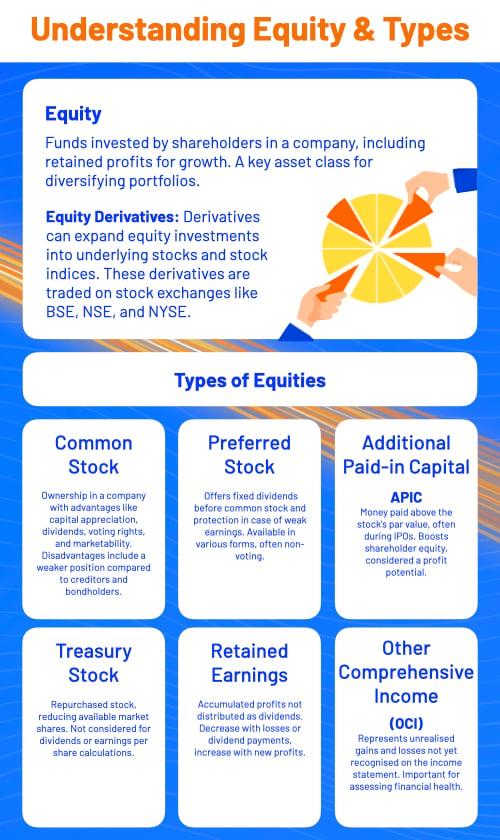
A share of equity stock is a unit of ownership in a company. Imagine a large pie representing a company’s total value; each slice of that pie is a share. The more shares you own, the larger your slice of the company. As a shareholder, you are not merely a lender; you are a part-owner. This ownership typically comes with certain rights, most notably voting rights on important company matters, such as electing the board of directors or approving major corporate actions. While the practical impact of a single individual’s vote might seem negligible in a large corporation, collectively, shareholders wield significant power in guiding a company’s trajectory. Furthermore, shareholders have a residual claim on the company’s assets and earnings, meaning if the company were to be liquidated, they would be entitled to a portion of the remaining assets after all creditors have been paid.
Why Companies Issue Equity
Companies issue equity stock primarily to raise capital. When a startup needs funding to develop a new product, or an established corporation seeks to expand into new markets, it can choose to borrow money (debt financing) or sell ownership stakes (equity financing). Issuing equity allows companies to secure funds without incurring debt, meaning they don’t have a fixed obligation to repay the money or pay interest. Instead, they share future profits and growth with their new owners. This process can occur in various stages: from early-stage venture capital funding and private placements to a highly anticipated Initial Public Offering (IPO), where a company first offers its shares to the general public on a stock exchange. An IPO marks a pivotal moment, transforming a private company into a publicly traded entity, subject to greater scrutiny and regulation, but also gaining access to a much broader pool of capital.
Common vs. Preferred Stock
While “equity stock” is a broad term, it’s essential to differentiate between its two primary types: common stock and preferred stock. The vast majority of stock traded on exchanges is common stock. Common shareholders are the true owners, having voting rights and the potential for significant capital appreciation as the company grows. However, they are also at the bottom of the liquidation hierarchy, meaning they are the last to be paid if a company goes bankrupt.
Preferred stock, on the other hand, typically carries no voting rights but offers other advantages. Preferred shareholders usually receive fixed dividend payments before common shareholders and have a higher claim on the company’s assets in the event of liquidation. They often function more like a hybrid security, blending characteristics of both stocks and bonds. For investors seeking income and a degree of stability, preferred stock can be appealing, but it generally offers less potential for capital growth compared to common stock. Understanding this distinction is crucial for aligning your investment choices with your financial goals and risk tolerance.
Understanding the Dynamics of Equity Markets
The mere existence of equity stock would be meaningless without a mechanism for buying and selling it. This is where equity markets come into play, providing the vibrant, often volatile, arenas where ownership changes hands and prices are discovered. These markets are complex ecosystems driven by a multitude of factors.
How Equity Stocks are Traded
Equity stocks are primarily traded on organized exchanges, such as the New York Stock Exchange (NYSE), Nasdaq, or the London Stock Exchange (LSE). These exchanges provide a regulated marketplace where buyers and sellers can meet. Historically, trading involved physical floor exchanges, but today, most transactions occur electronically through sophisticated trading platforms. Individual investors typically access these markets through brokerage firms, which act as intermediaries, executing buy and sell orders on their behalf.
The core mechanism of trading is supply and demand. When more investors want to buy a particular stock than sell it, its price tends to rise. Conversely, if there are more sellers than buyers, the price will fall. This continuous interplay of bids (offers to buy) and asks (offers to sell) determines the real-time market price of a stock. Efficient and liquid markets ensure that investors can easily buy or sell shares without significantly impacting the price, provided the trading volume is sufficient.
Factors Influencing Stock Prices
Stock prices are not static; they are in constant flux, influenced by a myriad of factors. These can be broadly categorized into company-specific, industry-specific, and macroeconomic forces.
-
Company Performance: This is perhaps the most direct driver. Strong earnings reports, successful new product launches, innovative technologies, efficient management, and positive future outlooks typically drive stock prices up. Conversely, missed earnings targets, scandals, product recalls, or poor strategic decisions can lead to significant price declines.
-
Economic Indicators: Broader economic health plays a crucial role. Factors like GDP growth, inflation rates, interest rates set by central banks, unemployment figures, and consumer confidence can affect corporate profitability and investor sentiment across the board. A strong economy often correlates with higher stock prices, while recessions can cause widespread declines.
-
Industry Trends: Specific industries can experience booms or busts due to technological advancements, regulatory changes, or shifts in consumer preferences. For instance, the rise of e-commerce impacted traditional retail stocks, while increasing awareness of climate change has boosted renewable energy stocks.
-
Market Sentiment and Geopolitical Events: Investor psychology, sometimes referred to as “fear and greed,” can exert considerable influence. Positive news or optimism can fuel bull markets, while fear and uncertainty (e.g., pandemics, wars, political instability) can trigger sell-offs. These emotional responses, though not fundamentally tied to a company’s value, can cause significant short-term price swings.
Key Metrics for Equity Analysis
To make informed investment decisions, investors often analyze various financial metrics and ratios. These tools help assess a company’s health, value, and growth potential.
-
Price-to-Earnings (P/E) Ratio: One of the most common valuation metrics, the P/E ratio divides a company’s current share price by its earnings per share (EPS). A high P/E might suggest investors expect high future growth, while a low P/E could indicate an undervalued stock or a company facing challenges.
-
Earnings Per Share (EPS): This metric indicates how much profit a company generates for each outstanding share. Rising EPS is generally a positive sign, reflecting increasing profitability.
-
Dividend Yield: For income-focused investors, this shows the annual dividend payment per share as a percentage of the share price. A higher yield means more income relative to the investment.
-
Market Capitalization (Market Cap): This is the total value of a company’s outstanding shares (share price multiplied by the number of shares). It helps categorize companies (e.g., small-cap, mid-cap, large-cap) and provides an idea of their overall size and influence.
-
Debt-to-Equity Ratio: This measures a company’s financial leverage by comparing its total debt to its shareholder equity. A high ratio might indicate higher financial risk.
Analyzing these and other metrics allows investors to gain a deeper understanding of a company’s financial standing and its potential as an investment.
The Benefits and Risks of Investing in Equity Stock
Investing in equity stock is a double-edged sword, offering the promise of substantial returns but also carrying inherent risks. A balanced perspective requires understanding both sides of this equation.
Potential for Capital Appreciation
One of the most compelling reasons to invest in equity stock is the potential for capital appreciation. This refers to the increase in the value of your shares over time. As a company grows, becomes more profitable, develops innovative products, or expands its market reach, its intrinsic value increases. This increased value is often reflected in a higher stock price, allowing shareholders to sell their shares for more than they paid for them. Over the long term, equity markets have historically provided superior returns compared to other asset classes like bonds or cash, making them a powerful engine for long-term wealth creation and a critical tool for combating inflation. This growth potential is especially attractive for investors with a long time horizon, such as those saving for retirement or a child’s education.
Income Generation Through Dividends
Beyond capital appreciation, many companies distribute a portion of their profits to shareholders in the form of dividends. These are typically cash payments, though they can sometimes be paid in additional shares. Companies that consistently pay dividends are often mature, stable businesses with predictable cash flows. For income-focused investors, such as retirees or those seeking supplemental income, dividend-paying stocks can be a vital component of their portfolio. The regularity of these payments can provide a steady stream of income, and some investors reinvest these dividends to purchase more shares, compounding their returns over time through a strategy known as dividend reinvestment plans (DRIPs).
The Inherent Volatility and Risk
While the rewards can be significant, investing in equity stock is not without risk. The primary risk is market volatility – the tendency of stock prices to fluctuate significantly over short periods. A stock’s value can plummet due to poor company performance, negative economic news, industry downturns, or even irrational market sentiment. There’s also the risk of losing your entire investment if a company goes bankrupt. This inherent uncertainty means that returns are never guaranteed, and past performance is not indicative of future results.
Key risks include:
-
Market Risk: The risk that the overall market will decline, dragging down even fundamentally sound stocks.
-
Company-Specific Risk (Idiosyncratic Risk): Risks unique to a particular company, such as poor management, product failures, or competitive threats.
-
Liquidity Risk: The risk that you may not be able to sell your shares quickly enough at a fair price, especially with small-cap or thinly traded stocks.
-
Inflation Risk: While equities generally combat inflation well, periods of high inflation can erode purchasing power, especially if stock returns don’t keep pace.
Diversification as a Risk Mitigation Strategy
Given these risks, a crucial strategy for equity investors is diversification. This involves spreading your investments across different companies, industries, and even geographical regions. The idea is not to avoid risk entirely, but to minimize the impact of any single negative event on your overall portfolio. If one stock or industry performs poorly, the impact on a well-diversified portfolio will be less severe if other investments are performing well. Diversification can be achieved by investing in a variety of individual stocks, but also more easily through investment vehicles like mutual funds or Exchange Traded Funds (ETFs) that hold baskets of many different stocks.
Equity Stock in Your Investment Portfolio
For most long-term investors, equity stock forms a cornerstone of their financial strategy. Its role, however, needs to be understood within the broader context of an investment portfolio aligned with individual goals and risk tolerance.
Equity as a Core Component of Long-Term Investing
Due to its historical tendency to outperform other asset classes over extended periods, equity stock is almost indispensable for long-term financial goals such as retirement planning, saving for a down payment on a house, or funding education. The power of compounding, where returns generate further returns, works most effectively when applied to assets with strong growth potential over decades. For younger investors with a longer time horizon, a higher allocation to equities is often recommended, as they have more time to ride out market downturns and benefit from eventual recoveries and long-term growth trends. As one approaches retirement, the allocation typically shifts towards more conservative assets to preserve capital.
Active vs. Passive Investing
When it comes to building an equity portfolio, investors generally adopt one of two main approaches:
-
Active Investing: This involves actively researching and selecting individual stocks, attempting to “beat the market” by identifying undervalued companies or predicting market trends. This strategy requires significant time, effort, and expertise, and often comes with higher transaction costs and management fees if using active funds. While the potential for outsized returns exists, many active investors struggle to consistently outperform broad market indices after fees.
-
Passive Investing: This approach involves investing in diversified funds that aim to replicate the performance of a specific market index, such as the S&P 500. Index funds and ETFs are prime examples of passive investing vehicles. The philosophy here is that it’s difficult to consistently beat the market, so it’s better to simply “be the market” by owning a broad basket of stocks. Passive investing is generally characterized by lower fees, less trading, and a simpler strategy, making it very popular for long-term investors.
Many investors adopt a hybrid approach, with a core of passive investments and a smaller portion dedicated to active stock picking.
The Importance of Research and Due Diligence
Regardless of whether you choose an active or passive strategy, the importance of research and due diligence cannot be overstated. For passive investors, this means understanding the fees, composition, and underlying index of the funds they choose. For active investors, it involves a much deeper dive into a company’s financial statements, management team, competitive landscape, industry outlook, and overall valuation.
-
Fundamental Analysis: This involves evaluating a company’s intrinsic value by examining financial statements (income statement, balance sheet, cash flow statement), management quality, industry position, and economic factors. The goal is to determine if the stock’s current price accurately reflects its true worth.
-
Technical Analysis: This involves studying past market data, primarily price and volume charts, to identify patterns and predict future price movements. Technical analysts believe that all known information is already reflected in the stock price and that historical patterns can repeat.
Both approaches can provide valuable insights, and often a combination is used. However, the most critical element remains a thorough understanding of what you are investing in and why.
Conclusion
Equity stock is more than just a ticker symbol on a screen; it is a powerful instrument of capital formation and a cornerstone of personal wealth building. By understanding that a share of stock represents a tangible slice of a company’s ownership, investors can appreciate its dual nature as both a source of growth potential and an inherent bearer of risk. From facilitating corporate expansion through capital raising to offering individuals a path to participate in economic prosperity, equity plays a pivotal role in the modern financial landscape.
Navigating the equity markets requires diligence, a clear understanding of market dynamics, and a disciplined approach to risk management, primarily through diversification. Whether an investor opts for the hands-on approach of active stock picking or the broad market exposure of passive index funds, the overarching principle remains the same: informed decision-making is paramount. Ultimately, integrating equity stock strategically into a well-diversified portfolio, aligned with one’s personal financial goals and risk tolerance, is key to harnessing its immense power for long-term financial success. The journey into equity investing is a continuous learning process, but one that, with prudence and patience, can yield substantial rewards, transforming individual savings into significant wealth.
aViewFromTheCave is a participant in the Amazon Services LLC Associates Program, an affiliate advertising program designed to provide a means for sites to earn advertising fees by advertising and linking to Amazon.com. Amazon, the Amazon logo, AmazonSupply, and the AmazonSupply logo are trademarks of Amazon.com, Inc. or its affiliates. As an Amazon Associate we earn affiliate commissions from qualifying purchases.