
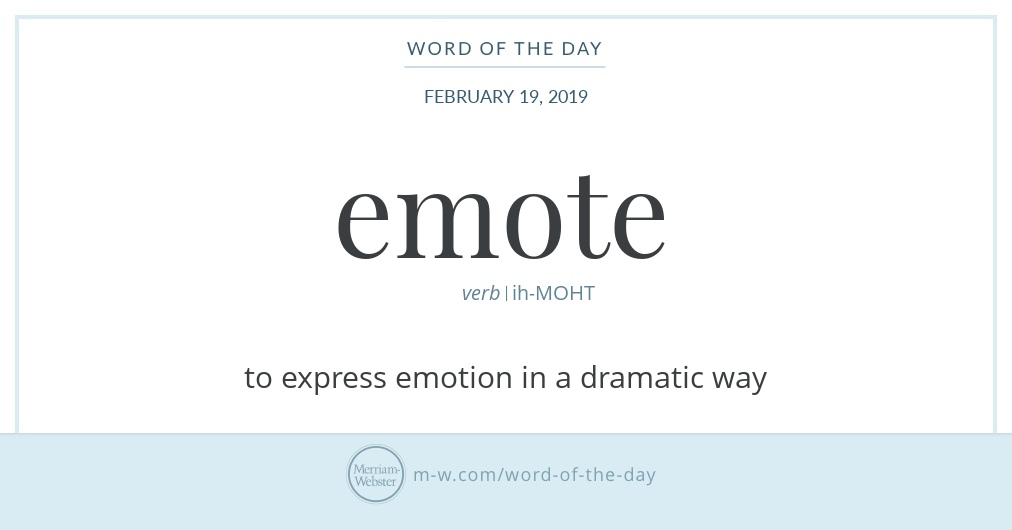
The term “emoting,” often bandied about in discussions about artificial intelligence, human-computer interaction, and digital experiences, refers to the act of expressing or conveying emotions. In the context of technology, emoting takes on a fascinating duality: it’s both about how technology simulates and interprets human emotions, and how technology itself can be designed to evoke emotional responses in users. This evolving field sits at the intersection of psychology, computer science, and design, promising to reshape how we interact with the digital world, our personal well-being, and even the brands we engage with.
The Technological Embodiment of Emotion: AI and Affective Computing
At its core, the technological pursuit of emoting is driven by advancements in Artificial Intelligence (AI), particularly within the subfield of Affective Computing. This discipline is dedicated to developing systems and devices that can recognize, interpret, process, and simulate human affects – essentially, emotions. The goal isn’t merely to build intelligent machines, but to build machines that are emotionally intelligent, capable of understanding and responding to the nuanced emotional landscape of human interaction.
Recognizing and Interpreting Human Emotions
The first hurdle in technological emoting is the ability of AI to detect and understand human emotions. This involves analyzing a variety of data points:
Facial Expression Analysis
Perhaps the most intuitive method, facial recognition AI analyzes micro-expressions, gaze direction, and muscle movements to infer emotional states like happiness, sadness, anger, surprise, fear, and disgust. Sophisticated algorithms can discern subtle shifts that even humans might miss, offering a window into a person’s inner feelings. This technology has applications ranging from market research and customer feedback analysis to providing insights for mental health professionals.
Vocal Tone and Speech Analysis
Beyond what is said, how it is said carries immense emotional weight. AI systems are trained to analyze prosody – pitch, tone, rhythm, and volume – in spoken language. A sudden shift in pitch might indicate excitement or anxiety, while a low, monotone delivery could suggest boredom or sadness. This analysis, often combined with Natural Language Processing (NLP) for sentiment analysis of the actual words, provides a richer understanding of emotional state. This is crucial for voice assistants, call center analytics, and even in detecting potential distress.
Physiological Signal Monitoring
For more objective and less overt indicators, AI can analyze physiological signals. This includes:
- Heart Rate Variability (HRV): Changes in heart rate patterns can be linked to stress, relaxation, or excitement.
- Electrodermal Activity (EDA): Skin conductance, often measured through electrodes, increases with arousal, which can be tied to emotional responses like fear or surprise.
- Body Posture and Gestures: AI can interpret non-verbal cues like slumped shoulders (sadness), open gestures (confidence), or clenched fists (anger) to supplement other emotional detection methods.
Textual Sentiment Analysis
In written communication, from social media posts to customer reviews, NLP-driven sentiment analysis algorithms can identify the emotional tone. These tools categorize text as positive, negative, or neutral, and more advanced systems can detect specific emotions like joy, frustration, or disappointment. This is invaluable for brand monitoring, customer service, and understanding public opinion.
Simulating and Expressing Emotions: The Rise of Empathetic AI
Once technology can interpret emotions, the next frontier is for it to express or simulate them. This is where the concept of emoting becomes truly transformative, moving from passive observation to active participation.
Emotional AI Companions and Virtual Assistants
The goal is to create AI systems that can engage in more natural, empathetic, and emotionally resonant conversations. Instead of robotic responses, imagine a virtual assistant that can detect your frustration with a complex task and offer a reassuring tone or a suggestion to take a break. This involves not just understanding your emotion but responding in a way that acknowledges and validates it. Chatbots are increasingly being programmed with personality traits and the ability to use empathetic language.
Robotics and Humanoid Embodiment
For physical robots, emoting can involve the visual and auditory display of simulated emotions. This can range from subtle changes in facial expressions on a screen to more nuanced physical movements and vocal inflections. This is particularly relevant in areas like elder care, where a robot companion might need to convey a sense of warmth and understanding, or in customer service roles where a friendly demeanor can enhance the user experience.
Generative AI and Emotional Content Creation
Generative AI models are now capable of creating content – text, images, music – that elicits specific emotional responses. Writers use AI to craft narratives with particular emotional arcs, artists use it to generate evocative imagery, and musicians employ it to compose pieces designed to inspire joy, melancholy, or excitement. This represents a powerful new tool for creative expression and for brands looking to connect with audiences on an emotional level through their content.
The Impact of Emoting Technologies on User Experience and Engagement
The ability of technology to understand and simulate emotions has profound implications for how we experience and interact with digital products and services. It shifts the paradigm from purely functional interfaces to more human-centric, engaging, and even personalized experiences.
Enhancing User Interface (UI) and User Experience (UX) Design
Emoting technologies are poised to revolutionize UI/UX design by making interfaces more intuitive, responsive, and emotionally intelligent.
Adaptive and Personalized Interfaces
Imagine a learning platform that detects a student’s growing frustration and proactively offers simpler explanations or a different learning module. Or a website that adjusts its visual theme and content presentation based on a user’s detected mood to enhance their browsing experience. This level of personalization goes beyond simply remembering preferences; it adapts to the user’s current emotional state.
Gamification and Emotional Feedback Loops
In the realm of gaming and educational apps, emoting technologies can create more compelling feedback loops. AI can analyze a player’s excitement, focus, or disappointment and adjust game difficulty, provide motivational prompts, or even alter the narrative. This creates a more immersive and engaging experience by ensuring the game stays within a zone of optimal emotional challenge and reward.
Accessibility and Inclusivity
For individuals with communication challenges, emoting technologies can offer new avenues for expression and interaction. AI that can interpret subtle emotional cues or provide assistive communication tools can empower those who struggle with traditional verbal or written communication, making technology more accessible and inclusive.
Building Deeper Brand Connections Through Emotional Resonance
Brands are increasingly recognizing that true connection with consumers is built on an emotional foundation. Emoting technologies offer powerful new ways for brands to understand, engage, and resonate with their target audiences.
Customer Service and Support with Empathy
By analyzing customer sentiment in real-time through chat logs, voice calls, or social media interactions, AI can help customer service agents respond with greater empathy and understanding. This can de-escalate tense situations, improve customer satisfaction, and foster loyalty. Chatbots equipped with emotional intelligence can provide initial support that feels more human and less transactional.
Personalized Marketing and Content Strategies
Understanding the emotional drivers behind consumer purchasing decisions is a holy grail for marketers. Emoting technologies allow brands to analyze sentiment towards their products or campaigns, identify emotional triggers, and tailor marketing messages to resonate on a deeper level. This could involve creating ad content that evokes specific emotions or personalizing offers based on a consumer’s perceived emotional state.
Product Development Informed by User Emotion
Beyond understanding existing sentiment, brands can use emoting technologies to gather emotional feedback during the product development process. Beta testers’ emotional responses to prototypes can provide invaluable insights into usability, desirability, and areas for improvement, leading to products that are not only functional but also emotionally satisfying.
Ethical Considerations and the Future of Emoting Technologies
As emoting technologies become more sophisticated and pervasive, they bring with them a host of ethical considerations that must be carefully navigated. The ability to interpret and influence human emotions is a powerful tool, and its deployment requires responsibility and transparency.
Privacy and Data Security in Emotional Analysis
The collection and analysis of emotional data, particularly physiological and facial expressions, raise significant privacy concerns. Who owns this data? How is it stored and protected? The potential for misuse, such as discriminatory profiling or unwanted emotional manipulation, is a serious risk. Robust data anonymization techniques, clear consent mechanisms, and stringent security protocols are paramount.
The Risk of Emotional Manipulation
If technology can understand and evoke emotions, it can also be used to manipulate them. Marketing campaigns could be designed to exploit vulnerabilities, or AI companions could be programmed to foster unhealthy emotional dependencies. Establishing ethical guidelines for the development and deployment of emoting AI is crucial to prevent such scenarios. This includes developing AI that promotes well-being rather than exploits emotional states.
Algorithmic Bias and Inclusivity
AI systems are trained on data, and if that data contains biases, the AI will perpetuate them. This can lead to misinterpretation of emotions for certain demographic groups, resulting in unfair or discriminatory outcomes. Ensuring that AI is trained on diverse and representative datasets, and rigorously testing for bias, is essential for equitable emoting technologies.
The Human Element: Augmentation vs. Replacement
The increasing sophistication of emoting technologies raises questions about the future of human connection. Will AI companions replace genuine human interaction? Will the ability to simulate empathy devalue authentic emotional expression?
Augmenting Human Capabilities
The most optimistic and arguably the most beneficial future for emoting technologies lies in their ability to augment human capabilities. AI can assist therapists in understanding patient emotions, help educators tailor their teaching to student engagement, and empower individuals with communication difficulties. In these instances, technology acts as a tool to enhance, not replace, human connection and understanding.

Defining the Boundaries of AI’s Emotional Role
As AI becomes more adept at emoting, society will need to engage in crucial discussions about where the boundaries lie. What roles are appropriate for emotionally intelligent AI? What aspects of human emotional life should remain exclusively within the human domain? Clarity on these issues will guide the responsible integration of emoting technologies into our lives and societies. The ongoing evolution of emoting technologies presents a compelling frontier in the relationship between humans and machines, promising to make our digital interactions richer, more intuitive, and ultimately, more human.
aViewFromTheCave is a participant in the Amazon Services LLC Associates Program, an affiliate advertising program designed to provide a means for sites to earn advertising fees by advertising and linking to Amazon.com. Amazon, the Amazon logo, AmazonSupply, and the AmazonSupply logo are trademarks of Amazon.com, Inc. or its affiliates. As an Amazon Associate we earn affiliate commissions from qualifying purchases.