
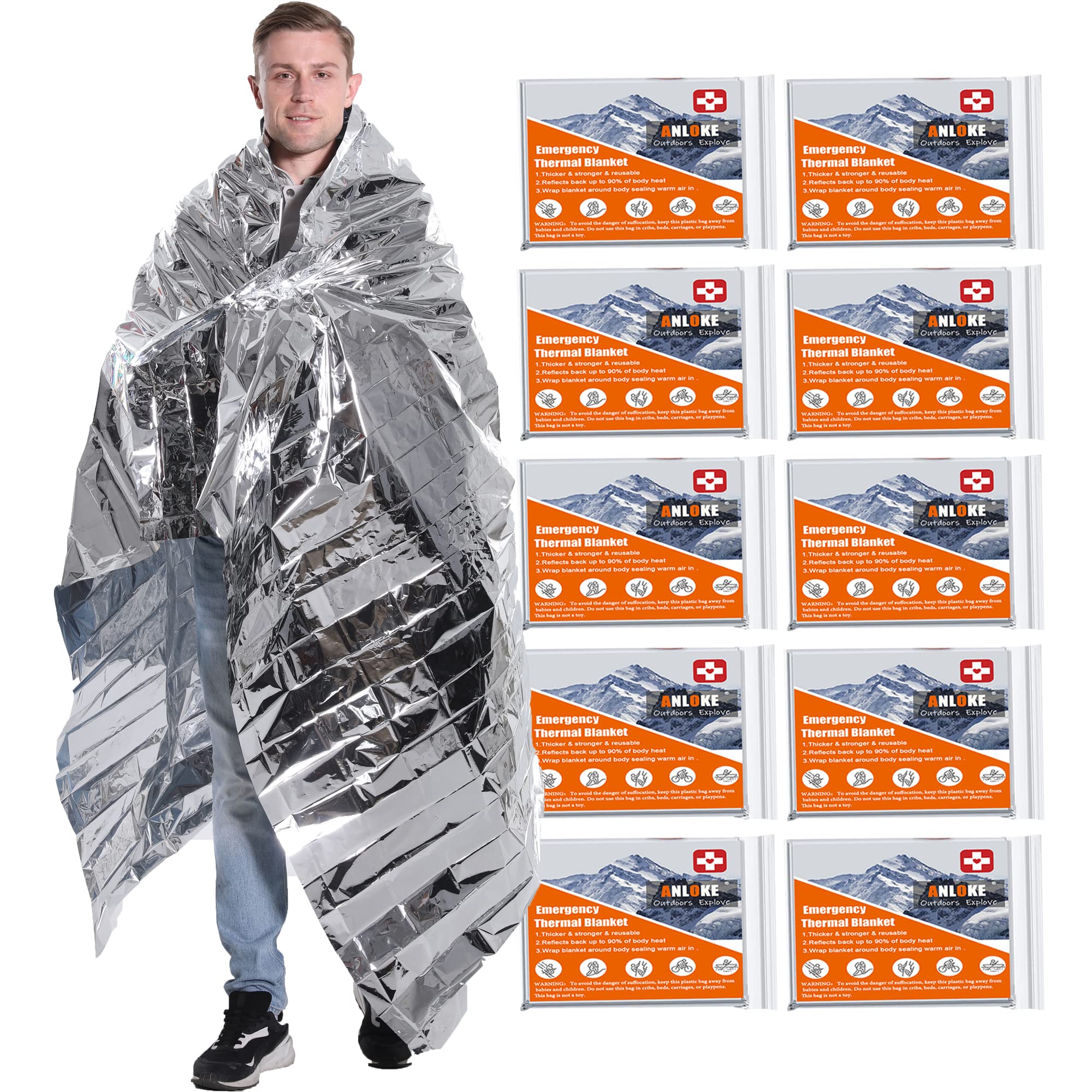
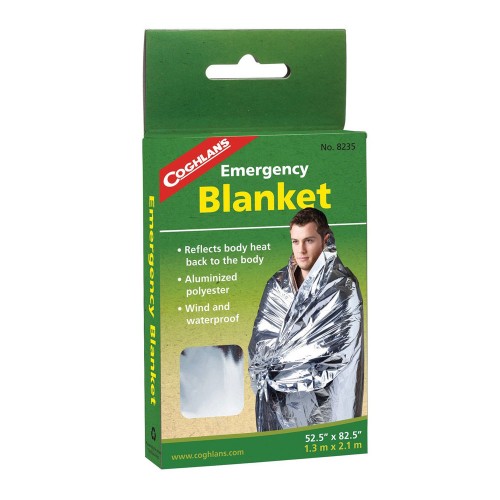
The emergency blanket, often referred to as a “space blanket,” “weather blanket,” or “heat sheet,” is a cornerstone of modern survival technology and material science. To the casual observer, it appears to be nothing more than a thin, crinkly sheet of metallic foil. However, beneath its shimmering surface lies a complex history of aerospace engineering and a sophisticated application of the laws of thermodynamics. Originally developed by NASA in the 1960s to protect spacecraft and astronauts from the extreme thermal environments of outer space, the emergency blanket has transitioned into a ubiquitous tool for outdoor enthusiasts, first responders, and disaster relief agencies.

Understanding what an emergency blanket is requires a deep dive into the technology of metallized polymers and the physics of heat transfer. It is not a traditional “blanket” in the sense of providing loft or insulation through trapped air; rather, it is a high-tech radiation barrier designed to manage the human body’s thermal output in high-stakes environments.
The Aerospace Origins: From Satellite Shields to Survival Gear
The technological lineage of the emergency blanket begins at NASA’s Marshall Space Flight Center. During the early years of the space race, engineers faced a significant challenge: how to protect sensitive electronic equipment and personnel from the massive temperature fluctuations of the vacuum of space. Without an atmosphere to regulate heat, a satellite could experience temperatures ranging from -450 degrees Fahrenheit in the shade to 250 degrees Fahrenheit in direct sunlight.
The solution was the development of metallized polyethylene terephthalate (MPET). By applying a microscopic layer of vaporized aluminum to a thin plastic film, NASA created a material that was incredibly lightweight, flexible, and capable of reflecting up to 97% of radiant heat. This material, often called “Mylar” in the commercial sector, became the standard for satellite insulation and the exterior layers of space suits.
By the mid-1970s, the commercial potential for this technology became evident. A company called National Metallizing took the manufacturing process developed for NASA and adapted it for terrestrial use. The “Space Blanket” brand was born, marketing the product to hikers, climbers, and marathon runners. Today, the technology remains largely unchanged from its extraterrestrial roots, representing one of the most successful examples of NASA technology transfer in history.
The Development of BoPET
The core of the emergency blanket is Biaxially-oriented polyethylene terephthalate (BoPET). This polyester film is stretched in two directions during its manufacturing process, which aligns the molecular chains and gives the material exceptional tensile strength, chemical stability, and gas barrier properties. For the tech-minded, this process is critical because it allows the material to remain incredibly thin—often around 12 microns—without tearing under the stresses of wind or movement.
From Satellites to the Finish Line
The evolution of the emergency blanket saw it move from high-cost aerospace components to a mass-produced safety item. Its adoption by the medical community followed its success in the outdoors. Doctors and paramedics realized that the same technology used to shield a satellite could be used to prevent hypothermia in trauma victims. This transition was facilitated by the material’s ability to be folded into a package no larger than a deck of playing cards, making it an essential component of any technological kit designed for remote or emergency response.
The Physics of Heat Retention: Thermodynamics in a Thin Film
To understand why the emergency blanket is a masterpiece of thermal technology, one must look at the three primary ways the human body loses heat: conduction, convection, and radiation. Traditional blankets, such as those made of wool or fleece, focus on preventing conduction and convection. They use “loft” to trap air, which is a poor conductor of heat, thereby slowing the transfer of warmth from the body to the environment.
The emergency blanket, however, is designed primarily to combat radiative heat loss. Under normal conditions, a resting human body loses approximately 40% to 65% of its heat through infrared radiation.
Understanding Radiative Reflection
Every object with a temperature above absolute zero emits infrared radiation. In a survival situation, the body is essentially “leaking” energy into the surrounding environment. The aluminum coating on an emergency blanket acts as a high-efficiency mirror for this infrared energy. When the body emits radiant heat, the metallic surface reflects that energy back toward the skin. This creates a feedback loop of thermal energy, significantly slowing the rate at which a person’s core temperature drops.
The Role of Emissivity
In the field of material science, “emissivity” is the measure of an object’s ability to emit infrared energy. A perfect black body has an emissivity of 1.0, while a highly reflective surface like the aluminum on an emergency blanket has a very low emissivity—often around 0.03. Because the material has low emissivity, it is a poor radiator of heat. Even if the blanket becomes warm from the body’s touch, it does not easily pass that heat to the outside air, further enhancing its efficiency as a thermal barrier.
Managing Convection and Evaporation
While radiation is the primary focus, the emergency blanket also serves as a high-tech vapor and wind barrier. Because BoPET is non-porous, it stops convective heat loss caused by wind stripping away the layer of warm air near the skin. Furthermore, it prevents evaporative cooling by trapping moisture. While this can lead to condensation inside the blanket (a technical drawback known as the “trash bag effect”), in an emergency, the priority is maintaining core temperature by stopping the phase-change cooling that occurs when sweat evaporates from the skin.
Material Science and Engineering: The Vacuum Metallization Process
The manufacturing of an emergency blanket is a marvel of industrial chemistry and physics. It is not simply a matter of painting a plastic sheet with silver paint. Instead, it involves a process called physical vapor deposition (PVD), specifically vacuum metallization.
The Vacuum Chamber
The process begins with a roll of clear polyester film being placed in a massive vacuum chamber. The air is evacuated to prevent oxygen from interfering with the metal coating. Inside the chamber, high-purity aluminum wire is fed onto “boats” or crucibles that are heated to approximately 1,500 degrees Celsius (2,700 degrees Fahrenheit). At this temperature, the aluminum does not just melt; it sublimates, turning directly into a vapor.
Atomic Deposition
As the aluminum vapor rises, it encounters the polyester film moving rapidly across a chilled roller. The vapor condenses on the cold film, forming a layer of metal that is only atoms thick—typically between 30 and 100 nanometers. This layer is so thin that if you hold an emergency blanket up to a bright light, you can often see through it, yet it is thick enough to provide near-total infrared reflection.
Coating and Finishing
To increase the durability of the blanket, manufacturers often apply a protective top-coat or dye the polyester. This is why many emergency blankets are silver on one side and orange or olive drab on the other. The colored side is not just for aesthetics; it provides high visibility for search and rescue operations or camouflage for tactical use, while the silver side remains the primary reflective surface.
Technical Variations and Performance Metrics
Not all emergency blankets are engineered equally. Depending on the intended application, the technology can vary in thickness, base material, and composite layering.
Standard Mylar (Disposable)
The most common version is the single-use “disposable” blanket. These are typically 12.5 microns thick. Their primary technical advantage is their weight-to-performance ratio. They are ideal for ultralight backpacking or mass-casualty kits where thousands of units must be stored in a small space. However, their technical limitation is their low tear strength; once a puncture occurs, the material tends to “run” or rip completely.
Laminated and Woven Tech
For professional and long-term use, engineers have developed reinforced blankets. These utilize a multi-layer approach, often laminating the metallized film to a layer of scrim (a reinforcing fabric) or a layer of polyethylene foam. This creates a “heavy-duty” blanket that is not only reflective but also provides a degree of conductive insulation and significant durability. These are the blankets used by military units and professional mountain guides, as they can be reused and even rigged as emergency shelters or tarps.
Bivvy Sacks and Thermal Bags
A further technological iteration is the thermal bivvy. By heat-sealing the edges of a metallized sheet, manufacturers create a sleeping-bag-style enclosure. This is technically superior to a flat sheet because it eliminates the “gaps” where heat can escape through convection, effectively sealing the user in a 360-degree reflective environment.
Beyond Survival: Diverse Technical Applications in the Modern Era
While the term “emergency blanket” focuses on survival, the underlying technology—Radiant Barrier Technology—is utilized across various high-tech industries.
Medical and Surgical Applications
In hospitals, metallized films are used to prevent perioperative hypothermia. During surgery, a patient’s ability to regulate their temperature is compromised. Medical-grade thermal blankets, often integrated with forced-air warming systems, use the same reflective principles to keep patients stable.
Green Building and Architecture
The technology has migrated into the construction industry in the form of radiant barriers. High-tech home insulation now often includes a layer of metallized film in the attic or walls. This reflects solar radiation away from the house in the summer and reflects internal heat back into the living space in the winter, drastically reducing energy consumption for HVAC systems.
Digital and Signal Shielding
Because the metallic layer is conductive, emergency blankets can also serve as a makeshift Faraday cage. In the world of digital security and electronic warfare, metallized polymers are used to shield sensitive equipment from electromagnetic interference (EMI) and radio frequency interference (RFI). This cross-disciplinary utility highlights that the emergency blanket is not just a piece of fabric, but a versatile technical membrane.
The emergency blanket stands as a testament to how elite aerospace technology can be democratized for the safety of the general public. It is a product defined by the precise manipulation of atoms and the calculated application of thermodynamics. Whether it is shielding a multi-billion dollar satellite or a hiker caught in a storm, the fundamental technology remains a silent, shimmering guardian against the cold.
aViewFromTheCave is a participant in the Amazon Services LLC Associates Program, an affiliate advertising program designed to provide a means for sites to earn advertising fees by advertising and linking to Amazon.com. Amazon, the Amazon logo, AmazonSupply, and the AmazonSupply logo are trademarks of Amazon.com, Inc. or its affiliates. As an Amazon Associate we earn affiliate commissions from qualifying purchases.