
In the rapidly evolving landscape of scientific research and technological development, the tools used to capture data have undergone a profound transformation. For decades, the paper laboratory notebook was the gold standard for documenting experiments, recording observations, and protecting intellectual property. However, as data sets have grown in complexity and the need for global collaboration has increased, the traditional paper method has become a bottleneck. Enter the Electronic Lab Notebook (ELN).
An ELN is a specialized software package designed to replace traditional paper notebooks. While it serves the foundational purpose of documentation, a modern ELN is far more than a digital word processor; it is a sophisticated data management platform that integrates with laboratory hardware, facilitates real-time collaboration, and ensures rigorous digital security. In this article, we will explore the technological architecture of ELNs, their core features, the impact of AI on research data, and how to select the right platform for a modern tech-driven laboratory.
Understanding the ELN: From Paper to Digital Intelligence
The transition from paper to digital is not merely a change in medium; it is a fundamental shift in how scientific intelligence is curated and utilized. To understand what an ELN is, one must first understand the limitations it was built to overcome.
Definition and Core Functionality
At its simplest level, an ELN is a software program used by scientists, engineers, and researchers to document research, experiments, and procedures performed in a laboratory. However, from a technology perspective, an ELN is a structured database management system. It allows users to input text, upload images, attach datasets, and link to external files. Unlike a standard document editor like Microsoft Word, an ELN is built with metadata at its core, ensuring that every entry is searchable, timestamped, and attributed to a specific user.
The Transition from Traditional Paper Notebooks
Paper notebooks are inherently siloed. If a researcher in London needs to review data generated by a colleague in San Francisco, the physical notebook must be scanned or transcribed—a process prone to error and delay. Furthermore, paper is susceptible to physical damage and offers no native “search” function.
The digital transition addresses these “Tech Debt” issues. ELNs introduce the concept of “Data Integrity,” ensuring that records cannot be altered retroactively without a trace. This is particularly vital in fields like biotechnology and materials science, where the chronological proof of discovery is essential for patent filings. By moving to a digital format, labs can implement automated backups, version control, and instant data retrieval, effectively future-proofing their research.
Key Features of Modern ELN Software
Modern ELN platforms are judged by their ability to integrate into a laboratory’s existing tech stack. They are no longer standalone applications but are interconnected hubs that communicate with other software and hardware.
Data Organization and Searchability
The primary technological advantage of an ELN is its indexing capability. In a digital environment, researchers can use Boolean operators to search through years of experimental data in seconds. Whether searching by a specific chemical structure, a gene sequence, or a particular date range, the ELN provides a level of granularity that paper cannot match. Most high-end ELNs also support “Tagging,” allowing teams to categorize experiments by project, status, or reagent used, creating a multi-dimensional view of the lab’s activities.
Collaboration and Team Integration
In the era of distributed teams and remote work, collaboration features are critical. Modern ELNs operate on a “Multi-Tenant” or “Cloud-Native” architecture, allowing multiple users to view and comment on an experiment simultaneously. Permission-based access ensures that sensitive data is only visible to authorized personnel, while “Shared Folders” and “Review Workflows” allow for seamless peer review. This connectivity accelerates the R&D lifecycle, as feedback loops are reduced from weeks to minutes.
Compliance, Security, and IP Protection
For many organizations, the ELN is a critical tool for regulatory compliance. In the United States, the FDA’s 21 CFR Part 11 regulation sets the standard for electronic records and signatures. A robust ELN provides built-in audit trails—a chronological record of who did what and when.
From a digital security standpoint, ELNs employ advanced encryption (AES-256) for data at rest and in transit. They also feature digital signatures and “witnessing” protocols, where a second user can electronically sign off on a colleague’s work to freeze the record for intellectual property (IP) protection. This ensures that the data is not only safe from external hacks but also legally defensible in a court of law.
The Impact of AI and Automation on Electronic Lab Notebooks
As we move deeper into the decade, the intersection of Artificial Intelligence (AI) and ELN technology is becoming the new frontier for research efficiency.
Automated Data Capture and IoT Integration
The Internet of Things (IoT) has entered the lab. Modern ELNs can now connect directly to laboratory instruments—such as scales, spectrophotometers, and PCR machines. Instead of a researcher manually typing in results, the ELN automatically pulls the data via APIs or specialized “Parsers.” This reduces human error and ensures that the “Raw Data” is captured in its purest form. This automated pipeline is the foundation of the “Smart Lab,” where the software acts as the central nervous system for all hardware.
AI-Driven Analytics and Predictive Modeling
With thousands of experiments stored in a structured digital format, ELNs become a goldmine for Machine Learning (ML). AI tools can analyze historical data within the ELN to identify patterns that a human might miss. For example, an AI algorithm could suggest the optimal temperature for a chemical reaction based on five years of previous experimental outcomes stored in the database.
Furthermore, Natural Language Processing (NLP) is being integrated into ELNs to help researchers “talk” to their data. Instead of manual searching, a researcher could ask an AI assistant, “Show me all experiments where the yield exceeded 90% using Catalyst X,” and receive an instant report. This shift from “Data Storage” to “Data Insights” is the hallmark of next-generation ELN technology.
Choosing the Right ELN for Your Research Ecosystem
Not all ELNs are created equal. The choice of platform depends heavily on the specific tech requirements and the nature of the research being conducted.
Open Source vs. Proprietary Solutions
For academic labs or smaller startups, open-source ELNs offer a cost-effective way to digitize. These platforms allow for high levels of customization, as developers can modify the source code to fit specific needs. However, they often lack the rigorous support and compliance certifications (like SOC2 or ISO 27001) that come with proprietary, enterprise-grade software.
Proprietary solutions, while requiring a subscription fee (SaaS), provide a “Turnkey” experience. They offer dedicated support teams, regular security patches, and seamless updates. For large pharmaceutical or tech companies, the security and reliability of a proprietary vendor often outweigh the initial cost.
Cloud-Based vs. On-Premise Deployment
The “Cloud vs. On-Prem” debate is a central theme in digital security. Cloud-based ELNs (SaaS) offer the advantage of accessibility from anywhere and lower IT overhead. The vendor handles all server maintenance and security.
On the other hand, organizations dealing with highly sensitive national security data or extreme proprietary secrets may opt for an “On-Premise” installation. This keeps the data within the organization’s physical servers and firewall. While more secure in theory, it requires a dedicated internal IT team to manage backups and prevent data loss.
The Future of Digital Science: Beyond the ELN
The ELN is just one piece of the digital laboratory puzzle. To achieve true digital transformation, the ELN must work in harmony with other specialized systems.
Integration with LIMS and SDMS
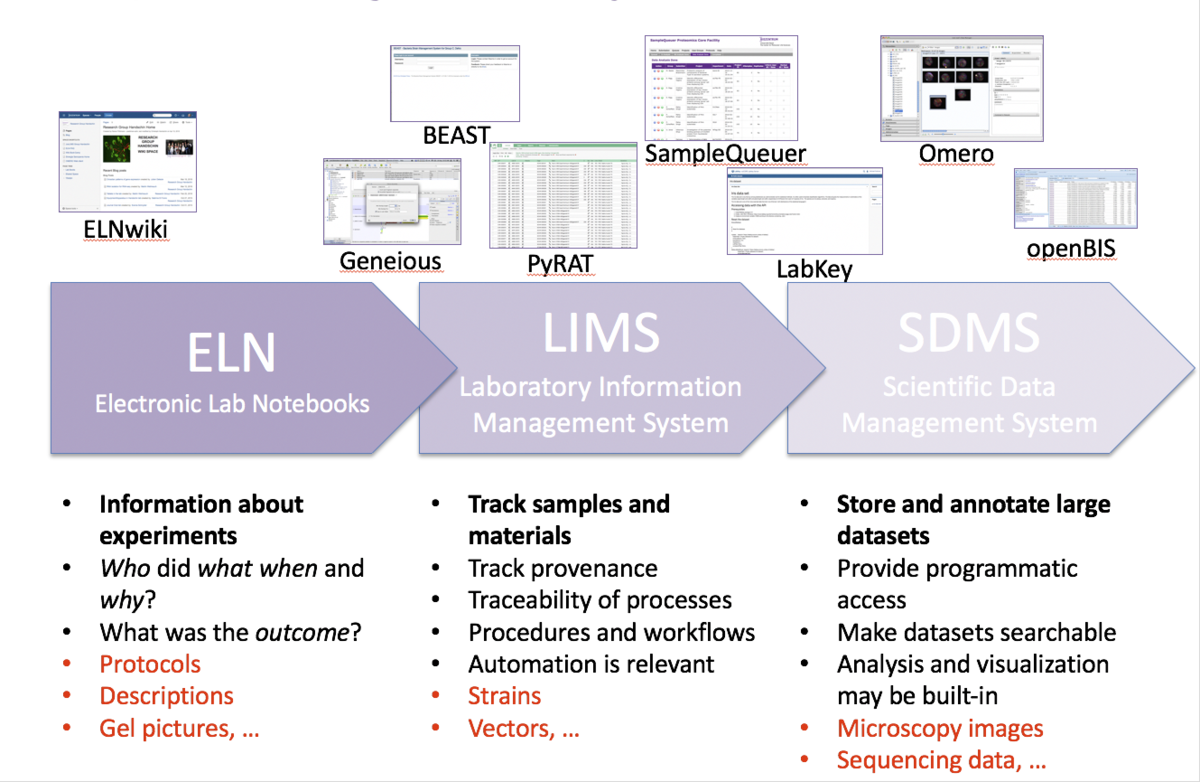
While an ELN focuses on the process of an experiment (the narrative), a Laboratory Information Management System (LIMS) focuses on the samples and inventory. In a high-tech lab, these two systems are often integrated. When a researcher mentions a specific sample ID in their ELN, the software automatically pulls the sample’s history from the LIMS.
Additionally, Scientific Data Management Systems (SDMS) are used to handle the massive files generated by modern imaging and sequencing. A fully integrated tech stack allows a researcher to move from a high-level experimental summary in the ELN down to the raw gigabytes of data in the SDMS with a single click.

Towards a Paperless Laboratory
The ultimate goal of ELN technology is the realization of the paperless laboratory. This is not just an environmental goal but an operational one. A paperless lab is more agile, more secure, and more data-driven. As ELNs continue to incorporate AI, voice-to-text documentation, and augmented reality (AR) interfaces—where a researcher can see their ELN notes projected onto their safety goggles—the line between the physical lab and the digital interface will continue to blur.
In conclusion, an ELN is no longer a luxury for the tech-savvy lab; it is a foundational requirement for any organization serious about modern research. By centralizing data, ensuring compliance, and leveraging the power of AI, ELNs are transforming the way we solve the world’s most complex technical challenges. Whether you are a solo developer working on a new biotech algorithm or a global corporation managing thousands of scientists, the ELN is your gateway to the future of discovery.
aViewFromTheCave is a participant in the Amazon Services LLC Associates Program, an affiliate advertising program designed to provide a means for sites to earn advertising fees by advertising and linking to Amazon.com. Amazon, the Amazon logo, AmazonSupply, and the AmazonSupply logo are trademarks of Amazon.com, Inc. or its affiliates. As an Amazon Associate we earn affiliate commissions from qualifying purchases.