
In the landscape of consumer packaged goods (CPG), few brands possess the institutional ubiquity of Elmer’s. For decades, the brand—represented by the iconic Elmer the Bull—was synonymous with the white school glue used in classrooms and the clear adhesives used in woodshops. However, the mid-2010s saw a seismic shift in consumer behavior that threatened to turn this utilitarian brand into a mere “ingredient” rather than a destination product. The result of this shift was the birth of Elmer’s Gue, a pre-made slime product that represents one of the most successful brand extensions in modern marketing history.
To understand what Elmer’s Gue is, one must look beyond the polymer chemistry and examine it through the lens of brand strategy, market agility, and the evolution of corporate identity.
1. From Adhesives to Play: The Strategic Evolution of Elmer’s
The transition from “Elmer’s Glue” to “Elmer’s Gue” was not an accidental linguistic slip; it was a calculated response to a grassroots cultural phenomenon. For nearly a century, Elmer’s (a subsidiary of Newell Brands) operated within the functional category of adhesives. Their primary brand promise was “bonding”—fixing broken items or facilitating school projects.
Identifying the Slime Phenomenon
Around 2016, a massive trend exploded across social media platforms like Instagram and YouTube: the DIY slime movement. Content creators were purchasing gallons of Elmer’s White and Clear Glue to mix with activators like borax or contact lens solution. For Elmer’s, this was a double-edged sword. While sales of bulk glue skyrocketed, the brand was effectively being used as a raw material for an “unauthorized” end product. The DIY community was defining the brand’s utility, not the brand itself.
Pivoting from Ingredient to End Product
Elmer’s recognized a critical gap in their brand architecture. While they owned the “ingredient” market, they were missing out on the “convenience” market. Many parents were wary of the mess and chemical ratios involved in DIY slime. By launching Elmer’s Gue, the brand successfully pivoted from being a supplier of raw materials to a provider of a finished, branded experience. This move allowed Elmer’s to capture a higher price point per ounce and regain control over the product’s safety standards and sensory quality.
2. Brand Architecture: Defining “Gue” in the Elmer’s Portfolio
When a legacy brand enters a new category, the naming convention is vital. Calling the product “Elmer’s Slime” would have been the obvious choice, but it would have lacked the proprietary weight needed to distinguish the product from a sea of generic competitors.
The Naming Convention and Linguistic Branding
The choice of “Gue” is a masterclass in linguistic branding. It is phonetically similar to “Glue,” maintaining a strong cognitive link to the parent brand’s heritage, yet it feels softer, more playful, and distinct. By trademarking “Gue,” Elmer’s created a proprietary category. In the eyes of the consumer, there is “slime” (generic) and then there is “Gue” (the premium, brand-backed version). This distinction protects the brand’s intellectual property and creates a “moat” around their market share.
Positioning Against the DIY Movement
The strategic positioning of Gue was not intended to cannibalize Elmer’s existing glue sales. Instead, it was designed to expand the “Total Addressable Market” (TAM). The brand architecture now serves two distinct personas: the “Creator” (who still buys the glue to make custom slime) and the “Consumer” (who wants the immediate gratification of a ready-to-play product). This dual-pathway strategy ensures that Elmer’s remains the dominant force in both the DIY and the toy-aisle segments, effectively competing with itself to prevent external competitors from gaining a foothold.

3. Marketing and Consumer Connection: Reaching Gen Alpha and Gen Z
Elmer’s Gue is more than a product; it is a manifestation of modern marketing trends that prioritize sensory experience over functional utility. To market Gue effectively, Elmer’s had to move away from traditional “Back to School” advertising and toward “Experience Economy” marketing.
Sensory Branding and ASMR
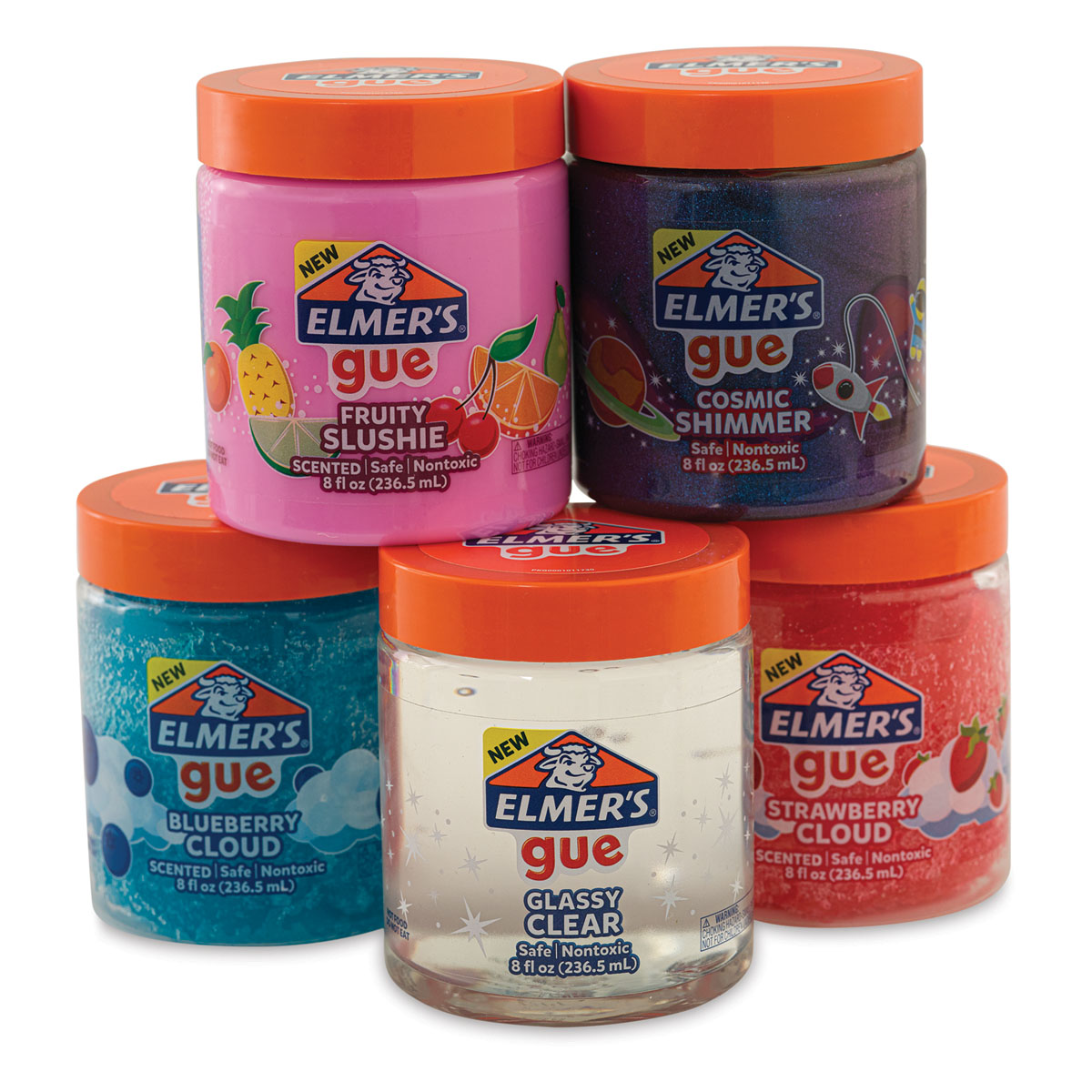
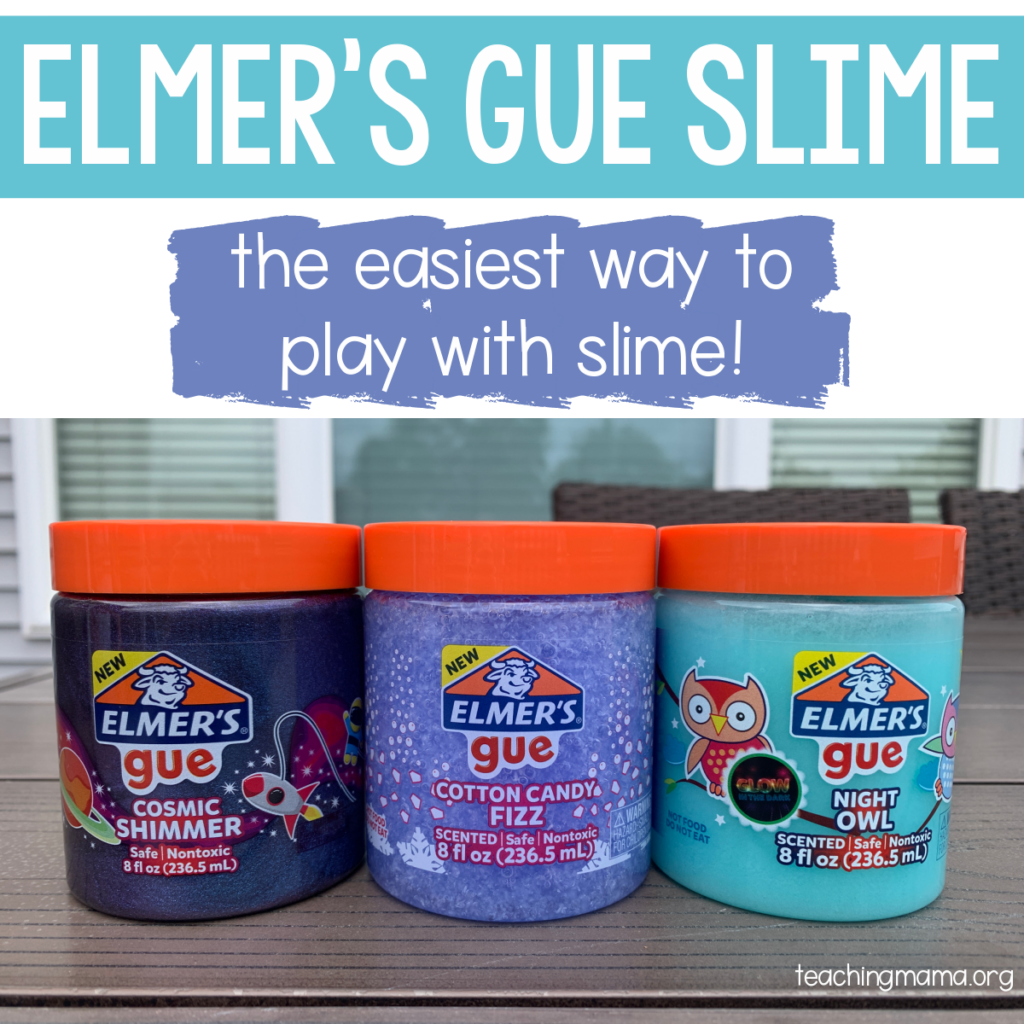
A significant driver of the Gue brand is the ASMR (Autonomous Sensory Meridian Response) community. Elmer’s realized that the value of Gue lies in its tactile and auditory qualities—the “pokes,” “bubbles,” and “stretches.” Consequently, the branding of Gue variants focuses heavily on sensory descriptors. Products are marketed as “Glassy,” “Crunchy,” or “Cloud,” using descriptive language that appeals to the neurological rewards of sensory play. By aligning the brand with the wellness and relaxation trends found in ASMR, Elmer’s transformed a sticky toy into a tool for stress relief and mindfulness.
Packaging Design as a Narrative Tool
The visual identity of Elmer’s Gue deviates from the clinical, functional look of their school glue. The packaging uses vibrant gradients, holographic foils, and bold typography. This is a deliberate attempt to speak the visual language of Gen Alpha and Gen Z. Each variant of Gue tells a micro-story—whether it is a “Cosmic” theme or a “Fruit Scents” theme—transforming the product from a chemical compound into a collectible item. This shift in design language signifies the brand’s transition from a utility-based tool to a lifestyle-based accessory.
4. The Impact on Corporate Identity and Market Leadership
The success of Elmer’s Gue has broader implications for how heritage brands maintain relevance in a digital-first economy. It serves as a case study for corporate agility within a large conglomerate like Newell Brands.
Defending Market Share against Artisanal Competitors
Before Elmer’s Gue, the premium slime market was dominated by “artisanal” shops on Etsy and Shopify. These small businesses could pivot quickly to new trends (like “cloud slime” or “butter slime”). By launching Gue, Elmer’s proved that a massive corporation could emulate the speed of a boutique creator while offering the safety assurances and distribution power of a global brand. This effectively “crowded out” generic competitors on retail shelves at Walmart and Target, securing Elmer’s position as the category captain.
Lessons in Agility for Century-Old Brands
The journey of Elmer’s Gue demonstrates that a brand’s identity is not fixed; it is a living organism that must adapt to how consumers are using the product in the real world. Elmer’s didn’t fight the slime trend or issue warnings against using their glue for non-traditional purposes. Instead, they leaned into the community, listened to the feedback, and productized the trend.
This level of brand agility is rare for a company that is nearly 80 years old. It requires a willingness to risk the “seriousness” of the corporate identity in favor of cultural relevance. Today, Elmer’s Gue is a multi-million dollar product line that has revitalized the entire Elmer’s portfolio, proving that even the most established brands can find new life by listening to the “sticky” demands of their audience.
Conclusion
What is Elmer’s Gue? On the surface, it is a premade, non-toxic slime available in various textures and scents. But from a brand strategy perspective, it is a brilliant defensive and offensive maneuver. It is the result of a legacy brand recognizing its role in a new cultural movement and having the courage to evolve its identity from a simple adhesive manufacturer to a leader in sensory entertainment.
By bridging the gap between DIY creativity and retail convenience, Elmer’s Gue has secured the brand’s future for a new generation. It stands as a testament to the power of observant marketing: sometimes the best product innovation doesn’t come from a lab, but from watching how your customers are already playing with your brand.
aViewFromTheCave is a participant in the Amazon Services LLC Associates Program, an affiliate advertising program designed to provide a means for sites to earn advertising fees by advertising and linking to Amazon.com. Amazon, the Amazon logo, AmazonSupply, and the AmazonSupply logo are trademarks of Amazon.com, Inc. or its affiliates. As an Amazon Associate we earn affiliate commissions from qualifying purchases.