
In the grand tapestry of human innovation, few inventions are as critical yet as overlooked as the electricity transformer. While we marvel at the latest silicon chips, foldable displays, and AI-driven software, the silent, humming boxes found on street corners and within our device chargers are what actually make the digital age possible. A transformer is a passive electrical device that transfers electrical energy from one electrical circuit to another, or multiple circuits. A varying current in any one coil of the transformer produces a varying magnetic flux in the transformer’s core, which induces a varying electromotive force across any other coils wound around the same core.

Without the ability to efficiently change voltages, our modern world would be localized, inefficient, and dangerously high-voltage. From the massive substations that power entire cities to the tiny components inside your smartphone, the transformer is the fundamental bridge between power generation and technological consumption.
The Fundamental Physics: How Transformers Power Our Digital World
To understand the transformer, one must first appreciate the nature of Alternating Current (AC). Unlike Direct Current (DC), which flows in one direction, AC reverses direction periodically. This oscillation is the key that unlocks the power of electromagnetic induction—the physical principle discovered by Michael Faraday that allows transformers to function.
The Principle of Electromagnetic Induction
At its core, a transformer operates on Faraday’s Law of Induction. When an alternating current flows through a primary coil of wire, it creates a fluctuating magnetic field around it. When a secondary coil is placed within this magnetic field, a voltage is “induced” in that second coil. Crucially, there is no physical connection between the primary and secondary wires; the energy is transferred entirely through the medium of magnetism. This isolation is a critical safety feature in tech design, protecting sensitive electronics from direct contact with high-voltage sources.
Step-Up vs. Step-Down Transformers
The primary utility of a transformer lies in its ability to change voltage levels by varying the number of turns in the primary and secondary coils.
- Step-Up Transformers: These have more turns in the secondary coil than the primary, increasing the voltage. In the tech infrastructure world, these are used at power plants to boost voltage to hundreds of thousands of volts for long-distance transmission, minimizing energy loss.
- Step-Down Transformers: These have fewer turns in the secondary coil, reducing the voltage. These are the “tech heroes” that take high-voltage line power and drop it down to the 120V or 240V used in homes, and eventually down to the 5V or 12V used by your computer’s motherboard.
Anatomy of a Transformer: Hardware and Engineering Precision
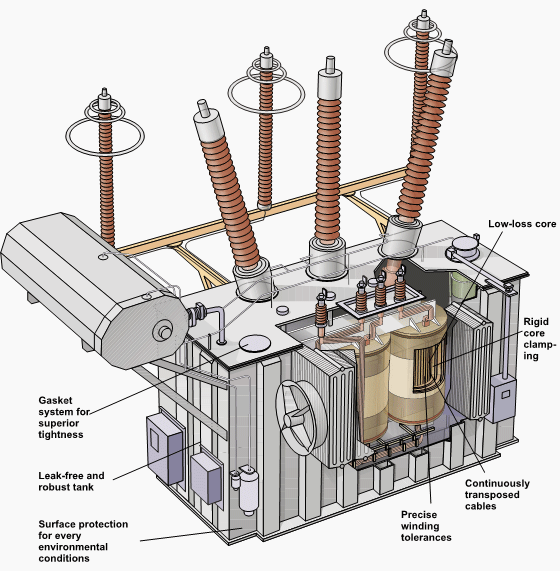
While the theory is simple, the hardware required to manage high-energy loads with 99% efficiency is a marvel of materials science and engineering. Modern transformers are designed to withstand extreme thermal stress, magnetic forces, and environmental degradation.
Core Materials and Magnetic Efficiency
The “core” of the transformer is typically made of highly permeable materials, usually laminated silicon steel. The goal is to channel the magnetic flux as efficiently as possible from the primary to the secondary winding. In high-frequency tech applications—such as the power supplies for servers and gaming PCs—engineers use ferrite cores. These ceramic-like materials are designed to minimize “eddy currents,” which are small loops of electrical current that can cause significant heat loss in metal cores at high frequencies.
Windings and Insulation Tech
The coils, or windings, are usually made of high-purity copper or aluminum. Copper is the preferred choice for high-end tech applications due to its superior conductivity and ductility. However, the real “tech” often lies in the insulation. Each winding must be perfectly insulated to prevent short circuits. In massive industrial transformers, this might involve oil-impregnated paper, while in micro-electronics, sophisticated polymer coatings are used to ensure that the component can survive years of heat cycles without failing.
Cooling Systems: Managing Thermal Energy
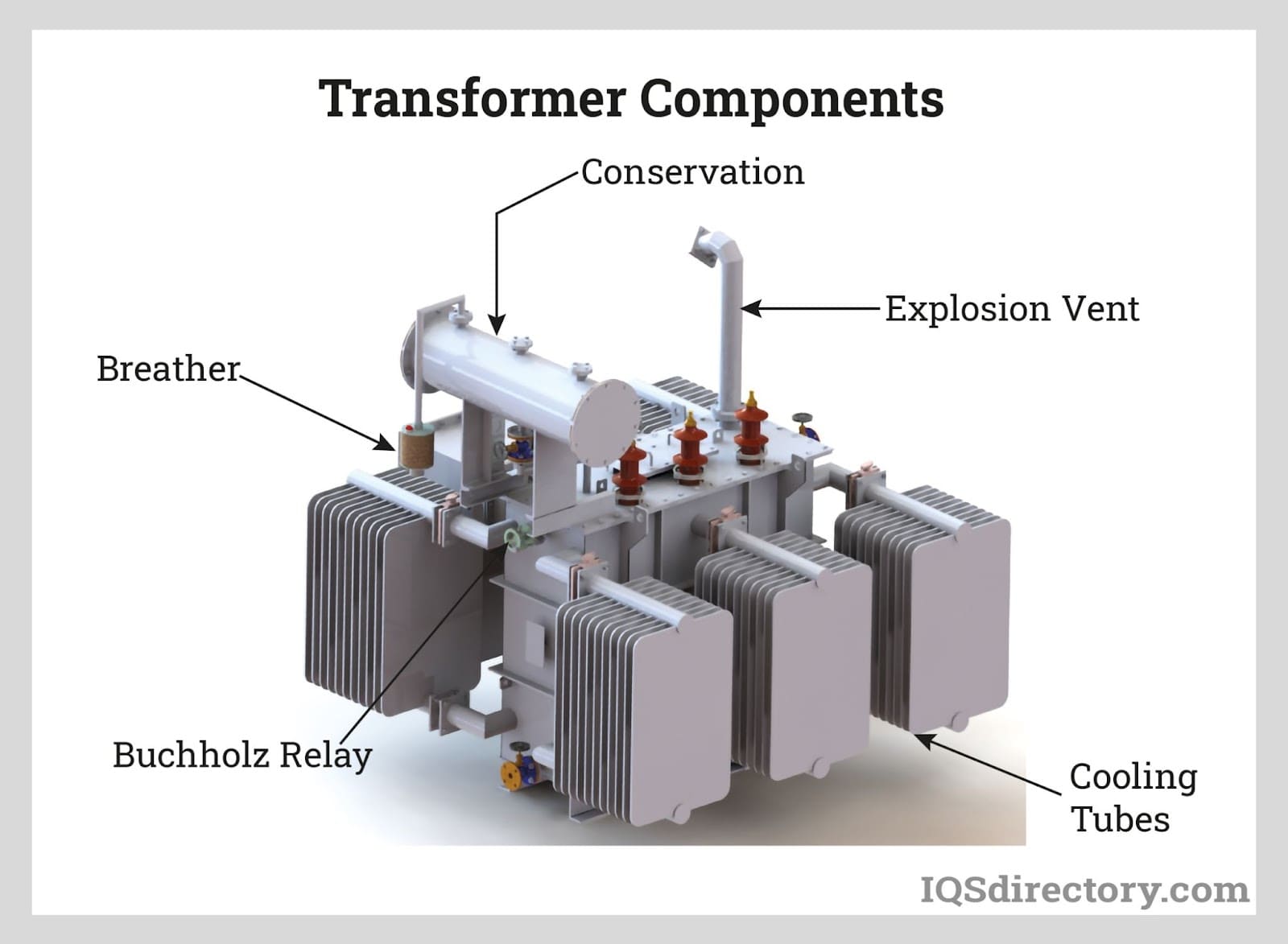
Efficiency is the gold standard in technology, and heat is the enemy of efficiency. Large-scale transformers often use mineral oil both as an insulator and a coolant, circulating the liquid through external radiators. In the world of “dry-type” transformers—those found inside office buildings or data centers—advanced forced-air systems or specialized resins are used to dissipate heat. Keeping a transformer cool is not just about longevity; it’s about maintaining the stability of the entire electrical load.
Applications in Modern Technology: From Data Centers to the Pocket
The transformer is not just a piece of “utility” hardware; it is an integrated part of the consumer and enterprise tech ecosystem. As our devices become more powerful and our data needs grow, the role of voltage regulation becomes increasingly sophisticated.
Powering the Backbone of AI: Data Centers
The AI revolution and the growth of cloud computing have placed unprecedented demands on power infrastructure. Data centers require massive amounts of electricity, but the delicate servers and GPUs (Graphics Processing Units) inside require incredibly stable, low-voltage DC power. Transformers serve as the first line of defense, stepping down high-voltage utility power to levels that can be managed by Power Distribution Units (PDUs). Modern data center transformers are now “smart,” integrated with sensors that feed data into management software to monitor load balance and prevent outages before they happen.
Consumer Gadgets and Switched-Mode Power Supplies (SMPS)
Every time you plug in a laptop or a fast-charger for your phone, you are using a transformer. However, modern tech uses a specific type: the Switched-Mode Power Supply. Unlike the heavy “wall warts” of the 1990s, these modern chargers use high-frequency switching to allow for much smaller transformers. By increasing the frequency of the AC signal, the physical size of the transformer core can be reduced significantly. This is why a 100W GaN (Gallium Nitride) charger can now fit in the palm of your hand.
Renewable Energy and EV Infrastructure
The shift toward green tech relies heavily on transformer innovation. Solar panels produce DC power, which must be inverted to AC and then stepped up via transformers to be sent to the grid. Similarly, Electric Vehicle (EV) fast-chargers are essentially high-power transformer stations. They take grid power and convert it to the specific voltage required to “refill” a car’s battery in minutes. The tech industry is currently investing billions into making these transformers smaller, more efficient, and more resilient to the erratic nature of renewable energy sources.
The Future of Transformers: Smart Grids and AI Optimization
We are currently entering a new era of “Solid-State” and “Digital” transformers. This represents the convergence of traditional electrical engineering and cutting-edge software technology.
Solid-State Transformers (SSTs)
The most significant trend in this niche is the development of Solid-State Transformers. Unlike traditional magnetic transformers, SSTs use semiconductor components (like Silicon Carbide) and high-frequency control circuitry. This allows for far greater control over the power flow. SSTs can convert AC to DC, change voltages, and even “smooth out” fluctuations in the power grid in real-time. For tech-heavy environments like smart cities, SSTs offer a level of programmable power that was previously impossible.
Predictive Maintenance and IoT Integration
In the past, a transformer was a “dumb” device—you only knew it was broken when it exploded or the lights went out. Today, the Internet of Things (IoT) has changed the game. Modern transformers are equipped with dissolved gas analysis (DGA) sensors, vibration monitors, and thermal imagers. This data is fed into AI algorithms that predict when a transformer is likely to fail. This “Predictive Maintenance” is a massive trend in the tech industry, saving utility companies and tech hubs billions of dollars in downtime and repair costs.
The Quest for Sustainability
As the tech industry moves toward “Net Zero” goals, the environmental impact of transformers is under scrutiny. Researchers are developing “Bio-degradable Esters” to replace mineral oil as a coolant, reducing the environmental risk of leaks. Furthermore, the push for “Circular Tech” means that the copper and steel inside old transformers are being recycled at higher rates than ever before.
The electricity transformer may not have a sleek user interface or a viral marketing campaign, but it remains the most vital hardware component of our age. As we push toward more advanced AI, faster electric vehicles, and more sustainable energy, the evolution of the transformer will continue to be the silent engine driving the next century of technological progress. It is a testament to the fact that sometimes, the most revolutionary technology is the one that simply works quietly in the background, making everything else possible.
aViewFromTheCave is a participant in the Amazon Services LLC Associates Program, an affiliate advertising program designed to provide a means for sites to earn advertising fees by advertising and linking to Amazon.com. Amazon, the Amazon logo, AmazonSupply, and the AmazonSupply logo are trademarks of Amazon.com, Inc. or its affiliates. As an Amazon Associate we earn affiliate commissions from qualifying purchases.