
In the landscape of commercial and residential real estate investment, the envelope of a building is often viewed through the lens of aesthetics. However, seasoned investors and asset managers understand that the exterior cladding system is a critical financial component that dictates long-term profitability, operating expenses, and asset valuation. One of the most debated yet financially impactful materials in this sector is EIFS, or Exterior Insulation and Finish Systems.
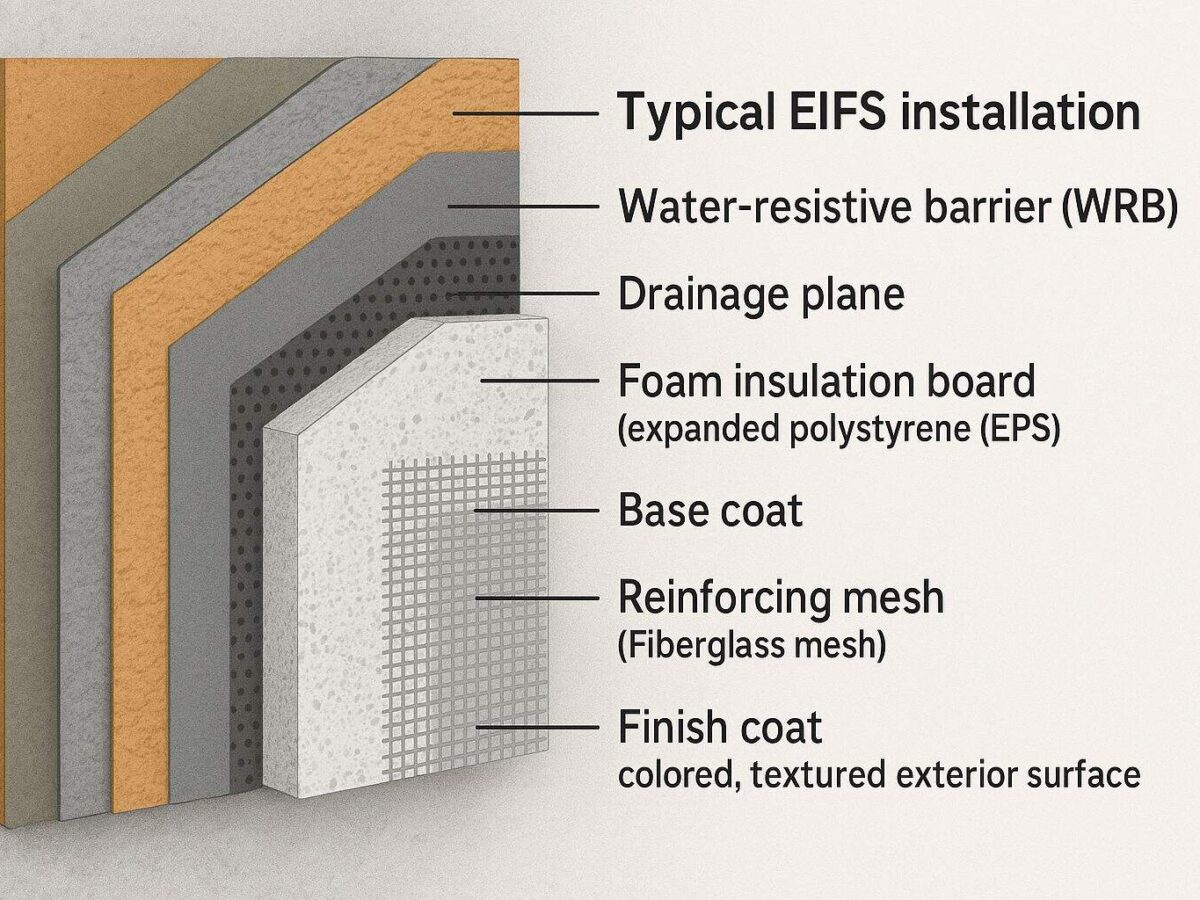
Often referred to as “synthetic stucco,” EIFS is a multi-layered exterior wall system used on both commercial buildings and residential homes. From a financial perspective, EIFS represents a sophisticated balance between initial capital expenditure and long-term yield. This article explores the economic dimensions of EIFS, analyzing its impact on energy efficiency, property marketability, risk management, and overall return on investment (ROI).
The Financial Case for EIFS: Investment and Energy Efficiency
For any property owner, the primary driver behind material selection is the impact on the bottom line. EIFS is unique because it is not merely a decorative finish; it is a high-performance thermal envelope. In the realm of business finance, this shifts the conversation from a simple “cost of goods” to a strategic “investment in efficiency.”
Initial Capital Expenditure vs. Long-Term ROI
When comparing EIFS to traditional materials like brick, stone, or conventional 3-coat stucco, the initial capital expenditure (CapEx) for EIFS is often highly competitive. Because the system is lightweight and relatively fast to install, labor costs—a significant portion of any construction budget—can be minimized. However, the true financial power of EIFS lies in its Return on Investment. By providing a continuous layer of insulation on the outside of the building, EIFS eliminates “thermal bridging,” a phenomenon where heat escapes through studs and joists. For a commercial building owner, this translates to an immediate and permanent reduction in heating and cooling demands, often resulting in energy savings of 20% to 30% annually.
Reducing Operating Expenses (OpEx) through Thermal Performance
In the world of income-producing real estate, Net Operating Income (NOI) is king. Any reduction in operating expenses directly increases the value of the property through capitalization rate (Cap Rate) mathematics. Because EIFS offers a significantly higher R-value (a measure of thermal resistance) than traditional siding or masonry, the monthly utility bills for the landlord or the tenants are drastically reduced. In a “triple-net” lease scenario, lower utility costs make the space more attractive to high-quality tenants; in a “full-service” lease, those savings go directly into the owner’s pocket. Over a 10-to-15-year hold period, the cumulative energy savings of an EIFS-clad building can effectively pay for the entire cost of the exterior system.
Impact on Property Valuation and Marketability
The exterior of a building is its first impression—a critical factor in the “curb appeal” that drives leasing rates and resale value. From a branding and marketing perspective, EIFS provides a level of design flexibility that more rigid materials cannot match.
Enhancing Curb Appeal and Asset Class Positioning
EIFS can be molded into almost any shape, including cornices, arches, and decorative columns, at a fraction of the cost of traditional masonry. This allows developers to create high-end “Class A” aesthetics on a “Class B” budget. In a competitive real estate market, the ability to position an asset as a premium property through sophisticated design directly correlates to higher rental premiums and lower vacancy rates. When an appraiser evaluates a property, the modern, well-maintained appearance of an EIFS building can lead to a higher valuation, facilitating better refinancing terms or a higher exit price during a sale.
Durability and Life-Cycle Cost Analysis
Smart money doesn’t just look at the price of installation; it looks at the life-cycle cost. EIFS systems are engineered to be highly flexible, which means they are resistant to the cracking that often plagues traditional stucco as buildings settle or temperatures shift. While EIFS requires periodic cleaning and recoating (approximately every 10 to 12 years), the costs are minimal compared to the tuck-pointing required for brick or the full replacement of cheaper vinyl siding. A well-maintained EIFS system can last the entire lifespan of the building, ensuring that the owner does not face massive, unexpected capital calls for facade failure.

Risk Management and Insurance Implications
While the financial benefits of EIFS are clear, a prudent investor must also navigate the risks associated with the material. Historically, EIFS faced scrutiny due to moisture intrusion issues in early “barrier-only” systems. Understanding how modern technology has mitigated these risks is essential for protecting the capital invested in the asset.
Understanding the Stucco Stigma and Liability
In the late 1990s, EIFS gained a reputation for trapping moisture behind the insulation board, leading to rot and mold. This “stigma” can still impact insurance premiums and buyer due diligence in some regions. From a financial risk management perspective, it is vital to distinguish between older “barrier” systems and modern “water-managed” EIFS. Modern systems include a water-resistive barrier and a drainage plane that allows any incidental moisture to exit the wall. For an investor, ensuring that a building uses a water-managed system is a critical step in due diligence, as it mitigates the risk of future litigation and protects the property’s insurability.
Ensuring Quality Control to Protect Capital
The financial failure of an EIFS system is almost always a result of poor installation rather than material failure. For developers, this means that the “savings” of hiring a low-bid, unqualified contractor can result in a massive financial liability. Investing in a third-party inspector or choosing a certified EIFS applicator is a form of “insurance” that protects the project’s equity. In the eyes of a lender, a property with documented, high-quality installation is a lower-risk asset, which can sometimes lead to more favorable loan-to-value (LTV) ratios.
EIFS as a Strategic Asset Upgrade
For those specializing in “value-add” real estate investing, EIFS is a powerful tool for transforming underperforming assets. Retrofitting an older building with EIFS can solve multiple financial challenges simultaneously.
Retrofitting Older Buildings for Value Addition
Many older commercial buildings suffer from “energy bleeding” and dated aesthetics. Retrofitting these structures with EIFS is often the most cost-effective way to modernize the facade while bringing the building up to modern energy codes. This process, often called an “EIFS over-clad,” allows the building to remain occupied during the renovation, preserving the existing cash flow while simultaneously increasing the building’s future income potential. The transformation of a dated, 1970s concrete box into a sleek, modern office building can result in a massive “forced appreciation” of the asset’s value.
Navigating Tax Incentives and Green Building Credits
In the current financial climate, “Green” is synonymous with “Profit.” Government incentives and tax credits for energy-efficient buildings have made EIFS an even more attractive financial choice. Under Section 179D of the tax code in the United States, for example, commercial building owners can claim significant tax deductions for improvements to the building envelope that reduce energy consumption. Furthermore, EIFS contributes significantly to LEED (Leadership in Energy and Environmental Design) certification points. Buildings with high ESG (Environmental, Social, and Governance) scores are increasingly favored by institutional investors and REITs, often trading at a premium compared to non-green assets.
Conclusion: The Bottom Line on EIFS
When answering the question “What is EIFS?” from a financial perspective, the answer is clear: it is a strategic asset management tool. While it serves as a protective and decorative layer for a building, its true value lies in its ability to enhance Net Operating Income, reduce capital risk when installed correctly, and provide significant tax and energy advantages.
For the property investor, EIFS represents a rare opportunity where the most aesthetically flexible choice is also one of the most energy-efficient and cost-effective. By understanding the nuances of modern water-managed systems and the long-term OpEx benefits of high R-value insulation, owners can make informed decisions that protect their capital and maximize the valuation of their real estate portfolios. In the modern economy, where energy costs are volatile and sustainability is a requirement for institutional-grade assets, EIFS stands out as a prudent financial choice for the forward-thinking investor.
aViewFromTheCave is a participant in the Amazon Services LLC Associates Program, an affiliate advertising program designed to provide a means for sites to earn advertising fees by advertising and linking to Amazon.com. Amazon, the Amazon logo, AmazonSupply, and the AmazonSupply logo are trademarks of Amazon.com, Inc. or its affiliates. As an Amazon Associate we earn affiliate commissions from qualifying purchases.