
Electronic Data Interchange (EDI) is a foundational technology that has been quietly powering business-to-business (B2B) transactions for decades. While it might not boast the flashy headlines of emerging AI or the constant buzz of the latest gadget, EDI remains a critical component of efficient and accurate commerce for countless industries. Understanding what EDI is capable of is essential for any business looking to streamline operations, reduce costs, and improve trading partner relationships. At its core, EDI is about replacing traditional paper-based business documents with standardized electronic formats. This seemingly simple concept unlocks a cascade of capabilities that can transform how businesses communicate and transact.
The Foundational Capabilities: Automation and Standardization
At its most fundamental level, EDI is capable of automating the exchange of business documents between trading partners. This capability forms the bedrock upon which all other benefits are built.
Eliminating Manual Data Entry and Paperwork
Before EDI, sending invoices, purchase orders, shipping notices, and other essential business documents involved manual creation, printing, mailing, and data entry by the receiving party. This process was not only time-consuming but also highly prone to errors. A misplaced decimal point, a transposed number, or a lost document could lead to significant delays, disputes, and financial losses.
EDI’s capability lies in its ability to digitize these documents and transmit them directly from one company’s system to another. This bypasses the need for physical paperwork altogether. Imagine a retailer needing to order more stock from a manufacturer. Instead of printing a purchase order, mailing it, and waiting for it to be manually entered into the manufacturer’s system, an EDI purchase order can be generated by the retailer’s system and sent electronically to the manufacturer’s system in near real-time. This immediate transfer of information drastically reduces processing times and the associated labor costs.
Standardized Data Formats for Universal Understanding
A key enabler of EDI’s automation capability is its reliance on standardized data formats. Without standardization, each company would invent its own way of representing data, making it impossible for different systems to communicate effectively. EDI utilizes globally recognized standards, such as ASC X12 (predominantly used in North America) and UN/EDIFACT (used internationally).
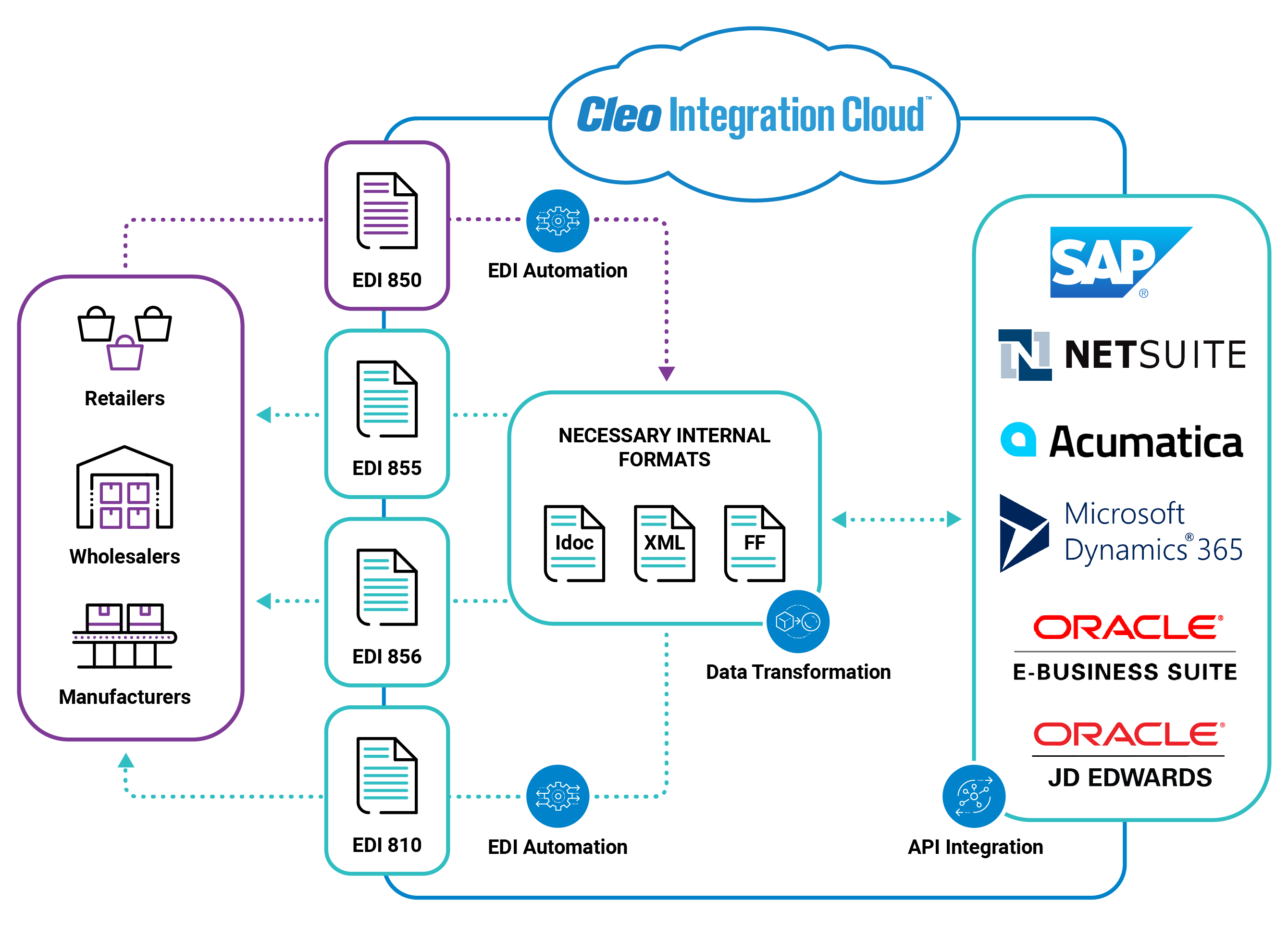
These standards define specific structures and codes for various business documents. For instance, an EDI 850 Purchase Order document has predefined segments and data elements that represent fields like buyer name, seller name, item number, quantity, price, and shipping address. When a company sends an EDI 850, it adheres to this standard. The receiving company’s EDI system, also programmed to understand the same standard, can then accurately interpret the data without any human intervention. This standardization ensures that a purchase order from Company A is understood identically by Company B, regardless of their internal system architectures. This universal language of business data is a core capability that fuels efficiency across diverse industries.
Enhanced Operational Efficiency and Accuracy
Beyond basic automation, EDI’s capabilities extend to significantly enhancing operational efficiency and accuracy within an organization and across its supply chain.
Streamlined Transaction Cycles
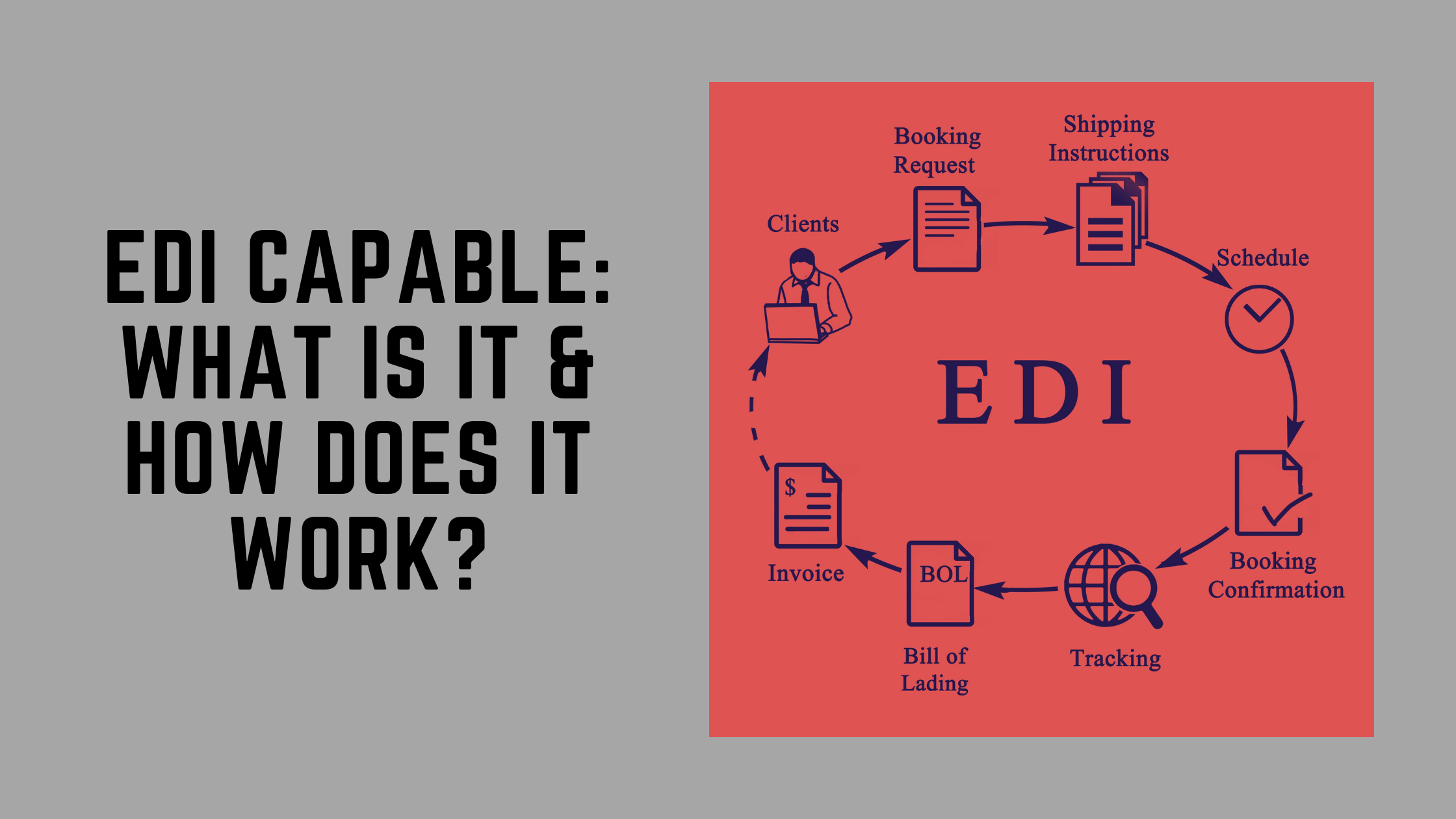
The automation enabled by EDI directly translates into streamlined transaction cycles. The time it takes from initiating an order to receiving goods and payment can be dramatically reduced.
- Order Processing: As mentioned, purchase orders are transmitted instantly, allowing manufacturers to begin processing them immediately. This reduces lead times and ensures that inventory is replenished efficiently.
- Shipping and Receiving: Advance Ship Notices (ASNs), sent via EDI, inform the trading partner about an upcoming shipment, including details about the contents, quantity, and expected delivery date. This allows the receiving party to prepare for the delivery, allocate resources, and expedite the receiving process, minimizing dock congestion and labor inefficiencies.
- Invoicing and Payment: EDI enables the electronic exchange of invoices (e.g., EDI 810) and remittance advice (e.g., EDI 820). This speeds up the billing cycle, reduces the risk of lost invoices, and facilitates faster payments, improving cash flow for both parties. The integration of remittance data with payments helps automate accounts receivable and accounts payable processes, further reducing manual effort.
Minimized Errors and Improved Data Integrity
The reduction of manual data entry is a direct contributor to improved data integrity and a significant decrease in errors. Human intervention is a primary source of mistakes in data processing. Transposing numbers, misinterpreting handwritten information, or entering data into the wrong fields are common occurrences in manual processes.
EDI, by enabling direct system-to-system data transfer, virtually eliminates these human errors. Once data is accurately entered into the originating system, it is transmitted in a standardized format that the receiving system can read without re-keying. This results in more accurate order quantities, pricing, shipping details, and financial information. Improved data accuracy leads to fewer disputes, reduced return rates, fewer incorrect shipments, and ultimately, a more reliable and trustworthy supply chain. This enhanced data integrity builds stronger, more confident relationships between trading partners.
Increased Visibility and Control
EDI provides businesses with enhanced visibility into their supply chain operations. The ability to track transactions electronically allows for better monitoring of order status, shipment progress, and payment cycles.
- Real-time Transaction Status: With EDI, businesses can often track the status of their transactions in near real-time. They can see when a purchase order has been sent, received, acknowledged, and processed. Similarly, they can track when an ASN has been sent, when a shipment has been delivered, and when an invoice has been sent and paid.
- Proactive Problem Solving: This increased visibility allows businesses to proactively identify and address potential issues before they escalate. For example, if an EDI 856 (ASN) indicates a shipment is delayed, the trading partner can be contacted immediately to understand the cause and adjust plans. This contrasts sharply with traditional methods where a problem might only be discovered upon the expected arrival of goods, leading to costly disruptions.
- Improved Inventory Management: By having a clearer picture of incoming shipments and outgoing orders, businesses can optimize their inventory levels. This reduces the risk of stockouts or excessive overstocking, leading to lower carrying costs and improved working capital. The control gained through real-time data allows for more agile and responsive supply chain management.
Expanding Business Reach and Competitive Advantage
The capabilities of EDI extend beyond internal efficiencies to impact a company’s ability to compete and grow in the marketplace.
Facilitating Large-Scale Commerce and Partnerships
Many large retailers, manufacturers, and government agencies mandate EDI compliance for their suppliers. For a business to become a supplier to these entities, EDI capability is often a prerequisite, not an option. By implementing EDI, companies can open doors to significant business opportunities with major players that they might otherwise be excluded from.
- Meeting Trading Partner Requirements: Large corporations often have complex and high-volume transaction needs. Their reliance on EDI is driven by the need for efficiency and accuracy at scale. By being EDI capable, a business demonstrates its maturity and ability to handle these demands, making it an attractive partner.
- Accessing New Markets: Some industries, particularly those with global supply chains, have standardized EDI requirements across multiple regions. Implementing EDI allows businesses to more easily enter and operate in these new markets, expanding their potential customer base and revenue streams.
- Strengthening Partner Relationships: Beyond just meeting requirements, EDI fosters stronger partnerships. The efficiency, accuracy, and transparency it brings build trust and reliability between trading partners. This can lead to preferential treatment, greater collaboration, and more enduring business relationships.

Gaining a Competitive Edge
In today’s fast-paced business environment, efficiency and responsiveness are key differentiators. Companies that leverage EDI effectively gain a significant competitive advantage.
- Faster Time-to-Market: By streamlining order processing and inventory management, businesses can bring products to market more quickly. This agility is crucial in industries with rapidly changing consumer demands.
- Reduced Operating Costs: The automation and error reduction inherent in EDI translate directly into lower operating costs. Less time spent on manual tasks, fewer errors to correct, and optimized inventory all contribute to a healthier bottom line. This cost savings can then be reinvested in growth or passed on to customers as competitive pricing.
- Improved Customer Satisfaction: Faster order fulfillment, fewer errors, and better communication all contribute to a superior customer experience. Satisfied customers are more likely to return and recommend the business to others, driving long-term success.
- Data-Driven Decision Making: The structured data generated through EDI can be analyzed to provide valuable insights into business performance. Trends in order volumes, popular products, supplier performance, and shipping times can be identified, enabling more informed strategic decisions and continuous improvement initiatives.
In conclusion, EDI’s capabilities are far-reaching and fundamental to modern B2B commerce. It is not merely a technical protocol but a strategic enabler that drives automation, accuracy, efficiency, and ultimately, competitive advantage. As businesses continue to navigate increasingly complex global supply chains and strive for operational excellence, understanding and implementing EDI remains a crucial step towards sustained success.
aViewFromTheCave is a participant in the Amazon Services LLC Associates Program, an affiliate advertising program designed to provide a means for sites to earn advertising fees by advertising and linking to Amazon.com. Amazon, the Amazon logo, AmazonSupply, and the AmazonSupply logo are trademarks of Amazon.com, Inc. or its affiliates. As an Amazon Associate we earn affiliate commissions from qualifying purchases.