
Economies of scale represent a cornerstone concept in business finance and strategic management, describing the cost advantages that enterprises gain due to their scale of operation. At its core, the principle asserts that as a company increases its production volume, the average cost per unit of output tends to decrease. This fundamental economic dynamic is not merely an academic theory; it is a powerful driver of profitability, competitive advantage, and growth strategies that shape industries and influence investment decisions worldwide. Understanding economies of scale is crucial for business leaders aiming to optimize operations, for entrepreneurs planning market entry, and for investors evaluating a company’s long-term financial viability and potential for sustainable returns.
The Core Mechanics: Fixed vs. Variable Costs
The phenomenon of economies of scale is rooted in how a business’s costs are structured and how they behave as production levels fluctuate. To grasp this, it’s essential to differentiate between fixed and variable costs.
Understanding Fixed Costs
Fixed costs are expenses that do not change, regardless of the level of production within a relevant range. These are the costs incurred even if a business produces nothing. Examples include rent for factory space, salaries of administrative staff, machinery depreciation, insurance premiums, and research and development expenditures. Critically, fixed costs remain constant in total, but they decrease on a per-unit basis as production volume rises. For instance, if a factory’s rent is $10,000 per month and it produces 1,000 units, the rent cost per unit is $10. If production doubles to 2,000 units, the rent cost per unit drops to $5. This spreading of fixed costs over a larger output is a primary mechanism driving economies of scale.
Understanding Variable Costs
Variable costs, in contrast, are expenses that change in direct proportion to the level of production. If a company produces more units, its total variable costs increase; if it produces fewer, they decrease. Examples include the cost of raw materials, direct labor wages for production workers, and packaging costs. While total variable costs fluctuate, the variable cost per unit typically remains constant. For example, if each widget requires $2 worth of raw materials, producing 1,000 widgets incurs $2,000 in raw material costs, and 2,000 widgets incur $4,000. The cost per unit remains $2.
The Cost Advantage Equation
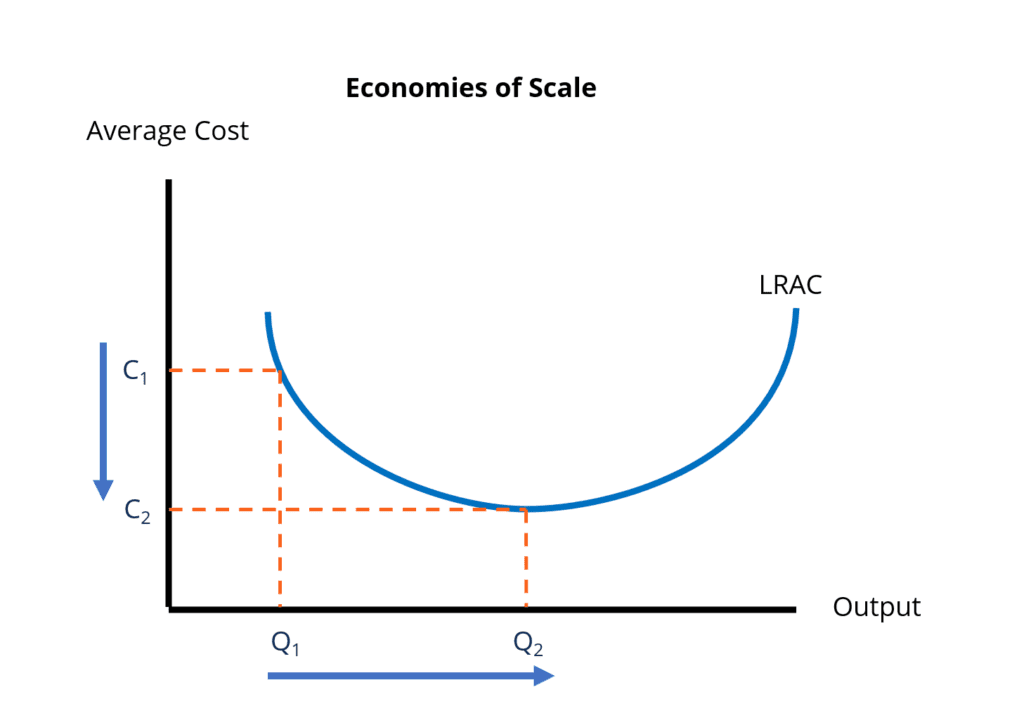
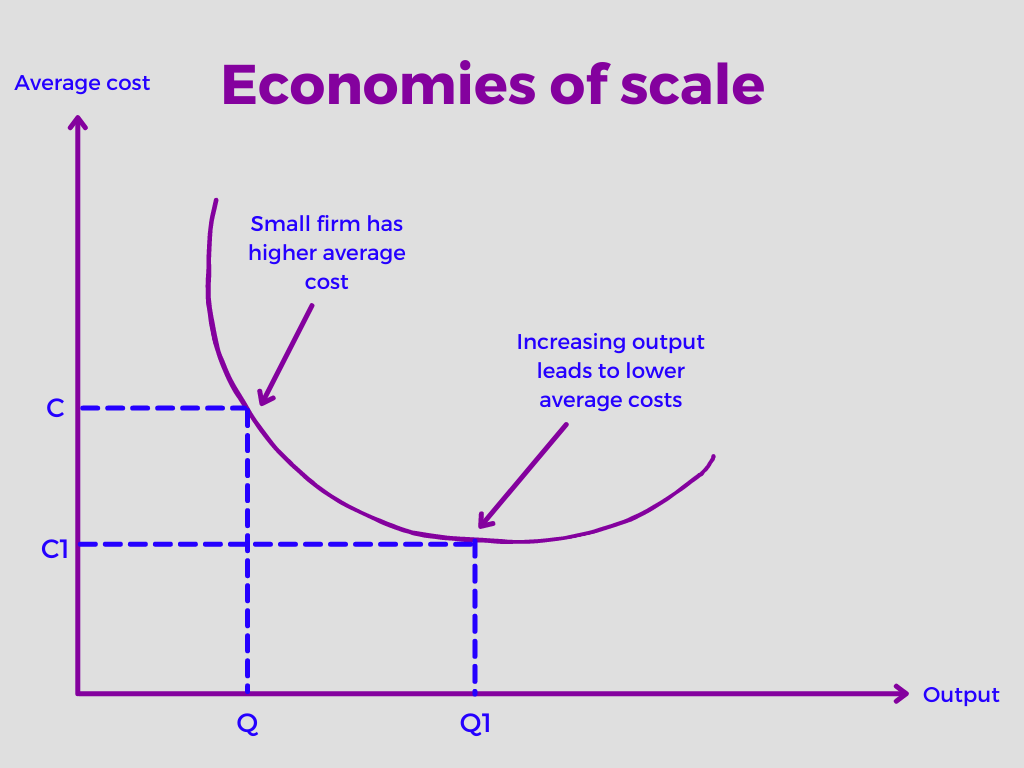
The magic of economies of scale unfolds when fixed costs are distributed across an ever-increasing number of units, effectively reducing the average total cost per unit. While variable costs per unit might stay constant (or even see slight reductions due to bulk purchasing), the significant leverage comes from fixed cost absorption. This reduction in average total cost per unit allows larger firms to potentially charge lower prices than smaller competitors while maintaining healthy profit margins, or to invest more in product development, marketing, or expansion, further solidifying their market position. This financial efficiency is a powerful competitive tool and a key indicator of operational maturity.
Types of Economies of Scale
Economies of scale are not a monolithic concept; they manifest in various forms, broadly categorized into internal and external economies.
Internal Economies of Scale
These are cost savings that arise from the growth of the firm itself. They are unique to a particular business and stem from its own operational efficiency and increased output.
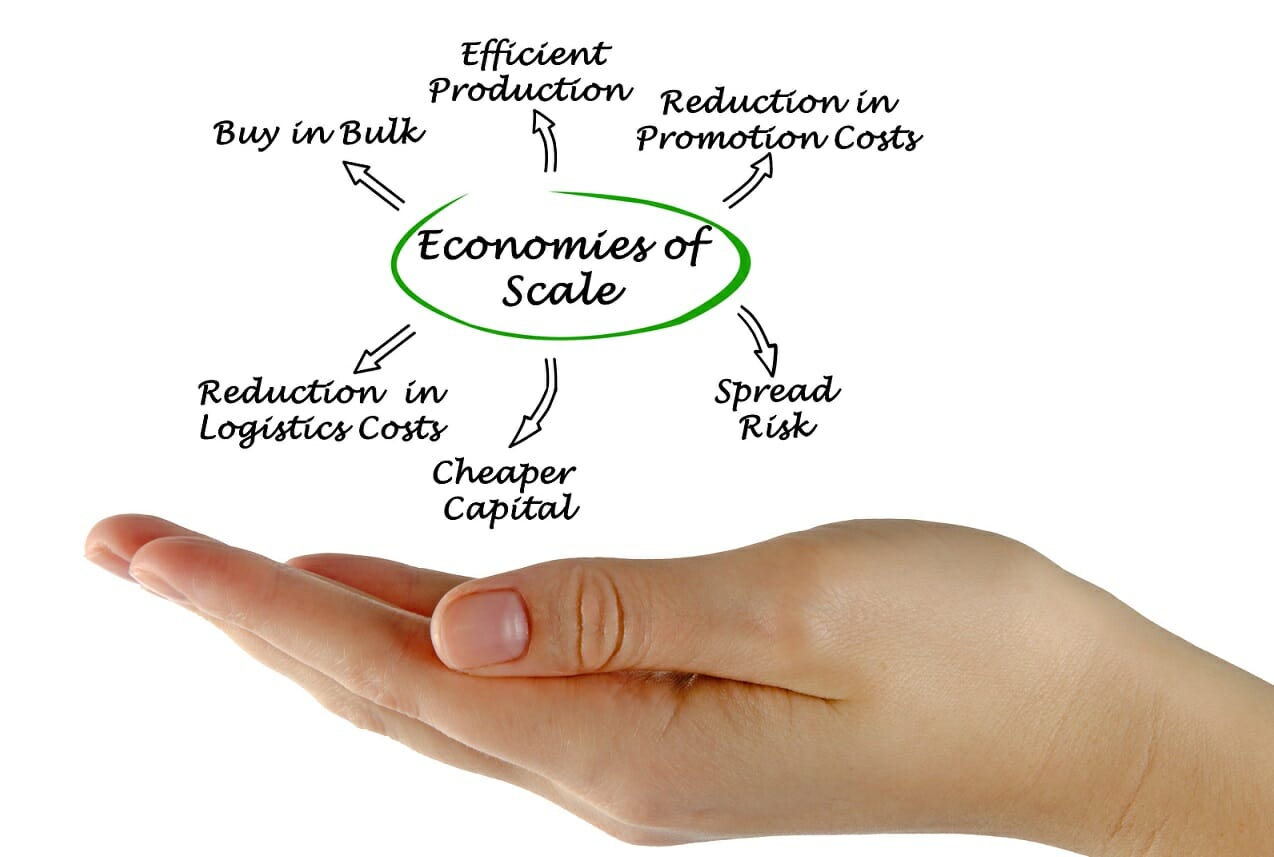
- Technical Economies: These are often the most intuitive. Larger firms can afford to invest in more specialized and efficient machinery or production processes that are not cost-effective for smaller outputs. They can also implement greater division of labor, where workers specialize in specific tasks, leading to higher productivity and lower per-unit labor costs. Furthermore, larger production runs reduce setup costs per unit.
- Managerial Economies: As a business expands, it can employ specialized managers for different departments (e.g., finance, marketing, human resources, logistics). A specialized marketing director, for example, might be more effective than a generalist manager in a smaller firm, and their salary, while a fixed cost, is spread over a much larger volume of sales, reducing the per-unit managerial overhead.
- Financial Economies: Larger firms often have significant advantages in accessing capital. They are typically perceived as less risky by lenders, allowing them to secure loans at lower interest rates. They also have easier access to capital markets, such as issuing bonds or shares, often at lower transaction costs relative to the capital raised. This lower cost of capital directly reduces their overall financing expenses.
- Marketing Economies: The cost of advertising and promoting a product can be substantial. For a large firm, a national advertising campaign might cost millions, but if it’s promoting millions of units, the advertising cost per unit becomes negligible. Smaller firms, selling fewer units, would bear a much higher per-unit marketing cost for an equivalent campaign, or be limited to less impactful, smaller-scale marketing efforts.
- Purchasing/Bulk Buying Economies: Large firms can leverage their significant purchasing power to negotiate discounts on raw materials, components, or services from suppliers. Buying in bulk typically leads to lower prices per unit of input, directly reducing the variable costs per unit of output.
- Risk-Bearing Economies: Diversification of products, markets, or production methods can spread risk. Larger companies are better positioned to weather economic downturns or specific product failures because they have multiple revenue streams or broader market penetration, reducing the impact of adverse events on overall profitability.
External Economies of Scale
Unlike internal economies, external economies of scale benefit an entire industry or cluster of firms within a specific geographic area, rather than just one company’s growth. They arise from factors outside a firm’s direct control.
- Skilled Labor Pool: When an industry concentrates in a particular region (e.g., Silicon Valley for tech, financial district for banking), a specialized labor force develops. Firms in that area benefit from readily available skilled workers, reducing recruitment and training costs.
- Specialized Suppliers and Infrastructure: The concentration of an industry can attract specialized suppliers and support services that cater specifically to that industry’s needs. This can lead to lower input costs, higher quality components, and faster delivery times for all firms in the cluster. Infrastructure improvements (e.g., transportation networks, communication systems) tailored to the industry also benefit all players.
- Knowledge Spillovers: Proximity of firms and individuals in an industry facilitates the sharing of ideas, research findings, and best practices. This “knowledge spillover” can accelerate innovation and improve efficiency across the entire sector, benefiting all participating companies.
Strategic Implications for Businesses and Investors
The presence and pursuit of economies of scale are profoundly influential in business strategy and investment analysis.
Competitive Advantage
Companies that effectively achieve economies of scale gain a significant competitive advantage. Their lower average production costs allow them to:
- Offer more competitive pricing: They can sell products at lower prices than smaller rivals while maintaining healthy profit margins, potentially capturing larger market share.
- Increase profitability: Even if they match competitors’ prices, their lower cost structure translates directly into higher gross and net profit margins.
- Invest in innovation: The cost savings can be reinvested into research and development, further improving products or processes, or into marketing to strengthen brand recognition.
- Create barriers to entry: The substantial capital required to achieve similar scale and cost efficiencies can deter new competitors from entering the market, protecting incumbent firms’ profitability. This “economic moat” is highly valued by investors.
Growth and Expansion Decisions
Understanding economies of scale is central to a company’s growth strategy. Decisions about increasing production capacity, building new plants, expanding into new markets, or engaging in mergers and acquisitions are often driven by the desire to capture greater economies of scale. Firms might seek to consolidate operations to reduce overhead, or expand their customer base to spread marketing and R&D costs over a larger sales volume. Capital budgeting decisions, therefore, often hinge on projections of how new investments will impact the average cost curve.
Investor Perspective
For investors, identifying companies that possess strong economies of scale is a key part of fundamental analysis. Such companies often exhibit:
- Predictable and resilient margins: Their cost advantages provide a buffer against market fluctuations and competitive pressures.
- Sustainable competitive advantage: Economies of scale create a “moat” that protects market share and profitability over the long term.
- High barriers to entry: This limits future competition, supporting long-term growth and returns.
Investors often look for businesses where fixed costs are a significant proportion of total costs and where the market size allows for substantial production volume increases to maximize the spread of these fixed costs. This can lead to higher valuations and more stable long-term returns on investment.
Diseconomies of Scale: The Limits to Growth
While economies of scale offer compelling advantages, growth is not limitless. Beyond a certain point, a company can experience diseconomies of scale, where expanding operations actually leads to an increase in the average cost per unit of output. This signifies that the benefits of scale have been exhausted, and further growth introduces inefficiencies.
The primary causes of diseconomies of scale are often related to managerial and organizational challenges:
- Managerial Inefficiencies: As organizations become very large, coordination and communication can become cumbersome. Bureaucracy can set in, slowing decision-making, increasing administrative costs, and stifling innovation. It becomes harder for top management to monitor and control all aspects of the operation effectively.
- Communication Breakdowns: Large, complex organizations often struggle with effective internal communication. Information can be distorted or lost as it passes through multiple layers of management, leading to errors, delays, and misallocated resources.
- Labor Relations Issues: In very large organizations, individual employees may feel less connected to the company’s overall mission. This can lead to decreased morale, higher rates of absenteeism, increased labor disputes, and reduced productivity, all contributing to higher per-unit costs.
- Loss of Specialization Advantages: While specialization initially drives efficiency, over-specialization can lead to a lack of flexibility. If market conditions change, a highly specialized production line might be difficult and costly to adapt, leading to inefficiencies.
- Resource Scarcity and Logistics: For truly massive operations, securing sufficient raw materials or specialized components can become challenging, potentially driving up input prices. Logistics for distributing products over vast geographical areas can also become disproportionately expensive and complex.
For businesses, understanding the point at which diseconomies of scale begin to outweigh the benefits of further growth is crucial. Strategic planning must involve optimizing scale rather than blindly pursuing endless expansion. The goal is to achieve the optimal scale of production, where the average cost per unit is minimized, thereby maximizing profitability and financial efficiency. This balance is a continuous challenge for business finance and operational management, requiring careful analysis of cost structures and strategic foresight.
aViewFromTheCave is a participant in the Amazon Services LLC Associates Program, an affiliate advertising program designed to provide a means for sites to earn advertising fees by advertising and linking to Amazon.com. Amazon, the Amazon logo, AmazonSupply, and the AmazonSupply logo are trademarks of Amazon.com, Inc. or its affiliates. As an Amazon Associate we earn affiliate commissions from qualifying purchases.