
Economic theories serve as the foundational frameworks for understanding how societies allocate scarce resources. Far from being abstract academic exercises, these theories are indispensable tools for navigating the complex world of money, influencing everything from global financial markets to personal budgeting decisions. They provide lenses through which we can analyze economic phenomena, predict future trends, and formulate strategies in personal finance, investing, and business operations. Grasping the core tenets of various economic schools of thought equips individuals and organizations with the insights needed to make informed financial choices, mitigate risks, and capitalize on opportunities in an ever-evolving financial landscape.

The Bedrock of Financial Understanding
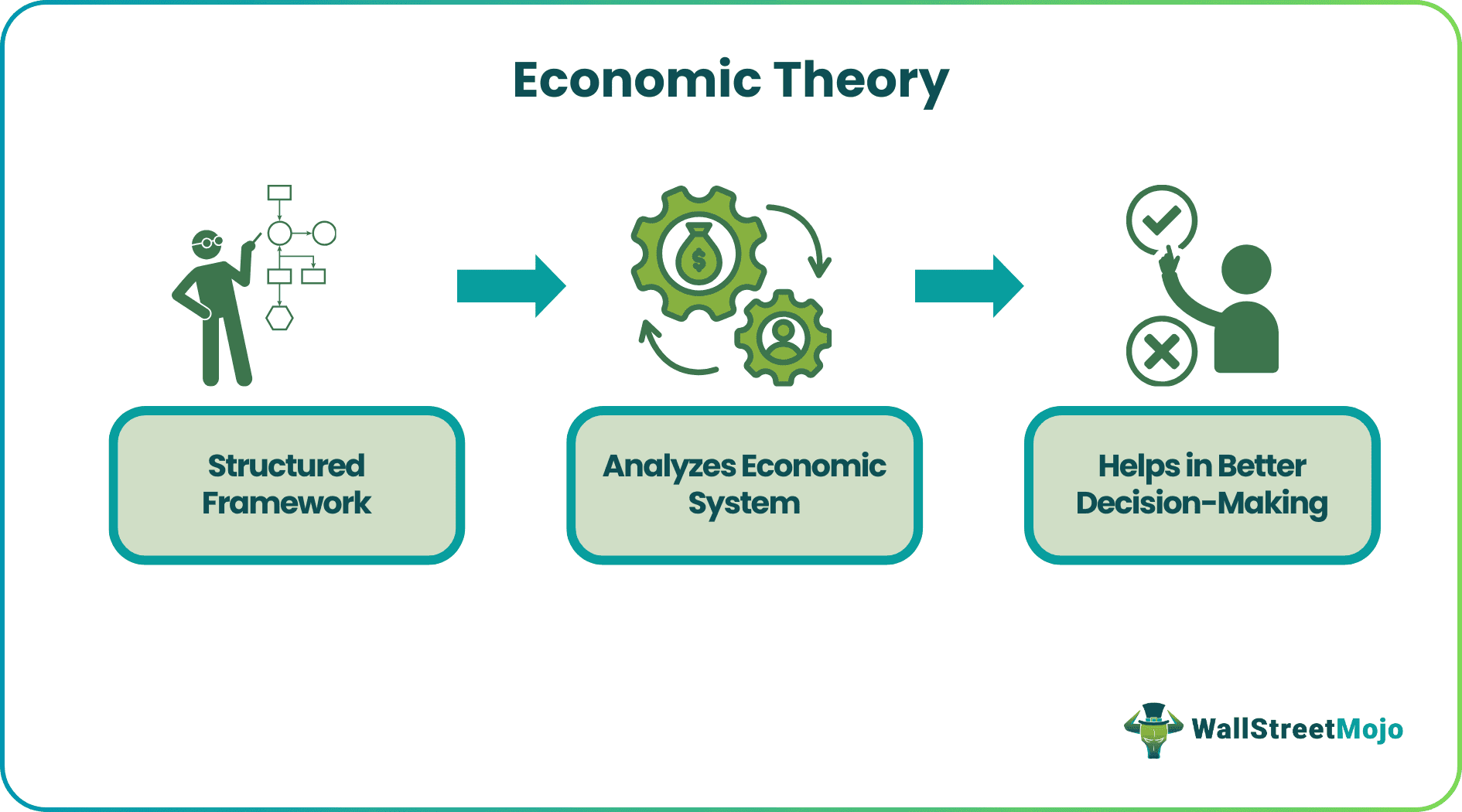
At its core, economics seeks to explain human behavior in the face of scarcity. Economic theories, therefore, are systematic sets of principles and models that describe how individuals, businesses, and governments make choices about resources. For anyone engaged with money, whether managing a personal budget, investing in stocks, or running a business, these theories provide the essential blueprint for decision-making. They offer a structured approach to analyzing market dynamics, understanding the forces that drive prices, and anticipating shifts that can impact financial well-being. Without a theoretical grounding, financial decisions become reactive and speculative, rather than strategic and informed.
Guiding Personal Finance Decisions
Even seemingly simple personal finance choices are implicitly influenced by economic principles. The concept of opportunity cost, for instance, is central to budgeting: every dollar spent on one item is a dollar not available for another, or for saving. Understanding scarcity encourages disciplined saving and investing, recognizing that resources are finite. Microeconomic theories on utility maximization help individuals evaluate how to allocate their income to achieve the greatest satisfaction, whether through consumption or long-term investments. Furthermore, insights from macroeconomics, such as the expected rate of inflation, are crucial for long-term financial planning, dictating how much one needs to save today to maintain future purchasing power for retirement or significant life events. Economic theories provide the rationale behind making trade-offs, prioritizing needs, and planning for a financially secure future.
Informing Investment Strategies
For investors, economic theories are critical for constructing portfolios, assessing risk, and predicting market movements. Theories on market efficiency, for example, suggest that asset prices already reflect all available information, challenging the notion of consistently beating the market without taking on additional risk. This informs strategies like passive investing and diversification. Modern Portfolio Theory (MPT) uses economic models to help investors construct portfolios that maximize expected return for a given level of market risk. Beyond traditional finance, behavioral economics offers insights into the psychological biases that lead investors to make irrational decisions, such as herd mentality or loss aversion. Recognizing these biases allows investors to develop strategies to counteract them, leading to more disciplined and potentially more profitable investment outcomes. Understanding the interplay between supply and demand, interest rates, and currency valuations—all rooted in economic theory—is paramount for navigating bond markets, foreign exchange, and real estate investments.
Shaping Business Finance
Businesses operate within a complex economic ecosystem, and their financial decisions are heavily influenced by economic theories. Pricing strategies are derived from theories of demand elasticity and market structure. Production decisions, including investment in new capital, are guided by theories of production costs and returns to scale. Corporate finance decisions, such as capital budgeting, mergers and acquisitions, and debt management, rely on economic models that assess profitability, risk, and the optimal allocation of financial resources. Understanding macroeconomic forecasts—like projected GDP growth, inflation, and unemployment rates—is vital for strategic business planning, market entry, and anticipating consumer spending patterns. Economic theories provide businesses with the analytical tools to maximize profits, ensure sustainability, and strategically position themselves within competitive markets.
Key Schools of Thought and Their Financial Impact
The field of economics is rich with diverse schools of thought, each offering unique perspectives on how economies function and what interventions (if any) are most effective. For those managing money, understanding these different theoretical approaches is crucial, as they often underpin the policies and market conditions that directly impact financial decisions.
Classical Economics and Free Markets
Originating with Adam Smith, classical economics champions the idea of self-regulating markets guided by an “invisible hand.” It posits that economic efficiency and growth are best achieved through minimal government intervention, free trade, and competition. For the financial world, classical theory implies that markets will naturally gravitate towards equilibrium, making long-term investment in productive assets generally favorable. This perspective underpins the belief in the efficiency of financial markets and suggests that individuals and businesses should be free to pursue their economic interests, driving innovation and wealth creation. Investment strategies based on fundamental analysis often have roots in classical thought, seeking out undervalued assets in the belief that markets will eventually correct.
Keynesianism and Government Intervention
Developed by John Maynard Keynes during the Great Depression, Keynesian economics challenges the classical notion of self-correcting markets. It argues that aggregate demand is the primary driver of economic activity and that governments have a crucial role in stimulating demand through fiscal policy (government spending, taxation) during recessions. From a financial perspective, understanding Keynesianism helps investors and businesses anticipate the impact of government stimulus packages or austerity measures on market sentiment, interest rates, and inflation. For instance, expansionary fiscal policy can lead to increased bond issuance, potentially affecting bond yields and attracting investment into certain sectors, while contractionary policies might signal a tougher environment for corporate earnings.
Monetarism and the Role of Money Supply
Led by Milton Friedman, monetarism emphasizes the critical role of the money supply in influencing inflation and economic growth. Monetarists argue that controlling the amount of money in circulation is the most effective way for central banks to stabilize the economy. For money managers, monetarism highlights the profound impact of central bank policies, such as interest rate adjustments and quantitative easing/tightening. These actions directly affect the cost of borrowing, the return on savings, and currency valuations. Investors tracking central bank announcements and monetary policy decisions are essentially applying monetarist principles to predict future market movements, bond yields, and inflationary pressures, which are vital for asset allocation and risk management.
Behavioral Economics and Investor Psychology
A more recent and increasingly influential school, behavioral economics integrates insights from psychology to explain why economic agents often deviate from purely rational decision-making. It identifies cognitive biases and emotional factors that can lead to market inefficiencies, bubbles, and crashes. For individuals and professional investors, behavioral economics offers a powerful lens to understand market anomalies and their own tendencies. Recognizing biases like “herding,” “anchoring,” “confirmation bias,” or “loss aversion” can help investors avoid common pitfalls, make more disciplined decisions, and potentially exploit market mispricings caused by others’ irrationality. It underscores the importance of a robust investment process that safeguards against emotional impulses.
Supply-Side Economics and Tax Policy
Supply-side economics focuses on stimulating economic growth by increasing the supply of goods and services, often through tax cuts, deregulation, and reduced government spending. The premise is that lower taxes provide incentives for individuals to work more and businesses to invest and produce more, ultimately benefiting the entire economy. For individuals managing their finances and businesses planning their operations, supply-side theory highlights the impact of tax policy on disposable income, investment incentives, and corporate profitability. Understanding potential changes in tax rates can influence decisions regarding savings, capital expenditures, and even the structuring of business ventures or side hustles to maximize after-tax returns.
Economic Models and Financial Forecasting
Economic theories are often formalized into models that provide simplified representations of complex economic realities. These models are not perfect predictors, but they offer invaluable tools for financial forecasting, helping investors, businesses, and policymakers anticipate future trends and assess potential risks and opportunities.
Understanding Market Cycles
Economic models derived from various theories help us understand and interpret the inherent cyclical nature of economies, characterized by periods of expansion, peak, contraction (recession), and trough. By analyzing indicators like GDP growth, unemployment rates, and industrial production through these models, investors can gain insight into where the economy is in its cycle. This understanding is critical for strategic asset allocation, as different asset classes tend to perform better during specific phases of the economic cycle. For example, growth stocks might outperform during expansions, while defensive assets might be favored during contractions.
Predicting Inflation and Interest Rates
Two of the most critical variables for any financial decision are inflation and interest rates. Economic models, drawing heavily from Keynesian and Monetarist theories, are used to forecast these figures. Models consider factors such as money supply, government spending, consumer demand, and global commodity prices to project future inflation. Similarly, predictions for interest rates are derived from models that analyze central bank policy stances, inflationary expectations, and market liquidity. Accurate forecasting of these variables is paramount for bond investors (who rely on interest rate movements), businesses planning debt financing, and individuals saving for retirement, as both inflation and interest rates significantly impact the real return on investments and the cost of capital.
Assessing Risk and Opportunity
Economic models are instrumental in assessing financial risk and identifying opportunities. For instance, general equilibrium models can simulate the impact of various shocks (e.g., oil price spikes, trade wars) on different sectors of the economy, helping businesses and investors gauge potential vulnerabilities in their portfolios or operations. Stress testing of financial institutions, which uses economic models to simulate adverse scenarios, is a key component of financial regulation. Conversely, models can identify emerging growth sectors driven by demographic shifts, technological advancements, or global economic rebalancing, guiding investment towards areas with high potential returns.
Applying Economic Theories in Modern Financial Practices
The insights gleaned from economic theories are not confined to academic discourse; they are actively applied in real-world financial contexts, shaping strategies from individual investment decisions to large-scale business operations and even the structure of online income ventures.
Portfolio Management and Asset Allocation
Professional portfolio managers and individual investors alike utilize economic theories to construct robust portfolios. Concepts from Modern Portfolio Theory (MPT) guide diversification across asset classes to optimize risk-adjusted returns. Understanding market efficiency helps determine whether to pursue active or passive investment strategies. Furthermore, the principles of behavioral economics are increasingly integrated to recognize and mitigate cognitive biases that can lead to suboptimal asset allocation choices, ensuring a more disciplined approach to investing. The analysis of macroeconomic forecasts, rooted in various economic theories, informs decisions on shifting allocations between equities, bonds, real estate, and commodities based on anticipated economic cycles.
Strategic Business Planning
For businesses, economic theories are foundational to strategic planning and financial decision-making. Microeconomic principles of supply, demand, and cost structure inform pricing strategies, production levels, and market entry decisions. Macroeconomic forecasts, derived from models based on Keynesian, Monetarist, or other theories, are crucial for long-term capital budgeting, expansion plans, and anticipating consumer spending trends. For instance, a firm might use demand elasticity to determine the optimal price point for a new product, or economic growth projections to decide whether to invest in new manufacturing facilities, directly impacting its financial health and competitive position.
Navigating Online Income and Side Hustles
Even in the rapidly evolving landscape of online income and side hustles, economic theories provide valuable guidance. The concept of supply and demand is critical for identifying profitable niches for online services or products; high demand coupled with low supply often indicates a lucrative opportunity. Understanding opportunity cost helps individuals allocate their limited time and effort most effectively between different side hustle ventures or between their main job and entrepreneurial pursuits. Platform economics, derived from theories of network effects and market power, helps explain earning potentials on platforms like Uber, Airbnb, or freelancing sites. Recognizing economic trends, such as the growth of the gig economy or shifts in consumer preferences, enables individuals to pivot their online income strategies to maximize earning potential.

Policy Implications for Financial Stability
Governments and central banks rely heavily on economic theories to formulate policies aimed at achieving financial stability, promoting economic growth, and controlling inflation. Monetary policy, guided by theories like Monetarism, uses interest rate adjustments and money supply control to influence credit availability and inflation. Fiscal policy, often influenced by Keynesian ideas, involves government spending and taxation to stabilize the economy. Regulatory frameworks, designed to prevent financial crises and protect consumers, are also informed by economic principles, particularly those related to market failures and systemic risk. For any financial participant, understanding the theoretical underpinnings of these policies is essential for anticipating regulatory changes and their profound impact on markets, investments, and business operations.
aViewFromTheCave is a participant in the Amazon Services LLC Associates Program, an affiliate advertising program designed to provide a means for sites to earn advertising fees by advertising and linking to Amazon.com. Amazon, the Amazon logo, AmazonSupply, and the AmazonSupply logo are trademarks of Amazon.com, Inc. or its affiliates. As an Amazon Associate we earn affiliate commissions from qualifying purchases.