
In the realms of aerospace engineering, automotive design, and industrial automation, few concepts are as fundamental yet as frequently misunderstood as dynamic pressure. While the term might sound like abstract physics, it is the invisible force that keeps airplanes aloft, determines the fuel efficiency of high-speed vehicles, and governs the performance of complex fluid-transport systems. In the context of modern technology, dynamic pressure is not just a variable in an equation; it is a critical data point that informs the development of everything from consumer drones to hypersonic missiles.
Understanding dynamic pressure is essential for anyone involved in technical fields where fluid dynamics—the study of how liquids and gases move—intersect with hardware design and software simulation. By exploring its physical foundations and its diverse technological applications, we can better appreciate the sophisticated engineering that defines our modern world.
Understanding the Physics: The Foundation of Fluid Dynamics
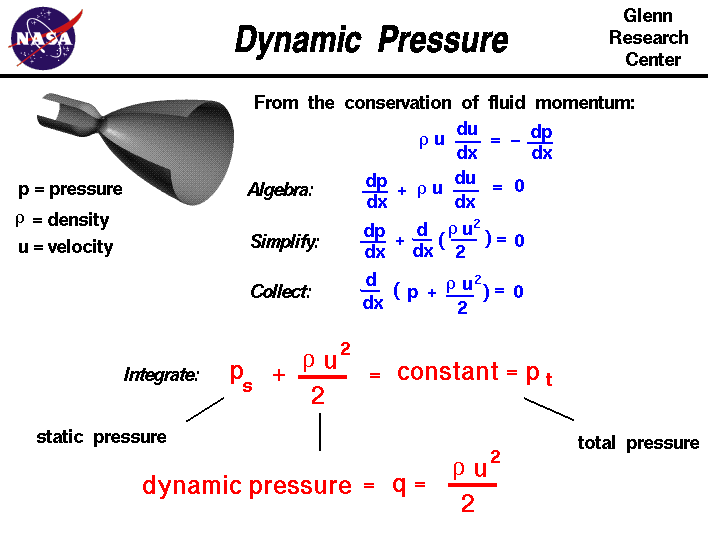
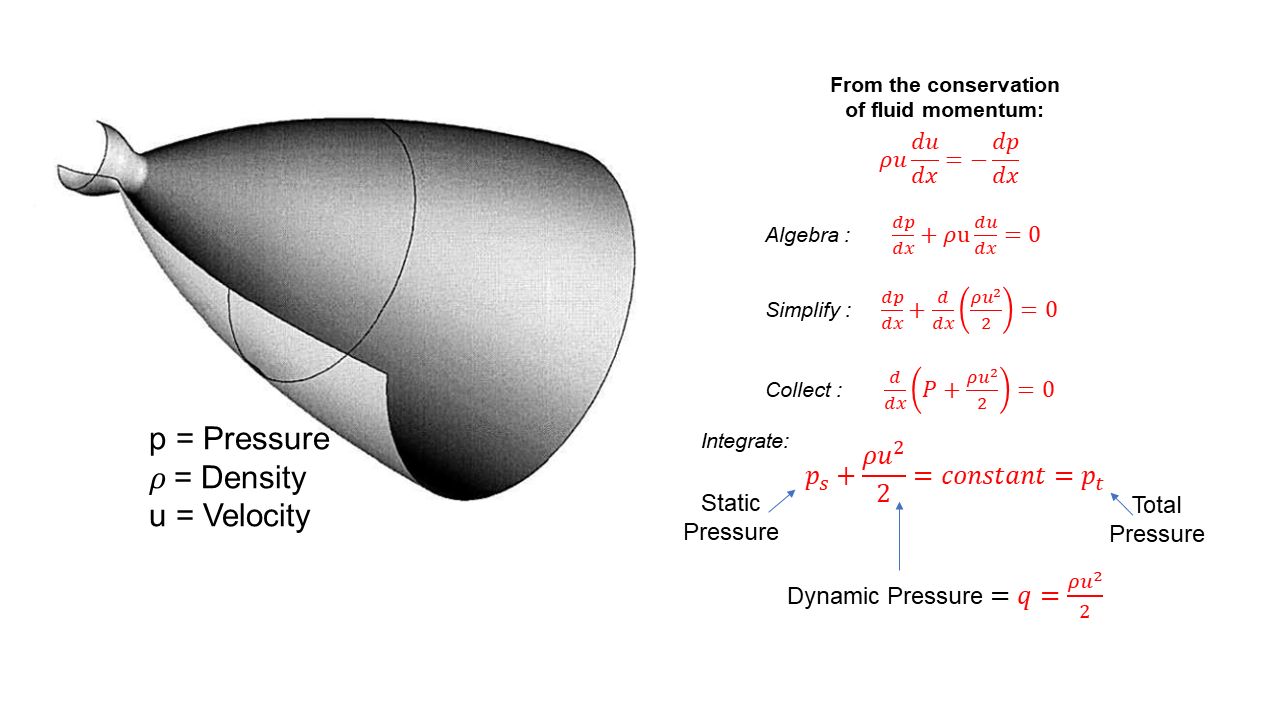
To grasp the technological importance of dynamic pressure, one must first understand its physical definition. In fluid mechanics, dynamic pressure (often represented by the symbol q) represents the kinetic energy per unit volume of a fluid. Whenever a fluid—whether it be air, water, or oil—is in motion, it possesses energy due to its velocity.
The Bernoulli Principle and Kinetic Energy
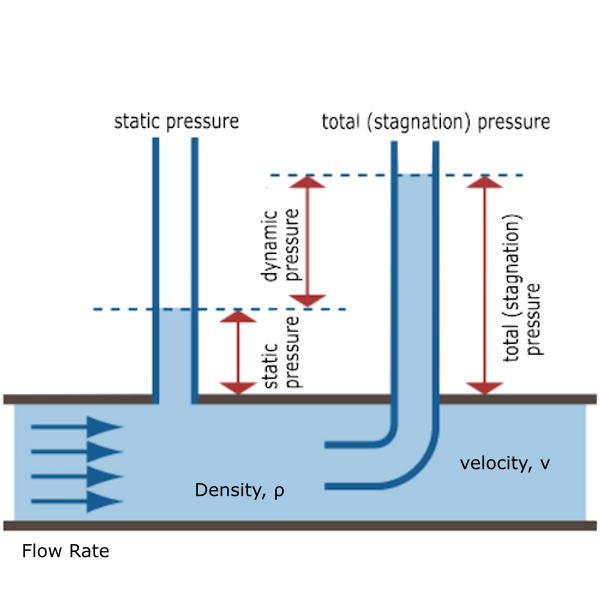
The concept of dynamic pressure is inextricably linked to Bernoulli’s Principle, which states that within a flowing fluid, an increase in speed occurs simultaneously with a decrease in static pressure. Dynamic pressure is the “moving” component of the total pressure in a system. While “static pressure” is the pressure exerted by a fluid at rest (like the air pressure in a balloon), “dynamic pressure” is the pressure generated by the fluid’s movement.
In a technological sense, this is the force you feel when you hold your hand out of a moving car window. The air hitting your hand is being forced to stop, converting its kinetic energy into pressure. This conversion is the bedrock of how we measure speed and lift in technical environments.
The Mathematical Framework: Defining q
The mathematical formula for dynamic pressure is elegantly simple:
q = ½ρv²
Where:
- q is the dynamic pressure.
- ρ (rho) is the density of the fluid.
- v is the velocity of the fluid.
From a tech perspective, the “v-squared” component is the most significant. Because velocity is squared, even a small increase in speed results in a massive increase in dynamic pressure. This exponential relationship is why engineering challenges become significantly more difficult as speeds increase, requiring more robust sensors, advanced materials, and precise software modeling to manage the resulting forces.
Dynamic Pressure in Aerospace and Aviation Technology
Perhaps no industry relies more heavily on the mastery of dynamic pressure than aerospace. For an aircraft to fly, engineers must balance dynamic pressure against gravity and drag. In this sector, dynamic pressure is more than a calculation; it is a vital metric for pilot safety and structural integrity.
Flight Control and Pitot-Static Systems
Every modern aircraft, from a Boeing 787 to a tactical fighter jet, utilizes a “Pitot-static system” to determine its airspeed. This system relies entirely on measuring dynamic pressure. A Pitot tube—a small, forward-facing sensor—captures the “total pressure” (the sum of static and dynamic pressure), while static ports measure the ambient pressure.
The onboard computer or flight instrument subtracts the static pressure from the total pressure to isolate the dynamic pressure. This value is then converted into “Indicated Airspeed” (IAS). Without the ability to accurately sense dynamic pressure, pilots would have no way of knowing if they are flying fast enough to maintain lift or so fast that they risk structural failure. In high-tech fly-by-wire systems, these sensors provide the primary data inputs that allow flight computers to make micro-adjustments to control surfaces in real-time.
High-Speed Aerodynamics: From Subsonic to Supersonic
As technology pushes vehicles toward supersonic and hypersonic speeds, dynamic pressure becomes a formidable barrier. At these velocities, the air cannot move out of the way fast enough, leading to massive pressure buildups and intense frictional heating.
Tech firms specializing in “Max Q” (Maximum Dynamic Pressure) analysis focus on the point during a rocket launch where the vehicle experiences the greatest structural stress. SpaceX and NASA launches frequently mention “Max Q” because it is the moment when the combination of atmospheric density and the rocket’s increasing velocity creates the highest possible load. Engineering software must precisely predict this moment to ensure the rocket’s hull does not collapse under the weight of the air it is pushing through.
Industrial Applications and Smart Sensor Integration
Beyond the cockpit of a jet, dynamic pressure is a key variable in industrial “Smart Tech” and the Internet of Things (IoT). As factories and cities become more automated, the need to monitor fluid and gas flow with high precision has led to a revolution in sensor technology.
Automotive Engineering: Optimizing Drag and Efficiency
In the automotive world, especially with the rise of Electric Vehicles (EVs), aerodynamic efficiency is paramount to extending battery range. Modern car designers use the concept of dynamic pressure to shape vehicles that “slip” through the air.
High-tech wind tunnels utilize arrays of dynamic pressure sensors to map how air moves over a car’s body. By identifying areas of high dynamic pressure (like the front grille) and low pressure (like the rear wake), engineers can implement active aero-tech. Some modern luxury cars feature active shutters that close at high speeds to redirect airflow, reducing dynamic pressure drag and increasing the vehicle’s efficiency by up to 10%.
HVAC and Fluid Transport Systems
In “Smart Building” technology, dynamic pressure is used to optimize heating, ventilation, and air conditioning (HVAC) systems. Sensors located within ductwork measure dynamic pressure to calculate flow rates. If a filter becomes clogged, the dynamic pressure changes, alerting the building’s maintenance software via the cloud. This allows for predictive maintenance, saving energy and reducing the mechanical wear and tear on the system. Similarly, in the oil and gas tech sector, dynamic pressure sensors detect leaks or blockages in pipelines by monitoring the kinetic energy of the moving product.
The Role of Computational Fluid Dynamics (CFD) Software
One of the most significant technological leaps in recent decades is the ability to simulate dynamic pressure without ever building a physical prototype. This is achieved through Computational Fluid Dynamics (CFD) software.
Simulating Pressure Fields in Virtual Environments
Software suites like ANSYS, Siemens Star-CCM+, and OpenFOAM allow engineers to create digital twins of their designs. By inputting the variables of density and velocity, these programs calculate the dynamic pressure at every single point on a 3D model.
This tech is used to design everything from the cooling systems in gaming laptops to the blades of a jet engine. In a laptop, the fan must generate enough dynamic pressure to push air through dense heat sinks. CFD software allows tech designers to visualize “pressure drops” and optimize fan blade geometry to maximize cooling while minimizing noise—all before a single piece of plastic is molded.
Real-time Monitoring and IoT Feedback Loops
We are currently seeing a transition from static simulations to real-time digital twins. By integrating dynamic pressure sensors with IoT platforms, engineers can monitor the real-world performance of a bridge, a turbine, or a vehicle and compare it to the CFD model in real-time. If the dynamic pressure readings deviate from the predicted model, the system can automatically adjust parameters—such as slowing down a motor or changing the pitch of a blade—to prevent damage. This marriage of physics and software is the definition of “Industry 4.0.”
Future Frontiers: Dynamic Pressure in Next-Gen Tech
As we look toward the future, the mastery of dynamic pressure will be at the heart of several emerging technological revolutions. From sustainable energy to global logistics, the way we manage the kinetic energy of fluids will dictate our progress.
Hypersonic Travel and Thermal Management
The next frontier of commercial and military aviation is hypersonic travel (Mach 5 and above). At these speeds, dynamic pressure is so high that air behaves more like a plasma than a gas. The tech required to survive these conditions involves “regenerative cooling,” where fuel is circulated through the skin of the aircraft to soak up the heat generated by extreme dynamic pressure. Developing materials and sensors that can function in this high-pressure, high-heat environment is currently one of the most well-funded areas of tech research.
Renewable Energy: Wind Turbine Efficiency
In the green tech sector, dynamic pressure is what allows us to harvest energy from the wind. A wind turbine’s blades are essentially high-tech wings designed to capture the dynamic pressure of the wind and convert it into rotational torque.
Next-generation turbines are incorporating “smart blades” equipped with sensors that measure dynamic pressure in real-time. These blades can actually change their shape or angle (morphing-wing tech) to adapt to changing wind speeds. By maximizing the capture of dynamic pressure during low winds and shedding it during storms to prevent damage, these technological advances are making wind energy more reliable and cost-effective than ever before.
In conclusion, dynamic pressure is far more than a fundamental principle of physics. It is a critical driver of innovation across the entire spectrum of modern technology. From the sensors that guide our planes to the software that designs our cars, understanding and manipulating the “pressure of motion” allows us to build faster, safer, and more efficient machines. As we continue to push the boundaries of speed and efficiency, the role of dynamic pressure in tech will only continue to grow.
aViewFromTheCave is a participant in the Amazon Services LLC Associates Program, an affiliate advertising program designed to provide a means for sites to earn advertising fees by advertising and linking to Amazon.com. Amazon, the Amazon logo, AmazonSupply, and the AmazonSupply logo are trademarks of Amazon.com, Inc. or its affiliates. As an Amazon Associate we earn affiliate commissions from qualifying purchases.