
In the landscape of modern digital entertainment and interactive media, the term “Dragonborn” has transcended its origins in tabletop role-playing games to become a cornerstone of technological achievement in game design and virtual identity. While the casual observer might view the Dragonborn simply as a mythical race or a heroic protagonist, technologists and software developers recognize it as a complex synthesis of procedural generation, advanced rendering techniques, and sophisticated artificial intelligence. To understand what a Dragonborn is in the 21st century, one must look beyond the lore and examine the underlying frameworks that allow such a concept to exist within high-fidelity virtual worlds.
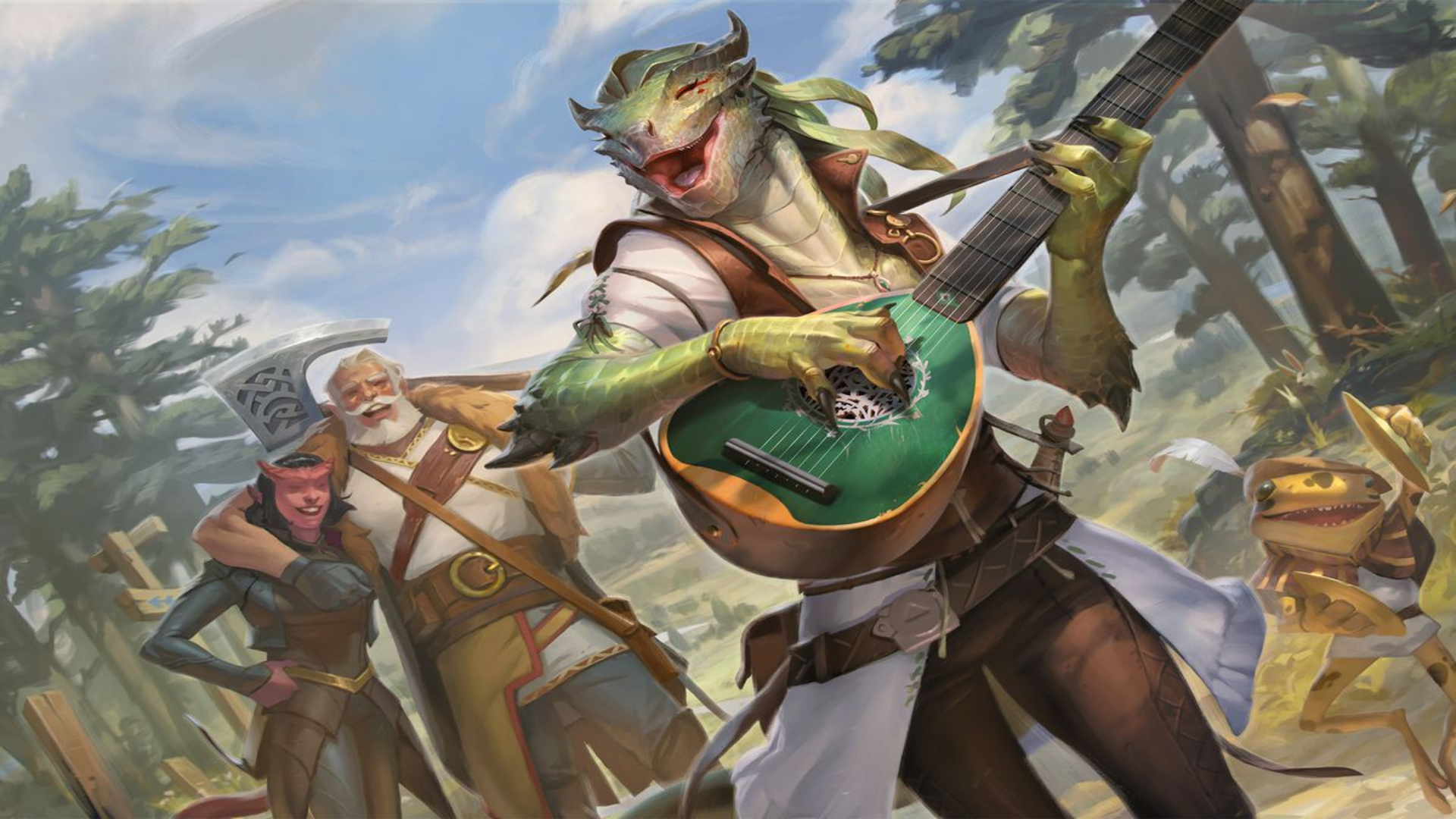
The Architecture of Virtual Identity: Defining the Dragonborn in Modern Gaming
At its core, the Dragonborn represents a pinnacle of player-character architecture. In the context of software engineering, creating a “Dragonborn” involves the integration of various assets—meshes, textures, and skeletal rigs—into a cohesive, interactive entity. This process is far more complex than rendering a static NPC (non-player character); it requires a dynamic system capable of reflecting player choices in real-time.
From Text to Texture: The Rendering Evolution
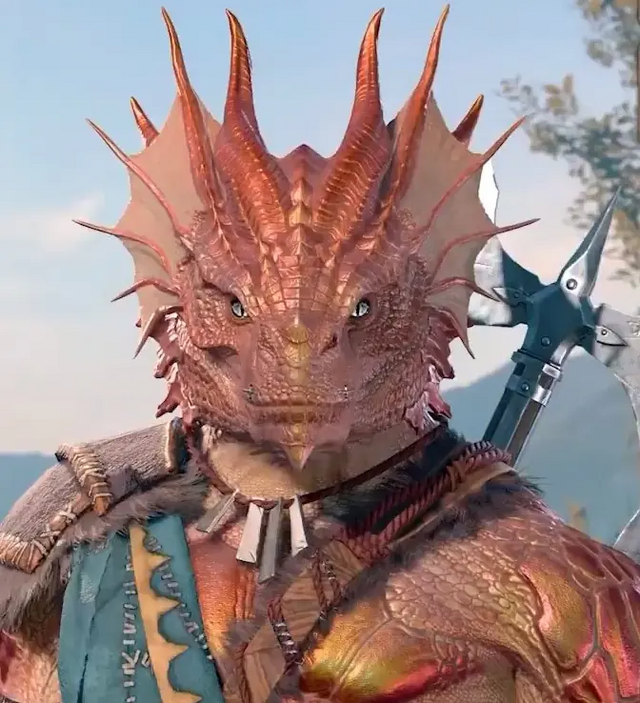
The transition of the Dragonborn from text-based descriptions in early manuals to high-definition 3D models highlights the rapid advancement of GPU (Graphics Processing Unit) technology. Modern iterations of these characters utilize PBR (Physically Based Rendering) to simulate how light interacts with draconic scales versus metallic armor. This involves complex shaders that calculate subsurface scattering—the way light penetrates a surface before being reflected—to give skin and scales a lifelike appearance. For a developer, the “Dragonborn” is a collection of high-resolution displacement maps and normal maps that must be optimized to run at 60 frames per second across various hardware configurations.
Procedural Generation and Character Customization
One of the most significant technological feats associated with the Dragonborn is the depth of the character customization engines. These systems rely on procedural generation and morph targets to allow millions of unique iterations of a single race. When a user adjusts the “snout length” or “eye color” of their Dragonborn, the engine is performing real-time vertex manipulation. This level of granular control is powered by robust data structures that store player parameters and apply them to a base skeletal mesh, ensuring that regardless of the aesthetic choices, the character’s animations—driven by inverse kinematics—remain fluid and anatomically plausible.
The Core Tech Behind the Legend: Game Engines and Scripting
The functionality of a Dragonborn, particularly in titles like The Elder Scrolls V: Skyrim, is a testament to the power of proprietary game engines. Whether it is Bethesda’s Creation Engine or the industry-standard Unreal Engine 5, the “Dragonborn” serves as a vessel for testing the limits of scripting and environmental interaction.
Scripting the “Thu’um”: Mechanics of Interaction
In many digital iterations, the Dragonborn is defined by the ability to utilize “Shouts” or specialized magic. From a software perspective, these are scripted events triggered by specific user inputs. However, the complexity lies in how these scripts interact with the game world’s global state. A “Unrelenting Force” shout is not just an animation; it is a physics impulse call. The engine must calculate the vector of the force, identify all physics-enabled objects within a specific frustum (the field of view), and apply the appropriate velocity while accounting for mass and friction. This requires a high-performance physics engine, such as Havok, to manage hundreds of simultaneous calculations without crashing the system.
Physics Engines and Dragon Combat Systems
The interaction between a Dragonborn and a dragon is one of the most resource-intensive scenarios in modern gaming tech. This “AI vs. Player” dynamic involves complex navigation meshes (NavMesh) that tell the dragon where it can land and fly, and collision detection systems that ensure the Dragonborn’s sword actually “hits” the dragon’s hitbox. The technology must bridge the gap between skeletal animation (the movement of the characters) and collision geometry (the invisible boxes used for physics calculations). When these two systems are perfectly synchronized, the result is an immersive experience that masks the millions of lines of C++ or C# code running in the background.
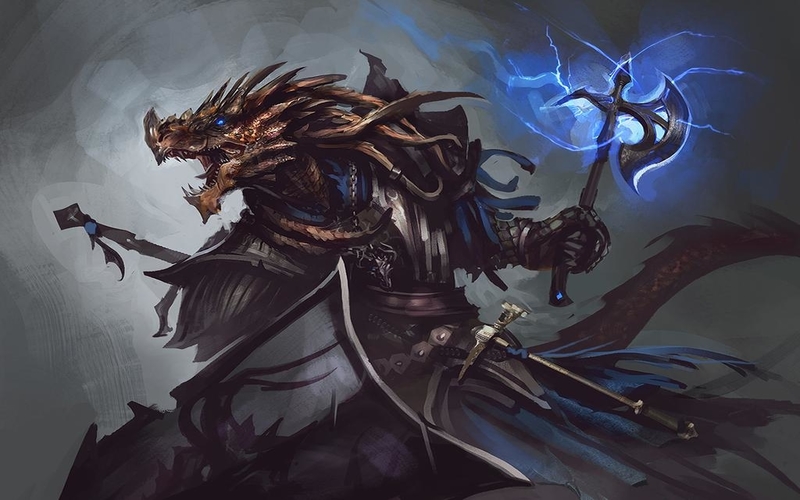
Artificial Intelligence and the Future of Dragonborn NPCs
As we move toward the next generation of digital interaction, the concept of the Dragonborn is being revolutionized by Artificial Intelligence (AI) and Machine Learning (ML). We are moving away from pre-determined dialogue trees toward a future where a Dragonborn NPC can think, react, and speak autonomously.
Large Language Models (LLMs) and Dynamic Dialogue
Integrating Large Language Models (LLMs) into the persona of a Dragonborn allows for unprecedented levels of immersion. Instead of selecting from three pre-written responses, players can engage in natural language processing (NLP) driven conversations. The “Dragonborn” becomes an AI agent capable of understanding context, sentiment, and intent. This tech stack involves a local or cloud-based API that processes the player’s voice or text input, generates a response based on the character’s “personality” parameters, and uses text-to-speech (TTS) synthesis to deliver the line in a voice that matches the character’s draconic or humanoid nature.
Behavioral Trees and Adaptive AI in Open Worlds
Beyond dialogue, the AI governing a Dragonborn’s behavior in an open-world environment utilizes complex behavioral trees. These are hierarchical structures that dictate how an entity reacts to environmental stimuli. If a Dragonborn encounters a hostile faction, the AI must decide between aggression, stealth, or retreat based on a set of weighted variables (health, weapon tier, proximity to allies). Modern tech allows these behavioral trees to be “adaptive,” meaning the AI can learn from player patterns, making the digital Dragonborn feel less like a programmed script and more like a sentient digital being.
Security and Sovereignty: The Dragonborn in the Metaverse and Web3
As the digital landscape shifts toward the Metaverse and decentralized platforms, the “Dragonborn” is evolving into a portable digital asset. This transition introduces new technological challenges regarding digital security, interoperability, and ownership.
Interoperability and Cross-Platform Identity
In a truly persistent digital universe, a user would want to take their “Dragonborn” identity from one software environment to another. This requires high-level interoperability—a technological standard where 3D assets can be read across different engines (e.g., moving a character from Unity to Unreal). Standards like USD (Universal Scene Description) and glTF are at the forefront of this movement. The Dragonborn, in this context, is a standardized file package containing all the metadata, textures, and rigging data necessary to recreate the persona in any compatible virtual space.
Protecting Intellectual Property in a Decentralized Tech Landscape
With the rise of Web3, the concept of a “Dragonborn” can be tied to a non-fungible token (NFT) or a similar blockchain-based identifier. This provides a technological solution to the problem of digital scarcity and ownership. By minting a specific Dragonborn character on a ledger, the user gains “digital sovereignty.” However, this also necessitates robust digital security measures to prevent “asset-jacking” or unauthorized cloning of the character’s unique attributes. From a brand and tech perspective, companies like Bethesda or Wizards of the Coast must navigate how to protect their trademarked “Dragonborn” IP while allowing users to utilize these assets in decentralized, user-generated environments.
Conclusion: The Digital Legacy of the Dragonborn
What is a Dragonborn? In the tech industry, it is a sophisticated case study in the convergence of graphics, physics, AI, and data security. It is a testament to how far we have come from the early days of 8-bit sprites to the current era of hyper-realistic, AI-driven avatars. The Dragonborn is no longer just a character in a story; it is a highly engineered digital product that continues to push the boundaries of what is possible in software development.
As we look toward the future, the technologies developed to bring the Dragonborn to life—from real-time ray tracing to neural-network-driven NPC behavior—will undoubtedly spill over into other sectors. The same rendering techniques used for draconic scales are being used in medical imaging and architectural visualization. The AI frameworks developed for heroic combat are being adapted for autonomous systems and virtual assistants. In defining the Dragonborn, we are ultimately defining the future of our digital reality, proving that the myths of the past are the technological milestones of tomorrow.
aViewFromTheCave is a participant in the Amazon Services LLC Associates Program, an affiliate advertising program designed to provide a means for sites to earn advertising fees by advertising and linking to Amazon.com. Amazon, the Amazon logo, AmazonSupply, and the AmazonSupply logo are trademarks of Amazon.com, Inc. or its affiliates. As an Amazon Associate we earn affiliate commissions from qualifying purchases.