
When the evening news anchor announces that “the market is up today,” they are almost invariably referring to the Dow Jones Industrial Average (DJIA). Often referred to simply as “the Dow,” this index is one of the oldest, most famous, and most frequently cited indicators of the U.S. stock market’s health. For the modern investor, understanding the Dow is not just about tracking a number; it is about understanding the pulse of the American corporate landscape and how the performance of a few elite companies can influence global financial sentiment.
In the realm of personal finance and investing, the Dow serves as both a historical record and a real-time barometer. Despite the rise of more complex indices like the S&P 500 or the tech-heavy Nasdaq, the Dow remains a cornerstone of financial discourse. This article explores the mechanics, history, and strategic importance of the Dow Jones Industrial Average, providing investors with the insights needed to navigate the complexities of the stock market.
What is the Dow Jones Industrial Average (DJIA)?
At its core, the Dow Jones Industrial Average is a stock market index that tracks 30 large, publicly owned blue-chip companies trading on the New York Stock Exchange (NYSE) and the Nasdaq. It was designed to provide a snapshot of the health of the U.S. economy through the lens of its most significant industrial leaders.
Origins and History of the Index
The index was created in 1896 by Charles Dow, the founder of The Wall Street Journal, and his business partner Edward Jones. Originally, the index consisted of just 12 companies, primarily in the industrial sector—railroads, cotton, gas, sugar, tobacco, and oil. Of the original 12, only General Electric remained in the index for over a century before being removed in 2018.
The Dow’s evolution mirrors the shift in the American economy. While it started with “smokestack” industries, today it includes giants in technology, healthcare, retail, and financial services. This transition ensures that the index remains relevant to the contemporary economic environment.
The Components: How the 30 Blue-Chip Stocks are Chosen
Unlike other indices that use a rigid mathematical formula based on market capitalization, the components of the Dow are selected by a committee at S&P Dow Jones Indices. There are no definitive rules for inclusion, but companies are generally added if they have an excellent reputation, demonstrate sustained growth, and are of interest to a large number of investors.
The term “Blue-Chip” is synonymous with Dow components. These are companies like Apple, Microsoft, Coca-Cola, and Goldman Sachs—firms that are leaders in their respective industries and are known for their stability and reliability. Because there are only 30 stocks, the inclusion or removal of a company is a major financial event that often signals a shift in the broader economy’s direction.
Price-Weighted vs. Market-Cap Weighted Indexes
One of the most unique—and sometimes controversial—aspects of the Dow is that it is a price-weighted index. In a price-weighted system, the index’s value is determined by the share prices of its component stocks rather than their total market value (market capitalization).
In a market-cap-weighted index like the S&P 500, a company like Apple has a much larger influence because its total valuation is in the trillions. In the Dow, a company with a higher share price (regardless of its total company size) has a greater impact on the index’s daily movement. To account for stock splits and dividends, the sum of the prices is divided by the “Dow Divisor,” a continuously adjusted figure that maintains the index’s historical continuity.
How the Dow Influences Global Financial Markets
The Dow is more than just a domestic number; it is a psychological anchor for investors worldwide. When the Dow moves significantly, it sets the tone for trading sessions in London, Tokyo, and Hong Kong.
The Dow as an Economic Barometer
Because the Dow consists of companies that provide essential goods and services—ranging from pharmaceuticals (Amgen) to consumer credit (Visa)—its performance reflects the spending power and confidence of the American consumer. If the Dow is trending upward, it generally suggests that corporate earnings are strong and the economy is expanding. Conversely, a prolonged decline in the Dow often precedes or confirms an economic recession, influencing policy decisions by the Federal Reserve and other governing bodies.
Impact on Investor Sentiment and Behavior
The Dow is the “face” of the stock market for the general public. When headlines scream about a 1,000-point drop in the Dow, it creates a sense of urgency that can lead to panic selling. Professional investors use the Dow to gauge “market sentiment.” If the Dow is outperforming other indices, it may indicate a flight to safety, as investors pour money into established blue-chip stocks during times of uncertainty. Understanding this sentiment helps personal investors decide when to hold steady and when to rebalance their portfolios.
Correlation with Other Major Indices
While the Dow, S&P 500, and Nasdaq often move in the same direction, the degree of movement varies. The Dow is generally less volatile than the Nasdaq because it lacks the heavy concentration of high-growth, high-risk tech startups. However, over long periods, the Dow shows a high correlation with the S&P 500. Investors monitor these correlations to identify “divergence”—moments where one index rises while another falls—which can signal a rotation of capital from one sector (like tech) to another (like industrials or value stocks).
Interpreting the Numbers: Points vs. Percentages
To the uninitiated, the Dow’s movements can be confusing. Seeing the Dow “up 400 points” sounds massive, but in the context of modern finance, the percentage change is the figure that truly matters.
Why a 1,000-Point Drop Isn’t What It Used to Be
In the 1980s, a 100-point drop in the Dow would have been a national catastrophe because the index was trading at a much lower total value. Today, with the Dow trading in the tens of thousands, a 100-point move is less than 1% of the total value.
Investors must train themselves to look at the percentage change. A 2% move in the Dow is significant regardless of whether the index is at 10,000 or 40,000. Focusing on points is often a tactic used by news outlets to create “clickbait” headlines; focusing on percentages is the hallmark of a disciplined investor.
The Significance of “Closing Prices” and Daily Volatility
The “Close” is the final price at which the Dow is recorded at the end of the trading day (4:00 PM EST). This number is used by mutual funds to calculate their Net Asset Value (NAV) and is the benchmark for daily performance. However, the Dow fluctuates wildly during the day. This “intraday volatility” is often driven by breaking news, earnings reports, or geopolitical events. For long-term investors, the intraday noise is usually less important than the long-term trend of the closing prices.
The Dow Divisor and Market Liquidity
As mentioned earlier, the Dow Divisor is a mathematical constant used to smooth out the effects of stock splits. If a Dow company undergoes a 2-for-1 stock split, its share price halves. Without the Divisor, the Dow would appear to crash. The Divisor ensures that the index reflects the actual value of the investment rather than just the nominal price change. This technical detail is vital for maintaining the liquidity and reliability of the index as a trading instrument.
Criticisms and Limitations of the Dow
Despite its prestige, the Dow is not without its critics. Many financial analysts argue that it is an antiquated tool that does not provide a full picture of the modern financial world.
The Small Sample Size Debate
The most common criticism of the Dow is its size. Can 30 companies truly represent an economy with thousands of public firms? Critics argue that the S&P 500, which tracks 500 companies, provides a much broader and more accurate representation of market health. Because the Dow is limited to 30 stocks, it can be heavily skewed by the poor performance of just one or two companies, even if the rest of the market is doing well.
Why Price Weighting is Often Questioned
Most modern indices use market-cap weighting because it reflects the actual size of the companies. In the Dow’s price-weighted system, a $100 stock has twice the influence of a $50 stock, even if the $50 stock’s company is five times larger in total market value. This can lead to situations where a company’s internal corporate actions (like a stock split) change its influence on the index, which some see as an arbitrary way to measure economic strength.
Excluding Sectors: Does the Dow Miss the Full Picture?
For a long time, the Dow was slow to include technology and service-based companies. While it has caught up significantly, it still lacks the granularity of sector-specific indices. It does not include utilities or transportation companies (which are covered by separate Dow Jones indices). For an investor looking for exposure to small-cap growth or emerging technologies, the Dow is a poor primary metric.
How to Use the Dow in Your Personal Investment Strategy
While the Dow is an index, you cannot “buy” the index itself. However, there are several ways to use the Dow to enhance your personal finance strategy.
Tracking Market Trends Over Long Horizons
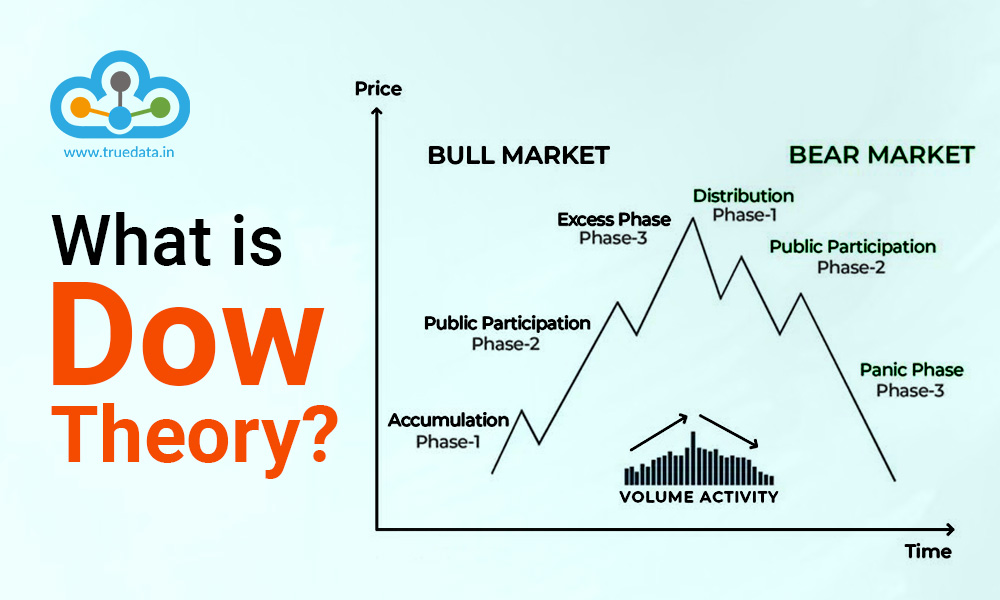
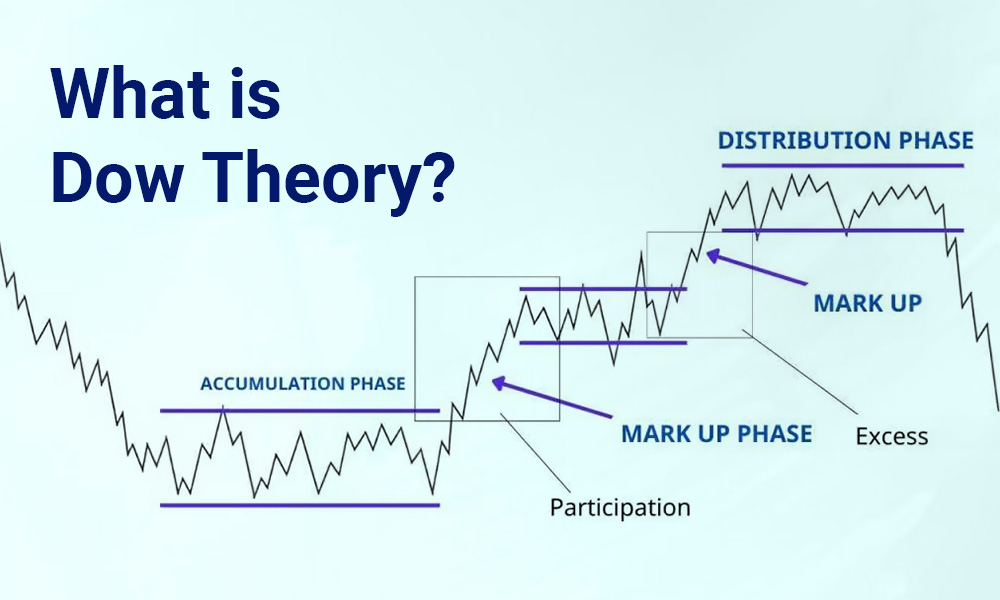
The Dow is excellent for identifying long-term “Secular Bull Markets” (long periods of rising prices) and “Secular Bear Markets” (long periods of falling prices). By looking at a 10-year or 20-year chart of the Dow, investors can see the resilience of the U.S. economy and the power of compounding. It serves as a reminder that despite short-term crashes, the long-term trajectory of established American companies has historically been upward.
Investing in the Dow via ETFs and Index Funds
For investors who want to mirror the performance of the Dow, the most popular method is through Exchange-Traded Funds (ETFs). The SPDR Dow Jones Industrial Average ETF Trust (Ticker: DIA), often called “Diamonds,” is designed to track the index exactly. By purchasing shares of an ETF like DIA, an investor gains instant diversification across 30 of the world’s most stable and profitable companies. This is often a preferred strategy for “Value” investors who prioritize dividends and stability over high-risk growth.
Using the Index to Diversify Your Portfolio
The Dow should rarely be an investor’s only metric. A sophisticated financial strategy involves using the Dow as a “Value” or “Large-Cap” anchor while diversifying with other funds that cover small-cap stocks, international markets, and bonds. By understanding what is—and isn’t—in the Dow, you can identify gaps in your portfolio. For instance, if your portfolio is heavy on the Dow, you might be under-exposed to emerging tech or international growth, prompting you to seek out complementary investments.

Conclusion
“The Dow” is more than just a number on a screen; it is a storied institution that reflects the history, growth, and resilience of the American economy. While it has its flaws—notably its small sample size and price-weighting methodology—its cultural and financial significance is undeniable.
For the individual investor, the Dow serves as a vital tool for gauging market sentiment and accessing some of the most stable companies in the world. By looking beyond the daily point fluctuations and understanding the underlying mechanics of the index, you can use the Dow Jones Industrial Average to build a more informed, robust, and successful investment portfolio. Whether you are a seasoned trader or just starting your journey in personal finance, keeping an eye on the Dow is an essential part of staying connected to the global engine of wealth creation.
aViewFromTheCave is a participant in the Amazon Services LLC Associates Program, an affiliate advertising program designed to provide a means for sites to earn advertising fees by advertising and linking to Amazon.com. Amazon, the Amazon logo, AmazonSupply, and the AmazonSupply logo are trademarks of Amazon.com, Inc. or its affiliates. As an Amazon Associate we earn affiliate commissions from qualifying purchases.