
The Dow Jones Industrial Average (DJIA), often referred to simply as “the Dow,” stands as one of the most watched barometers of the American economy. For over a century, investors, analysts, and everyday citizens have looked to this index to gauge the health of the financial markets. When people ask, “What is the Dow Jones highest ever?” they are usually looking for a specific number, but the answer is a moving target that reflects the ongoing growth, resilience, and evolution of global commerce.

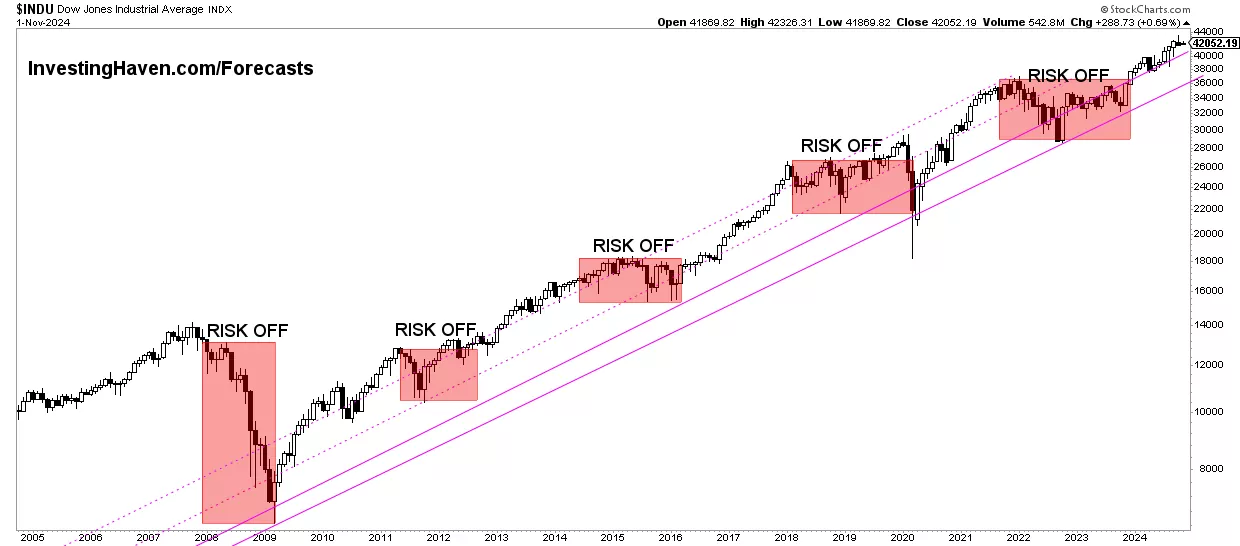
In May 2024, the Dow Jones Industrial Average achieved a historic milestone that many analysts thought was years away: it surged past the 40,000 mark for the first time in its history. This peak represents more than just a psychological threshold; it is a testament to the compounding power of blue-chip corporate earnings and the shifting landscape of modern finance. To understand the significance of the Dow’s record highs, one must look beyond the ticker symbol and examine the underlying drivers that push the market to unprecedented heights.
The Historical Context of the Dow’s Record-Breaking Journey
The Dow Jones Industrial Average was created by Charles Dow and Edward Jones in 1896. At its inception, the index consisted of just 12 companies, primarily in the industrial sector—railroads, sugar, oil, and iron. Its first closing value was a mere 40.94. For the first few decades of its existence, the idea of the Dow hitting 1,000 seemed like a distant dream.
The Long Road to 1,000 and the Post-War Boom
It took 76 years for the Dow to close above the 1,000 mark, a feat finally achieved in November 1972. This period was marked by the industrialization of America, the challenges of the Great Depression, and the post-World War II economic expansion. Each record high during these years was a signal of American manufacturing dominance. However, the index was fundamentally different then; it was dominated by heavy industry and lacked the technological diversity we see today.
The Acceleration of the 1990s and the Dot-Com Era
The pace of record-breaking accelerated in the late 20th century. Driven by the rise of personal computing and the internet, the Dow crossed 5,000 in 1995 and doubled to 10,000 by 1999. This era highlighted a shift in the index’s composition, as service-oriented and technology-focused companies began to take their place among the traditional “smokestack” industries. The “highest ever” during this period was often fueled by speculative fervor, leading to the eventual correction in the early 2000s.
Deconstructing the Recent 40,000 Milestone
To understand the current “highest ever” figures, we must look at the recovery following the 2008 financial crisis and the subsequent decade-long bull market. The journey from the depths of the Great Recession to the peaks of the 2020s is one of the most remarkable stretches in financial history.
The Post-2008 Renaissance
After bottoming out near 6,500 in March 2009, the Dow began a relentless climb. By 2017, it had surpassed 20,000. This growth was underpinned by low interest rates, corporate tax reforms, and a steady increase in corporate productivity. Unlike the 1990s, this climb was largely supported by strong balance sheets and significant stock buyback programs among the 30 component companies.
The COVID-19 Volatility and the Rapid Recovery
The year 2020 saw some of the most extreme volatility in the Dow’s history. The index plummeted as the global pandemic took hold, but the subsequent recovery was unexpectedly swift. Massive fiscal stimulus and monetary intervention from the Federal Reserve provided the liquidity needed for the market to not only reclaim its previous highs but to shatter them. By late 2020, the Dow hit 30,000, and by May 2024, it reached the 40,000 milestone.
The current record high is a reflection of a “new normal” where technology and healthcare giants like Apple, Microsoft, and UnitedHealth Group carry significant weight. These companies have demonstrated an ability to generate massive cash flows even in inflationary environments, pushing the index to levels previously thought unattainable.
The Catalysts Behind the Surge: Innovation, Policy, and Earnings
What exactly drives the Dow to reach its highest point ever? It is rarely a single event. Rather, it is a confluence of factors that align to create a favorable environment for the 30 blue-chip stocks that comprise the index.
Corporate Earnings and the “Magnificent” Influence
At its core, the Dow is a reflection of corporate profitability. When the companies within the index—such as Goldman Sachs, Boeing, and Caterpillar—report record profits, the index naturally trends upward. In recent years, the integration of Artificial Intelligence (AI) and cloud computing has allowed these legacy companies to streamline operations and open new revenue streams. This “tech-enablement” of traditional brands has been a primary driver of the latest all-time highs.
Federal Reserve Policy and Interest Rates
The relationship between the Dow and the Federal Reserve is critical. Traditionally, low interest rates have been a catalyst for market highs because they lower the cost of borrowing for companies and make stocks more attractive compared to bonds. Even in periods of rising rates, as seen in 2022 and 2023, the Dow’s ability to reach new highs in 2024 suggests that the market has priced in a “soft landing”—an economic scenario where inflation is controlled without triggering a major recession.
The Price-Weighted Nature of the Index
Investors must remember that the Dow is a price-weighted index, unlike the S&P 500, which is market-cap weighted. This means that companies with higher share prices have a greater impact on the index’s movement. Therefore, a significant move in a high-priced stock like UnitedHealth or Goldman Sachs can propel the Dow to a new “highest ever” level even if the majority of the other 29 stocks remain flat. Understanding this mechanic is vital for personal finance enthusiasts who use the Dow as a benchmark for their own portfolios.
Navigating the Psychology of All-Time Highs
For the individual investor, seeing the Dow at its “highest ever” can be a double-edged sword. While it signals a healthy economy and growing wealth, it also triggers a psychological phenomenon known as “peak phobia”—the fear that the market is overvalued and a crash is imminent.
The Myth of the “Overvalued” Peak
Historically, the stock market spends a significant amount of time at or near all-time highs. An all-time high is not necessarily a signal to sell; often, it is a signal of momentum. Data shows that investors who buy when the market hits a record high often see positive returns over the following one-, three-, and five-year periods. The Dow’s journey to 40,000 demonstrates that “highs” are often just stepping stones to even higher valuations as the economy expands.
Inflation and Nominal vs. Real Highs
It is also important to distinguish between nominal highs and real (inflation-adjusted) highs. When the Dow hits a new record, it is a nominal figure. Because the value of the dollar decreases over time due to inflation, a “record high” today does not represent the same purchasing power as a record high from twenty years ago. For long-term wealth building, investors should focus on the fact that the Dow has historically outpaced inflation, making it a reliable vehicle for maintaining and growing purchasing power over decades.
Future Projections: Scaling the Next Peak
As the Dow hovers around its current record levels, the question on every investor’s mind is: where is the ceiling? While past performance is never a guarantee of future results, the structural components of the Dow suggest that the trajectory remains upward over the long term.
The Role of Sector Rotation
The Dow is periodically rebalanced to remain relevant. We have seen the removal of old-guard companies like ExxonMobil and the inclusion of modern giants like Amazon and Salesforce. This constant evolution ensures that the Dow represents the most successful and influential segments of the current economy. As the “Green Energy” and “AI” sectors continue to mature, we can expect the composition of the Dow to shift again, likely providing the fuel needed for the climb toward 50,000.
Risks to Continued Ascendance
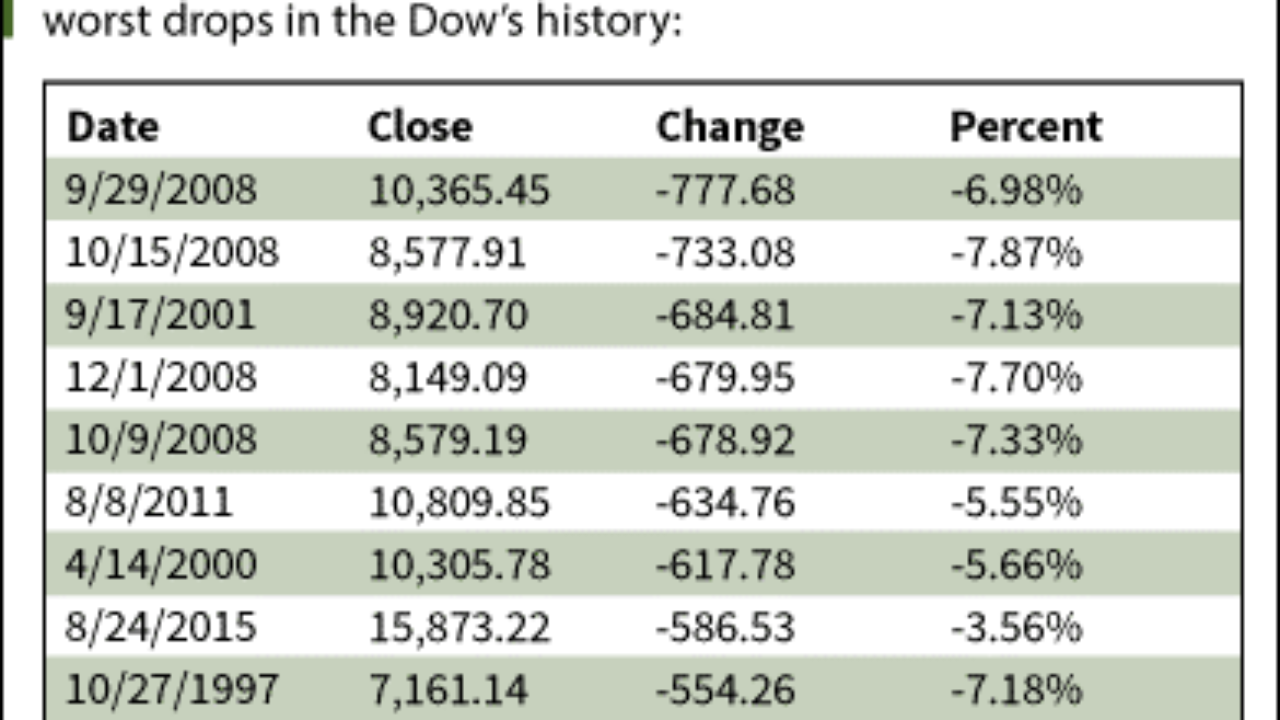
No climb to a record high is without risk. Geopolitical tensions, shifts in global trade policy, and unforeseen economic “black swan” events can all cause the Dow to retreat from its peaks. However, the history of the Dow Jones Industrial Average is a history of recovery. Every “highest ever” has eventually been surpassed, usually following a period of consolidation or correction that allows the market to reset its valuations.
For the modern investor, the “highest ever” status of the Dow Jones is a reminder of the importance of staying invested. Whether the index is at 10,000, 40,000, or eventually 100,000, the underlying principle remains the same: the collective ingenuity and profitability of the world’s leading corporations are a powerful engine for wealth creation. By understanding what drives these peaks, investors can move past the headlines and make informed decisions based on the long-term fundamentals of the financial markets.
aViewFromTheCave is a participant in the Amazon Services LLC Associates Program, an affiliate advertising program designed to provide a means for sites to earn advertising fees by advertising and linking to Amazon.com. Amazon, the Amazon logo, AmazonSupply, and the AmazonSupply logo are trademarks of Amazon.com, Inc. or its affiliates. As an Amazon Associate we earn affiliate commissions from qualifying purchases.