
In the fast-paced world of global finance, the “Dow Jones Industrial Average” is a household name, synonymous with the health of the American economy. However, for active investors and market watchers, the standard 9:30 AM to 4:00 PM EST trading window is only part of the story. Long before the opening bell rings on Wall Street, and long after it falls silent, a different financial instrument is at work: Dow Futures.
Dow Futures are derivative contracts that allow traders to speculate on or hedge against the future value of the Dow Jones Industrial Average (DJIA). They serve as a vital barometer for market sentiment, often acting as a “crystal ball” that predicts how the stock market will open. Understanding Dow Futures is essential for anyone looking to navigate the complexities of personal finance and professional investing, as these instruments bridge the gap between global economic events and domestic equity prices.
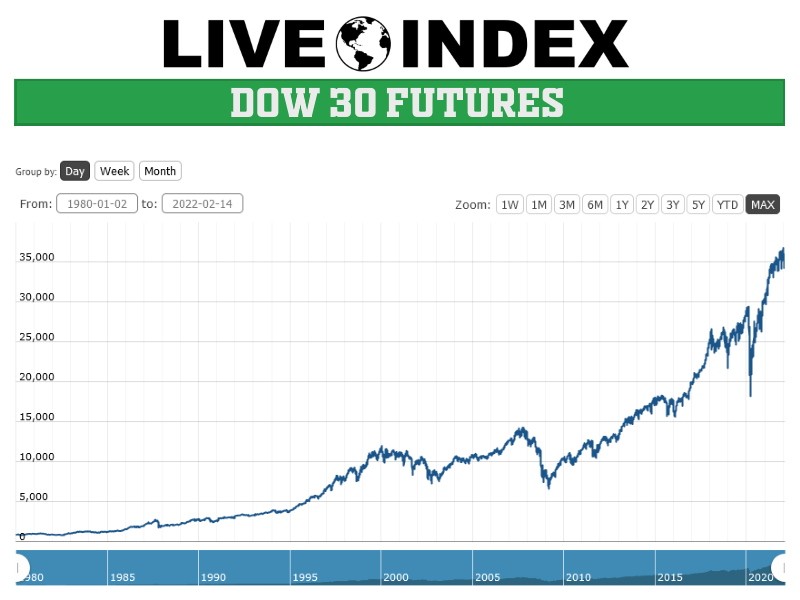
Understanding the Mechanics of Dow Futures
To grasp what Dow Futures are, one must first understand the underlying asset: the Dow Jones Industrial Average. The DJIA is a price-weighted index of 30 prominent “blue-chip” companies listed on stock exchanges in the United States, including giants like Apple, Microsoft, and Goldman Sachs. While the index itself is a statistical measure, Dow Futures are the tradable vehicles that track it.
What are Futures Contracts?
A futures contract is a legal agreement to buy or sell a particular asset—in this case, the value of the Dow—at a predetermined price at a specified time in the future. Unlike buying a stock, where you own a piece of a company, trading futures is a commitment to a value. These contracts are standardized and traded on regulated exchanges, primarily the Chicago Mercantile Exchange (CME) Group.
Futures are “settled” daily, meaning the gains or losses are credited to or debited from the trader’s account at the end of each session. Because they are derivatives, their value is derived entirely from the performance of the underlying index.
The Evolution of E-mini and Micro E-mini Dow Contracts
In the past, futures trading was reserved for institutional giants due to the massive contract sizes. However, the introduction of “E-mini” and “Micro E-mini” Dow futures has democratized the market for individual investors.
- E-mini Dow ($5) Futures: These have a multiplier of $5. If the Dow is at 35,000, the total value of one contract is $175,000.
- Micro E-mini Dow Futures: Designed for the retail trader, these have a multiplier of just $0.50. This allows investors to gain exposure to the Dow with significantly less capital, making it a powerful tool for personal finance management and portfolio diversification.
Price Discovery and the 24-Hour Market
One of the most defining characteristics of Dow Futures is that they trade nearly 24 hours a day, six days a week. While the physical stock market closes at night, the world does not stop turning. Economic data from Asia, political shifts in Europe, or late-night corporate announcements in the U.S. all impact market sentiment. Dow Futures absorb this information in real-time, providing “price discovery” during the “overnight” sessions. This is why financial news networks report on “Futures” early in the morning—they provide the first glimpse of how the market is reacting to news that broke while U.S. traders were asleep.
Why Investors and Institutions Trade Dow Futures
Trading Dow Futures isn’t just about gambling on market direction; it is a strategic move used by sophisticated investors for a variety of financial objectives. Whether you are a retail investor managing a retirement fund or a hedge fund manager, futures offer unique advantages that traditional stocks cannot match.
Hedging Against Market Volatility
The primary function of any futures market is risk management. Imagine an investor who holds a diverse portfolio of blue-chip stocks. If they anticipate a short-term market downturn due to an upcoming Federal Reserve meeting, they might not want to sell their long-term holdings and trigger capital gains taxes. Instead, they can “short” Dow Futures. If the market drops, the profit made on the short futures contract offsets the losses in their stock portfolio. This “hedging” strategy acts as an insurance policy for wealth preservation.
Speculation and the Power of Leverage
Dow Futures are highly leveraged instruments. This means a trader only needs to deposit a small fraction of the total contract value—known as “margin”—to control a much larger position. For example, to control $175,000 worth of the Dow, a trader might only need $8,000 to $10,000 in their account.
While leverage can exponentially increase profits if the trader correctly predicts market movement, it is a double-edged sword. A small move in the wrong direction can result in significant losses exceeding the initial deposit. In the niche of professional investing, mastering leverage is the difference between sustainable income and financial ruin.
Arbitrage and Liquidity
Institutional investors often use Dow Futures for “arbitrage”—the practice of profiting from small price discrepancies between the futures price and the actual “spot” price of the index. Because the futures market is incredibly “liquid” (meaning there are always buyers and sellers), it is easy to enter and exit large positions without significantly moving the price. This liquidity makes Dow Futures an attractive tool for large-scale capital allocation.
Key Factors That Influence Dow Futures Prices
Because Dow Futures track the 30 largest companies in the U.S., they are sensitive to a wide array of macro and microeconomic triggers. Understanding these drivers is essential for any investor looking to use futures as a financial tool.
Economic Indicators and Federal Reserve Policy
The “Big Three” of economic data—Inflation (CPI), Employment (Non-Farm Payrolls), and Interest Rates—are the most significant movers of Dow Futures. When the Federal Reserve hints at raising interest rates to combat inflation, Dow Futures often sell off. Conversely, if employment data shows a healthy but not “overheated” economy, futures may rally. Professional traders spend hours analyzing “Fed Speak” to anticipate these movements before they happen in the equity markets.
Corporate Earnings and the Price-Weighted Index
The Dow Jones is unique because it is price-weighted, not market-cap-weighted (like the S&P 500). This means a stock with a higher share price, like UnitedHealth Group, has a much larger impact on the index than a stock with a lower share price, like Verizon. When these “heavyweights” report quarterly earnings or face regulatory hurdles, the Dow Futures will react violently to the news of that specific company, even if the rest of the market is stable.
Geopolitical Events and Global Sentiment
Since Dow Futures trade globally, they are often the first to react to international conflict, trade agreement shifts, or foreign economic crises. During times of global uncertainty, Dow Futures often experience high volatility. For an investor, monitoring these futures provides a “global pulse,” allowing them to adjust their domestic investment strategies based on international sentiment.
Practical Strategies for Trading Dow Futures
Entering the futures market requires more than just a brokerage account; it requires a disciplined approach to risk and a robust trading strategy. For those focused on building online income or business finance through trading, these strategies are the bedrock of success.
Technical Analysis vs. Fundamental Analysis
Most futures traders use a combination of two methodologies:
- Fundamental Analysis: This involves looking at the “why.” Why is the economy growing? What is the earnings outlook for the 30 Dow components?
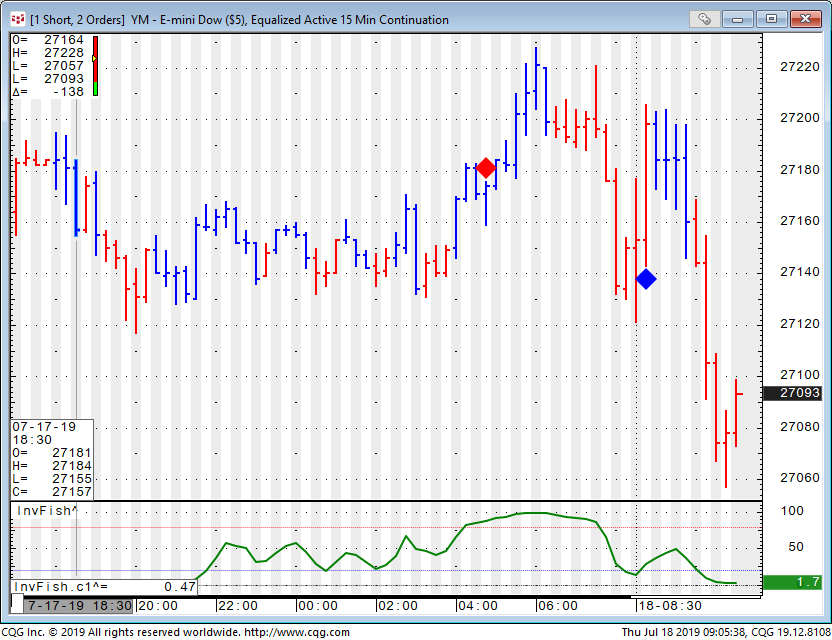
- Technical Analysis: This involves looking at “what” the price is doing. Traders use charts, moving averages, and support/resistance levels to identify patterns. Because futures markets are highly liquid, they tend to respect technical levels more consistently than low-volume stocks.
Risk Management and Position Sizing
In the realm of personal finance, capital preservation is king. Successful futures traders never risk more than 1-2% of their total account on a single trade. They use “stop-loss” orders to automatically exit a position if the market moves against them. Because Dow Futures move in “ticks” (the smallest price increment), traders must calculate the dollar value of each tick to ensure their position size aligns with their risk tolerance.
Choosing the Right Trading Environment
Not all brokers are created equal when it comes to futures. Investors must look for platforms that offer low latency (speed), competitive commission rates, and high-quality data feeds. Since Dow Futures move in milliseconds, having a reliable technological infrastructure is a prerequisite for professional-grade trading. Furthermore, staying informed through financial news aggregates and real-time data is essential for reacting to the “Fair Value” gap—the difference between the futures price and the expected opening price of the stock market.

Conclusion: The Role of Dow Futures in a Modern Portfolio
Dow Futures are far more than just a number on a morning news ticker. They are a sophisticated financial instrument that provides liquidity, offers protection through hedging, and serves as a vital indicator of global economic health. For the modern investor, understanding Dow Futures is a gateway to a deeper comprehension of how money moves around the world.
While the risks of leverage are real, the strategic advantages of futures—such as 24-hour access and the ability to profit in both bull and bear markets—make them an invaluable tool in the world of investing and business finance. By mastering the mechanics, staying attuned to economic drivers, and maintaining rigorous risk management, investors can use Dow Futures to not only predict the market’s next move but to actively participate in the global financial narrative. Whether you are looking to protect your retirement savings or generate active trading income, the Dow Futures market remains one of the most dynamic and essential arenas in the world of finance.
aViewFromTheCave is a participant in the Amazon Services LLC Associates Program, an affiliate advertising program designed to provide a means for sites to earn advertising fees by advertising and linking to Amazon.com. Amazon, the Amazon logo, AmazonSupply, and the AmazonSupply logo are trademarks of Amazon.com, Inc. or its affiliates. As an Amazon Associate we earn affiliate commissions from qualifying purchases.