
Divorce is a deeply personal and often emotionally challenging transition. Beyond the emotional upheaval, however, lies a critical, and often complex, legal and financial process. At the heart of this process lies “discovery,” a fundamental stage in divorce proceedings that ensures a fair and equitable division of marital assets and liabilities. Understanding discovery is not just about navigating legal jargon; it’s about safeguarding your financial future and ensuring you have a clear, comprehensive understanding of the financial landscape you are about to inherit or divide. This article will delve into the intricacies of discovery in divorce, explaining its purpose, its methods, and its paramount importance in achieving a just financial settlement.
The Core Purpose of Discovery in Divorce Proceedings
At its most basic, discovery in divorce is the formal process by which parties exchange information and evidence relevant to the case. It’s a crucial mechanism designed to prevent surprises and promote transparency in the financial aspects of a divorce. Without discovery, one party could potentially conceal assets or misrepresent their financial situation, leading to an unfair outcome for the other. The goal is to create a level playing field where both spouses have access to the same information, enabling them to make informed decisions about settlement or to present a well-supported case to a judge.
Unearthing the Marital Estate: Assets and Debts
The primary objective of discovery is to meticulously identify and value all assets and debts accumulated during the marriage. This encompasses a wide spectrum of financial holdings.
Identifying All Marital Assets
“Marital assets” generally refer to any property or income acquired by either spouse from the date of marriage until the date of separation or divorce. This can include:
- Real Estate: Marital homes, vacation properties, rental units, and undeveloped land. The valuation of these properties, whether through appraisals or market analysis, is a key element.
- Financial Accounts: Bank accounts (checking, savings, money market), investment accounts (stocks, bonds, mutual funds), retirement accounts (401(k)s, IRAs, pensions), and brokerage accounts. Statements detailing balances, contributions, and growth history are essential.
- Business Interests: Ownership stakes in businesses, partnerships, or sole proprietorships. The valuation of a business can be particularly complex, often requiring forensic accountants.
- Personal Property: Vehicles, furniture, art, jewelry, collectibles, and other valuable tangible assets. While sometimes less contentious, significant items may require appraisals.
- Intellectual Property and Royalties: Patents, copyrights, trademarks, and any income derived from them.
- Life Insurance Policies: The cash surrender value of life insurance policies can be considered a marital asset.
- Other Investments: Annuities, cryptocurrency, and any other form of investment.
Cataloging All Marital Debts
Equally important is the thorough identification of all debts incurred during the marriage. These can include:
- Mortgages: Outstanding balances on any marital real estate.
- Car Loans: Debts associated with vehicles.
- Credit Card Balances: All outstanding balances on credit cards held by either spouse.
- Personal Loans: Any loans taken out by either spouse during the marriage.
- Student Loans: If incurred during the marriage, these may be considered marital debts.
- Business Debts: Liabilities associated with any marital businesses.
The accurate cataloging of both assets and debts is the bedrock upon which a fair financial settlement is built. Without a complete picture, the division will inevitably be skewed.
Ensuring Financial Transparency and Preventing Concealment
One of the most significant benefits of the discovery process is its role in ensuring financial transparency and preventing spouses from hiding assets or income. It is a legal obligation for both parties to disclose all relevant financial information honestly and completely.
The Duty to Disclose
Every jurisdiction has rules that mandate full and honest disclosure of all financial information. This duty extends to all assets, debts, income, and expenses, regardless of how they are titled or held. Failure to disclose can have severe consequences, including financial penalties, unfavorable court rulings, and even the setting aside of a divorce settlement.
Common Tactics for Concealment and How Discovery Uncovers Them
Despite the legal obligation, some individuals may attempt to hide assets or income. Discovery mechanisms are specifically designed to detect these tactics:
- Underreporting Income: This can involve taking cash payments, failing to report all freelance earnings, or manipulating business profits. Discovery can uncover this through tax returns, bank statements, and business records.
- Transferring Assets: Moving assets to friends, family members, or offshore accounts to make them appear gone. Discovery can trace these transfers through bank records, deeds, and other documentation.
- Inflating Debts: Creating or increasing debts to reduce the apparent value of the marital estate. Discovery can scrutinize loan applications, payment histories, and creditor statements.
- Delaying or Forgoing Bonuses/Commissions: An employed spouse might strategically delay receiving expected income until after the divorce is finalized.
- Valuing Assets Below Market Value: Presenting an artificially low valuation for assets like businesses or real estate.
Discovery tools, such as interrogatories, requests for production of documents, and depositions, are crucial in bringing these hidden financial elements to light.
Key Mechanisms of Discovery in Divorce
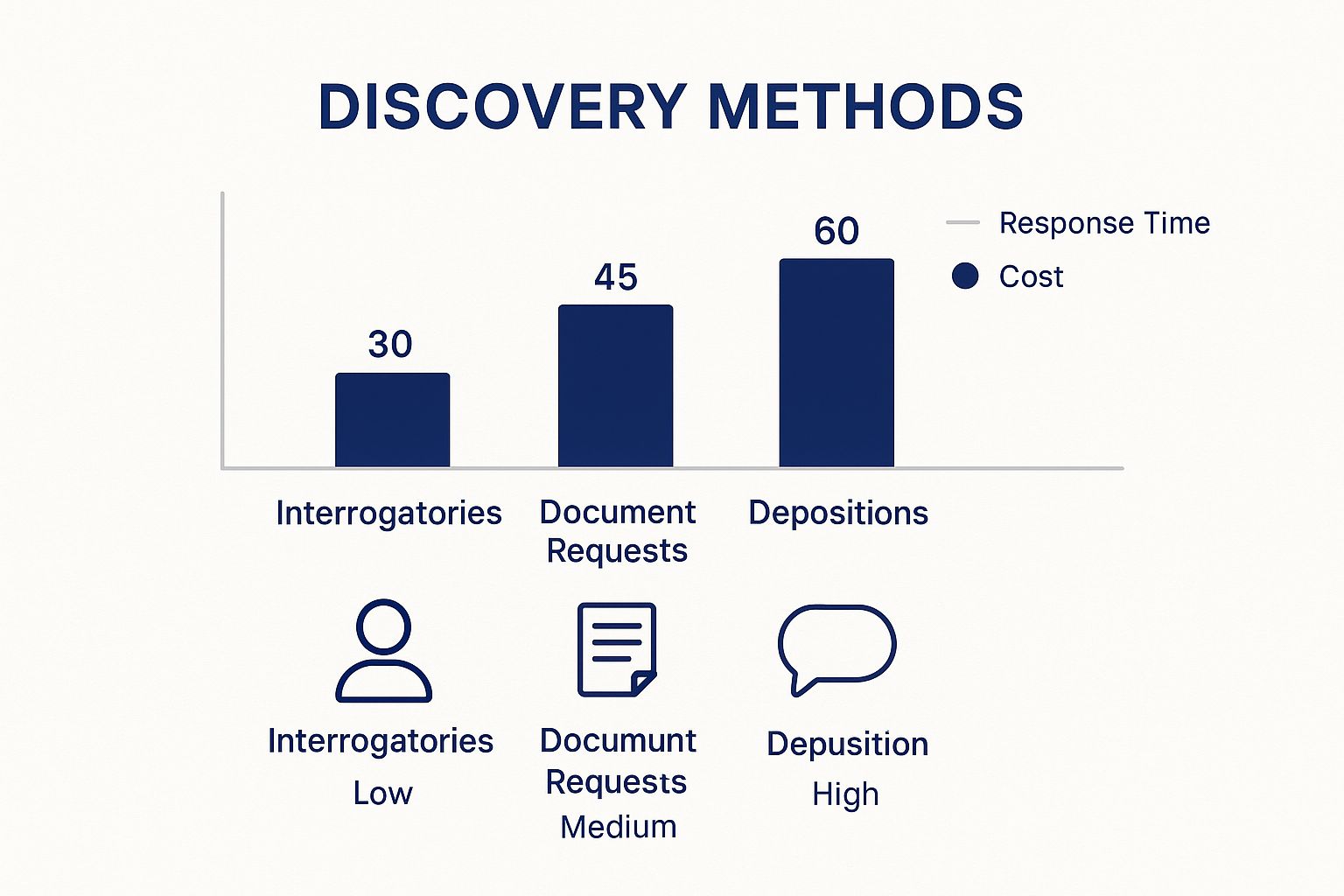
The process of discovery employs several formal legal tools to gather information. Each tool serves a distinct purpose in building a comprehensive financial picture.
Interrogatories: Written Questions for Direct Answers
Interrogatories are written questions that one party sends to the other, which must be answered under oath. These questions are designed to elicit specific information about the parties’ financial situations, including details about assets, debts, income, and expenses.
What Kind of Information Can Be Obtained?
Examples of information sought through interrogatories include:
- A list of all bank accounts, including account numbers, names of financial institutions, and current balances.
- Details of all real estate owned, including addresses, purchase dates, and estimated current market values.
- Information about any businesses owned or operated, including ownership percentages and financial statements.
- A comprehensive list of all income earned over a specified period.
- Details of all debts, including creditor names, account numbers, and outstanding balances.
- Information about any significant financial transactions that have occurred recently.
The Importance of Specificity and Honesty
When responding to interrogatories, it is crucial to be as specific and truthful as possible. Vague or evasive answers can lead to further investigation and potential legal repercussions. Lawyers play a vital role in drafting clear, concise interrogatories and ensuring that the answers provided are comprehensive and accurate.
Requests for Production of Documents: The Paper Trail

Perhaps the most powerful discovery tool, requests for production of documents compel parties to produce relevant financial records. This is where the “paper trail” of a marriage’s finances is meticulously laid bare.
Essential Financial Documents to Request
A comprehensive discovery request will typically ask for:
- Tax Returns: Federal, state, and local tax returns for the past several years.
- Bank Statements: Statements for all checking, savings, and money market accounts for a significant period.
- Investment Account Statements: Statements for brokerage accounts, mutual funds, and retirement accounts.
- Pay Stubs and W-2s/1099s: Proof of income for both spouses.
- Deeds and Titles: Documents related to real estate and vehicle ownership.
- Loan Documents: Agreements for mortgages, car loans, personal loans, and credit cards.
- Business Financial Records: Profit and loss statements, balance sheets, and cash flow statements for any businesses.
- Credit Card Statements: Detailed statements for all credit card accounts.
- Insurance Policies: Information on life insurance, disability insurance, and other relevant policies.
The Role of Forensic Accountants
In complex cases involving substantial assets, businesses, or suspected concealment, forensic accountants are often engaged. They can analyze the extensive documentation produced during discovery to uncover hidden assets, determine business valuations, and trace financial irregularities. Their expertise is invaluable in presenting a clear and accurate financial picture to the court.
Depositions: Oral Questioning Under Oath
Depositions involve taking sworn oral testimony from a party or a witness. A lawyer for one side asks questions of the deponent (the person being questioned), while a court reporter records everything said. Depositions are crucial for understanding how a party will present their case and for uncovering details that might not be apparent from written documents alone.
Uncovering the Narrative and Assessing Credibility
Through depositions, lawyers can:
- Probe for inconsistencies: Compare the testimony given with previously provided documents or statements.
- Gather detailed explanations: Understand the rationale behind financial decisions or transactions.
- Assess credibility: Observe the deponent’s demeanor and responsiveness to gauge their truthfulness.
- Lock in testimony: Once a deponent testifies, they are generally bound by that testimony. Any subsequent contradictory statements can be used to impeach their credibility.
The Strategic Advantage of Depositions
Depositions can reveal crucial information about a party’s understanding of their finances, their intentions regarding assets, and potential weaknesses in their claims. This information can be instrumental in negotiating a settlement or preparing for trial.
The Impact of Discovery on Financial Settlement and Legal Strategy
Discovery is not merely an information-gathering exercise; it is a cornerstone of both financial settlement negotiations and the broader legal strategy of a divorce case. The information unearthed during discovery directly shapes how parties approach settlement discussions and what their legal options may be.
Informing Negotiation Strategies
The comprehensive financial picture that emerges from discovery is the bedrock of informed negotiation.
Building a Stronger Negotiating Position
Armed with complete financial data, a party can:
- Accurately assess their entitlements: Understand what they are legally entitled to based on the marital estate.
- Identify areas of leverage: Recognize assets or debts that can be traded or used as bargaining chips.
- Present a well-supported proposal: Make settlement offers that are grounded in factual evidence, making them more persuasive.
- Recognize unrealistic demands: Quickly identify and counter any unreasonable settlement proposals from the other party.
Facilitating Realistic Expectations
Discovery helps both parties develop a more realistic understanding of the financial realities of their divorce. This can temper unrealistic expectations and steer parties towards a more amicable and mutually agreeable resolution. When both sides understand the full extent of the marital estate and the legal framework for its division, they are more likely to engage in good-faith negotiations.
Guiding Trial Preparation
If a settlement cannot be reached, the information gathered through discovery becomes the foundation for trial preparation.
Presenting Evidence to the Court
The documents and testimony obtained during discovery are the evidence that will be presented to a judge. Thorough discovery ensures that legal teams have access to all necessary proof to support their client’s claims regarding asset division, spousal support, child support, and other financial matters.
Anticipating Opposing Arguments
Discovery also allows legal teams to anticipate the arguments and evidence the opposing party will present. This enables them to prepare counter-arguments and challenge the validity of the other side’s claims, thus strengthening their own case.

Influencing Court Decisions
The thoroughness and accuracy of the financial information presented to the court can significantly influence the judge’s decisions. A party that has diligently conducted discovery and can present a clear, well-supported financial case is more likely to achieve a favorable outcome.
In conclusion, discovery in divorce is a vital, multi-faceted process that underpins the fair and equitable division of marital assets and debts. It is a legal requirement that fosters transparency, prevents financial deception, and empowers individuals to make informed decisions about their financial future. Understanding its purpose, the mechanisms involved, and its profound impact is not just about navigating a divorce; it’s about securing your financial well-being in the aftermath. By embracing the discovery process with diligence and legal guidance, individuals can navigate the financial complexities of divorce with greater confidence and achieve a more just and sustainable outcome.
aViewFromTheCave is a participant in the Amazon Services LLC Associates Program, an affiliate advertising program designed to provide a means for sites to earn advertising fees by advertising and linking to Amazon.com. Amazon, the Amazon logo, AmazonSupply, and the AmazonSupply logo are trademarks of Amazon.com, Inc. or its affiliates. As an Amazon Associate we earn affiliate commissions from qualifying purchases.