
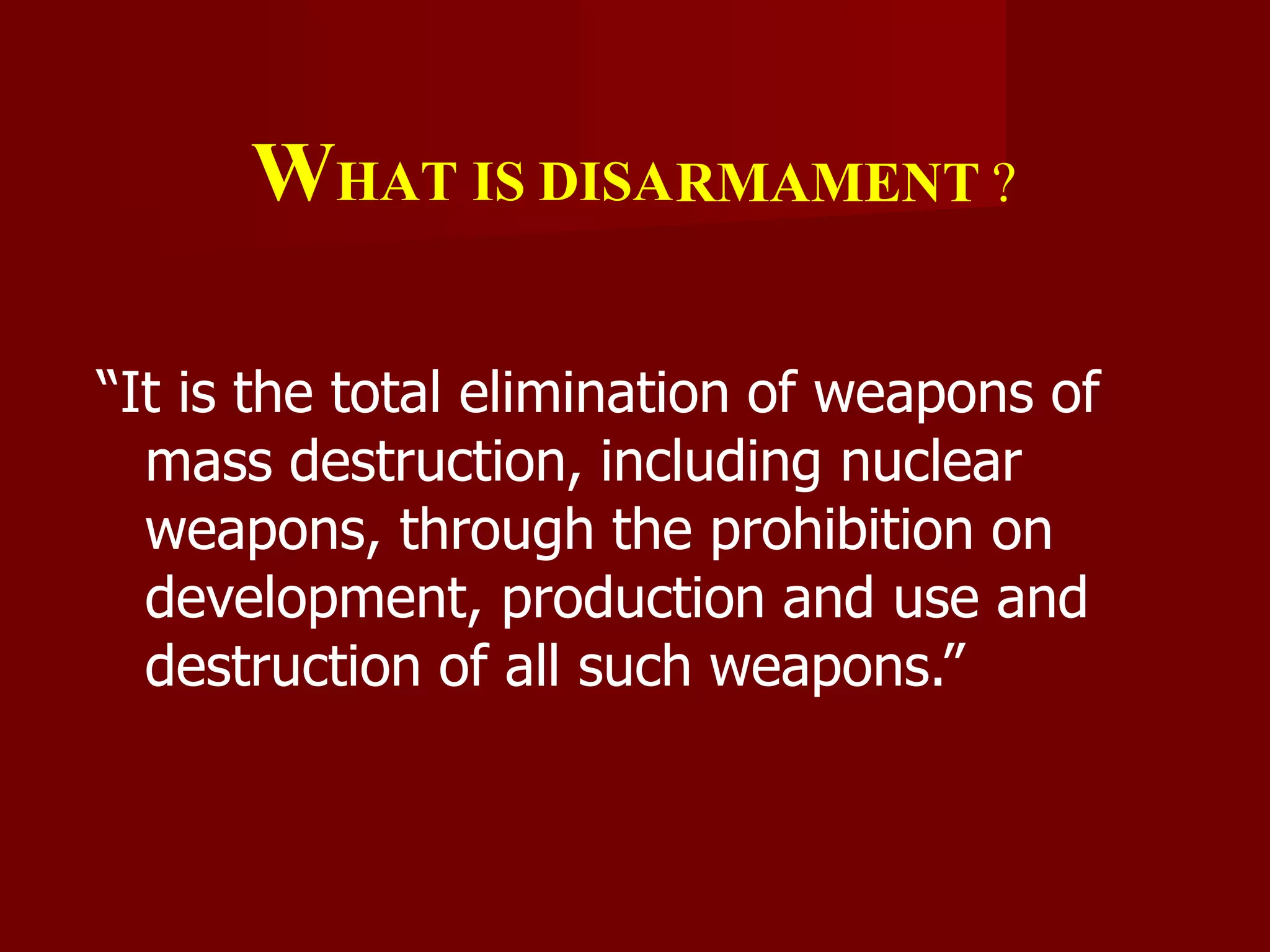
Disarmament, at its core, represents the reduction, limitation, or abolition of armaments. While often discussed through the lens of international relations and security, its profound implications extend deeply into the realm of global and national finance. From the colossal expenditures associated with maintaining vast military arsenals to the transformative economic potential unleashed by their reduction, disarmament is fundamentally a financial proposition. Understanding “what is disarmament” requires a rigorous examination of the economic choices nations make regarding defense spending, the opportunity costs incurred, and the strategic financial reallocation that could define a more prosperous, secure future. It is a concept intertwined with fiscal responsibility, economic development, and the sustainable allocation of capital on a global scale.

The Staggering Financial Burden of Armament
The global arms race and the continuous modernization of military capabilities impose an immense, often unsustainable, financial burden on nations worldwide. These expenditures divert trillions of dollars annually from sectors that could otherwise foster economic growth, social development, and improved living standards.
Defense Budgets and Opportunity Costs
Nations allocate substantial portions of their annual budgets to defense. In 2023, global military expenditure reached an unprecedented $2.44 trillion, representing a significant portion of global GDP. This funding is directed towards personnel salaries, weapon procurement, research and development, maintenance, and operational deployments. For many countries, particularly developing economies, defense spending can consume a disproportionate share of national income, straining public finances and leading to fiscal deficits.
The economic concept of “opportunity cost” is particularly salient here. Every dollar spent on military hardware or personnel is a dollar not invested in education, healthcare, infrastructure, renewable energy, or poverty alleviation programs. For example, the cost of a single advanced fighter jet could fund numerous schools or hospitals. The development and deployment of complex weapon systems, such as intercontinental ballistic missiles or aircraft carriers, involve expenditures that dwarf the budgets of entire social welfare programs. These opportunity costs are not merely theoretical; they represent tangible sacrifices in human development and economic potential, directly hindering long-term financial stability and progress. Societies grapple with the trade-off between perceived security through military strength and actual security derived from robust economic foundations and social well-being.
The Economic Drag of Perpetual Preparedness
Beyond direct budgetary outlays, the economic drag of perpetual military preparedness manifests in several ways. Large standing armies and extensive defense industries often tie up significant human capital and resources that could otherwise be utilized in more productive, civilian-focused economic sectors. Skilled engineers, scientists, and technicians working on military projects might instead contribute to technological innovation in areas like sustainable energy, medical breakthroughs, or advanced manufacturing for commercial markets.
Furthermore, the constant need to maintain and update military infrastructure—bases, naval yards, airfields—requires continuous investment that yields no direct economic return in terms of goods or services for the civilian economy. Instead, these are expenditures designed to deter or wage war, not to create wealth or improve productivity. The diversion of national savings into non-productive military assets rather than capital formation for economic expansion can suppress innovation, reduce competitiveness in global markets, and ultimately slow economic growth. This ongoing financial commitment creates a cycle where resources are continually siphoned off, perpetuating a state of economic constraint under the guise of national security.
The “Peace Dividend”: Financial Reallocation and Economic Growth
Disarmament, particularly on a large scale, presents a unique economic opportunity often referred to as the “peace dividend.” This concept describes the financial benefits derived from reduced military spending, allowing for the reallocation of significant capital towards economically productive and socially beneficial endeavors.
Redirecting Capital to Productive Sectors
The most immediate and tangible financial benefit of disarmament is the freeing up of national budgets. Funds previously earmarked for weapon systems, military operations, and defense personnel can be redirected into key sectors that drive economic growth and improve human welfare. For instance, investments in public education can enhance human capital, leading to a more skilled workforce and increased productivity. Enhanced healthcare systems can reduce the burden of disease, improve public health outcomes, and increase labor force participation.
Massive infrastructure projects—roads, bridges, ports, digital networks—can be financed, creating jobs, improving supply chains, and stimulating trade. Investments in renewable energy technologies can not only address climate change but also foster new industries, create green jobs, and reduce reliance on volatile fossil fuel markets. By strategically reallocating funds from destructive potential to constructive development, nations can unlock significant economic multiplier effects. The initial savings from defense cuts can generate further economic activity through increased consumption, investment, and innovation, leading to a virtuous cycle of growth and prosperity.
Attracting Investment in a Secure Environment
Beyond direct budgetary shifts, disarmament can fundamentally alter a nation’s investment profile. A reduction in military tensions and conflicts, both domestically and internationally, creates a more stable and predictable environment. This stability is highly attractive to both domestic and foreign investors who prioritize security and reduced political risk when making long-term capital commitments.

When a country is perceived as less prone to conflict or internal strife, its risk premium decreases, making it a more appealing destination for foreign direct investment (FDI). FDI brings not only capital but also technology, expertise, and market access, all of which are crucial for economic development. A nation that demonstrably prioritizes peace and economic development over military confrontation can garner increased trust from international financial institutions, leading to more favorable lending terms and access to development aid. Such an environment fosters a greater sense of confidence, encouraging businesses to expand, innovate, and create jobs, thereby strengthening the national economy and integrating it more robustly into the global financial system.
Navigating the Financial Transition: Challenges and Strategic Planning
While the “peace dividend” offers compelling advantages, the transition to a disarmed or significantly less armed state is not without its financial challenges. Strategic planning and careful economic management are crucial to mitigate potential disruptions.
Economic Impact on Defense Industries and Workforce
One of the most immediate financial challenges of disarmament is the impact on the defense industry. These industries, often large employers and significant contributors to regional economies, face substantial contraction or even collapse. Reductions in military contracts can lead to mass layoffs, impacting skilled workers such engineers, technicians, and factory personnel. Entire communities reliant on defense manufacturing can experience severe economic downturns.
Managing this transition requires proactive financial strategies. Governments might need to implement robust retraining programs to equip former defense workers with skills transferable to civilian sectors, such as renewable energy, advanced manufacturing, or healthcare technology. Financial incentives for defense companies to diversify their product lines into civilian applications can help smooth the transition. This could involve tax breaks, grants for research and development into new markets, or preferential procurement policies for civilian goods. The goal is to avoid widespread unemployment and economic dislocation, transforming a potential crisis into an opportunity for economic diversification and reindustrialization.
The Costs of Verification and Enforcement
Disarmament is not simply about destroying weapons; it also involves comprehensive verification and enforcement mechanisms to ensure compliance with treaties and agreements. These processes, while essential for trust and security, incur significant financial costs. Establishing and maintaining international monitoring agencies, conducting on-site inspections, deploying surveillance technologies, and training specialized personnel all require substantial funding.
These costs often involve international cooperation, with nations contributing financially to shared security infrastructure. While these expenditures might seem counterintuitive to the concept of saving money through disarmament, they are an investment in long-term peace and stability, ultimately preventing the far greater financial devastation and human cost of conflict. Strategic financial planning must account for these ongoing operational expenses, ensuring sustainable funding models through international contributions, dedicated budgets, or innovative financial instruments. Effective verification mechanisms reduce the risk of rearmament, thereby safeguarding the financial benefits accrued from initial disarmament efforts.
Investing in a Disarmed Future: Sustainable Development and Financial Innovation
A world actively pursuing disarmament shifts its financial priorities from military might to human potential and sustainable development. This requires not just redirecting funds but also innovative financial strategies and tools to build a more secure and prosperous global economy.
Funding International Development and Humanitarian Initiatives
The vast sums saved through global disarmament could revolutionize international development and humanitarian aid. Instead of being channeled into weapons, these funds could directly address some of the world’s most pressing financial and social challenges: ending extreme poverty, combating global pandemics, ensuring food security, and providing universal access to clean water and sanitation. Large-scale financial investments in these areas yield significant economic returns, fostering stability, reducing inequalities, and building stronger global markets.
Consider the economic impact of eradicating preventable diseases or providing widespread literacy. These initiatives create healthier, more productive populations who can contribute more effectively to their national economies, attracting investment and fostering sustainable growth. Financial mechanisms such as dedicated global funds, increased contributions to international development banks, and multilateral aid programs would become even more potent, driving transformative change on a scale previously unimaginable. This represents a strategic investment in human capital and global stability, generating dividends that are far more enduring and impactful than any military expenditure.
Leveraging Financial Tools for Global Stability
In a disarmed future, financial tools and strategies would play an even more crucial role in maintaining global stability and managing economic interdependencies. International financial institutions would be vital in facilitating the economic transition of former defense-dependent nations, providing loans, grants, and technical assistance for diversification and development. Sovereign wealth funds, built from the peace dividend, could invest in global sustainable development projects, further cementing economic ties and shared prosperity.
Innovative financial instruments, such as “peace bonds” or “development impact bonds,” could be designed to fund specific disarmament verification projects or post-conflict reconstruction efforts, attracting ethical investors. Moreover, robust financial intelligence and regulatory frameworks would be essential to combat illicit financial flows that could fund rearmament or destabilize regions. Disarmament, from a financial perspective, is not merely about subtracting military budgets; it is about a profound re-imagining of how global capital is generated, allocated, and managed to secure a future of shared economic growth and peace. It underscores that true security is built on robust economies, equitable societies, and sound financial stewardship, rather than an ever-expanding arsenal.
aViewFromTheCave is a participant in the Amazon Services LLC Associates Program, an affiliate advertising program designed to provide a means for sites to earn advertising fees by advertising and linking to Amazon.com. Amazon, the Amazon logo, AmazonSupply, and the AmazonSupply logo are trademarks of Amazon.com, Inc. or its affiliates. As an Amazon Associate we earn affiliate commissions from qualifying purchases.