
In the ever-expanding universe of digital information, data is the new oil, the currency of the modern economy, and the bedrock of intelligent decision-making. Businesses across all sectors are increasingly reliant on data to understand their customers, optimize operations, and drive innovation. However, the sheer volume and velocity of data generation can often lead to a critical problem: dirty data. This isn’t just an academic concern; dirty data can be a silent saboteur, undermining the effectiveness of analytics, AI models, and ultimately, strategic initiatives. Understanding what constitutes dirty data, why it’s problematic, and how to combat it is paramount for any organization aiming to harness the true power of their information assets.

The Multifaceted Nature of Dirty Data
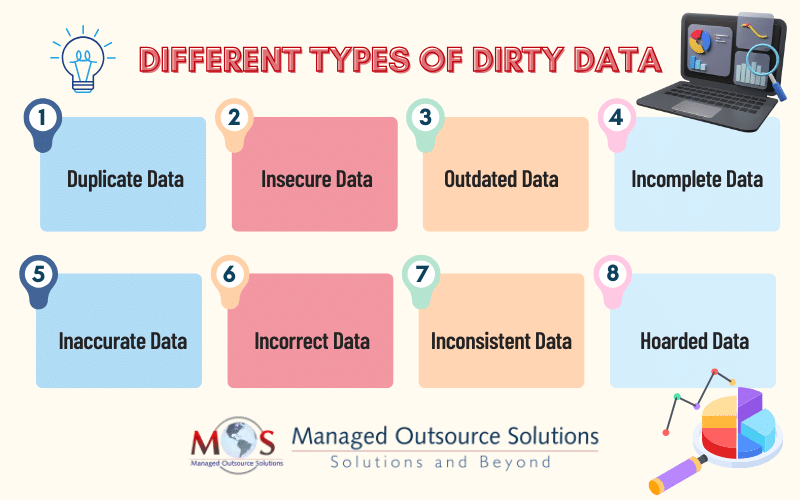
Dirty data, in essence, refers to data that is inaccurate, incomplete, inconsistent, duplicated, or irrelevant. It’s data that deviates from the expected or required quality standards, rendering it unreliable for analysis and decision-making. The “dirt” can manifest in numerous ways, each posing its own unique set of challenges.
Inaccurate Data: The Foundation of Misinformation
The most common and perhaps most insidious form of dirty data is inaccurate data. This occurs when data values are incorrect, flawed, or do not reflect the true state of affairs.
Typos and Spelling Errors
Even seemingly minor typographical errors can have significant consequences. A misspelled customer name (“Smith” versus “Smyth”) can prevent a record from being matched, leading to a fragmented customer view. Similarly, incorrect product codes can result in inventory discrepancies or incorrect sales reporting. In an era of automated data entry and processing, the potential for such errors multiplies.
Incorrect Values and Outliers
This category encompasses data points that are factually wrong or fall outside the plausible range. For instance, an age listed as 200 years, a salary of $0 for a full-time employee, or a temperature reading of 1000 degrees Celsius are clear indicators of inaccurate data. These outliers can skew statistical calculations, lead to flawed predictions, and misguide operational adjustments.
Stale or Outdated Information
Data that was once accurate but has since become obsolete is also considered inaccurate. In dynamic environments, such as customer contact details or product specifications, information needs to be regularly updated. Using outdated phone numbers will result in failed communication attempts, and referencing old product features will lead to customer dissatisfaction.
Incomplete Data: The Gaps That Obscure the Picture
Incomplete data is characterized by missing values, making it difficult to derive meaningful insights or perform comprehensive analyses. These gaps can arise from various sources, from user oversight to system limitations.
Missing Fields in Records
When essential fields within a data record are left blank, it creates a void. For example, if a customer record is missing an email address, it limits marketing outreach possibilities. Missing geographical information can hinder targeted advertising or supply chain optimization. The impact of missing data depends heavily on the criticality of the missing attribute for the intended use.
Truncated Records
Sometimes, due to technical glitches or data transfer issues, entire records or portions of records can be cut short, rendering them partially or completely unusable. This is particularly problematic when critical information is lost.
Absence of Necessary Context
Even if individual data points are present, the absence of crucial context can render them incomplete. For instance, a timestamp without a corresponding timezone is less useful for global analysis. Similarly, a sales figure without information about the product, customer, or region provides limited actionable intelligence.
Inconsistent Data: The Juggling Act of Different Representations
Inconsistency arises when the same piece of information is represented in multiple, conflicting ways across different datasets or even within the same dataset. This makes it challenging to consolidate and compare information reliably.
Varied Formats and Units
Dates can be represented as “MM/DD/YYYY,” “DD-MM-YYYY,” or “YYYY-MM-DD.” Units of measurement can differ, with some entries in kilometers and others in miles, or currencies expressed in USD, EUR, or GBP without a clear conversion. This inconsistency requires extensive standardization before data can be meaningfully integrated.
Different Naming Conventions
The same entity might be referred to by different names or abbreviations. For example, a company might be listed as “IBM,” “International Business Machines,” or “I.B.M.” Similarly, states can be represented by their full names or two-letter postal codes. This necessitates the creation of mapping tables or fuzzy matching algorithms to reconcile these variations.
Conflicting Values for the Same Attribute
This occurs when a single entity is recorded with contradictory attributes. For instance, a customer might be listed as having an “active” status in one system and “inactive” in another. A product might be marked as “in stock” in the inventory system but “out of stock” in the e-commerce platform. These conflicts create confusion and undermine trust in the data.
Duplicate Data: The Redundancy That Inflates and Distorts
Duplicate data refers to the presence of identical or near-identical records that represent the same real-world entity. While seemingly benign, duplicates can lead to significant operational inefficiencies and inaccurate analysis.
Redundant Customer Entries
A single customer might be entered into the system multiple times due to different registration methods or data entry errors. This can lead to multiple marketing communications being sent to the same person, increasing costs and potentially annoying the customer. It also inflates customer counts, providing a false sense of market reach.
Overlapping Transaction Records
Duplicate transaction records can distort sales figures, revenue reports, and financial analysis. This can lead to incorrect assessments of business performance and misallocation of resources.
Redundant Product Information
Similar to customer duplicates, having multiple entries for the same product can cause confusion in inventory management, pricing, and sales reporting.
Irrelevant Data: The Noise That Drowns Out the Signal
Irrelevant data is information that, while potentially accurate, is not pertinent to the specific analysis or decision being made. Including it can clutter datasets and dilute the focus on meaningful insights.
Unused Fields in Datasets
Databases and spreadsheets often contain numerous fields that are collected but rarely, if ever, used for analysis. Including these in your datasets can increase processing time and complexity without adding value.
Data from Outdated or Unrelated Sources
Information from systems that are no longer in use or data that pertains to a different business unit or market can be irrelevant to current analytical needs.
Information That Doesn’t Align with Business Objectives
Even if data is clean and relevant to a general topic, if it doesn’t directly contribute to answering a specific business question or supporting a strategic objective, it can be considered irrelevant for that particular context.
The Far-Reaching Consequences of Dirty Data
The presence of dirty data is not merely an aesthetic issue; it has tangible and often detrimental impacts on an organization’s operations, decision-making, and bottom line. The silent erosion of data quality can lead to a cascade of negative outcomes.
Impaired Decision-Making: The Foundation of Error
At its core, dirty data cripples the ability to make informed decisions. When the information fed into analytical models or executive dashboards is flawed, the insights derived will inevitably be inaccurate.
Misguided Strategies and Investments
If sales reports are inflated by duplicates, a company might overinvest in marketing or production based on perceived success. Conversely, if customer churn is underestimated due to incomplete contact information, retention efforts may be insufficient. Strategic planning based on faulty data can lead to misallocated resources, missed opportunities, and ultimately, business failure.
Poor Customer Experience
Inaccurate customer data can lead to sending irrelevant marketing materials, addressing customers by the wrong name, or providing incorrect support. Inconsistent product information can frustrate customers and damage brand reputation. When customers feel that a company doesn’t “know” them or is making mistakes, their trust erodes.
Operational Inefficiencies and Increased Costs
Dealing with dirty data is labor-intensive and costly. Manual data cleansing, correcting errors, and re-entering information consume valuable employee time that could be spent on more strategic tasks. Duplicate records increase the costs associated with marketing, customer service, and IT infrastructure. Inaccurate inventory data can lead to stockouts or excess inventory, both of which incur significant financial penalties.
Compromised Analytics and AI Performance: The Digital Blind Spot
In the age of big data and artificial intelligence, the quality of input data directly dictates the quality of output. Dirty data serves as a significant impediment to the effective utilization of these powerful technologies.
Skewed Analytical Results
Statistical models and business intelligence tools rely on the assumption that the data they process is representative and accurate. Inaccurate or incomplete data can lead to skewed averages, incorrect correlations, and misleading trends. This can result in a fundamental misunderstanding of market dynamics, customer behavior, or operational performance.
Inaccurate Predictive Models
Machine learning algorithms, particularly those used for forecasting, risk assessment, and personalization, are highly sensitive to data quality. If training data is dirty, the resulting models will learn incorrect patterns and make flawed predictions. This can lead to inaccurate sales forecasts, misidentified fraudulent transactions, or ineffective customer recommendations.
Biased AI Outcomes
Dirty data can introduce biases into AI systems. For example, if historical data disproportionately represents certain demographics or contains inherent societal biases, an AI trained on this data can perpetuate and even amplify these biases in its decision-making, leading to unfair or discriminatory outcomes.
Reduced Trust in Data and Systems
When analysts and decision-makers repeatedly encounter errors and inconsistencies in their data, their trust in the data itself, and in the systems that produce it, diminishes. This can lead to a reluctance to use data-driven insights, pushing organizations back towards gut-feeling decisions, which are often less reliable.
Reputational Damage and Regulatory Non-Compliance: The External Fallout
Beyond internal operational impacts, dirty data can have significant external repercussions, affecting how an organization is perceived by its customers, partners, and regulatory bodies.
Erosion of Brand Credibility
Consistent errors in customer interactions, product information, or marketing communications can quickly erode brand credibility and customer loyalty. A brand that appears disorganized or careless with its data can be perceived as unprofessional and untrustworthy.
Privacy and Security Risks
Inaccurate or incomplete customer data can contribute to privacy breaches. For example, sending sensitive information to the wrong individual due to outdated contact details. Furthermore, poorly managed data, including personal identifiable information (PII), can increase the risk of data security incidents and the associated legal and financial penalties.
Non-Compliance with Regulations
Many industries are subject to strict data privacy and accuracy regulations, such as GDPR (General Data Protection Regulation) or CCPA (California Consumer Privacy Act). Failure to maintain accurate and complete records, or mishandling personal data due to dirty data, can lead to significant fines, legal action, and reputational damage.
Combating the Dirt: Strategies for Data Quality Management
Recognizing the pervasive threat of dirty data is the first step; actively implementing strategies to prevent, detect, and remediate it is the crucial next phase. Data quality management is not a one-time fix but an ongoing process that requires a holistic approach.
Data Governance and Standardization: Building the Framework
Establishing a robust data governance framework is fundamental to ensuring data quality. This involves defining policies, procedures, and responsibilities for managing data assets.
Defining Data Standards and Policies
Organizations must clearly define what constitutes “good” data. This includes establishing naming conventions, data types, acceptable formats, and validation rules for all critical data elements. Data dictionaries and business glossaries become essential tools for documenting these standards and ensuring common understanding across the organization.
Assigning Data Ownership and Stewardship
Clear ownership of data assets is vital. Data owners are responsible for the overall quality and integrity of their data domains, while data stewards are responsible for implementing and enforcing data quality rules on a day-to-day basis. This accountability ensures that data quality is treated as a core business imperative.
Implementing Data Validation Rules at the Source
The most effective way to prevent dirty data is to stop it from entering the system in the first place. Implementing strict validation rules at the point of data entry – whether through forms, APIs, or data ingestion pipelines – can catch many errors before they propagate. This includes range checks, format checks, and mandatory field requirements.
Data Profiling and Cleansing: The Diagnostic and Remedial Process
Once data exists, proactive measures are needed to identify and fix existing issues. Data profiling and cleansing are critical components of this process.
Profiling Data to Understand its Characteristics
Data profiling involves analyzing datasets to understand their structure, content, and quality. This process reveals patterns, identifies anomalies, detects missing values, and uncovers inconsistencies. Tools that automate data profiling can quickly provide a comprehensive overview of data quality issues within various datasets.
Implementing Data Cleansing Processes
Data cleansing, or data scrubbing, involves correcting, standardizing, and enriching data. This can be a manual or automated process, depending on the complexity and volume of the data. Techniques include:
- Standardization: Converting data into a consistent format (e.g., standardizing all dates to YYYY-MM-DD).
- Correction: Fixing obvious errors based on predefined rules or external reference data.
- Deduplication: Identifying and merging or removing duplicate records.
- Imputation: Filling in missing values using statistical methods or logical inferences.
- Enrichment: Adding missing information from external sources to improve data completeness and utility.
Utilizing Data Quality Tools
A range of specialized software tools are available to assist with data profiling, cleansing, and monitoring. These tools can automate many of the laborious tasks involved, improve accuracy, and provide continuous oversight of data quality.
Continuous Monitoring and Improvement: The Ongoing Journey
Data quality is not a destination but a continuous journey. Establishing mechanisms for ongoing monitoring and fostering a culture of data quality are essential for long-term success.
Implementing Data Quality Dashboards and Alerts
Regularly monitoring key data quality metrics through dashboards provides visibility into the health of data assets. Setting up automated alerts for significant drops in quality or the detection of critical errors allows for prompt intervention and prevents minor issues from escalating.
Fostering a Data Quality Culture
Encouraging all employees to understand the importance of data quality and their role in maintaining it is crucial. Training programs, clear communication of data policies, and celebrating successes in data quality initiatives can help embed a data-conscious mindset throughout the organization.
Integrating Data Quality into the Data Lifecycle
Data quality considerations should be integrated into every stage of the data lifecycle, from data acquisition and storage to processing, analysis, and archival. This ensures that quality is a consideration from inception to retirement.

The Strategic Imperative of Clean Data
In today’s data-driven world, the concept of “dirty data” is more than just a technical inconvenience; it’s a strategic liability. The proliferation of data offers unprecedented opportunities, but only for those who can master its quality. Organizations that neglect data quality do so at their peril, risking impaired decision-making, compromised analytics, operational inefficiencies, and significant reputational damage.
By understanding the various forms of dirty data, its profound consequences, and by proactively implementing robust data governance, cleansing processes, and continuous monitoring, businesses can transform their data from a potential source of error into a powerful engine for innovation, growth, and competitive advantage. The investment in clean data is, in essence, an investment in the future intelligence and resilience of the organization.
aViewFromTheCave is a participant in the Amazon Services LLC Associates Program, an affiliate advertising program designed to provide a means for sites to earn advertising fees by advertising and linking to Amazon.com. Amazon, the Amazon logo, AmazonSupply, and the AmazonSupply logo are trademarks of Amazon.com, Inc. or its affiliates. As an Amazon Associate we earn affiliate commissions from qualifying purchases.