
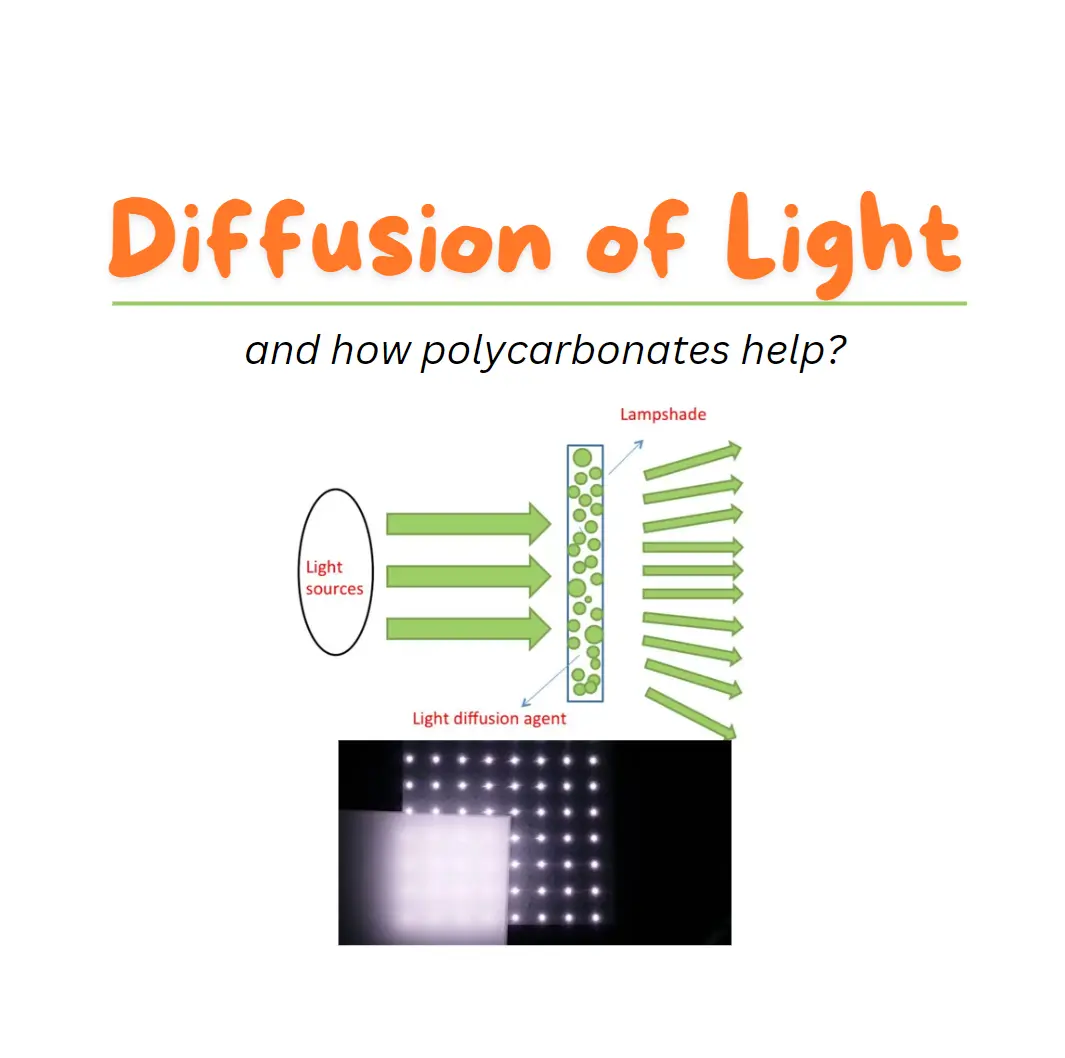
In the realms of physics, hardware engineering, and digital rendering, the concept of “diffused light” serves as a foundational pillar. While a casual observer might simply describe it as “soft light,” the technical reality is far more complex. Diffused light occurs when a concentrated light source is scattered by a medium—be it a physical material like polycarbonate or a digital algorithm in a rendering engine—causing photons to travel in multiple directions rather than a singular, parallel path.
As we move deeper into an era dominated by high-resolution displays, sophisticated semiconductor manufacturing, and hyper-realistic virtual environments, understanding the mechanics of diffused light is no longer just for photographers. It is a critical component of technological innovation, influencing everything from the ergonomics of your smartphone screen to the way AI-driven ray tracing simulates reality.

The Physics of Diffusion: Understanding Light Scattering in Hardware
To understand diffused light in a tech context, one must first look at the interaction between photons and matter. In a “hard” or specular light source, such as a bare LED or the sun, light waves travel in a relatively uniform direction. When these waves hit a surface, they create sharp shadows and high-contrast highlights. Diffusion is the process of breaking this uniformity.
The Role of Diffusers in LED and LCD Panels
In the world of consumer electronics, the most common application of diffused light is found within the backlighting units (BLUs) of LCD and LED displays. If you were to strip away the layers of a modern computer monitor, you would find a series of high-intensity LED strips. Without a diffusion layer, these LEDs would appear as bright “hot spots,” making the screen unreadable.
Engineers utilize “Diffuser Sheets”—typically made from polyester or polycarbonate films embedded with microscopic beads—to scatter the light emitted by these LEDs. The goal is to achieve Lambertian distribution, where the brightness of the surface appears the same regardless of the observer’s angle of view. This technological feat ensures that your laptop screen maintains uniform brightness from corner to corner, a prerequisite for professional-grade color accuracy and visual comfort.
Minimizing Glare and Blue Light Impact
Diffusion technology also plays a massive role in hardware ergonomics. “Anti-glare” or “matte” screens are essentially sophisticated light diffusers. By etching the surface of the glass at a microscopic level, manufacturers create a texture that scatters incoming ambient light. Instead of reflecting a window or a lamp directly back into your eyes (specular reflection), the screen diffuses the light, reducing eye strain and improving legibility in high-light environments.
Furthermore, new advancements in “diffused blue light” technology are emerging. Rather than simply filtering out blue light through software (which tints the screen yellow), hardware engineers are developing diffusion layers that shift the peak wavelengths of light-emitting diodes, scattering the energy more broadly to mitigate digital eye strain without sacrificing color fidelity.
Diffused Light in Digital Content Creation: The Tech Behind the Glow
Beyond the screens we look at, diffused light is a critical variable in the technology we use to capture and create content. From the sensors in our smartphones to the lighting rigs used by top-tier streamers, diffusion is the “secret sauce” of high-quality digital imaging.
Softboxes and Light Modifiers for Modern Streamers
The rise of the “prosumer” creator has led to a boom in lighting tech. Devices like the Elgato Key Light or various LED panels utilize integrated diffusion layers to solve a specific technical problem: sensor noise. High-intensity, non-diffused light creates harsh shadows that digital sensors often struggle to interpret, leading to “crushed blacks” or “blown-out whites.”
By passing light through a diffusion silk or a honeycomb grid, the light source becomes effectively larger. In the language of physics, a larger light source relative to the subject produces a more gradual “shadow fall-off.” For a digital camera, this means a more balanced dynamic range, allowing the ISP (Image Signal Processor) to capture more detail in the mid-tones and reducing the computational load required to “clean up” the image in post-production.
Computational Photography: Simulating Soft Light with AI
Perhaps the most impressive tech trend involving diffused light is computational photography. When you use “Portrait Mode” on an iPhone or a Google Pixel, the phone isn’t just blurring the background; it is simulating the way diffused light interacts with a physical lens.
AI models are trained on millions of images to understand how light wraps around a human face. When the software detects a “hard” light source in the original frame, it uses generative algorithms to soften the edges of shadows, effectively “digitally diffusing” the light after it has been captured. This marriage of optical physics and machine learning allows tiny mobile sensors to mimic the look of a professional studio setup with massive softboxes.

Ray Tracing and Global Illumination: Rendering Diffused Light in Software
In the domain of software engineering and gaming, the simulation of diffused light is one of the most computationally expensive tasks a GPU can perform. This is the heart of the “Ray Tracing” revolution that has defined the last few years of PC and console gaming.
The Evolution of Indirect Lighting in Real-Time Engines
Historically, video games used “baked” lighting, where shadows and diffused glows were simply painted onto textures. However, modern engines like Unreal Engine 5 use “Lumen,” a fully dynamic global illumination system. The core challenge here is “Diffuse Interreflection”—the way light bounces off one surface, picks up its color, and diffuses onto another.
If a character stands next to a bright red wall in a sunlight-filled room, the “diffused bounce” should cast a subtle red tint onto the character’s skin. Calculating these millions of light bounces in real-time requires dedicated hardware (like NVIDIA’s RT cores). The technology works by tracing the paths of individual “rays” of light and calculating how they scatter when they hit non-reflective surfaces. This creates a sense of “presence” and realism that was previously impossible in real-time environments.
Why Diffusion Matters for Virtual Reality (VR) Immersion
In Virtual Reality, the technical accuracy of diffused light is a matter of biological comfort. The human brain is incredibly sensitive to “uncanny valley” lighting. If a VR environment lacks proper light diffusion and global illumination, the brain perceives the world as “flat” or “fake,” which can contribute to motion sickness and eye fatigue.
Advanced VR headsets are now integrating “foveated rendering” to prioritize the calculation of diffused light in the user’s direct line of sight. By accurately simulating how light scatters through virtual fog or across matte surfaces, developers can create a much higher sense of “immersion,” making the digital world feel as tangible as the physical one.
The Future of Diffused Lighting in Wearable Tech and Smart Homes
As we look toward the next decade, the tech industry is moving away from “points of light” and toward “surfaces of light.” This shift is driven by advancements in material science and the Internet of Things (IoT).
Smart Glass and Adaptive Transparency
One of the most exciting trends in “Smart Tech” is the development of electrochromic glass—or “smart glass.” By applying a small electric current to a specially treated pane of glass, the material can switch from transparent to diffused (frosted) in milliseconds. This isn’t just for privacy; it’s being integrated into AR (Augmented Reality) glasses.
When you are using AR outdoors, the “Ambient Light Sensor” can trigger a diffusion layer on the glasses to scatter bright sunlight, ensuring the digital HUD (Heads-Up Display) remains visible. This “on-demand diffusion” is a critical hurdle for the mass adoption of wearable tech.
Circadian Lighting: Bio-hacking with Soft Light
Finally, the “Smart Home” sector is leveraging diffused light to improve human health. Research indicates that harsh, direct light at night disrupts melatonin production. The tech response has been the creation of “Circadian Lighting” systems. These devices use high-CRI (Color Rendering Index) LEDs paired with edge-lit diffusion panels to mimic the natural scattering of the sky.
Unlike a standard lightbulb, which is a point source, these panels use light-guide plates to emit an even, diffused glow across a large surface area. This mimics the “blue hour” or “golden hour” of the sun, using the tech of light scattering to regulate our biological clocks.
Conclusion
Diffused light is far more than an aesthetic preference; it is a fundamental technological tool. From the microscopic layers of an OLED display to the complex algorithms of a Ray Tracing engine, the ability to control, scatter, and simulate the diffusion of photons is what allows our modern devices to be both functional and beautiful.
As hardware continues to shrink and software continues to grow more lifelike, the mastery of diffused light will remain at the forefront of the tech industry. Whether it’s reducing eye strain on a 14-inch laptop or creating a believable sunset in a metaverse environment, the science of diffusion is the invisible force shaping our digital future.
aViewFromTheCave is a participant in the Amazon Services LLC Associates Program, an affiliate advertising program designed to provide a means for sites to earn advertising fees by advertising and linking to Amazon.com. Amazon, the Amazon logo, AmazonSupply, and the AmazonSupply logo are trademarks of Amazon.com, Inc. or its affiliates. As an Amazon Associate we earn affiliate commissions from qualifying purchases.