
In the realm of professional communication, brand identity, and corporate documentation, the nuance of language is a powerful tool. When crafting high-stakes contracts, internal policy documents, or strategic brand messaging, the choice between “shall” and “will” often serves as the dividing line between amateur writing and professional precision. While these two modal verbs are frequently used interchangeably in casual conversation, they hold distinct weight and functional implications within the spheres of law, corporate governance, and brand strategy.
The Linguistic Evolution: From Obligation to Prediction
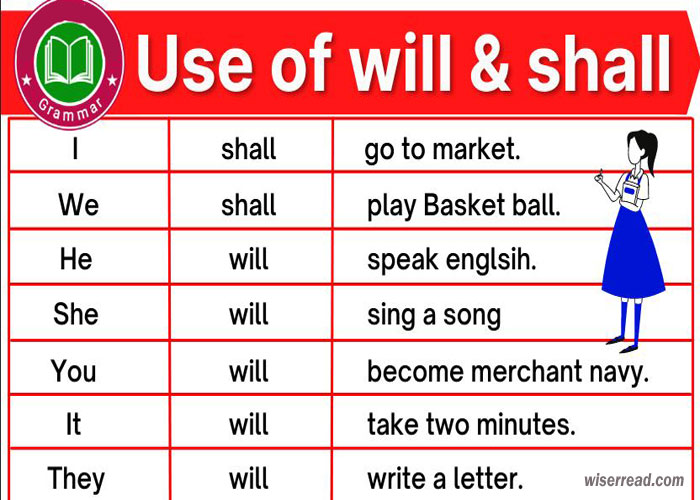
To understand why “shall” and “will” carry different weights in a professional context, one must first appreciate their historical and grammatical evolution. Traditionally, “shall” was used to denote futurity in the first person (“I shall,” “we shall”), while “will” was reserved for the second and third persons (“you will,” “they will”). However, this distinction has largely eroded in common parlance, leading to a modern usage where “will” has become the default for neutral future tense.
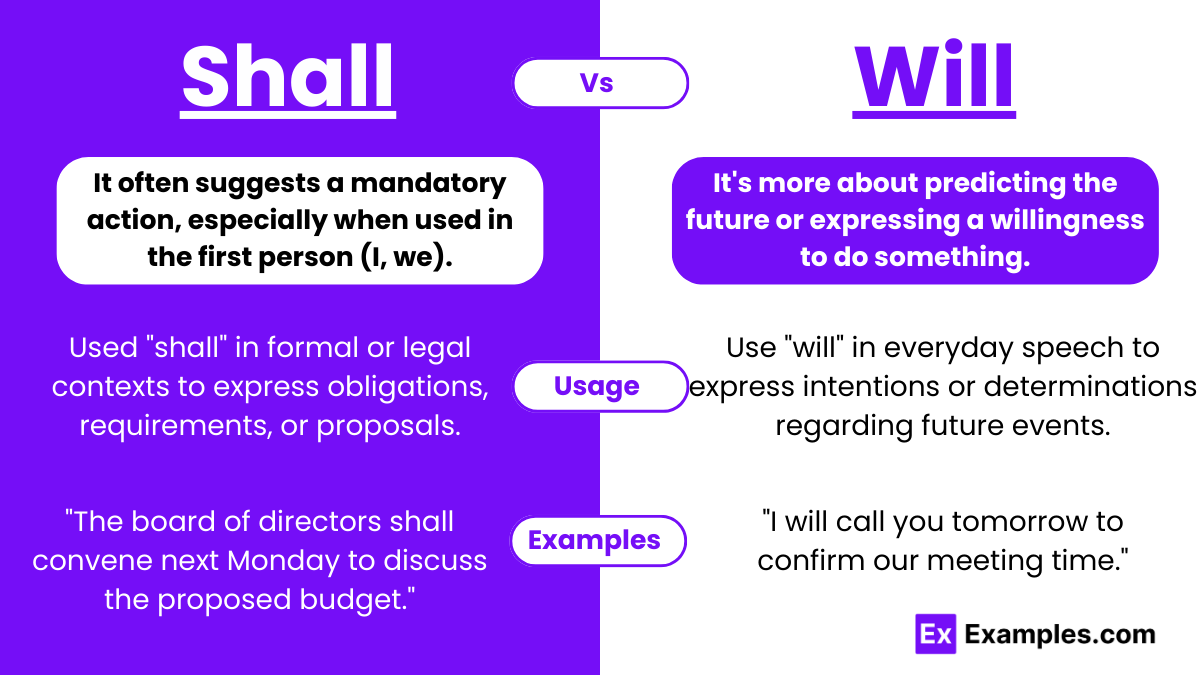
In professional and brand-centric environments, the distinction has shifted from a matter of grammatical person to a matter of legal and strategic intent. “Shall” has been largely co-opted by legal drafting and formal policy writing to signify mandatory action. Conversely, “will” has evolved into the standard tool for expressing commitment, predictive outcomes, and strategic vision. Understanding this shift is essential for any professional whose written output defines their brand’s promise to the world.
The Modern Legalistic Burden of “Shall”
In legal and corporate contexts, “shall” is almost exclusively used to impose a duty. It is the language of requirement. If a brand manual states that “All employees shall wear the company badge,” it is not expressing a future possibility; it is establishing a non-negotiable rule.
For those involved in brand management and corporate communications, using “shall” incorrectly can lead to unintended consequences. If a brand promise is phrased as “Our company shall deliver excellent service,” it inadvertently introduces a contractual obligation that, if not met, could be interpreted as a breach of policy rather than a service aspiration. Therefore, professional writers must be judicious in their deployment of the word, reserving it for internal compliance documents where the threat of non-compliance is real and enforced.
The Strategic Power of “Will” in Brand Messaging
If “shall” is the language of the courtroom and the compliance department, “will” is the language of the marketplace. For branding professionals, “will” is an instrument of aspiration and conviction. It bridges the gap between the present state of a brand and its future promise to the consumer.
When a brand says, “We will change the way you experience travel,” they are making a public declaration of intent. Unlike the rigid, cold nature of “shall,” the word “will” invites the audience to participate in a vision. It is confident, forward-looking, and inherently optimistic. In digital marketing and public relations, “will” helps craft a narrative of growth and innovation.
Building Trust Through Predictive Consistency
Consistency in branding is built on the foundation of predictive language. When a company consistently uses “will” to describe its future milestones, product launches, or service standards, it creates a psychological anchor for the consumer.
Consider the following examples of strategic phrasing:
- “Our software will integrate seamlessly with your existing infrastructure.”
- “The new update will reduce latency by 40%.”
- “Our team will be available 24/7 to support your growth.”
In these instances, “will” functions as a promise that provides security to the client. It implies that the brand is in control of its future and, by extension, the customer’s experience. Substituting “shall” in these sentences would result in a tone that feels overly bureaucratic, defensive, or even litigious. A brand that communicates through the lens of “shall” often comes across as distant and authoritative, whereas a brand that utilizes “will” effectively positions itself as a partner in success.
Navigating the Grey Areas in Corporate Documentation
The most significant friction occurs when drafting internal policy documents that must balance tone and clarity. A common mistake in corporate documentation is the overuse of “shall” to the point of exhaustion. When every sentence begins with a requirement, the brand identity of the internal culture suffers. It becomes a culture of “thou shalt,” which rarely fosters innovation or employee engagement.
Best Practices for Policy Writing
To maintain a professional yet approachable internal brand, writers should categorize their communication:
- For Legal/Regulatory Obligations: Use “shall” to eliminate ambiguity regarding compliance. Example: “Employees shall comply with the data privacy protocols outlined in Section 4.”
- For Behavioral Expectations: Use “will” to frame desired outcomes as a standard of excellence rather than a punitive command. Example: “Team members will contribute to the weekly sprint retrospective.”
- For Strategic Goals: Use “will” to generate momentum. Example: “We will reach our sustainability targets by the end of the fiscal year.”
By segmenting language in this way, the professional writer maintains legal integrity without sacrificing the organizational culture. “Shall” is the structural steel of the organization, while “will” is the vision that keeps the company moving forward.
The Danger of Ambiguity
The “shall vs. will” debate is further complicated by the fact that many modern style guides, including the Plain English movement, advise against using “shall” entirely, even in legal settings, due to its history of inconsistent interpretation. Some legal experts argue that “shall” is inherently ambiguous—it can mean “must,” “may,” or even “is.”
In these instances, professional writers are often encouraged to replace “shall” with “must” when a mandatory obligation is intended. However, in industries where tradition holds sway, “shall” remains the standard. The key takeaway for the modern professional is not necessarily which word to pick, but the realization that the word chosen fundamentally changes the perceived relationship between the speaker and the subject.
Aligning Language with Brand Strategy
Ultimately, the choice between “shall” and “will” is a strategic decision that reflects a brand’s personality. A brand that identifies as a disruptor—a tech startup or a creative agency—should lean heavily into the use of “will.” It creates a sense of agency and progress. Conversely, a brand that operates within highly regulated sectors like banking, healthcare, or industrial manufacturing may find that the authority conveyed by “shall” is an essential part of their trustworthiness and reliability.
The Role of Voice and Tone
Brand voice is the personality behind the message. If your brand voice is empathetic and human-centric, “will” is almost always the superior choice. It allows for a more natural cadence and a more collaborative tone. If your brand voice is defined by institutional stability and rigorous standards, the inclusion of “shall” reinforces that persona.
Consider how these two sentences change the brand’s identity:
- “The user shall receive a notification upon completion.” (Sounds like a software system requirement or a technical manual).
- “You will receive a notification as soon as we finish the process.” (Sounds like a helpful, customer-facing notification).
Both sentences convey the same outcome, but the second one builds a relationship. The first one merely states a rule. In an era where customer experience is the primary competitive differentiator, professional writers must ask themselves if they are writing to dictate or to connect.

Conclusion
The difference between “shall” and “will” is more than a mere grammatical exercise; it is a fundamental aspect of professional communication. “Shall” serves as the anchor of obligation, ensuring that legal and corporate standards are met with precision. “Will” acts as the engine of ambition, driving brand promises and future-facing strategies toward reality.
By mastering the nuanced application of these modal verbs, professionals can ensure that their writing is not only grammatically sound but also strategically aligned with their brand’s identity and organizational goals. Whether you are drafting a contract that requires the absolute certainty of “shall” or writing a marketing campaign that depends on the inspiring nature of “will,” the power of your message depends on choosing the right word to carry your intent. In the competitive landscape of modern business, precision in language is not just a stylistic preference—it is a competitive advantage.
aViewFromTheCave is a participant in the Amazon Services LLC Associates Program, an affiliate advertising program designed to provide a means for sites to earn advertising fees by advertising and linking to Amazon.com. Amazon, the Amazon logo, AmazonSupply, and the AmazonSupply logo are trademarks of Amazon.com, Inc. or its affiliates. As an Amazon Associate we earn affiliate commissions from qualifying purchases.