
In the realms of personal finance, professional investing, and corporate strategy, few acronyms carry as much weight as GDP. Gross Domestic Product is widely regarded as the primary pulse-check of a nation’s economic health. However, for those looking to manage wealth or scale a business, simply looking at the headline GDP figure is insufficient and potentially misleading. To make informed decisions, one must master the distinction between Nominal GDP and Real GDP.
While both metrics aim to measure the value of goods and services produced within a country over a specific period, they do so through different lenses. Nominal GDP provides a snapshot using current market prices, while Real GDP adjusts for the distorting effects of inflation. Understanding this nuance is not just an academic exercise; it is a fundamental skill for anyone operating within the “Money” niche, from retail investors to CFOs.

The Fundamentals of Economic Measurement: Nominal vs. Real
To navigate the financial markets, one must first understand how these two figures are calculated and what they represent in the rawest sense.
Defining Nominal GDP: The “Current Price” Perspective
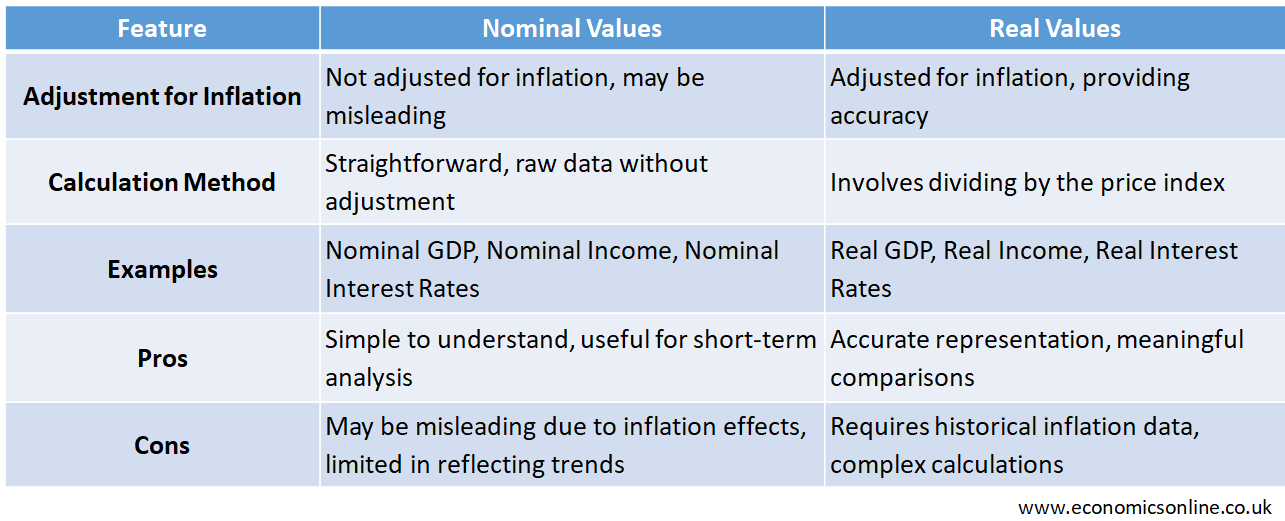
Nominal GDP is the total market value of all finished goods and services produced within a country’s borders, calculated using the prices that are current at the time of measurement. In simpler terms, it is the “sticker price” of an economy. If a country produces 1,000 cars and each car sells for $30,000, the contribution to Nominal GDP is $30 million.
The primary characteristic of Nominal GDP is that it does not account for inflation or deflation. It reflects both changes in the volume of production and changes in the price level. Because of this, Nominal GDP can often appear to show robust growth even if the actual output of the economy has remained stagnant or even declined, simply because prices have risen.
Defining Real GDP: The “Constant Price” Perspective
Real GDP, conversely, measures the value of economic output adjusted for price changes. To calculate Real GDP, economists select a “base year” and apply those base-year prices to the quantities produced in subsequent years. This allows analysts to strip away the “noise” of inflation and focus strictly on the volume of production.
By holding prices constant, Real GDP answers a critical question for investors: Is the economy actually producing more, or are things just getting more expensive? For the “Money” professional, Real GDP is the more reliable indicator of long-term economic growth and the underlying health of the business environment.
The Divergence: Why They Often Tell Different Stories
The gap between Nominal and Real GDP is primarily driven by the inflation rate. In an era of high inflation, the divergence can be massive. For instance, a country might report a 7% growth in Nominal GDP, which sounds impressive to an untrained ear. However, if the inflation rate for that same period was 8%, the Real GDP actually contracted by 1%. In this scenario, the economy didn’t grow; it shrank in terms of actual purchasing power and productivity.
Why Real GDP is the “Gold Standard” for Investors and Business Leaders
For those involved in investing and business finance, Real GDP is the metric that truly dictates strategy. Relying on Nominal figures can lead to “money illusion,” where individuals mistake nominal increases for actual wealth gains.
Assessing Corporate Earnings and Profitability
When a corporation reports increased revenue, savvy investors look at that growth in the context of Real GDP. If a company’s sales grow at 5% while Nominal GDP grows at 8%, the company is actually underperforming the broader inflationary environment.
Business owners use Real GDP data to forecast demand. Since Real GDP tracks the actual volume of goods moving through the economy, it is a much better predictor of future consumer behavior than Nominal GDP. If Real GDP is rising, it indicates that consumers have higher purchasing power and are consuming more physical units of products, which justifies capital expenditures and hiring.
Steering Investment Portfolios Through Economic Cycles
Investors use the growth rate of Real GDP to determine their asset allocation. Historically, periods of rising Real GDP are favorable for equities and real estate, as they signal genuine expansion. During such times, corporate earnings are typically backed by increased sales volume rather than just price hikes.

Conversely, when Nominal GDP rises significantly faster than Real GDP, it serves as a red flag for “overheating.” This often leads central banks to raise interest rates to curb inflation. For an investor, this is a signal to perhaps shift toward inflation-protected securities (like TIPS) or value stocks that can weather a high-interest-rate environment.
The Role of Real GDP per Capita
For those focused on personal finance and long-term wealth, Real GDP per Capita is an even more refined tool. By dividing the inflation-adjusted GDP by the total population, we get a sense of the average standard of living. For a business looking to expand into a new market, a rising Real GDP per Capita is the ultimate green light, indicating a growing middle class with increasing discretionary income.
The GDP Deflator: The Bridge Between Price and Value
In the world of financial tools and economic analysis, the “GDP Deflator” is the mathematical bridge used to convert Nominal GDP into Real GDP. Understanding how this tool works provides a deeper insight into how economic data is massaged before it hits the news cycle.
How the GDP Deflator is Calculated
The GDP Deflator is a price index that tracks the changes in prices of all goods and services produced domestically. It is calculated by dividing Nominal GDP by Real GDP and then multiplying the result by 100.
Unlike the Consumer Price Index (CPI), which only tracks a “basket” of goods typical for an average consumer, the GDP Deflator is much broader. It includes the prices of capital goods, government services, and exports. For business finance professionals, the Deflator is often a more accurate measure of the inflationary pressures facing the industrial and corporate sectors.
Using the Deflator to Identify Inflationary Trends
A rising GDP Deflator indicates that the price level is increasing. If the Deflator is rising faster than an investor’s portfolio returns, that investor is losing real wealth. In business finance, the Deflator helps CFOs adjust their long-term contracts. If a company has a five-year supply contract, they may include a clause that adjusts payments based on the GDP Deflator to ensure that the “real” value of the payment remains consistent regardless of currency devaluation.
Comparison with the Consumer Price Index (CPI)
While the CPI is the most famous measure of inflation for the general public, the “Money” niche often prefers the GDP Deflator for macro-level analysis. The CPI can be skewed by volatile energy and food prices or by imports. Since the GDP Deflator only focuses on domestic production, it gives a clearer picture of the internal inflationary pressures within a specific country’s borders, which is vital for domestic business planning.
Applying GDP Insights to Your Financial Strategy
Whether you are managing a side hustle, a corporate budget, or a personal investment account, knowing how to interpret these GDP metrics can provide a competitive edge.
Strategic Planning for Business Owners and Side Hustlers
If you run a business, you should monitor Real GDP to time your expansions. During periods of Real GDP growth, the cost of capital is often lower relative to future returns, making it an ideal time to take on debt for growth. However, if Nominal GDP is high but Real GDP is flat, your “increased profits” might be eaten up by rising supply costs (inflation). In this environment, the strategic move is to focus on operational efficiency and cost-cutting rather than aggressive expansion.
Personal Finance: Protecting Your Purchasing Power
On a personal level, understanding the difference between Nominal and Real figures helps in evaluating your own income. If you receive a 3% raise at work, but the GDP Deflator (or CPI) is 5%, you have received a “nominal” raise but a “real” pay cut. This understanding is the primary motivator for investing in assets that outpace inflation. Relying on a savings account that pays 2% interest when Nominal GDP is soaring due to 6% inflation is a recipe for a gradual loss of wealth.
Real Estate and Tangible Assets
The “Money” niche often looks to real estate as a hedge. Real estate values often track with Nominal GDP because property prices tend to rise with inflation. However, the rental income and the long-term viability of the investment depend on Real GDP. If an economy has high Nominal growth but low Real growth, property prices might rise, but the ability of tenants to pay rent may diminish as their real wages stagnate.
Conclusion: Mastering the Macro for Micro Success
In conclusion, the distinction between Real and Nominal GDP is more than a technicality; it is the foundation of sound financial analysis. Nominal GDP provides the raw data of the moment, reflecting the current state of transactions. Real GDP provides the truth, stripping away the mask of inflation to show whether an economy is truly flourishing or merely inflating.
For the investor, the business leader, and the individual seeking financial independence, these metrics serve as a compass. By focusing on Real GDP, you can avoid the traps of “money illusion” and align your financial strategies with the actual growth of production and value. In a world where currency values are constantly in flux, the ability to discern real value from nominal numbers is the ultimate advantage in the pursuit of wealth.
aViewFromTheCave is a participant in the Amazon Services LLC Associates Program, an affiliate advertising program designed to provide a means for sites to earn advertising fees by advertising and linking to Amazon.com. Amazon, the Amazon logo, AmazonSupply, and the AmazonSupply logo are trademarks of Amazon.com, Inc. or its affiliates. As an Amazon Associate we earn affiliate commissions from qualifying purchases.