
For homeowners, facility managers, and property investors, understanding the distinctions between mold and mildew is more than a matter of semantics—it is a critical component of property maintenance and financial preservation. While both are types of fungi that thrive in damp environments, they possess distinct biological characteristics, aesthetic signatures, and, most importantly, different levels of risk to your structural assets and the long-term value of your real estate investments.
The Financial Implications of Fungal Growth
When we talk about mold and mildew in a professional or financial context, we are essentially discussing asset management. Fungal growth represents a degradation of building materials, which directly correlates to a depreciation in property value. Identifying the type of growth early is essential to determining the necessary remediation strategy and, consequently, the budget required to address the issue.
The Cost of Remediation
Mildew is generally considered a surface-level nuisance. It is typically easier to clean and often requires only over-the-counter antimicrobial solutions. If caught early, the financial impact is negligible—a weekend of DIY maintenance or a modest service fee for a cleaning professional.
Mold, conversely, is a structural adversary. Because mold can penetrate deeper into porous materials like drywall, ceiling tiles, and insulation, remediation often requires the removal and replacement of affected building components. This transitions the task from simple cleaning to full-scale renovation. In commercial real estate, mold outbreaks can lead to significant business interruption, potential liability claims, and increased insurance premiums, making the distinction between the two a matter of significant financial consequence.
Property Value and Inspection Readiness
For anyone involved in the buying or selling of real estate, the presence of mold is a “red flag” that can trigger failed inspections and price renegotiations. Mildew, while still an indicator of moisture control issues, is viewed by inspectors as a maintenance oversight. Mold is viewed as a structural hazard. Investors who understand the difference are better equipped to negotiate repair costs or implement proactive moisture control strategies that protect their ROI.
Biological and Aesthetic Distinctions
To effectively manage property assets, one must be able to visually diagnose the fungus in question. While a laboratory analysis is the only way to be 100% certain, certain indicators serve as reliable proxies for identification.
Identifying Mildew
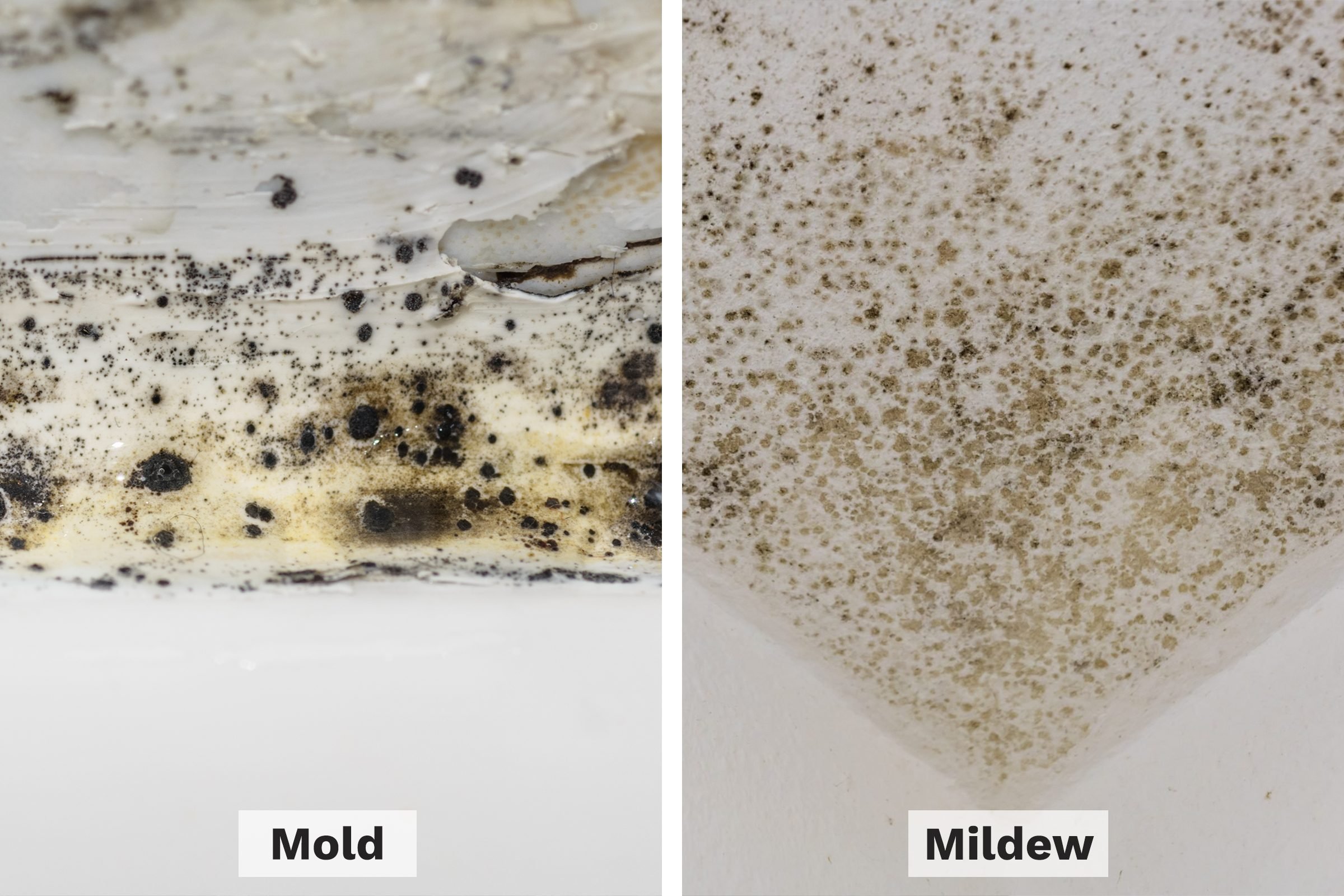
Mildew is a surface-dwelling fungus. It typically appears as a flat, powdery growth. In its early stages, it is often white, eventually turning yellow, grey, or light brown. It tends to grow in a flat pattern, covering the surface of a material rather than rooting itself deep within the fibers.
You will most commonly find mildew on surfaces like:
- Paper surfaces (wallpaper, books)
- Fabrics and upholstery
- Window sills and shower tiles
- Plants and crops

Identifying Mold
Mold is more aggressive. It is a multi-cellular organism that grows in thick, fuzzy, or slimy colonies. Unlike mildew, which stays on the surface, mold develops root-like structures called hyphae that extend into the material it inhabits. This allows it to consume the material, leading to eventual structural rot.
Mold coloration is far more diverse than that of mildew. It can appear in shades of dark green, black, blue, or even orange and red. The distinct “musty” odor associated with mold is a byproduct of microbial volatile organic compounds (mVOCs), which are released as the mold digests your walls, flooring, or wood framing. If you can smell it, the growth is likely significant enough to have penetrated the material, signaling a need for professional intervention.
Risk Assessment and Maintenance Strategies
Strategic property maintenance requires a proactive approach to moisture management. Since both mold and mildew require moisture to thrive, controlling the ambient environment is the most cost-effective way to mitigate the risk of a fungal outbreak.
Controlling the Environment
The primary objective in preventing both mold and mildew is humidity control. In most climates, maintaining an indoor relative humidity level between 30% and 50% is the gold standard for asset protection.
- HVAC Maintenance: Ensure that your HVAC system is properly sized and maintained. A system that is too large for a space will cycle on and off too quickly, failing to properly dehumidify the air.
- Ventilation: High-moisture areas like bathrooms and kitchens must have exhaust ventilation that vents directly to the exterior of the building. Relying on interior air circulation in these zones is a primary driver of fungal growth.
- Water Intrusion: Regularly inspect the building envelope—the roof, windows, and foundation—for leaks. Even a small pinhole leak in a pipe or a minor compromise in exterior flashing can provide the moisture necessary for a catastrophic mold event behind a wall where it remains undetected for months.
When to Bring in Professionals
Understanding when to transition from DIY maintenance to professional remediation is a hallmark of intelligent property management. If you observe mildew on a small, non-porous surface, a specialized cleaning agent is usually sufficient. However, if the affected area exceeds 10 square feet, or if the growth is clearly mold that has penetrated porous materials, professional intervention is mandatory.
Professional remediators follow specific protocols—such as those established by the IICRC (Institute of Inspection, Cleaning and Restoration Certification)—to ensure that the growth is not just removed, but that the underlying moisture source is identified and neutralized. Attempting to “clean” mold on porous surfaces without addressing the moisture source or employing negative air pressure containment can often lead to the spread of spores to unaffected areas of the building, increasing the cost of eventual professional cleanup.
The Strategic Perspective on Fungal Mitigation
In the world of property management and finance, knowledge is a risk-mitigation tool. By distinguishing between the superficial threat of mildew and the structural threat of mold, you can allocate your maintenance budget more effectively.
Proactive management involves:
- Documentation: Keep records of humidity levels and inspection dates. This creates a paper trail that is invaluable for insurance claims or property disclosures.
- Investment in Technology: Utilize smart moisture sensors or hygrometers in basement and attic spaces. These low-cost digital tools provide early warnings, allowing you to address moisture before it manifests as visible mold or mildew.
- Prioritization: Do not treat a spot of mildew on a tile with the same alarm as a patch of black mold behind a drywall panel. Prioritize repairs based on the structural risk and the potential cost to remediate.
Ultimately, both mold and mildew are symptoms of an underlying issue: poor moisture control. While the technical differences in their growth patterns, appearances, and impacts are significant, the solution remains the same—control the environment. By staying ahead of the moisture, you protect the structural integrity of your building and ensure the long-term financial health of your investment. Neglect is the costliest variable in real estate; by mastering the nuances of these biological threats, you maintain control over your property, your budget, and your peace of mind.
aViewFromTheCave is a participant in the Amazon Services LLC Associates Program, an affiliate advertising program designed to provide a means for sites to earn advertising fees by advertising and linking to Amazon.com. Amazon, the Amazon logo, AmazonSupply, and the AmazonSupply logo are trademarks of Amazon.com, Inc. or its affiliates. As an Amazon Associate we earn affiliate commissions from qualifying purchases.