
The landscape of computing has evolved dramatically, moving beyond the basic functionalities of early machines to the sophisticated, graphically intensive experiences we expect today. From immersive video games and high-definition video editing to complex scientific simulations and advanced AI model training, the demands placed on a computer’s graphical capabilities have soared. At the heart of this evolution lies a crucial piece of hardware: the discrete Graphics Processing Unit, or dGPU. While integrated graphics have long been a staple, the dGPU represents a significant leap forward, offering dedicated power and performance for visually demanding tasks.
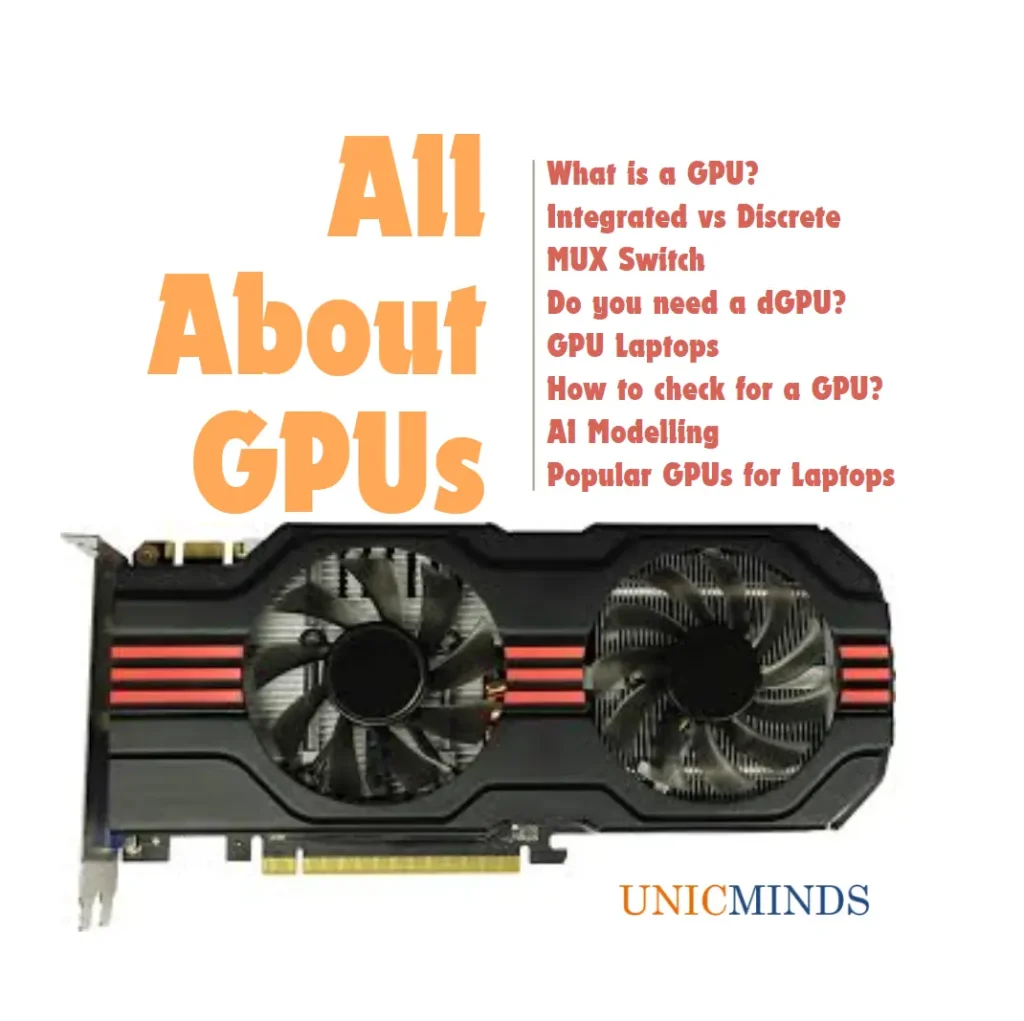
The Core Functionality: What Exactly Does a dGPU Do?
At its most fundamental level, a dGPU is a specialized processor designed specifically to handle the rendering of images, video, and animations. Unlike the Central Processing Unit (CPU), which is a general-purpose processor capable of handling a wide range of computational tasks, the GPU is optimized for parallel processing. This means it can perform many simple calculations simultaneously, making it exceptionally well-suited for the repetitive, matrix-based operations inherent in graphics rendering.
Parallel Processing Power Unleashed
The architecture of a dGPU is fundamentally different from that of a CPU. While a CPU might have a few powerful cores designed for complex, sequential tasks, a GPU boasts hundreds, if not thousands, of smaller, less powerful cores. This massive parallelism is what allows a dGPU to process vast amounts of data concurrently. Think of it like this: a CPU is a brilliant mathematician who can solve incredibly complex equations one by one, while a dGPU is an army of clerks, each capable of performing a simple addition, but together, they can tally millions of numbers in mere moments.
This parallel processing power is crucial for rendering 3D graphics. Each pixel on your screen requires numerous calculations related to its color, shading, texture, and position in a virtual scene. A dGPU can distribute these calculations across its many cores, significantly accelerating the process and enabling smooth, detailed visual outputs. Without a dGPU, complex graphics would be either impossible to render or incredibly slow and choppy, rendering many modern applications unusable.
Beyond Gaming: The Broad Spectrum of dGPU Applications
While often associated with high-end gaming, the capabilities of dGPUs extend far beyond entertainment. Their parallel processing prowess makes them invaluable in a multitude of professional and scientific fields.
High-Performance Computing (HPC) and Scientific Simulations
In scientific research, dGPUs are instrumental in accelerating complex simulations. Fields like computational fluid dynamics, molecular modeling, weather forecasting, and astrophysics rely heavily on processing massive datasets to model intricate physical phenomena. The ability of a dGPU to crunch these numbers rapidly allows researchers to perform more extensive simulations, gain deeper insights, and accelerate the pace of discovery.
Artificial Intelligence (AI) and Machine Learning (ML)
The explosion of AI and ML in recent years is inextricably linked to the advancements in dGPU technology. Training deep neural networks, the backbone of many modern AI applications, involves iterative calculations on enormous datasets. The matrix multiplications and convolutions at the core of neural network training are perfectly suited for the parallel architecture of GPUs. This has led to a significant reduction in training times, making it feasible to develop and deploy sophisticated AI models for tasks ranging from image recognition and natural language processing to autonomous driving and medical diagnostics.
Content Creation and Professional Visualization
For professionals in fields like graphic design, video editing, 3D animation, architectural visualization, and CAD (Computer-Aided Design), a dGPU is not a luxury but a necessity. Rendering complex 3D models, applying intricate visual effects to video footage, and manipulating large design files all demand substantial graphical horsepower. A dGPU significantly speeds up these processes, allowing creators to work more efficiently, achieve higher levels of detail, and meet demanding project deadlines.
Differentiating dGPU from Integrated Graphics
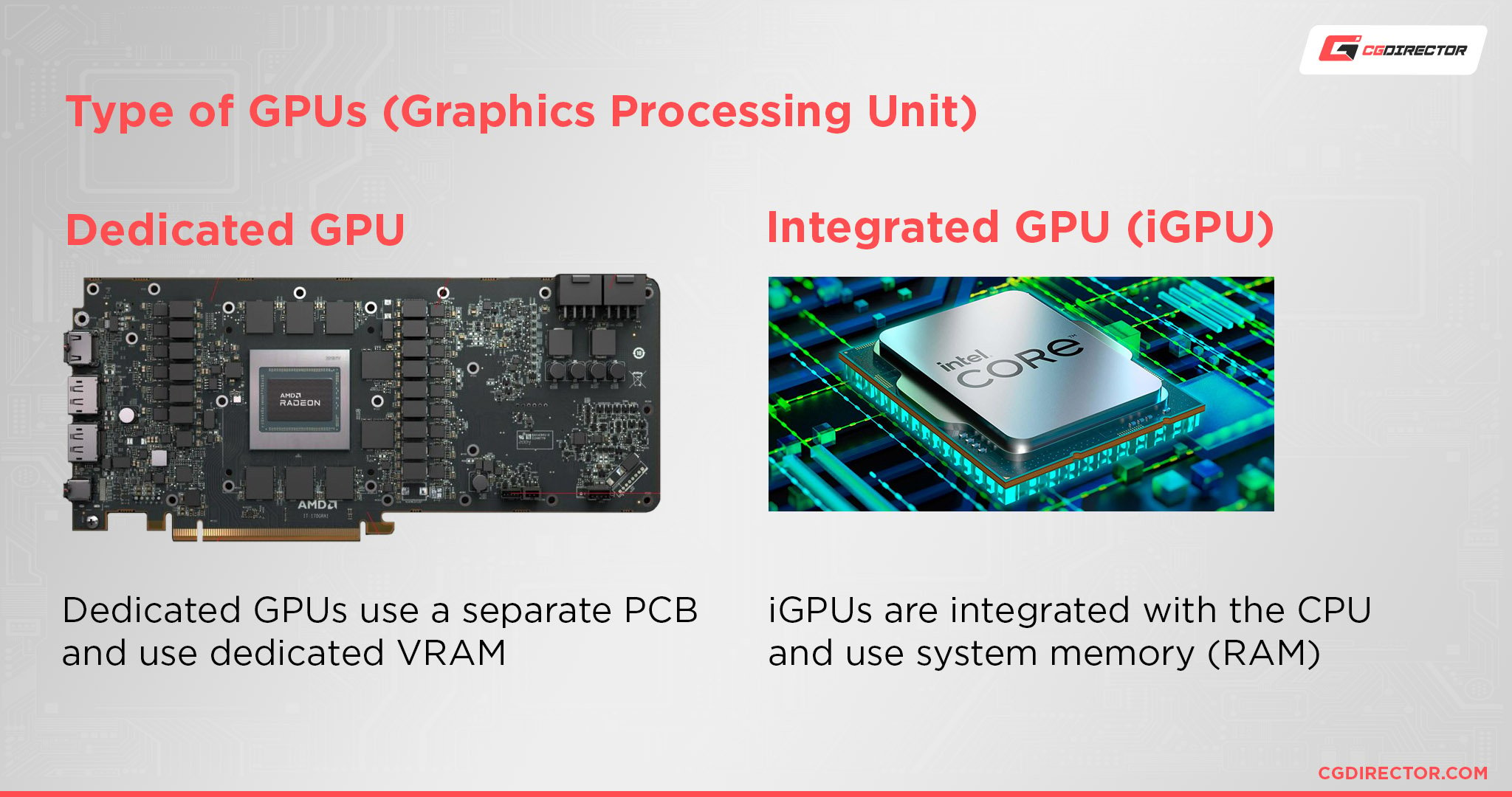
To truly understand the significance of a dGPU, it’s essential to distinguish it from integrated graphics. Integrated graphics, also known as iGPUs, are built directly into the CPU or motherboard. While they have improved over the years and are sufficient for basic computing tasks, they share system resources, primarily RAM, with the CPU.
The Resource Sharing Conundrum of Integrated Graphics
Integrated graphics solutions typically leverage the system’s main memory (RAM) for their own operations. This means that when the iGPU needs to perform graphical tasks, it has to compete with the CPU for access to the RAM. This can lead to performance bottlenecks, especially when both the CPU and iGPU are heavily utilized. Furthermore, iGPUs generally have fewer processing units and lower clock speeds compared to dedicated dGPUs, limiting their ability to handle demanding visual workloads.
The Dedicated Power of Discrete Graphics
A dGPU, on the other hand, is a separate component with its own dedicated video memory (VRAM). This VRAM is much faster than system RAM and is exclusively used by the dGPU, eliminating the competition for resources. Having its own dedicated memory and processing cores allows a dGPU to operate independently of the CPU, leading to significantly higher performance, especially in graphically intensive applications. This dedicated architecture is the key differentiator that empowers dGPUs to tackle tasks that integrated graphics simply cannot.
Key Components and Architecture of a dGPU
Understanding the internal workings of a dGPU reveals why it possesses such formidable graphical processing capabilities. Several key components and architectural features contribute to its performance.
The Graphics Processing Cluster (GPC) and Streaming Multiprocessors (SMs)
At the heart of a dGPU are its Graphics Processing Clusters (GPCs). Within each GPC are multiple Streaming Multiprocessors (SMs). These SMs are the fundamental execution units of the GPU. Each SM contains numerous CUDA cores (in NVIDIA terminology) or Stream Processors (in AMD terminology). These cores are responsible for performing the actual parallel computations. The more SMs and the more cores within each SM, the greater the parallel processing power of the GPU.
Dedicated VRAM: The Fast Lane for Graphics Data
As mentioned earlier, a dGPU is equipped with its own high-speed memory, known as Video RAM (VRAM). This memory stores textures, frame buffers, and other graphical assets that need to be accessed quickly by the GPU during rendering. VRAM is typically GDDR (Graphics Double Data Rate) memory, which is designed for high bandwidth and low latency, making it ideal for the rapid transfer of graphical data. The amount and speed of VRAM directly impact the GPU’s ability to handle high-resolution textures, complex scenes, and large datasets.
Specialized Units: Ray Tracing Cores and Tensor Cores
Modern dGPUs often feature specialized hardware units designed for specific tasks. Ray Tracing Cores, for instance, are hardware accelerators that significantly speed up the computationally intensive process of ray tracing, a rendering technique that simulates the physical behavior of light to produce incredibly realistic visuals. Tensor Cores are another example, specifically designed to accelerate the matrix operations commonly found in AI and machine learning workloads, further enhancing the GPU’s utility beyond traditional graphics rendering.
Choosing the Right dGPU: Factors to Consider
With the variety of dGPUs available on the market, selecting the right one can seem daunting. Several key factors should be considered to ensure the chosen GPU meets your specific needs and budget.
Performance Benchmarks and Application Requirements
The most critical factor is understanding the performance requirements of the applications you intend to use. For casual gaming or basic multimedia tasks, a lower-end dGPU might suffice. However, for professional 3D rendering, high-end gaming at high resolutions and refresh rates, or serious AI development, a more powerful GPU will be necessary. Researching benchmarks for specific applications you use is crucial. Websites and publications that specialize in hardware reviews often provide detailed performance comparisons across various GPUs and software titles.
VRAM Capacity and Bandwidth
The amount of VRAM is particularly important for applications that handle large textures, high-resolution assets, or complex scenes. For example, video editors working with 4K or 8K footage, or 3D artists creating detailed environments, will benefit from more VRAM. Similarly, the memory bandwidth (how quickly data can be transferred to and from VRAM) plays a significant role in overall performance. Higher bandwidth generally translates to smoother performance, especially at higher resolutions and detail settings.
Power Consumption and Cooling Solutions
High-performance dGPUs can consume a significant amount of power and generate considerable heat. It’s essential to ensure your power supply unit (PSU) can adequately support the chosen GPU’s power draw. Additionally, consider the cooling solution provided with the GPU. High-end cards often come with robust cooling systems, but in smaller PC cases, airflow and overall system cooling become even more critical to prevent thermal throttling and ensure optimal performance.
The Future of dGPUs: Evolving Capabilities and Expanding Roles
The evolution of dGPUs is far from over. The ongoing advancements in manufacturing processes, architectural innovations, and the increasing demands of emerging technologies promise an exciting future for these powerful processors.
AI Integration and Specialized Architectures
The trend of integrating specialized AI acceleration units like Tensor Cores is likely to continue and expand. We may see even more sophisticated and dedicated hardware within GPUs designed to handle the ever-growing complexity of AI workloads. This could lead to further breakthroughs in AI development and deployment across a wider range of applications.
Enhanced Realism and Immersive Experiences
As display technologies continue to advance, with higher resolutions, wider color gamuts, and faster refresh rates, the demand on GPUs will only increase. Innovations in rendering techniques, such as more efficient ray tracing and advanced shader technologies, will be crucial for delivering even more realistic and immersive visual experiences in gaming, virtual reality, and augmented reality.
Cloud Computing and the Rise of GPU-as-a-Service
The accessibility of powerful computing resources is also being transformed by cloud computing. GPU-as-a-Service (GPUaaS) models are allowing individuals and businesses to rent access to high-end dGPUs for specific tasks without the need for significant upfront hardware investment. This democratizes access to powerful computational resources, enabling a wider range of users to leverage the capabilities of dGPUs for their projects. The future of dGPUs will likely involve a combination of on-premises hardware and cloud-based solutions, catering to diverse user needs and computational demands.
aViewFromTheCave is a participant in the Amazon Services LLC Associates Program, an affiliate advertising program designed to provide a means for sites to earn advertising fees by advertising and linking to Amazon.com. Amazon, the Amazon logo, AmazonSupply, and the AmazonSupply logo are trademarks of Amazon.com, Inc. or its affiliates. As an Amazon Associate we earn affiliate commissions from qualifying purchases.