
In the rapidly evolving landscape of digital content creation, efficiency, accessibility, and innovation are paramount. Traditional audio and video editing workflows, while powerful, often demand specialized skills, significant time investment, and dedicated software that can be intimidating for newcomers. Enter Descript – a revolutionary all-in-one software that is fundamentally changing how creators, marketers, educators, and businesses approach multimedia production. Far more than just another editing tool, Descript leverages cutting-edge artificial intelligence to transform audio and video into an editable text document, making the complex process of media manipulation as intuitive and straightforward as editing a word processor document.
At its core, Descript is an AI-powered audio and video editor that integrates transcription, screen recording, podcasting, and collaborative features into a single, cohesive platform. Its radical approach to media editing simplifies intricate tasks, democratizes access to professional-grade tools, and drastically cuts down production times. For anyone looking to create podcasts, videos, presentations, or even simply transcribe spoken word, Descript represents a paradigm shift, offering a glimpse into a future where content creation is not only more efficient but also more collaborative and inherently more intelligent. This deep dive will explore Descript’s core functionalities, its transformative impact on various industries, and the technological innovations that power its unique capabilities.
The Core Concept: Text-Based Media Editing
The most distinctive and revolutionary aspect of Descript is its text-based editing paradigm. This innovative approach fundamentally alters the traditional non-linear editing (NLE) experience, making it accessible to a broader audience without sacrificing professional-grade control.
Transcribing Your Media into an Editable Document
The journey with Descript begins by importing your audio or video files. Upon import, Descript’s advanced AI immediately gets to work, automatically transcribing the spoken word into a highly accurate text document. This isn’t just a static transcript; it’s a dynamic, fully interactive representation of your media. Every word in the transcript is directly linked to its corresponding audio or video segment. This instantaneous transcription process, often completed in mere minutes for even lengthy recordings, lays the groundwork for Descript’s innovative editing workflow. The accuracy of these transcripts is continuously refined by Descript’s machine learning models, ensuring a reliable starting point for any project.
Editing Audio and Video Like a Document
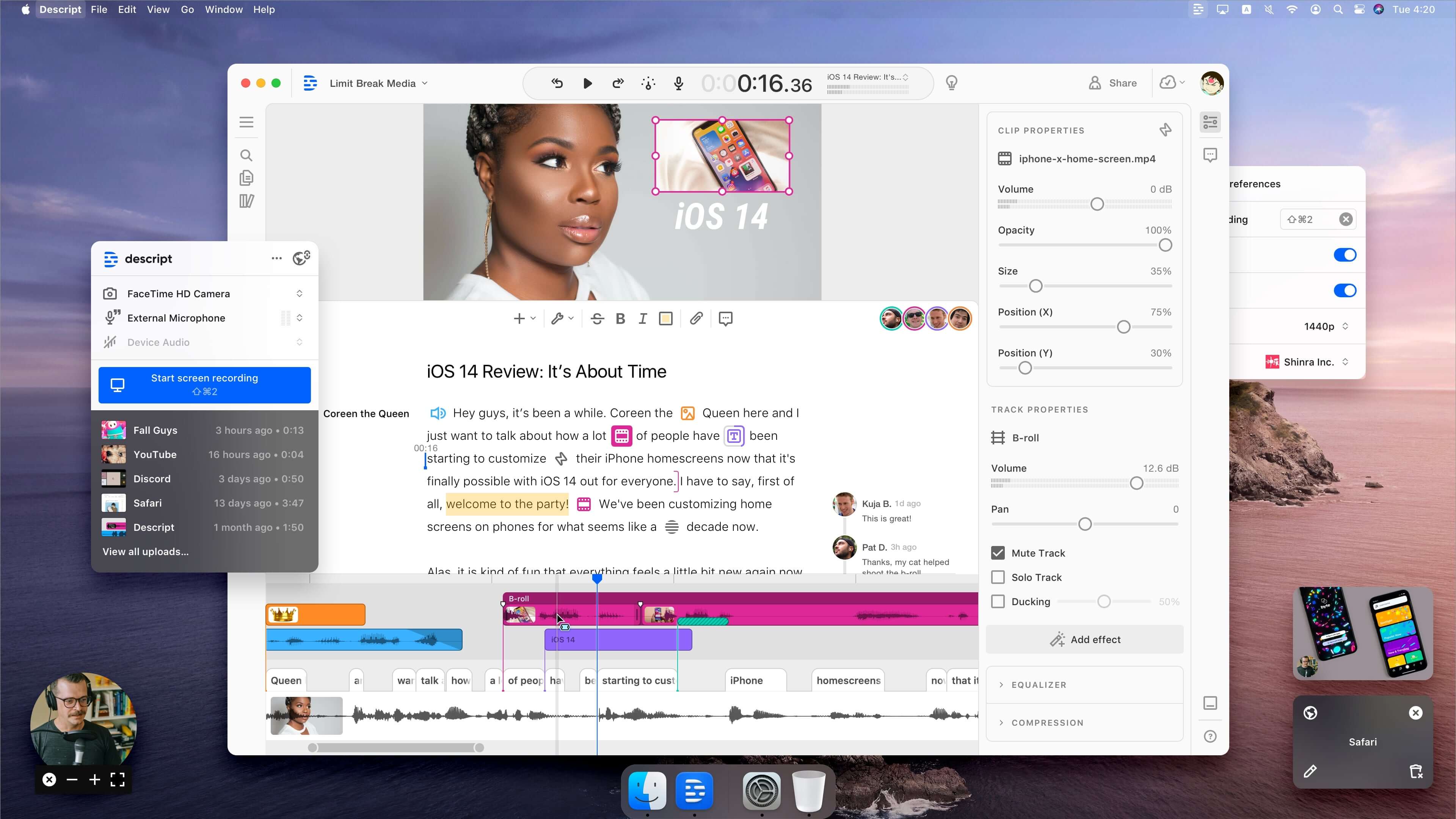
Once the transcription is complete, the magic of Descript truly shines. Instead of navigating complex timelines filled with waveforms and video tracks, users can edit their audio and video content by simply editing the text document. Want to remove an awkward pause, a stutter, or an entire sentence? Just highlight the corresponding words in the transcript and press delete – Descript automatically cuts out the associated audio and video. Rearranging segments is as simple as cutting and pasting text. This intuitive interface demystifies the editing process, allowing content creators to focus on the narrative and flow of their story rather than getting bogged down by technical intricacies. It’s an approach that appeals strongly to anyone comfortable with word processing, effectively lowering the barrier to entry for high-quality media production.
Overdub: AI Voice Synthesis
Perhaps one of Descript’s most astonishing and powerful features is Overdub. This generative AI capability allows users to create a synthetic version of their own voice – or a stock voice – and then generate new audio by simply typing text. Imagine realizing after a recording that you forgot to mention a crucial detail, or mispronounced a word, or even need to add an entirely new sentence. With Overdub, there’s no need for a re-recording session. You can type in the new words, and Descript will generate them in your voice, seamlessly integrating them into your existing audio. This technology goes beyond simple text-to-speech; it learns the nuances, intonations, and characteristics of your voice, making the generated speech remarkably natural and indistinguishable from the original recording. Overdub not only saves immense amounts of time but also opens up new creative possibilities for dynamic content revision and personalization.
Key Features That Redefine Content Workflow
Beyond its core text-based editing, Descript is packed with a suite of features that consolidate multiple tools into one platform, streamlining the entire content creation process from capture to publication.
Multitrack Audio and Video Editing
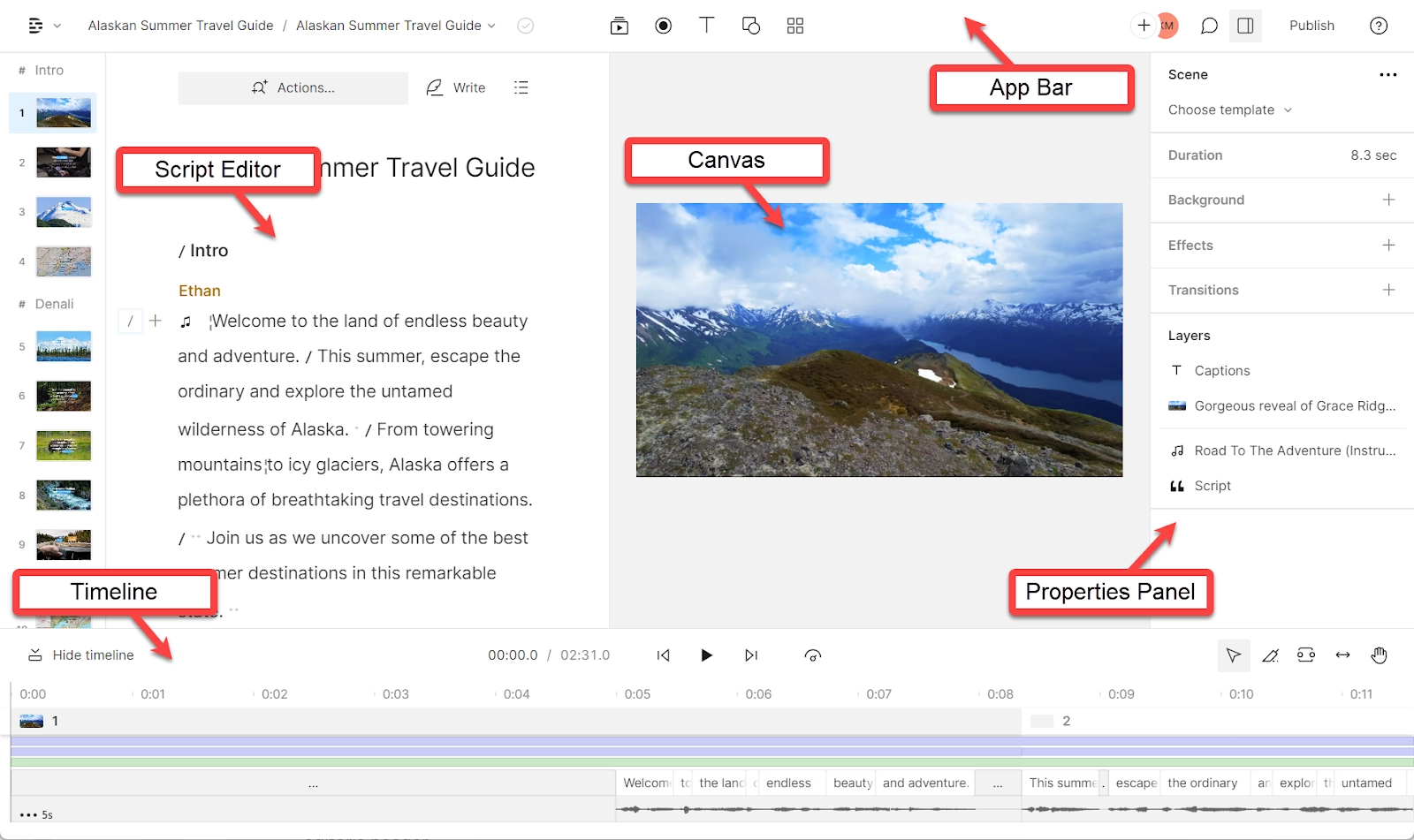
While its text-based interface is revolutionary, Descript doesn’t shy away from offering robust traditional editing capabilities. It functions as a fully capable multitrack audio workstation (DAW) and non-linear video editor (NLE). Users can work with multiple audio and video tracks, add music, sound effects, and B-roll footage, and fine-tune levels, transitions, and effects. This hybrid approach ensures that while the primary editing is text-driven, users still have the granular control expected from professional editing software, allowing for complex layering and sophisticated post-production.
Studio Sound and Filler Word Removal
Descript integrates powerful AI-driven audio enhancements. The “Studio Sound” feature can dramatically improve audio quality, reducing background noise, removing echo, and optimizing voice clarity with a single click – making home recordings sound like they were made in a professional studio. Equally impressive is the “Filler Word Removal” tool, which automatically identifies and removes common verbal tics like “um,” “uh,” “you know,” and “like” from the transcript and, consequently, from the media, leading to cleaner, more professional-sounding content.
Eye Contact Correction and Green Screen
For video content, Descript offers intelligent AI-powered enhancements. The “Eye Contact Correction” feature subtly adjusts the speaker’s gaze in video recordings, making it appear as if they are looking directly into the camera, even if they were reading notes during filming. This is invaluable for presenters and educators. Additionally, its built-in green screen functionality allows for easy background removal and replacement, further simplifying video production without the need for specialized external software.
Collaborative Workspaces
In an increasingly remote and team-oriented world, collaboration is critical. Descript excels here, providing real-time collaborative workspaces that allow multiple team members to work on the same project simultaneously. Editors, producers, writers, and reviewers can access, edit, comment, and track changes within the same Descript project, much like Google Docs. This fosters seamless teamwork, accelerates feedback loops, and ensures everyone is working from the latest version of the content.
Screen Recording and Remote Recording
Descript acts as a comprehensive recording studio. Its integrated screen recorder allows users to capture their desktop, specific windows, or browser tabs, along with their webcam and microphone audio – perfect for tutorials, presentations, or software demonstrations. For remote interviews or podcasts, Descript’s “Remote Recording” feature facilitates high-quality, uncompressed audio and video capture from multiple participants directly within the platform, syncing their individual tracks for easy editing.
Publishing and Export Options
Once a project is complete, Descript offers versatile export and publishing options. Users can export their finished audio or video in various formats and resolutions. For podcasters, Descript can directly publish to popular hosting platforms. For video creators, content can be easily exported for platforms like YouTube, Vimeo, or social media, often with built-in features for generating audiograms or video clips for promotional purposes.
Who Benefits Most from Descript?
Descript’s versatility and user-friendly design make it an invaluable tool for a wide array of professionals and organizations. Its ability to simplify complex tasks significantly broadens its appeal.
Podcasters and Audio Engineers
For podcasters, Descript is a game-changer. It streamlines the entire production workflow from recording and transcription to editing and mastering. The text-based editing allows for rapid content refinement, while filler word removal and Studio Sound significantly enhance audio quality. Multitrack capabilities accommodate co-hosts and guests, and Overdub can save crucial time for last-minute script changes or corrections.
Video Content Creators and YouTubers
Video production, especially for platforms like YouTube, often involves intensive editing. Descript accelerates this process by allowing creators to quickly cut out irrelevant sections, rearrange clips, and add b-roll. Features like eye contact correction, green screen, and integrated screen recording make it easier to produce professional-looking videos without needing a dedicated team of specialists.
Marketers and Businesses
Businesses can leverage Descript for a multitude of tasks: creating explainer videos, internal communications, training modules, social media content, and promotional audio/video. The collaborative features are particularly beneficial for marketing teams, enabling quick content generation and review cycles, while Overdub allows for rapid updates to existing content without costly re-shoots.
Educators and Trainers
Educators can create engaging video lectures, tutorials, and online course materials with unprecedented ease. Screen recording and webcam capture are perfect for demonstrating concepts, while the text-based editing simplifies the process of refining educational content, ensuring clarity and conciseness. Transcripts also serve as valuable resources for students with diverse learning needs.
Transcribers and Journalists
Professionals who regularly work with spoken word benefit immensely from Descript’s accurate and fast transcription services. Journalists can quickly transcribe interviews for articles, and transcribers can use the tool to edit and refine their outputs, often making their work more efficient and accurate than manual methods or less sophisticated automated solutions.
The Technological Edge: AI and Machine Learning at Its Core
Descript’s groundbreaking capabilities are not magic; they are the result of sophisticated artificial intelligence and machine learning algorithms working in concert. These technologies underpin every unique feature, allowing Descript to perform tasks that were once either impossible or incredibly labor-intensive.
Natural Language Processing (NLP) for Transcription
The accuracy and speed of Descript’s transcription engine are powered by advanced Natural Language Processing (NLP). NLP algorithms are trained on vast datasets of spoken language, enabling them to accurately convert audio waveforms into text, understand context, and differentiate between speakers. This continuous learning process ensures that Descript’s transcription capabilities remain state-of-the-art, even handling diverse accents and challenging audio environments.
Generative AI for Voice Synthesis (Overdub)
Overdub is a prime example of Generative AI in action. It utilizes deep learning models, specifically neural networks, to analyze a speaker’s unique vocal characteristics – pitch, cadence, timbre, and accent. Once a voice model is created, the generative AI can synthesize new speech that mimics these characteristics, making the generated audio sound like the original speaker. This involves complex processes of waveform generation and speech synthesis that are at the forefront of AI research.
Computer Vision for Video Enhancements
Features like Eye Contact Correction and Green Screen removal rely on Computer Vision. Computer Vision algorithms analyze video frames to identify faces, track eye movements, and segment foreground elements from backgrounds. For eye contact, AI subtly manipulates pixels around the eyes to adjust the gaze. For green screen, it intelligently detects the background color and applies masking techniques to replace it, performing these tasks with remarkable precision and minimal artifacts.
Machine Learning for Workflow Optimization
Beyond specific features, machine learning is integral to Descript’s overall performance and user experience. It optimizes processing times, refines automatic editing suggestions (like filler word removal), and continually improves the accuracy of its various AI models. The more users interact with Descript and provide feedback, the smarter and more efficient the platform becomes, learning from user preferences and common editing patterns to streamline workflows further.
Descript in the Broader Media Landscape: Disrupting Traditional Workflows
Descript is more than just a tool; it represents a significant disruption to traditional media production paradigms, reshaping how we conceive, create, and collaborate on audio and video content.
Bridging the Skill Gap
One of Descript’s most profound impacts is its ability to bridge the skill gap in media production. By making editing as intuitive as text processing, it empowers individuals and small teams without extensive technical training in video or audio engineering to produce high-quality content. This democratization of professional tools enables a wider range of voices to enter the digital media space.
Accelerating Production Times
The time savings offered by Descript are immense. Tasks that traditionally take hours – manual transcription, precise audio cuts, or re-recording segments – can be completed in a fraction of the time. This acceleration is crucial for content creators operating in fast-paced environments, allowing them to produce more content, respond to trends quickly, and maintain a consistent publishing schedule.
Fostering Innovation in Content Creation
By simplifying the technical hurdles, Descript allows creators to focus more on storytelling, creativity, and message delivery. This freedom can foster innovation, encouraging experimentation with new formats, narratives, and interactive elements. The ability to quickly iterate and revise content without extensive technical overhead can lead to richer and more dynamic media experiences.
The Future of Media Production
Descript points towards a future where AI plays an even more central role in content creation. As AI models become more sophisticated, we can expect even more automated features, smarter editing suggestions, and deeper integration of generative capabilities. The platform’s commitment to text-based, collaborative editing suggests a future where media production is less about technical mastery of complex software and more about clarity of communication and creative vision, with AI acting as an intelligent co-pilot.
Conclusion
Descript stands as a testament to the transformative power of artificial intelligence in the realm of digital media. By rethinking the fundamental approach to audio and video editing, it has created a tool that is simultaneously powerful enough for professionals and accessible enough for novices. Its text-based interface, coupled with an impressive array of AI-powered features like Overdub, Studio Sound, and intelligent video enhancements, streamlines workflows, fosters collaboration, and dramatically reduces the time and effort required to produce high-quality content.
In an era where content is king and digital communication is paramount, Descript is not just simplifying media creation; it is democratizing it. It empowers podcasters, YouTubers, marketers, educators, and businesses to tell their stories more effectively and efficiently, without getting lost in the complexities of traditional editing suites. As Descript continues to evolve, integrating even more sophisticated AI capabilities, it solidifies its position as a leading innovator, charting a clear path toward the future of intelligent, collaborative, and intuitive media production. For anyone serious about creating compelling audio and video content in the modern age, understanding “what is Descript” is not just about learning a new tool, but recognizing a pivotal shift in how we interact with and shape the digital world.
aViewFromTheCave is a participant in the Amazon Services LLC Associates Program, an affiliate advertising program designed to provide a means for sites to earn advertising fees by advertising and linking to Amazon.com. Amazon, the Amazon logo, AmazonSupply, and the AmazonSupply logo are trademarks of Amazon.com, Inc. or its affiliates. As an Amazon Associate we earn affiliate commissions from qualifying purchases.