
In the fast-paced world of technology, software development, and digital product launches, certain terms become ubiquitous. Among the most common is “demo.” Whether you are a software developer showcasing a new feature, a product manager pitching an app to investors, or a user exploring a trial version of a subscription service, the word “demo” is inescapable. But for those looking at the linguistic roots and the professional application of the term, the question remains: what is demo short for, and why does it carry so much weight in the tech industry?
The Etymology and Definition of Demo
At its core, “demo” is a clipped form of the word “demonstration.” In the context of technology, a demonstration is the act of showing how a product, piece of software, or hardware device functions in a real-world or simulated environment. Unlike a formal presentation or a dry technical specification document, a demo is designed to be experiential. It bridges the gap between abstract code and tangible utility.
Beyond the Clipping: The Role of Demonstration
The shift from the formal “demonstration” to the casual “demo” reflects the evolution of the tech industry itself. As software moved from the domain of academic mainframes to consumer-facing applications, the terminology became more accessible. A demo is no longer just a proof of concept; it is a primary marketing and communication tool. It is the bridge between a developer’s intent and the end-user’s reality. When we say “demo,” we are implicitly promising that the technology works, that the user interface is intuitive, and that the value proposition is clear.
The Evolution of the Term in Software
In the early days of computing, a demonstration might involve a manual, line-by-line execution of code. Today, the term covers everything from interactive prototypes created in design software like Figma to fully functional “demo environments” that mirror production systems. The evolution of the term tracks the sophistication of our tools—from simple command-line outputs to immersive, cloud-hosted software experiences that can be accessed from anywhere in the world.
The Strategic Importance of Software Demos
In the technology sector, the demo is the ultimate arbiter of success. It is the moment where the product “meets the road.” For SaaS (Software as a Service) companies, the demo is often the pivot point of the entire sales cycle. It is the conversion mechanism that turns an interested lead into a paying customer. Understanding why the demo is so critical requires looking at both the technical and psychological aspects of software adoption.
Reducing Friction for New Users
One of the primary goals of a software demo—especially in the form of a “product tour” or a “freemium” trial—is to reduce friction. Modern users have limited patience. If a piece of software does not demonstrate its value within the first few minutes, users are likely to abandon it. A well-constructed demo guides the user through the most high-value features, providing a “quick win” that establishes trust. This is the difference between a successful software launch and a stagnant product.
The Demo as a Tool for Stakeholder Buy-in
For internal teams and project managers, the demo serves as a milestone. When a team demos a new feature to stakeholders, they are engaging in a process of validation. It allows for feedback loops that are impossible to capture through documentation alone. By seeing the software in motion, stakeholders can identify usability issues, design flaws, or technical limitations before a final release. This iterative process is the cornerstone of Agile methodology, where the “sprint demo” is the ritual that keeps a team aligned and moving toward a common goal.
Types of Demos in the Modern Tech Landscape
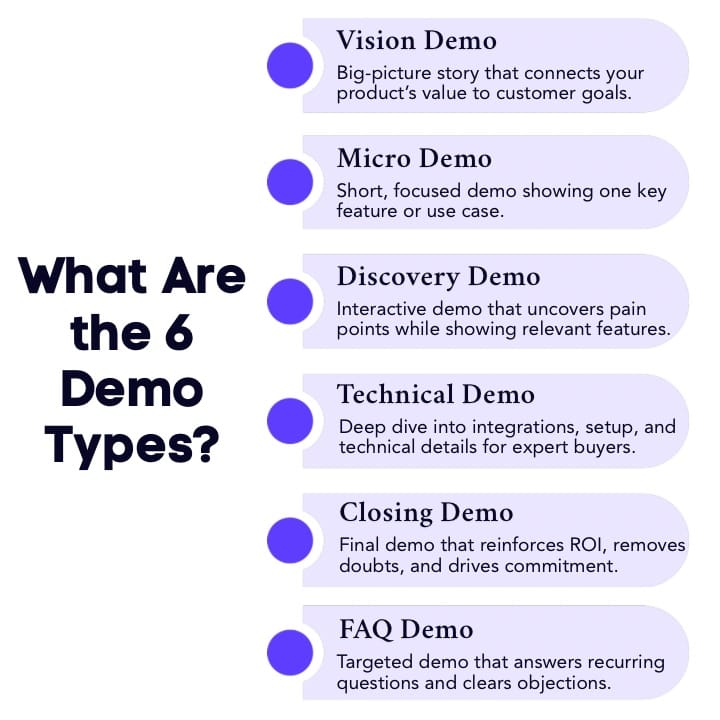
The term “demo” is an umbrella for several distinct types of experiences. Depending on the target audience and the desired outcome, companies deploy different strategies to showcase their technology. Understanding these categories is essential for anyone working within the tech stack.
Live vs. Recorded Demos
A live demo remains the “gold standard” for high-stakes sales meetings. It demonstrates confidence and provides the opportunity for real-time interactivity. However, the rise of asynchronous communication has popularized the recorded demo. Using tools like Loom or Vidyard, product managers can record walkthroughs that potential users can watch at their own pace. While this lacks the immediate feedback of a live session, it provides scalability and ensures that the demonstration is delivered exactly as intended, without the risk of a “live demo fail”—a nightmare scenario where software bugs ruin a high-pressure pitch.
Interactive Product Tours
Interactive tours have emerged as the sophisticated evolution of the static demo. These are often embedded directly into the software’s landing page or onboarding sequence. Using layers of overlays and guided tooltips, the software “walks” the user through a simulated or live environment. This is particularly popular in B2B SaaS, where the complexity of the platform makes it difficult for a new user to grasp the capabilities without structured guidance.
The Proof of Concept (PoC)
Often confused with a demo, the Proof of Concept is a deeper dive. While a demo aims to sell or explain, a PoC aims to prove that a specific technical solution can solve a specific business problem. A PoC is usually custom-built for a client, demonstrating that the software can handle their specific data sets or integrate with their legacy systems. If a demo is a sales brochure, the PoC is the engine teardown.
Best Practices for Successful Demonstrations
Executing a demo effectively is a blend of technical expertise, storytelling, and user empathy. Whether you are presenting to a room full of C-suite executives or recording a tutorial for your YouTube channel, the principles of a high-impact demo remain consistent.
Focus on Outcomes, Not Features
The most common mistake in tech demos is “feature dumping.” This happens when the presenter lists every button, menu, and setting in the software. This approach overwhelms the viewer and masks the value of the product. Instead, successful demos focus on the outcome. Start with the problem the user faces, and show the software as the solution. If you are demonstrating a project management tool, don’t show the user how to create a task; show them how the software helps them hit a deadline.
Crafting a Narrative
Every good demo needs a narrative arc. Who is the user? What is their current struggle? How does this software transform their workflow? By framing the demo as a story, you keep the audience engaged. The software becomes the hero of the story, helping the user overcome an obstacle. This narrative structure keeps the viewer invested in the process and makes the information far more memorable.
Handling the “Demo God” Factor
The “Demo Gods” are a notorious part of tech culture—a tongue-in-cheek reference to the unpredictable nature of live technology. Even with the most robust code, environments can crash, APIs can fail, and internet connections can drop. Professional presenters always have a fallback. This might mean having a screen recording of the workflow ready if the live environment fails, or keeping a “clean” backup environment that hasn’t been cluttered by test data. Planning for failure is the hallmark of a seasoned tech professional.
The Future of Demonstrations in the Digital Age
As we move toward a future defined by Artificial Intelligence and Augmented Reality, the way we demo technology is changing rapidly. We are moving away from passive viewing toward interactive, AI-driven experiences.
AI-Generated Demos
We are already seeing the emergence of generative AI tools that can create personalized demos for individual prospects. Imagine a landing page that, upon learning your industry and specific pain points, automatically generates a video demo showcasing how the software solves your exact problems. This level of hyper-personalization is the next frontier of digital marketing and product adoption.
Immersive Demos with AR/VR
For hardware and complex industrial software, Augmented Reality (AR) and Virtual Reality (VR) are beginning to play a role. Instead of looking at a 2D screen, users can interact with a 3D model of the product or a simulated digital twin of an entire factory floor. These immersive environments allow users to “test drive” technology before it is ever manufactured or fully deployed.

Conclusion
“Demo” may be a simple, three-letter clipping of “demonstration,” but it represents the most critical link in the technology value chain. It is the moment where theory becomes practice, where marketing becomes reality, and where potential customers make the leap to becoming users. By mastering the art of the demo, tech professionals ensure that their innovations don’t just exist—they resonate. Whether through live presentations, interactive tours, or AI-driven experiences, the demo will remain the heartbeat of the tech industry for years to come.
aViewFromTheCave is a participant in the Amazon Services LLC Associates Program, an affiliate advertising program designed to provide a means for sites to earn advertising fees by advertising and linking to Amazon.com. Amazon, the Amazon logo, AmazonSupply, and the AmazonSupply logo are trademarks of Amazon.com, Inc. or its affiliates. As an Amazon Associate we earn affiliate commissions from qualifying purchases.