
In the pursuit of long-term physical performance and sustainable muscle growth, the most counterintuitive advice is often the most effective: stop pushing so hard. While modern fitness culture emphasizes “grind,” “hustle,” and “no pain, no gain,” these philosophies often lead to plateaus, burnout, and injury. This is where the concept of the “deload” becomes essential. A deload is a planned, temporary reduction in training intensity, volume, or frequency, designed to allow the body and central nervous system to recover from the accumulated stress of intense exercise. Rather than representing a step backward, it is a strategic maneuver that ensures your trajectory of progress continues upward over months and years.
The Physiology of Stress and Supercompensation
To understand why deloading is necessary, one must first understand the General Adaptation Syndrome (GAS). When you expose your body to the stress of a workout, you push it out of its baseline state. This stress signals the body to adapt to handle future similar stressors—this is the process of getting stronger. However, training is catabolic; it breaks down muscle fibers and taxes the nervous system. The actual growth and performance gains occur during the recovery phase, a phenomenon known as supercompensation.
Accumulated Fatigue vs. Functional Overreaching
Over the course of a standard training block—typically lasting four to eight weeks—fatigue accumulates. Initially, this fatigue is manageable, and you might still hit personal records. However, as the cumulative stress exceeds the body’s ability to recover within a 24-to-48-hour window, you enter a state of functional overreaching. If you do not pull back, you cross the line into non-functional overreaching, where performance plateaus or even declines. Deloading acts as the reset button that allows the accumulated fatigue to dissipate while preserving the physiological adaptations you have already earned.
The Role of the Central Nervous System (CNS)
Most athletes focus on muscle soreness, but the nervous system is the silent bottleneck of performance. High-intensity lifting, particularly heavy compound movements like squats and deadlifts, places immense strain on the CNS. When the nervous system is fatigued, your ability to recruit motor units—the muscle fibers controlled by a single nerve—decreases. A deload provides the necessary downtime for the neurotransmitters and neural pathways to recalibrate, ensuring that when you return to heavy lifting, your nervous system is primed for maximal force production.
How to Properly Execute a Deload
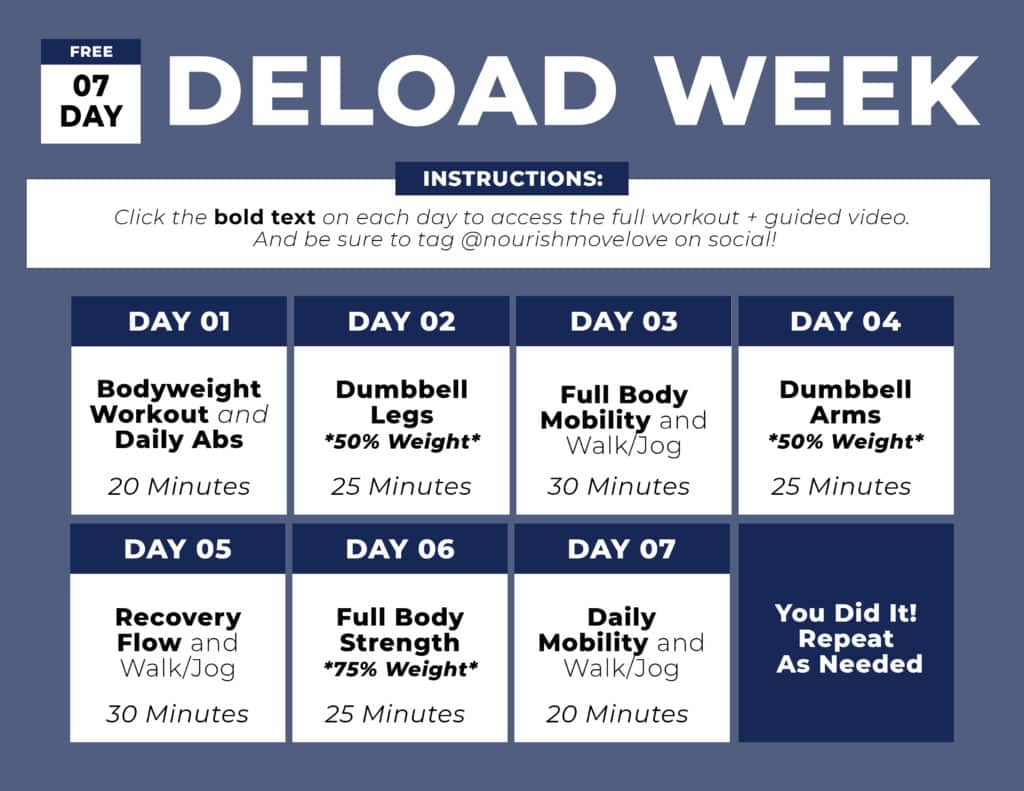
There is a common misconception that a deload means spending a week on the couch doing absolutely nothing. While complete rest is sometimes necessary for those who have severely overtrained, a structured deload is usually more effective for maintaining neuromuscular coordination and movement patterns. The goal is to keep the stimulus present but to lower the systemic cost of the training.
Reducing Volume
Volume is defined as sets multiplied by repetitions. This is the primary driver of systemic fatigue. If your typical training session involves four sets of eight reps for a specific movement, a simple deload strategy is to reduce the volume by 50%. This means performing only two sets of eight at the same weight. By cutting the volume in half, you significantly lower the time under tension and the total load placed on your joints and tendons, allowing connective tissues to repair and inflammation to subside.

Reducing Intensity
Intensity refers to the weight on the bar, usually expressed as a percentage of your one-rep max (1RM). If you prefer to keep your volume consistent, you can instead reduce the weight by 20% to 30%. For example, if you typically squat 300 pounds for sets of five, you would drop the weight to 225 or 240 pounds. This allows you to practice the movement pattern and maintain your “feel” for the weight without pushing your cardiovascular and central nervous systems to their absolute limit.
Frequency and Duration
For most intermediate to advanced trainees, a deload should be programmed every four to six weeks. Beginners, who are still mastering movement patterns and have not yet reached high levels of systemic fatigue, may only need a deload every eight to ten weeks. The duration of the deload is typically one week. Anything less may be insufficient to shed deep-seated fatigue, while anything more than two weeks risks the onset of detraining, where you begin to lose the progress you have worked so hard to achieve.
The Mental and Psychological Benefits
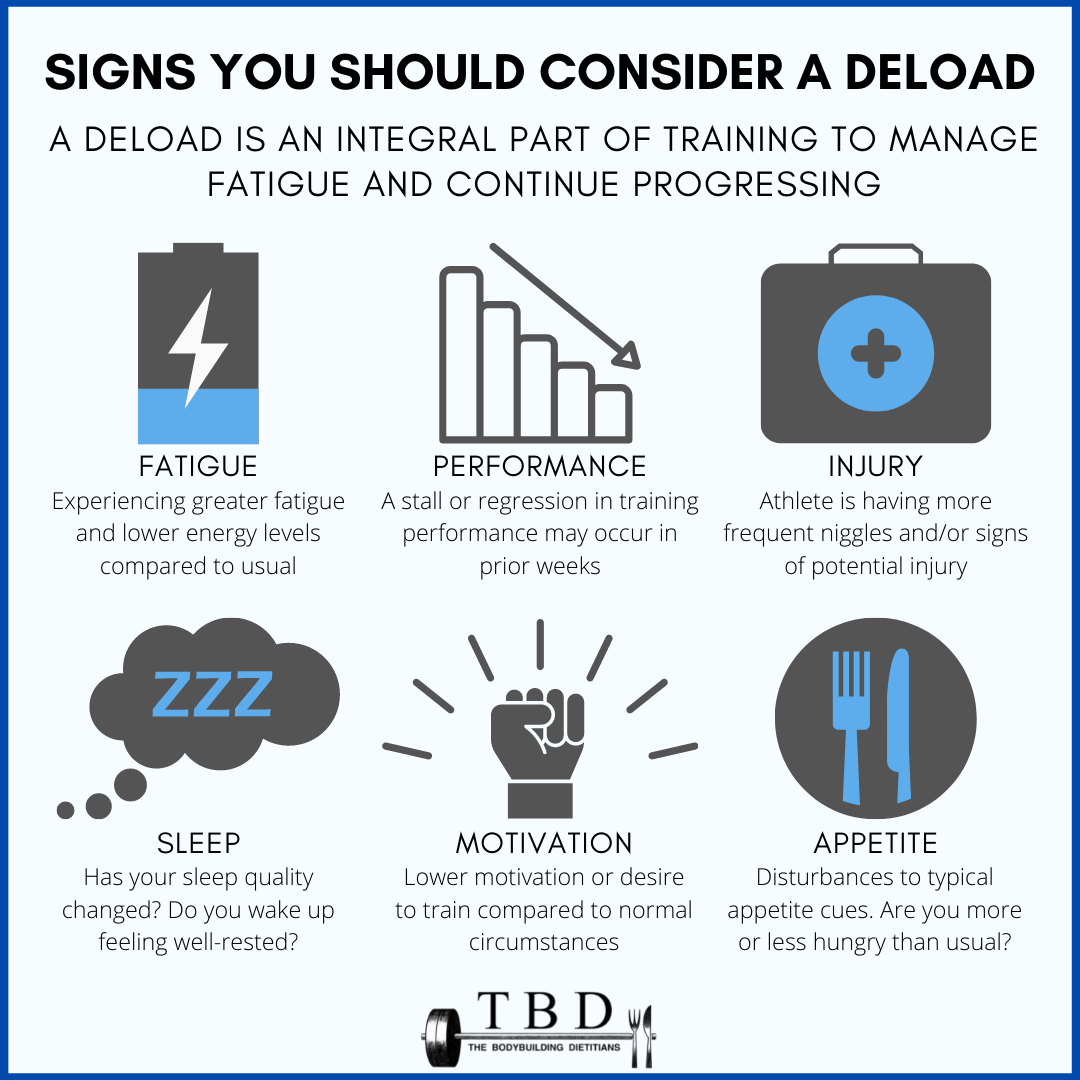
Physical fatigue is only half of the equation. Training for peak performance is mentally taxing. The psychological burden of consistently approaching heavy sets, worrying about technical form, and pushing through self-imposed barriers can lead to mental fatigue. Many athletes find that they become “burned out” on their program long before their bodies actually break down.
Reigniting Motivation
The monotony of a rigid, high-intensity training program can eventually drain the joy out of the process. A deload offers a psychological break from the pressure of chasing numbers. During this week, you don’t have to worry about hitting a PR or straining for that last rep. This mental freedom can be incredibly refreshing. When you return to your regular training block, you often find that your drive and motivation are significantly higher. You are no longer dreading the weights; you are eager to get back under them.
Evaluating Your Training Goals
A deload week is the perfect time for reflection. Because you aren’t focused on the grind of the current session, you can objectively assess your recent training blocks. Did you make the progress you expected? Is the current program aligned with your long-term objectives? Are there specific movement patterns that consistently cause discomfort? By stepping back, you gain the clarity needed to adjust your variables—your exercise selection, your rep ranges, or your frequency—to better suit your future goals.
Integrating Deloads Into Your Long-Term Strategy
Incorporating a deload is not a sign of weakness; it is a sign of maturity. The most successful lifters and athletes are those who treat their body like a high-performance machine that requires scheduled maintenance. Ignoring these maintenance intervals is like driving a racecar at high speed without ever stopping to change the oil or tires. Eventually, something will break, and the downtime required for repairs will be much longer than the time you would have spent on routine maintenance.
Proactive vs. Reactive Deloading
There are two ways to approach this: proactive and reactive. A proactive deload is scheduled. You mark it on your calendar every fourth or fifth week, regardless of how you feel. This is the gold standard for long-term health. A reactive deload occurs when your body forces you to stop—you feel persistent joint pain, your sleep quality plummets, your resting heart rate increases, or you consistently fail to hit your target numbers. While reactive deloading is better than no deloading at all, it is far less efficient than a proactive approach. By the time you are forced to stop, you have already wasted training time and moved dangerously close to an injury.
Personalizing Your Approach
Ultimately, the perfect deload is the one that allows you to return to your next training block feeling refreshed and hungry to lift. Some athletes find that active recovery—such as light swimming, yoga, or mobility work—during their deload helps keep their body feeling supple and loose. Others prefer to stick to their gym routine, just with significantly lower intensity. The methodology may vary, but the principle remains the same: treat your recovery with the same respect and attention to detail as you treat your training. By mastering the art of the deload, you shift your focus from short-term exhaustion to long-term evolution, ensuring your physical journey is not just intense, but sustainable.
aViewFromTheCave is a participant in the Amazon Services LLC Associates Program, an affiliate advertising program designed to provide a means for sites to earn advertising fees by advertising and linking to Amazon.com. Amazon, the Amazon logo, AmazonSupply, and the AmazonSupply logo are trademarks of Amazon.com, Inc. or its affiliates. As an Amazon Associate we earn affiliate commissions from qualifying purchases.