
In the landscape of modern corporate strategy and organizational behavior, the ability to make effective choices is the ultimate competitive advantage. A decision process is not merely the act of choosing between A and B; it is a structured, repeatable sequence of analytical and psychological steps that an organization or individual uses to convert information into action. Whether you are scaling a startup, refining a brand’s market positioning, or navigating a pivot, your decision process defines the speed and quality of your results.
The Anatomy of Strategic Choice
At its core, a robust decision process transforms ambiguity into clarity. Without a defined framework, leaders often fall victim to cognitive biases, such as confirmation bias—seeking only information that supports their existing beliefs—or analysis paralysis, where an abundance of data leads to a state of total inactivity.

Defining the Objectives
The first phase of any effective decision process is the clear articulation of the problem. Often, businesses fail because they are attempting to solve a symptom rather than the root cause. A well-defined objective serves as a North Star, ensuring that all subsequent data gathering is laser-focused on moving the needle toward a specific outcome. This involves asking not just “What are we deciding?” but “What will success look like when this decision is implemented?”
Information Gathering and Synthesis
Once the objective is established, the process shifts to the aggregation of relevant intelligence. In the age of big data, the challenge is rarely a lack of information; it is a lack of signal amidst the noise. A high-performing decision process incorporates mechanisms to filter data based on its reliability, relevance, and impact. This stage requires the inclusion of diverse perspectives. If a brand strategy is being updated, the process must synthesize insights from marketing analytics, customer feedback loops, and competitive intelligence to form a coherent narrative.
The Cognitive Framework of Decision-Making
Human intuition is a powerful tool, but it is notoriously unreliable under pressure. A sophisticated decision process integrates both quantitative rigor and qualitative judgment to mitigate the impact of individual human error.
Leveraging Mental Models
Mental models are frameworks that simplify complex systems, allowing leaders to stress-test their assumptions. For instance, the “First Principles” approach involves breaking a problem down to its most basic, foundational truths and building up from there, rather than relying on historical precedence or market norms. By adopting such models, organizations can challenge the status quo and identify innovative opportunities that a standard, linear approach would miss.
The Role of Risk Assessment
No decision is free of trade-offs. An essential component of a mature decision process is the explicit evaluation of downside risk. This is not about being pessimistic, but about being prepared. By employing techniques like “pre-mortems”—where teams imagine a future scenario where the decision has failed and work backward to determine what could have caused that failure—leaders can build resilience into their strategies. This preemptive analysis allows for the adjustment of plans before capital or reputational equity is fully committed.
Structuring the Organizational Decision Loop
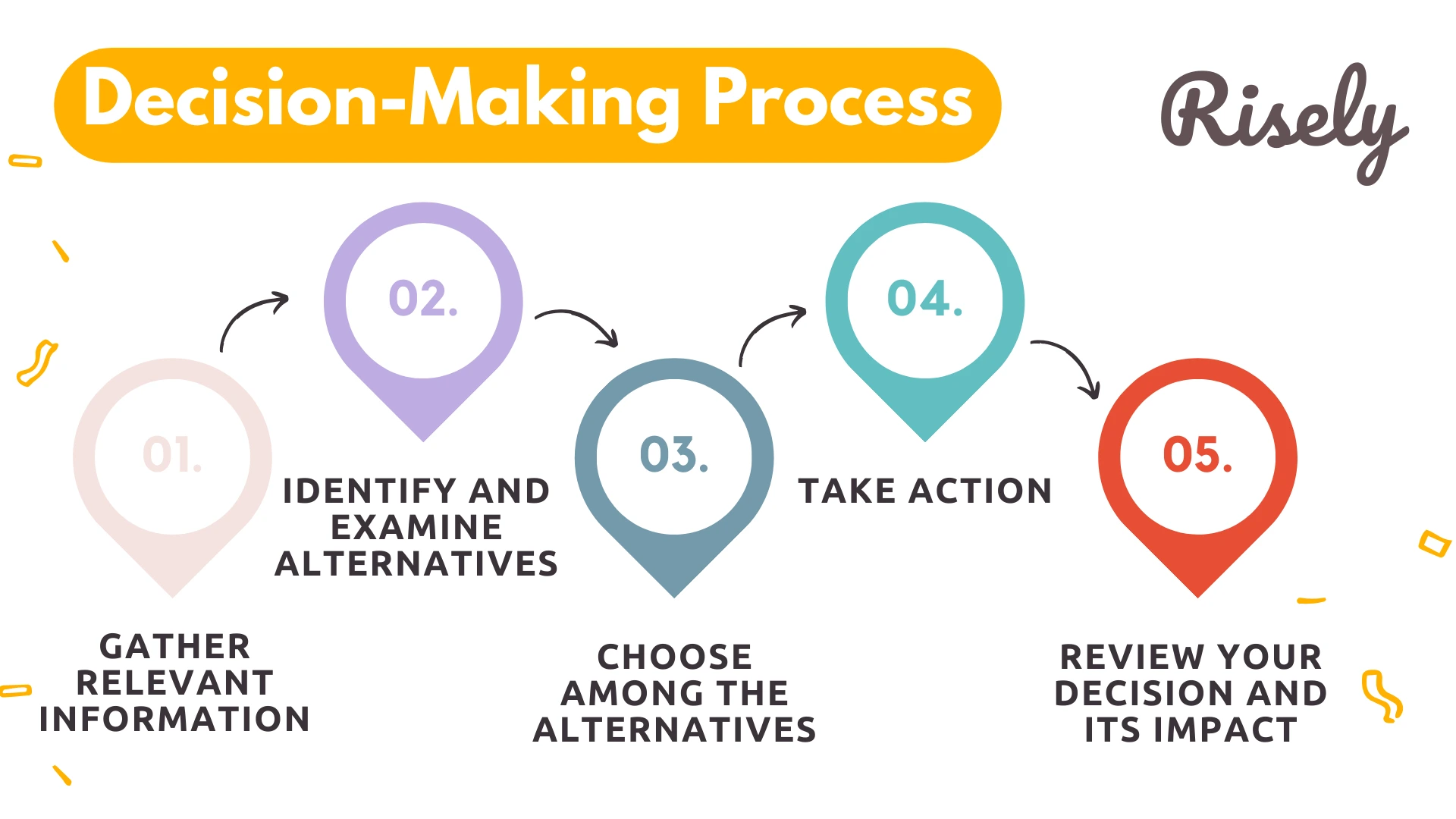
Decision-making in a vacuum is rarely sustainable. To be effective, the decision process must be integrated into the organization’s operational DNA, ensuring that accountability is clear and execution is seamless.
Decentralized vs. Centralized Models
There is a constant tension between centralized authority and decentralized autonomy. A successful organization knows when to use which. High-stakes, irreversible decisions—such as a merger or a complete rebranding—often require a centralized, high-level process to ensure alignment with the overarching corporate strategy. Conversely, operational decisions that occur daily should be pushed down to the front lines. Empowering employees to make decisions within a defined framework accelerates speed-to-market and fosters a culture of ownership.
The Feedback Loop and Iteration
The final stage of the decision process is, paradoxically, the beginning of the next cycle: the review. A decision is a hypothesis. Once implemented, it generates data that must be fed back into the organization. If the expected outcomes were not met, a rigid culture treats this as failure, while a high-growth culture treats it as an invaluable data point. By formalizing post-decision reviews, organizations can identify flaws in their logical framework and refine their process for the future. This iterative approach turns decision-making into an organizational muscle that grows stronger with every cycle.
Avoiding the Traps of Conventional Wisdom
Even with a formal process, organizations can fall into traps when the culture favors consensus over truth or speed over accuracy. Identifying these traps is essential to maintaining the integrity of your decision-making.
Groupthink and the Illusion of Consensus
Groupthink occurs when the desire for harmony or conformity results in an irrational or dysfunctional decision-making outcome. To combat this, effective leaders often employ a “devil’s advocate” role within their decision-making meetings. This individual is tasked specifically with challenging the prevailing view, ensuring that alternative hypotheses are fully explored before a final course of action is locked in.
The Sunk Cost Fallacy
One of the most dangerous biases in business strategy is the tendency to continue investing in a failing project simply because of the time, money, or resources already sunk into it. A rigorous decision process must include “kill switches.” These are pre-defined criteria that trigger an automatic review of whether a project is still viable. By separating the investment already made from the potential future return, leaders can make the cold, calculated choice to pivot or abandon initiatives that no longer align with the company’s long-term strategy.
The Future of Decision Intelligence
As we look toward the future, the integration of data-driven insights into the human decision process is becoming more sophisticated. We are moving toward a hybrid model where technology handles the heavy lifting of pattern recognition, allowing human leaders to focus on the nuanced art of judgment and ethics.
Data-Driven Culture
True decision intelligence is not just about having a dashboard; it is about having a culture where data is democratized. When every member of an organization understands the “why” behind the process, they become active participants in the strategy rather than passive implementers. This transparency reduces internal friction and ensures that when a major decision is made, the entire organization is aligned behind it.

Ethics and Long-Term Impact
Finally, a modern decision process must account for the broader implications of corporate choices. Beyond the balance sheet, brands today are judged by their societal impact. Including an ethical review—asking “Should we do this?” in addition to “Can we do this?”—is critical for long-term brand equity. This ensures that every strategic move reinforces the company’s identity rather than eroding consumer trust.
Ultimately, the goal of mastering your decision process is not to make every decision perfectly. It is to increase the probability of success, reduce the frequency of catastrophic errors, and ensure that your organization can adapt with agility in a volatile market. By formalizing the way you analyze information, evaluate risks, and learn from outcomes, you build an institutional advantage that is nearly impossible for competitors to replicate. Your decisions are the blueprint for your brand’s future; ensuring that the blueprint is sound is the most important task any leader can undertake.
aViewFromTheCave is a participant in the Amazon Services LLC Associates Program, an affiliate advertising program designed to provide a means for sites to earn advertising fees by advertising and linking to Amazon.com. Amazon, the Amazon logo, AmazonSupply, and the AmazonSupply logo are trademarks of Amazon.com, Inc. or its affiliates. As an Amazon Associate we earn affiliate commissions from qualifying purchases.