
In the intricate world of public finance, few concepts generate as much confusion, anxiety, and political drama as the debt ceiling. Far from being a technicality, it represents a critical statutory limit on the amount of money the United States government can borrow to meet its existing legal obligations. Understanding the debt ceiling is fundamental to grasping the mechanics of national finance, the stability of global markets, and the potential impact on every American’s financial well-being. It is not merely an abstract figure but a recurring flashpoint that forces policymakers to confront the nation’s fiscal trajectory and the potentially catastrophic consequences of inaction.
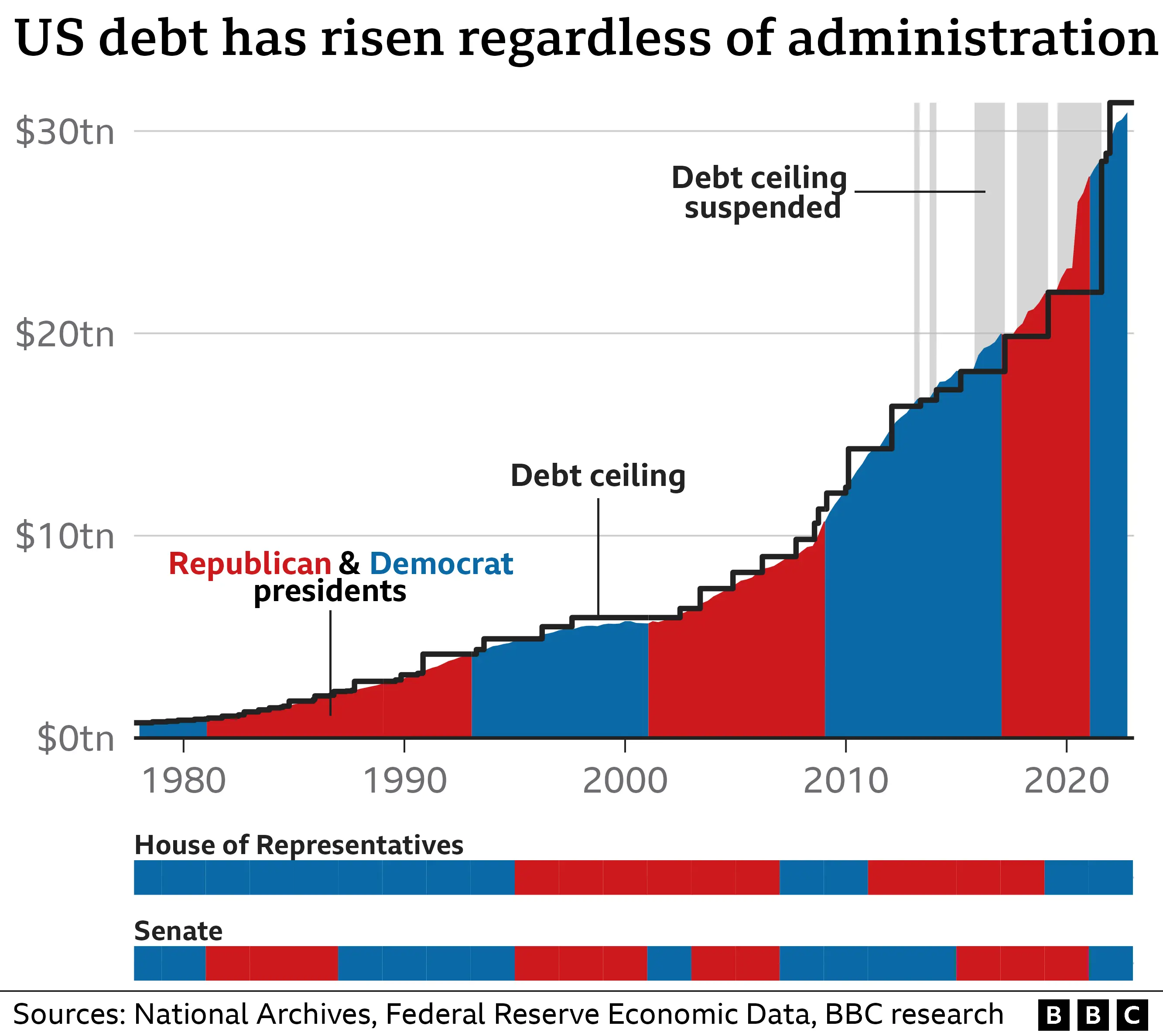
At its core, the debt ceiling is a legislative constraint. When Congress establishes a budget and authorizes spending—ranging from Social Security benefits and military salaries to tax refunds and infrastructure projects—it effectively commits the government to a certain level of expenditure. If the government’s revenues (primarily taxes) do not cover these expenditures, it must borrow money to make up the difference. This borrowing adds to the national debt. The debt ceiling is the maximum aggregate amount of outstanding debt that the U.S. Treasury can incur. Once this limit is reached, the government cannot issue new debt, even to pay for expenses it has already legally obligated itself to cover.
The concept might seem straightforward, but its implications are anything but. Each time the U.S. approaches its debt limit, the nation faces a period of intense political negotiation, often accompanied by global economic uncertainty. This article will delve into the mechanics of the debt ceiling, explore its profound significance, examine the political strategies employed around it, and differentiate it from other related financial concepts, all within the exclusive purview of the “Money” category.
Understanding the Debt Ceiling’s Mechanics
The debt ceiling, while seemingly a simple numerical limit, operates within a complex framework of government finance. Its mechanics reveal why it is a source of continuous debate and why reaching it without resolution can be so perilous.
A Limit, Not a Spending Authorization
One of the most crucial distinctions to make is that the debt ceiling is not a mechanism to control future spending. It is, instead, a limit on the government’s ability to pay for past spending decisions and existing legal commitments. When Congress passes appropriations bills, entitlements like Social Security and Medicare, and other financial obligations, it effectively authorizes the government to incur those expenses. The debt ceiling then dictates how much the Treasury can borrow to fulfill these pre-existing obligations when tax revenues fall short.
Imagine a household that has already committed to paying its mortgage, car loans, and utility bills for the month. The debt ceiling is like a sudden restriction on the amount of money they can withdraw from their credit line to cover these already-approved expenses, even if they have the income later in the month. It’s not about whether they should pay their bills, but whether they can. Failure to raise the debt ceiling would mean the U.S. government could not pay its bondholders, military personnel, or Social Security recipients on time, despite having the legal obligation and the implicit intent to do so. This distinction is critical because debates surrounding the debt ceiling often mistakenly become debates about government spending levels, rather than about the government’s capacity to honor its commitments.
Historical Context and Evolution
The debt ceiling was first established in 1917 under the Second Liberty Bond Act. Prior to this, Congress had to approve each individual bond issuance. With the massive borrowing required to finance World War I, this piecemeal approach became cumbersome. The debt ceiling was introduced to give the Treasury more flexibility to manage debt within a general limit, streamlining the process and allowing for quicker response to financing needs. Initially, there were separate limits for different types of debt, but in 1939, Congress consolidated these into a single, aggregate statutory limit, which is the system we have today.
Over its history, the debt ceiling has been raised or suspended more than 100 times, often with bipartisan agreement. For decades, these adjustments were largely routine administrative acts, necessary to keep the government functioning. However, in recent decades, particularly since the mid-1990s and increasingly in the 2010s, the debt ceiling has transformed into a powerful political tool, used by the opposition party to extract concessions from the party in power. This shift has elevated what was once a technicality into a high-stakes political battleground.
Who Sets and Raises It?
The power to set and raise the debt ceiling rests exclusively with Congress. It requires a majority vote in both the House of Representatives and the Senate, and the President’s signature to become law. This legislative requirement is why the process often becomes so contentious. While the President’s administration, specifically the Treasury Department, is responsible for managing the national debt and tracking its proximity to the ceiling, they have no unilateral authority to raise it.
When the Treasury projects that the government is nearing its borrowing limit, it notifies Congress, initiating a period of legislative urgency. Failure for Congress to act means the government will eventually exhaust its “extraordinary measures” (discussed below) and face default. The political dynamics often involve the party not in control of the White House demanding spending cuts or policy changes in exchange for their votes to raise the ceiling, turning a purely financial obligation into a platform for broader political battles.
Why Does the Debt Ceiling Matter? The Stakes Involved
The debt ceiling is not an abstract economic concept; its implications can be profoundly real, impacting global financial markets and the daily lives of ordinary citizens. The stakes involved in failing to raise the debt ceiling are immense, ranging from a potential default on U.S. obligations to widespread economic instability.
The Specter of Default
The most immediate and catastrophic consequence of the U.S. government hitting the debt ceiling without a resolution is the risk of default. A default means the U.S. Treasury would be unable to pay some of its legal obligations. This is not merely about missing a single payment; it implies a failure to meet commitments such as:
-
Payments to Bondholders: The U.S. Treasury bond is considered one of the safest investments globally. A default would mean the U.S. government failing to pay interest or principal on its sovereign debt. This would shatter confidence in the reliability of U.S. government securities, which are foundational to the global financial system.
-
Social Security and Medicare Benefits: Millions of retirees and beneficiaries rely on these payments. A default could delay or halt these critical income sources.
-
Salaries for Federal Employees and Military Personnel: Government workers, including those serving in the armed forces, would face delayed or missed paychecks.
-
Tax Refunds: Americans expecting tax refunds might not receive them on time.
-
Payments to Contractors and Vendors: Businesses that contract with the government would experience payment delays, potentially leading to layoffs or business failures.
While the Treasury Department could prioritize payments in a default scenario, deciding which obligations to honor and which to delay would be a legal and logistical nightmare, and would not mitigate the broader damage. The act of prioritization itself signals a failure to meet all obligations, which constitutes a de facto default.
Economic Repercussions
Beyond immediate payment failures, a U.S. default would trigger a cascade of severe economic repercussions, both domestically and internationally.
-
Global Financial Market Instability: U.S. Treasury bonds serve as the benchmark for safe assets worldwide. A default would cause unprecedented panic, leading to a flight from all but the most liquid assets, sharp declines in stock markets, and extreme volatility. The interconnectedness of global finance means this instability would quickly spread across continents.
-
Soaring Interest Rates: The perceived risk of lending to the U.S. government would skyrocket. To attract investors, the Treasury would have to offer much higher interest rates on future debt. This increase would ripple throughout the economy, pushing up interest rates on mortgages, car loans, and business loans, making borrowing more expensive for everyone.
-
Loss of Reserve Currency Status: The U.S. dollar’s role as the world’s primary reserve currency is underpinned by the full faith and credit of the U.S. government. A default would severely undermine this status, leading countries and institutions to seek alternative reserve assets. This could weaken the dollar’s value, make imports more expensive, and diminish America’s geopolitical influence.
-
Downgrade of U.S. Credit Rating: Rating agencies like Standard & Poor’s, Moody’s, and Fitch would almost certainly downgrade the U.S. government’s credit rating. Even the threat of default in 2011 led S&P to downgrade the U.S. for the first time in history, which had immediate negative impacts on markets and consumer confidence. A full default would lead to further, more severe downgrades.
-
Recession and Job Losses: Increased borrowing costs, reduced investor confidence, and disruptions to government payments would likely plunge the U.S. economy into a severe recession, leading to widespread job losses and business closures. Consumer and business confidence would plummet, further exacerbating the economic downturn.
Impact on Everyday Americans
The abstract financial jargon of defaults and credit ratings translates directly into tangible impacts on the financial lives of ordinary Americans.
-
Increased Borrowing Costs: Higher interest rates across the board mean higher payments on mortgages, credit cards, student loans, and car loans for millions of households.
-
Reduced Investment Returns: Stock market crashes and increased volatility would erode retirement savings, 401(k)s, and other investment portfolios, potentially delaying retirements or reducing financial security.
-
Job Insecurity: A recession triggered by default would lead to widespread layoffs, increased unemployment, and a tight job market, making it harder for people to find or keep work.
-
Disruption of Government Services: Beyond delayed benefits, a crisis could lead to disruptions in other vital government services, from national parks to scientific research, impacting quality of life and future innovation.
-
Erosion of Savings: Inflationary pressures could emerge if the dollar’s value erodes, meaning that savings would buy less over time.
In essence, a U.S. default would represent an unprecedented self-inflicted wound, destabilizing the global economy and inflicting severe financial hardship on American citizens, all for the sake of political posturing around a statutory limit.
Strategies and Political Maneuvers: Navigating the Limit
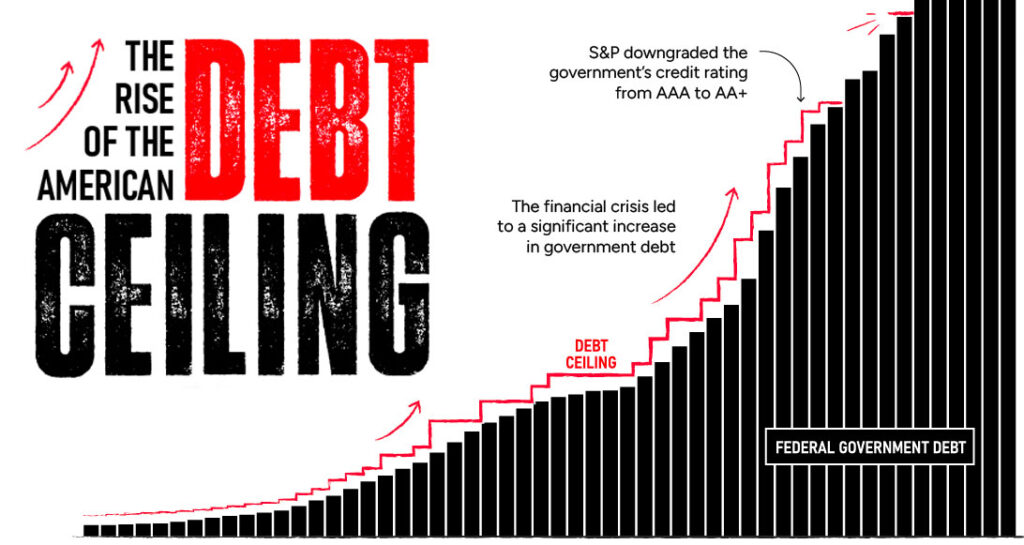
Given the severe consequences of hitting the debt ceiling, the period leading up to it often becomes a hotbed of political strategy and maneuvering. The Treasury Department employs temporary measures to buy time, while political factions leverage the crisis for their own agendas.
“Extraordinary Measures”
When the national debt approaches the statutory limit, the U.S. Treasury Department, under the guidance of the Secretary of the Treasury, can take “extraordinary measures” to avoid a default. These are temporary accounting maneuvers that do not increase the national debt but free up borrowing capacity. Common extraordinary measures include:
-
Suspending investments in certain government employee retirement funds: The Treasury temporarily suspends investments into the Government Securities Investment Fund (G Fund) of the Thrift Savings Plan (TSP) for federal employees, as well as the Civil Service Retirement and Disability Fund and the Postal Service Retiree Health Benefits Fund. The Treasury later restores these funds with interest once the debt ceiling is resolved.
-
Suspending the issuance of State and Local Government Series (SLGS) securities: These are special bonds issued by the Treasury to state and local governments, which they purchase to hold proceeds from tax-exempt bonds. Suspending their issuance reduces the amount of outstanding debt counted against the ceiling.
-
Exchanging securities: The Treasury can sometimes exchange certain types of debt held by specific government accounts for other types of debt that do not count against the statutory limit, temporarily creating headroom.
These measures buy weeks or even a few months of time, creating a “X-date” or “default date” when the Treasury will exhaust all available cash and borrowing authority. While these measures are crucial for avoiding immediate default, they are not a long-term solution and merely postpone the inevitable need for Congress to act.
Political Weaponization
What was once a routine administrative adjustment has, over the past few decades, become a powerful tool for political brinkmanship. The debt ceiling is frequently “weaponized” by the opposition party to exert leverage over the sitting President and the majority party, particularly when there is divided government.
Opposing factions often demand significant policy concessions—such as specific spending cuts, tax reforms, or other legislative priorities—in exchange for their votes to raise the debt ceiling. This turns a simple vote to pay the nation’s bills into a high-stakes negotiation where failure could have devastating economic consequences. The 2011 debt ceiling crisis, for example, saw Republicans demanding substantial spending cuts from the Obama administration, leading to a last-minute deal and the aforementioned downgrade of the U.S. credit rating. This dynamic fosters an environment of instability and creates recurring periods of market anxiety, even if default is ultimately averted.
Potential Solutions and Reforms
The recurring crises surrounding the debt ceiling have led to various proposals for reform or even its abolition.
-
Eliminate the Debt Ceiling: Many economists and policymakers argue that the debt ceiling is an anachronism that serves no useful purpose and is purely a source of political instability. They advocate for its outright repeal, arguing that Congress already approves spending and taxation, and thus implicitly approves the borrowing necessary to cover those commitments.
-
Link the Debt Ceiling to the Budget: One proposal suggests that whenever Congress passes a budget that would require borrowing beyond the current debt limit, the debt limit would automatically be raised to accommodate that borrowing. This would ensure that decisions about spending and borrowing are made concurrently, removing the separate, crisis-driven vote.
-
The “Trillion-Dollar Coin” (and other unconventional options): This highly controversial idea involves the Treasury minting a platinum coin of an arbitrarily large denomination (e.g., $1 trillion) and depositing it at the Federal Reserve. Under existing law, the Treasury has broad discretion to mint platinum coins, unlike other denominations which have specific limits. While technically legal, this “solution” is widely seen as a gimmick that could undermine the integrity of the financial system and the perception of responsible governance. Other unconventional options, like relying on the 14th Amendment (which states the validity of the public debt shall not be questioned), are also debated but carry significant legal and political risks.
Ultimately, reforming the debt ceiling requires political will and a commitment to fiscal responsibility that transcends partisan divides. Without reform, the U.S. economy and global financial markets will continue to endure recurring periods of manufactured crisis.
Distinguishing Debt Ceiling from National Debt and Budget Deficits
To fully comprehend the debt ceiling, it’s crucial to differentiate it from two related but distinct concepts: the national debt and budget deficits. While interconnected, conflating them leads to significant misunderstandings in public discourse.
National Debt Explained
The national debt, also known as the public debt, represents the total amount of money that the U.S. federal government owes to its creditors, both domestic and foreign. This accumulated debt is the sum of all past annual budget deficits (when spending exceeded revenue) minus any surpluses (when revenue exceeded spending).
The national debt can be broadly categorized into:
-
Debt held by the public: This includes U.S. Treasury securities held by individuals, corporations, state and local governments, the Federal Reserve, and foreign governments. This is the portion of the debt that is traded in financial markets.
-
Intragovernmental holdings: This is debt that the government owes to itself, primarily to various government trust funds (like Social Security and Medicare trust funds). These funds invest their surpluses in special Treasury securities, effectively lending money to the government.
The national debt grows when the government spends more than it collects in taxes and other revenues. It is a stock figure, representing the cumulative borrowing over the nation’s history.
Budget Deficit Defined
A budget deficit occurs when the federal government’s total expenditures exceed its total revenues within a specific fiscal year. It’s an annual flow concept. For example, if the government spends $6 trillion in a year but only collects $5 trillion in taxes, it has a budget deficit of $1 trillion for that year.
When the government runs a deficit, it must borrow money to cover the shortfall. This borrowing adds to the national debt. Conversely, a budget surplus occurs when revenues exceed expenditures, which allows the government to pay down its debt. Years of consistent budget deficits are the primary driver of an increasing national debt.
Interplay and Misconceptions
The interplay between these three concepts is critical:
-
Budget Deficit drives National Debt: Annual budget deficits necessitate government borrowing, which adds to the national debt.
-
National Debt vs. Debt Ceiling: The national debt is the actual accumulated amount of money the government owes. The debt ceiling is the statutory limit on how high that national debt can go. Think of the national debt as the water level in a bathtub, and the debt ceiling as a mark on the tub indicating the maximum allowable water level.
-
Debt Ceiling and Future Spending: A common misconception is that raising the debt ceiling authorizes new spending. In reality, raising the debt ceiling simply allows the Treasury to borrow money to pay for spending that Congress has already authorized through previous budget and appropriations bills. The spending decisions have already been made; the debt ceiling debate is about whether the government will honor those financial commitments.
Confusing these concepts can lead to misleading arguments in political debates. Debating the debt ceiling is not the appropriate time to debate whether the government should have spent a certain amount of money; that debate should occur during the annual budget process. The debt ceiling debate is solely about whether the government will pay the bills it has already incurred.

Conclusion: The Enduring Challenge of Fiscal Responsibility
The debt ceiling, while a unique feature of American public finance, underscores a universal challenge: managing a nation’s fiscal health responsibly. It is a powerful reminder that decisions made in the budgetary process have long-term consequences that must eventually be addressed. While designed initially as a technical convenience, it has evolved into a recurring high-stakes political spectacle, often threatening the stability of the U.S. and global economies.
The potential for a U.S. default is not merely a theoretical exercise; it represents a self-inflicted wound with catastrophic implications for financial markets, the dollar’s global standing, and the economic well-being of every American. From soaring interest rates on mortgages to potential disruptions in Social Security payments, the ripple effects would be profound and widespread.
Navigating the debt ceiling requires more than just “extraordinary measures” by the Treasury; it demands genuine political will to address fiscal challenges constructively. Whether through legislative reforms to abolish the ceiling or through a renewed commitment to compromise, the goal must be to ensure the U.S. government can always honor its financial obligations. Ultimately, the ongoing saga of the debt ceiling serves as a poignant barometer of the nation’s capacity for sound financial governance and its commitment to economic stability, both at home and across the globe. For investors, businesses, and everyday citizens, understanding this critical limit is essential for comprehending the broader landscape of national and international finance.
aViewFromTheCave is a participant in the Amazon Services LLC Associates Program, an affiliate advertising program designed to provide a means for sites to earn advertising fees by advertising and linking to Amazon.com. Amazon, the Amazon logo, AmazonSupply, and the AmazonSupply logo are trademarks of Amazon.com, Inc. or its affiliates. As an Amazon Associate we earn affiliate commissions from qualifying purchases.