
In the rapidly evolving landscape of technology, from the smartphones in our pockets to the massive data centers powering global Artificial Intelligence (AI), electricity remains the fundamental lifeblood. However, not all electricity is the same. To understand how our gadgets function, how our digital security is maintained, and how software interacts with hardware, one must grasp the distinction between Direct Current (DC) and Alternating Current (AC).
These two forms of electrical flow represent more than just physics; they represent the two pillars upon which modern tech infrastructure is built. This guide explores the technical nuances of AC and DC, their historical rivalry, and their specific roles in the current digital revolution.
The Fundamentals of Electrical Current: Defining AC and DC
At its most basic level, electrical current is the flow of electrons through a conductor, such as a copper wire. The way these electrons move determines whether the current is classified as AC or DC.
Direct Current (DC): The Steady Flow
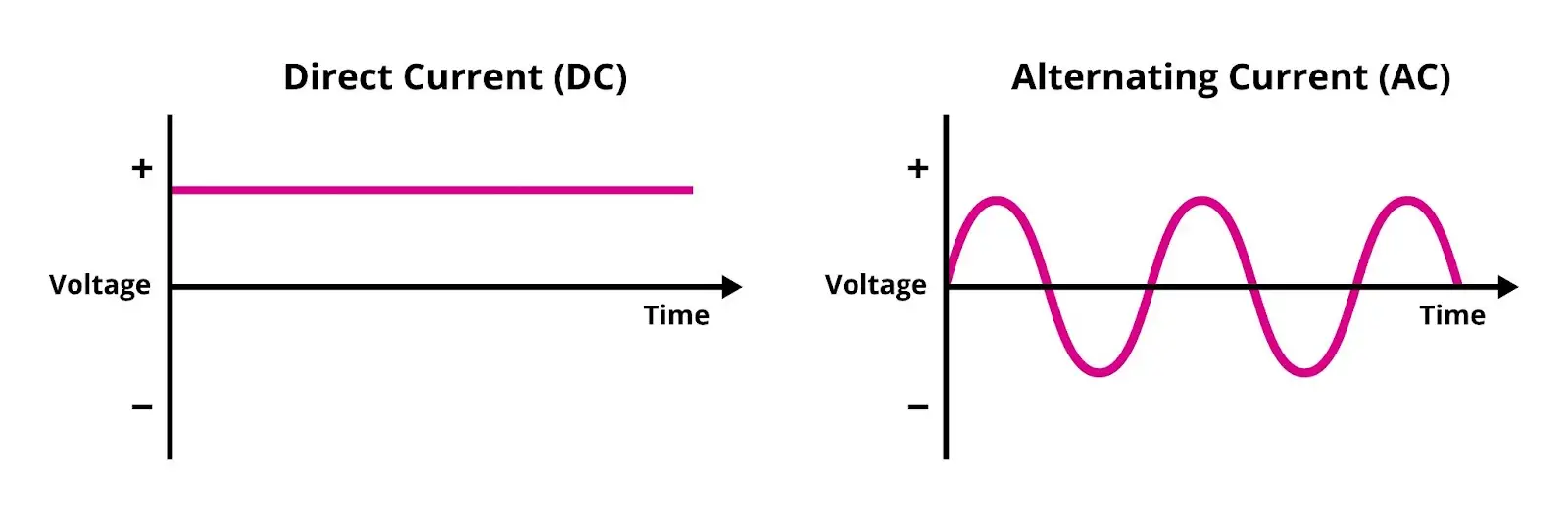
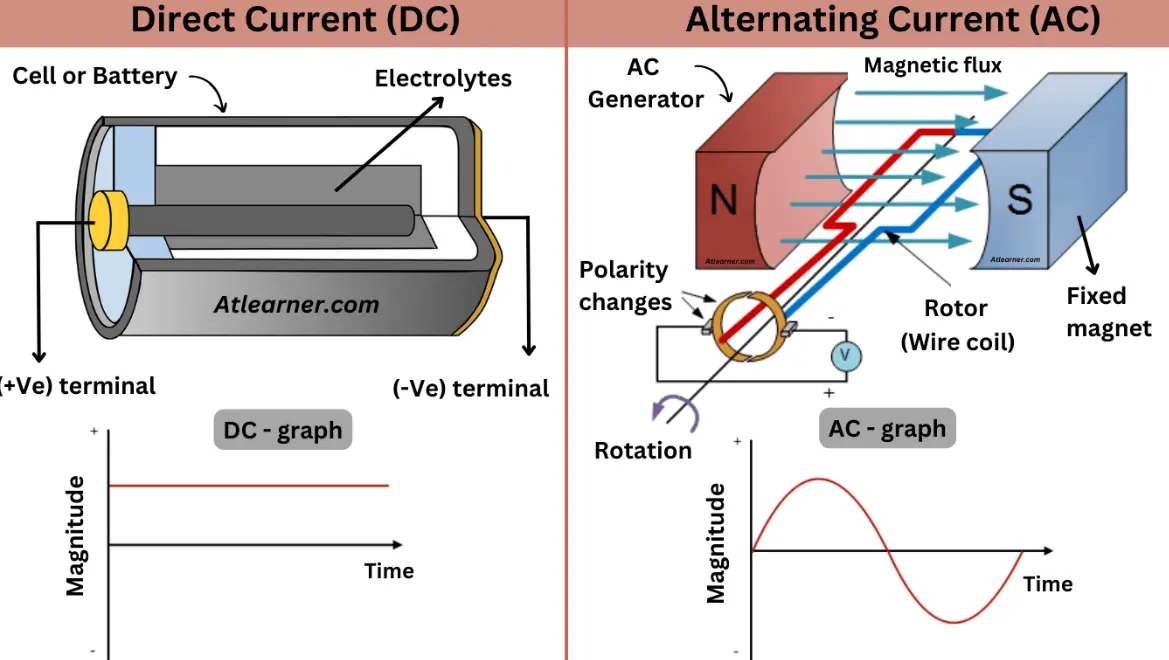
Direct Current is the unidirectional flow of electric charge. In a DC circuit, electrons move consistently in one direction—from the negative terminal to the positive terminal. This creates a stable and constant voltage, which is critical for the delicate components found in modern technology.
Most digital electronics, including microprocessors, sensors, and memory modules, require DC to function. Because DC provides a “clean” and steady stream of power, it ensures that the binary logic of computers—the 1s and 0s—is not interrupted by fluctuations in voltage. If you are using a device with a battery, such as a laptop, tablet, or smartphone, you are running on DC power.
Alternating Current (AC): The Rhythmic Pulse
Alternating Current behaves differently. Instead of flowing in a single direction, the flow of electrons periodically reverses direction. This reversal happens in a rhythmic, oscillating pattern known as a sine wave. The number of times the current changes direction per second is measured in Hertz (Hz); in most parts of the world, the standard is 50Hz or 60Hz.
AC is the standard for the electrical grid and the power outlets in our homes and offices. Its primary advantage lies in its flexibility. Through the use of transformers, AC voltage can be easily stepped up to very high levels for efficient long-distance transmission or stepped down to safer levels for residential use. This efficiency in distribution is why AC won the “War of Currents” in the late 19th century, a victory championed by Nikola Tesla over Thomas Edison’s DC system.
The Role of AC and DC in Modern Hardware and Gadgets
While the power grid provides AC, almost every piece of tech we use daily relies on DC. This creates a technical necessity for conversion, a process that happens silently inside our power adapters and device hardware.
Why Your Laptop Uses Both
If you look at the “power brick” on your laptop charger, you are looking at a sophisticated piece of technology called a switched-mode power supply (SMPS). Its primary job is to take the high-voltage AC from your wall outlet and convert it into a low-voltage DC that your laptop’s internal components can handle.
The reason for this dual-system approach is practical. AC is excellent for moving energy from a power plant to your house with minimal loss. However, the high-speed switching of transistors inside a CPU (Central Processing Unit) requires the precision of DC. Without the conversion provided by these adapters, the oscillating nature of AC would fry the sensitive silicon circuits of modern gadgets.
Power Supply Units (PSUs) and Rectification
In desktop computing and server management, the Power Supply Unit (PSU) is the unsung hero of digital stability. The PSU performs “rectification”—the process of converting AC to DC. High-end PSUs are rated by their efficiency (such as 80 Plus Gold or Platinum), which indicates how much energy is lost as heat during this conversion.
For tech enthusiasts and IT professionals, understanding this conversion is vital for digital security and hardware longevity. Poorly rectified power can lead to “electronic noise,” which can cause system crashes, data corruption, or even hardware failure. Ensuring a stable DC flow is the first step in maintaining a secure and reliable digital environment.
Energy Efficiency and the Future of Tech Infrastructure
As we move deeper into the era of cloud computing and AI, the way we manage AC and DC is changing. The massive power demands of data centers are forcing engineers to rethink traditional electrical architecture to maximize efficiency and reduce carbon footprints.
High-Voltage Direct Current (HVDC) in Data Centers
While AC has reigned supreme for long-distance transmission for over a century, High-Voltage Direct Current (HVDC) is making a significant comeback in the world of high-tech infrastructure. HVDC systems are often more efficient than AC for transmitting large amounts of power over extremely long distances, such as from offshore wind farms to inland cities.
Within the data centers themselves, many tech giants are experimenting with DC-powered server racks. By eliminating the need for every individual server to have its own AC-to-DC converter, data centers can reduce energy loss by 10% to 15%. In a facility consuming megawatts of power, these savings are substantial and represent a major trend in green technology.
Renewables and the DC Revolution
The shift toward renewable energy is also a shift toward DC. Solar panels and battery storage systems (like the Tesla Powerwall) inherently operate on DC. In a traditional setup, the DC from a solar panel is converted to AC for home use, and then often converted back to DC to charge a phone or power a computer.
Modern tech-integrated homes are increasingly looking at “DC microgrids.” These systems allow DC power generated by solar panels to be stored in batteries and delivered directly to DC-compatible LED lighting and electronics, bypassing the energy-heavy conversion process entirely. This is a key area of innovation for smart home apps and IoT (Internet of Things) devices.
Comparing AC vs. DC: Use Cases in the Digital Age
To summarize the tech landscape, it is helpful to view AC and DC not as rivals, but as specialized tools used for different stages of the energy journey.
Long-Distance Transmission (AC)
The primary use case for AC remains the power grid. Because AC can be easily transformed to high voltages, it experiences much lower resistive loss over miles of cabling. This makes it the only viable option for the sprawling infrastructure required to power modern cities. For software developers and digital service providers, the reliability of the AC grid is the foundation upon which all “uptime” guarantees are built.
Battery Storage and Portability (DC)
DC is the undisputed king of portability. Batteries, by their chemical nature, store and release energy as DC. This makes DC the essential component of the mobile revolution. From the lithium-ion batteries in smartphones to the massive battery packs in electric vehicles (EVs), DC allows technology to be untethered from the grid.
Furthermore, the rise of Electric Vehicles is a perfect example of the AC/DC synergy. While you might plug your car into an AC outlet at home (Level 1 or 2 charging), the car’s internal charger must convert that to DC to store it in the battery. Public “DC Fast Chargers,” however, bypass the car’s slow internal converter and feed high-voltage DC directly into the battery, allowing for much faster charging speeds—a crucial development for the tech-driven automotive industry.

Conclusion: The Synergy Powering Our Digital Future
Understanding the difference between AC and DC current is essential for anyone looking to navigate the technical realities of the 21st century. AC provides the massive, flexible power required to run our civilizations, while DC provides the precision and portability required to run our digital lives.
As we look toward the future—marked by AI-driven hardware, decentralized energy grids, and high-efficiency data centers—the line between these two formats is becoming increasingly integrated. Whether it is through the development of better power adapters, more efficient server architecture, or smarter battery management software, the mastery of both AC and DC current remains the cornerstone of technological progress. By appreciating the steady flow of DC and the powerful pulse of AC, we gain a deeper insight into the invisible forces that make our digital world possible.
aViewFromTheCave is a participant in the Amazon Services LLC Associates Program, an affiliate advertising program designed to provide a means for sites to earn advertising fees by advertising and linking to Amazon.com. Amazon, the Amazon logo, AmazonSupply, and the AmazonSupply logo are trademarks of Amazon.com, Inc. or its affiliates. As an Amazon Associate we earn affiliate commissions from qualifying purchases.