
In the rapidly evolving landscape of data science, software engineering, and distributed systems, the term “DAG” has shifted from an abstract mathematical concept to a cornerstone of modern architecture. Short for Directed Acyclic Graph, a DAG is a specialized data structure used to model complex relationships, process data pipelines, and even secure decentralized networks.
While the name might sound intimidating to those outside the computer science sphere, the logic behind it is inherently intuitive. It governs how information flows, how tasks are prioritized, and how systems ensure that processes move forward without getting stuck in infinite loops. As we transition into an era defined by Big Data and high-speed computation, understanding the DAG is essential for anyone looking to grasp the future of technology.

Understanding the Fundamentals: What Exactly is a DAG?
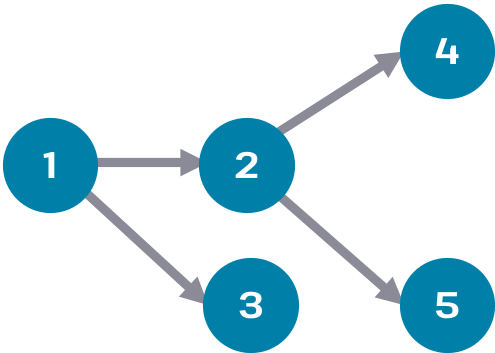
To understand a Directed Acyclic Graph, it is best to break down its three core components: Directed, Acyclic, and Graph. In technical terms, a graph is a collection of “nodes” (points) and “edges” (the lines connecting them).
The Anatomy of the Graph: Nodes and Edges
In any DAG, the “nodes” represent individual units of data or specific tasks. For example, in a data pipeline, a node might be a script that cleans a dataset. The “edges” represent the relationships or dependencies between these nodes. If Node A must be completed before Node B can start, an edge connects A to B. This structure allows engineers to visualize and program the flow of operations within a system.
The Meaning of “Directed” and “Acyclic”
The “Directed” part of the name means that the edges have a specific orientation. Information flows in one direction—from the source to the destination. You cannot travel backward against the arrow.
The “Acyclic” part is perhaps the most critical for technological stability. “Acyclic” means “non-circular.” In a DAG, it is impossible to start at one node, follow a sequence of edges, and eventually loop back to the starting node. This prevents “infinite loops,” which are the bane of computational efficiency. If a system were to loop back on itself, a process might run indefinitely, consuming resources without ever reaching a conclusion.
Why DAGs are Superior to Linear Chains
Unlike a traditional linear chain—where Step 1 must lead to Step 2, which leads to Step 3—a DAG allows for parallel processing. Multiple nodes can branch out from a single point and execute simultaneously, provided they don’t depend on each other. This non-linear structure is what allows modern software to be faster, more resilient, and capable of handling massive workloads that would bottleneck a traditional sequential system.
DAGs in Data Engineering and Workflow Orchestration
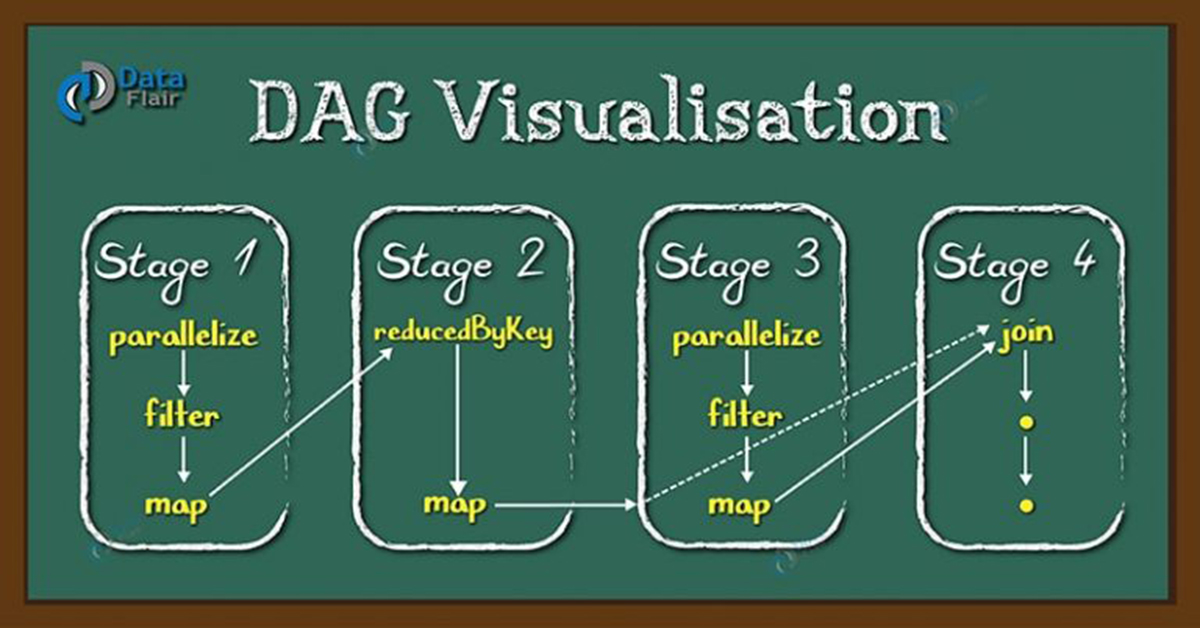
One of the most prominent applications of DAGs today is in data engineering. As companies collect terabytes of data daily, they need a way to transform that raw information into actionable insights. This process, often referred to as ETL (Extract, Transform, Load), relies heavily on DAG-based orchestration.
Managing Complex Dependencies
In a modern enterprise environment, data doesn’t just move from point A to point B. It might be pulled from five different APIs, merged into a single table, filtered for quality, and then sent to a machine learning model. A DAG serves as the blueprint for this entire journey. By defining the dependencies—noting that the “Filter” step cannot happen until the “Merge” step is finished—the system can automatically manage the order of operations.
Popular Tools: Apache Airflow and dbt
If you speak to a data engineer about DAGs, they will likely mention Apache Airflow. Airflow is an open-source platform used to programmatically author, schedule, and monitor workflows. In Airflow, every workflow is defined as a DAG. This allows engineers to visualize the entire pipeline, see which parts have succeeded, and identify exactly where a failure occurred if a node turns “red.”
Other tools, like dbt (data build tool), use DAGs to manage SQL transformations within data warehouses. By treating transformations as a graph, dbt ensures that tables are built in the correct order, significantly reducing the risk of data corruption.
Optimizing Parallel Processing
The inherent “branching” nature of a DAG allows for massive optimization. If a workflow has ten different tasks that don’t depend on each other, a DAG-based orchestrator can trigger all ten tasks at the exact same time across different servers. This horizontal scaling is what makes real-time data processing possible in industries like high-frequency trading, e-commerce, and social media analytics.
The Evolution of Distributed Ledgers: DAG vs. Blockchain
While “Blockchain” has become a household name, a new generation of Distributed Ledger Technology (DLT) is emerging that utilizes DAGs instead of linear blocks. This shift aims to solve the “Scalability Trilemma”—the struggle to balance security, decentralization, and speed.
Solving the Scalability Trilemma
In a traditional blockchain, like Bitcoin, every transaction is bundled into a block, and blocks are added one by one in a single, linear chain. This creates a bottleneck: as more people use the network, the “wait time” for a block to be mined increases, and fees skyrocket.
A DAG-based ledger, however, does away with blocks entirely. Instead, every individual transaction is a node in the graph. To submit a new transaction, a user must validate two previous transactions. This creates a web-like structure that grows stronger and faster as more people use it.
Transaction Validation without Miners
One of the most radical shifts in DAG technology is the removal of traditional miners or “validators” in the sense we know them. Because the users themselves validate previous transactions to post their own, the need for energy-intensive Proof of Work (PoW) is often eliminated. This leads to near-instant finality and, in many cases, zero transaction fees.
Real-World Use Cases: IOTA and Hedera
Projects like IOTA and Hedera Hashgraph are leading the charge in DAG-based distributed systems. IOTA focuses on the Internet of Things (IoT), where billions of devices need to exchange small amounts of data and value instantly without high fees. Hedera uses a “Gossip about Gossip” protocol within a DAG structure to achieve incredibly high throughput (thousands of transactions per second) with asynchronous Byzantine Fault Tolerance (aBFT) security.
DAGs in Artificial Intelligence and Software Development
Beyond data pipelines and crypto-assets, DAGs are fundamental to the inner workings of the software and AI we use every day. They provide the logic for how machines “think” and how code is compiled.
Neural Network Architectures
In the world of Artificial Intelligence and Deep Learning, the architecture of a neural network is essentially a DAG. Information (input) enters the network, passes through various layers (nodes) of neurons where mathematical transformations occur, and finally results in an output (prediction). Because the signal moves forward through the layers and does not loop back (in Feedforward Neural Networks), it follows the acyclic properties of a DAG. This structure is what allows models to perform complex tasks like image recognition and natural language processing.
Compilers and Version Control (Git)
Every time a software developer uses Git to manage their code, they are interacting with a DAG. When you create a “branch” in Git, you are creating a new path in the graph. When you “merge” it back, you are connecting those nodes. Git uses a DAG to track the history of changes, ensuring that the version history remains consistent and that “loops” (which would confuse the history of the code) are impossible.
Similarly, modern compilers use DAGs to optimize code. When you hit “run” on a program, the compiler looks at the code’s logic and identifies parts that can be executed at the same time and parts that must wait for others. By representing the code as a DAG, the compiler can strip away redundant operations and speed up execution.
The Future of Graph-Based Computing
As we look toward the next decade of technological advancement, the role of the Directed Acyclic Graph is only set to expand. We are moving away from “siloed” and “sequential” processing toward “interconnected” and “parallel” systems.
The DAG represents a shift in how we perceive order. It proves that a system doesn’t have to be a straight line to be organized. By embracing the complexity of a graph while maintaining the discipline of direction and the safety of acyclic flow, we are building systems that are more human-like in their complexity but machine-like in their precision. Whether it is powering the next generation of decentralized finance, enabling autonomous vehicles to process sensor data in real-time, or helping data scientists manage global-scale pipelines, the DAG is the silent engine of the modern digital world.
aViewFromTheCave is a participant in the Amazon Services LLC Associates Program, an affiliate advertising program designed to provide a means for sites to earn advertising fees by advertising and linking to Amazon.com. Amazon, the Amazon logo, AmazonSupply, and the AmazonSupply logo are trademarks of Amazon.com, Inc. or its affiliates. As an Amazon Associate we earn affiliate commissions from qualifying purchases.