
The Czech Republic, a vibrant heart of Central Europe, captivates millions with its rich history, stunning architecture, and cultural heritage. Yet, for visitors and those looking to do business, one of the most fundamental questions revolves around its monetary system: “What is Czech currency?” Unlike many of its European Union counterparts, the Czech Republic has chosen to retain its national currency, the Czech Koruna, or Czech Crown. Understanding the Koruna (CZK) is not merely a matter of knowing its name; it involves grasping its historical context, practicalities for daily use, its role in the broader economy, and the ongoing debates surrounding its future. This deep dive into Czech currency will provide a comprehensive overview for anyone looking to navigate the financial landscape of this fascinating nation.
The Czech Koruna (CZK) – An Introduction
The official currency of the Czech Republic is the Czech Koruna (symbol: Kč, international code: CZK). The name “Koruna” translates to “crown,” echoing a common historical nomenclature for currencies across various European monarchies. For anyone planning a visit or considering financial dealings within the country, familiarizing oneself with the Koruna is the first essential step.
Historical Context of the Koruna
The Koruna’s modern iteration emerged in 1993, following the peaceful dissolution of Czechoslovakia into the independent Czech Republic and Slovakia. Prior to this, the Czechoslovak Koruna had been in circulation. The transition was relatively smooth, with an initial period where Czechoslovak banknotes remained valid before being fully replaced by distinct Czech Koruna notes and coins. This event marked a significant step in the Czech Republic’s journey towards economic independence and nation-building. The Czech National Bank (Česká národní banka – CNB) was established as the central monetary authority, tasked with maintaining price stability and overseeing the country’s financial system. Its creation was a crucial institutional development that cemented the Koruna’s place as a sovereign currency.
Denominations and Features
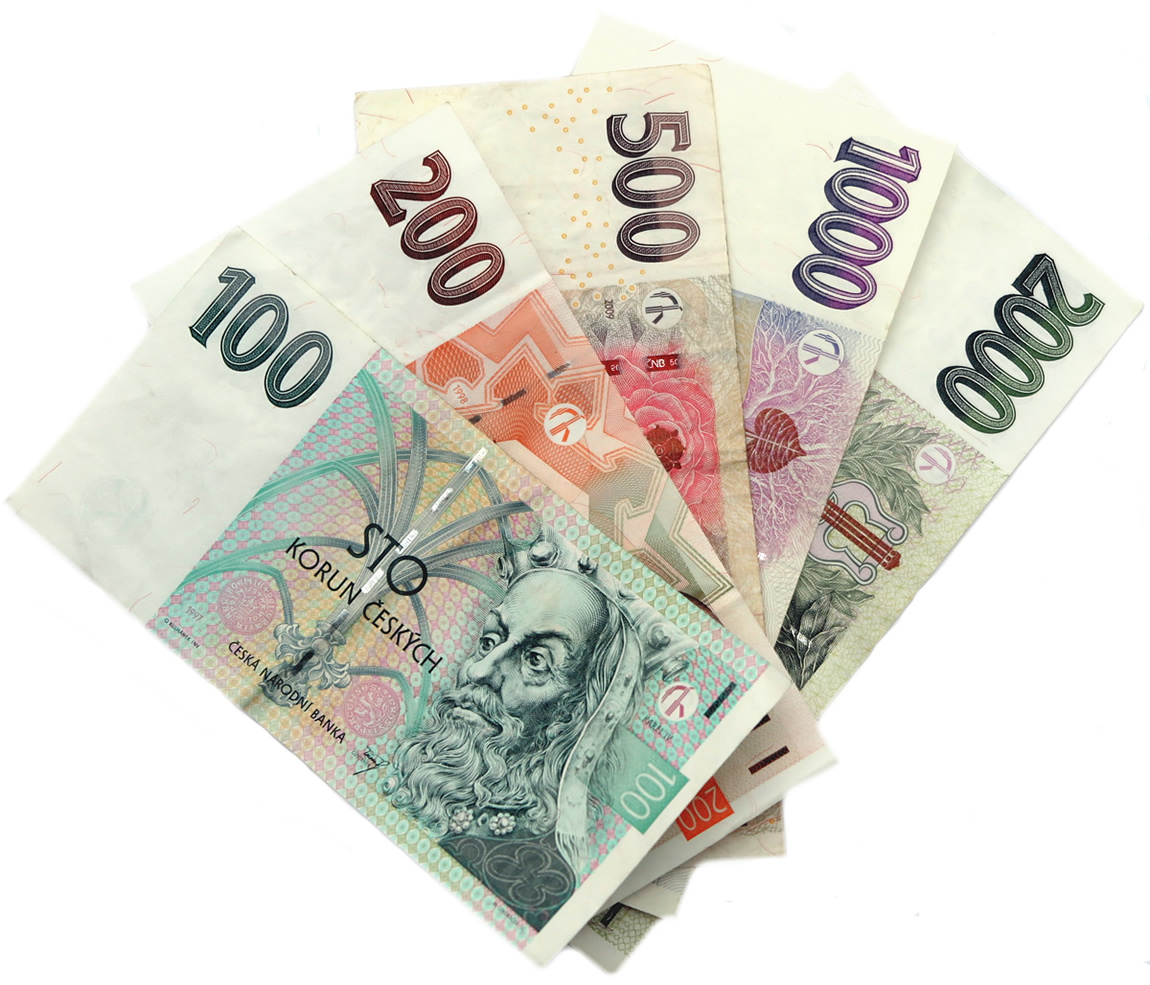
The Czech Koruna system comprises both banknotes and coins, each featuring distinct designs and security measures. Banknotes are available in denominations of 100, 200, 500, 1000, 2000, and 5000 CZK. Each note features prominent historical Czech figures on the obverse and architectural motifs or allegorical compositions on the reverse, celebrating the nation’s cultural legacy. For instance, the 1000 CZK note depicts František Palacký, a renowned historian, while the 2000 CZK note showcases Ema Destinnová, an opera singer. These notes are equipped with advanced security features, including watermarks, security threads, holograms, and tactile elements, making them difficult to counterfeit.
Coins, on the other hand, are issued in denominations of 1, 2, 5, 10, 20, and 50 CZK. They are made from various metal alloys and are easily distinguishable by their size, weight, and milled edges. The design typically includes the Czech lion coat of arms on one side and a numerical value on the other, often accompanied by elements symbolizing the Czech Republic, such as the Charles Bridge on the 10 CZK coin or St. Vitus Cathedral on the 50 CZK coin. Understanding these denominations is critical for daily transactions, whether it’s paying for a tram ticket or making a larger purchase.
Why Not the Euro?
A common question among those unfamiliar with Czech economics is why, as a member of the European Union since 2004, the Czech Republic has not adopted the Euro. The decision to retain the Koruna stems from a complex interplay of economic, political, and social factors. While joining the Eurozone could offer benefits such as reduced transaction costs and increased investment, Czech policymakers and a significant portion of the public have preferred to maintain monetary policy independence. This allows the Czech National Bank to tailor interest rates and other economic tools to suit the specific needs and cycles of the Czech economy, rather than being bound by the single monetary policy of the European Central Bank. Arguments against Euro adoption often highlight concerns about relinquishing control over inflation, exchange rates, and the ability to respond autonomously to economic shocks. Furthermore, public support for Euro adoption has historically been low, reflecting a desire to preserve national economic sovereignty.
Navigating Currency for Travelers and Businesses
For individuals traveling to the Czech Republic or businesses engaging with Czech partners, understanding how to manage the Koruna is paramount. This involves practical aspects of currency exchange, payment methods, and budgeting.
Exchange Rates and Where to Exchange
Exchange rates between the Koruna and major world currencies (like USD, EUR, GBP) fluctuate daily, influenced by global economic factors, interest rate differentials, and political developments. For travelers, it’s crucial to monitor these rates using reliable online financial tools or reputable bank websites before and during their trip. When exchanging currency, vigilance is key. While airports and major tourist areas offer exchange services, they often provide less favorable rates and higher commissions. It’s generally advisable to exchange money at established banks or licensed exchange offices in less touristy areas. Always ask about the total amount of CZK you will receive after all fees and commissions, and avoid unofficial street exchangers who may offer misleading rates or even scams. For larger business transactions, relying on interbank rates and wire transfers through established financial institutions is the standard and most secure practice.
Payment Methods: Cash, Cards, and Digital Wallets
The Czech Republic, particularly in urban areas, is largely a cashless society, but cash still holds an important place. Major credit and debit cards (Visa, MasterCard, Maestro) are widely accepted in hotels, restaurants, supermarkets, and larger retail stores. Contactless payments are ubiquitous and highly convenient. However, for smaller purchases, street vendors, local markets, or some independent shops, cash may still be preferred or even required. ATMs are readily available throughout the country, offering a convenient way to withdraw Koruna. When using ATMs, be mindful of potential fees from both your bank and the local ATM operator. A common pitfall for tourists is Dynamic Currency Conversion (DCC), where an ATM or card machine offers to process your transaction in your home currency; always choose to be charged in CZK to get a better exchange rate set by your bank. Digital wallets like Apple Pay and Google Pay are also gaining traction, offering secure and convenient payment options. For businesses, electronic transfers are the standard for large payments, with SWIFT and SEPA systems facilitating international transactions.
Budgeting and Cost of Living Considerations
Understanding the purchasing power of the Koruna is vital for effective budgeting. Compared to Western European countries, the Czech Republic generally offers a more affordable cost of living, particularly outside of Prague’s most tourist-centric areas. Accommodation, public transport, food, and cultural activities tend to be less expensive. A typical meal in a mid-range restaurant, for example, might cost between 200-400 CZK (approximately €8-€16 or $9-$18 USD), while a monthly public transport pass in Prague costs around 550 CZK (€22 or $25 USD). When planning a budget, it’s useful to categorize expenses and allocate specific amounts in CZK. For travelers, it’s prudent to have a mix of cash for small purchases and a card for larger expenses. For individuals considering relocating or businesses establishing a presence, a detailed analysis of local wages, rental costs, utilities, and daily expenditures is crucial for financial planning. Online cost-of-living comparison tools can provide useful initial estimates.

Economic Factors Influencing the Koruna
The strength and stability of the Czech Koruna are not isolated phenomena but are intricately linked to a range of domestic and international economic factors. Understanding these influences provides insight into the currency’s value and the broader financial health of the Czech Republic.
Role of the Czech National Bank (CNB)
The Czech National Bank (CNB) serves as the central bank of the Czech Republic, with its primary mandate being price stability. This means its main goal is to keep inflation low and predictable. The CNB employs various monetary policy tools to achieve this, most notably by setting the benchmark interest rate (the two-week repo rate). Higher interest rates can make the Koruna more attractive to foreign investors, increasing demand for the currency and potentially strengthening its value. Conversely, lower rates can stimulate borrowing and economic activity but might weaken the Koruna. The CNB also monitors and, at times, intervenes in the foreign exchange market to prevent excessive volatility in the Koruna’s value, although direct interventions are usually reserved for extreme circumstances. Its independence from political influence is a cornerstone of its credibility and effectiveness.
Inflation and Monetary Policy
Inflation is a critical factor impacting the Koruna’s purchasing power. When inflation is high, the value of the Koruna erodes, meaning more CZK are needed to buy the same goods and services. The CNB actively uses its monetary policy to combat inflationary pressures. By raising interest rates, the CNB makes borrowing more expensive, which can cool down an overheating economy and curb inflation. Conversely, during periods of low inflation or economic slowdown, the CNB might lower rates to stimulate spending and investment. Global factors, such as energy prices, supply chain disruptions, and the economic performance of major trading partners (especially within the Eurozone), also significantly influence Czech inflation and, consequently, the CNB’s policy decisions and the Koruna’s outlook. Personal finance strategies in the Czech Republic must account for inflation, particularly for long-term savings and investments.
Impact of Tourism and Trade
Tourism is a significant contributor to the Czech economy, especially in cities like Prague, Český Krumlov, and Karlovy Vary. A robust tourism sector leads to an inflow of foreign currency, as visitors exchange their home currencies for Koruna to pay for accommodation, food, and attractions. This increased demand for CZK can put upward pressure on its exchange rate. Conversely, a downturn in tourism can weaken the Koruna.
Trade, particularly with other European Union members, is another major driver. Germany is the Czech Republic’s largest trading partner, followed by other EU countries. A strong export performance means Czech businesses are earning foreign currency, which is then converted into Koruna, bolstering demand. Conversely, a large trade deficit (importing more than exporting) can weaken the Koruna as more CZK are converted into foreign currencies to pay for imports. The health of these trading relationships and the global economic climate, therefore, directly impact the Koruna’s stability and value, making it a key consideration for business finance and international trade operations.
The Future of Czech Currency and European Integration
The Czech Republic’s journey within the European Union has been a path of balancing national interests with broader European integration. The question of Euro adoption remains a central topic of discussion, shaping the long-term outlook for the Koruna.
Euro Adoption Debates
Since joining the EU in 2004, the Czech Republic has committed to eventually adopting the Euro, but without a specific timetable. The debate surrounding Euro adoption is complex, involving politicians, economists, business leaders, and the general public. Proponents argue that joining the Eurozone would eliminate exchange rate risks, reduce transaction costs for businesses engaged in trade with Eurozone partners, and potentially attract more foreign investment due to increased economic certainty. They also point to the benefits of deeper integration into the EU’s single market.
However, opponents raise significant concerns. A primary worry is the loss of monetary policy independence, meaning the Czech National Bank would no longer be able to set interest rates or intervene in the currency market to respond to specific domestic economic conditions. This could be problematic if the Czech economy’s cycles differ from those of the larger Eurozone. There are also fears about losing the ability to devalue the currency, which can be a tool to boost exports during an economic downturn. Public opinion has consistently shown a reluctance to adopt the Euro, often citing a desire to preserve national sovereignty and avoid potential economic instability perceived in some Eurozone countries.
Pros and Cons for the Czech Economy
The potential benefits of Euro adoption for the Czech economy include:
-
Reduced Transaction Costs: Businesses would save on currency exchange fees and hedging costs, potentially boosting trade and cross-border investment.
-
Price Transparency: Easier comparison of prices across Eurozone countries could increase competition and benefit consumers.
-
Increased Foreign Investment: Elimination of currency risk could make the Czech Republic a more attractive destination for investors.
-
Greater Economic Stability: Membership in a larger currency bloc could offer protection during global financial shocks.
Conversely, the disadvantages include:
-
Loss of Monetary Policy Autonomy: The inability to set interest rates or influence the exchange rate independently could limit the CNB’s ability to respond to national economic crises.
-
Asymmetric Shocks: If the Czech economy faces a crisis that differs from the Eurozone average, a “one-size-fits-all” monetary policy might be detrimental.
-
Inflationary Pressures: Concerns about potential price increases during the transition phase, as experienced by some other new Eurozone members.
-
Fiscal Discipline: Adherence to strict Eurozone fiscal rules could limit government spending flexibility.

Long-term Outlook for the Koruna
The long-term outlook for the Czech Koruna is tied to a blend of internal economic performance, the ongoing Euro adoption debate, and the broader geopolitical and economic landscape. As long as the Czech Republic maintains its current monetary policy independence, the Koruna’s value will continue to be influenced by the Czech National Bank’s actions, the country’s export performance, tourism levels, and global capital flows. The CNB’s prudent monetary policy and the Czech Republic’s relatively sound public finances have historically contributed to the Koruna’s stability.
Should the Czech Republic eventually decide to join the Eurozone, the Koruna would cease to exist as a national currency. However, given the current political and public sentiment, this is not expected in the immediate future. For the foreseeable future, the Czech Koruna will remain the backbone of the Czech economy, requiring individuals and businesses alike to understand its intricacies for effective financial planning and operations within this dynamic Central European nation. The Koruna’s journey reflects a nation carefully balancing its integration into a larger European project with a strong desire to maintain control over its economic destiny.
aViewFromTheCave is a participant in the Amazon Services LLC Associates Program, an affiliate advertising program designed to provide a means for sites to earn advertising fees by advertising and linking to Amazon.com. Amazon, the Amazon logo, AmazonSupply, and the AmazonSupply logo are trademarks of Amazon.com, Inc. or its affiliates. As an Amazon Associate we earn affiliate commissions from qualifying purchases.