
Cushing’s disease—medically identified as hypercortisolism—is a complex endocrine disorder that occurs when the body is exposed to chronically high levels of the hormone cortisol for an extended period. While cortisol is essential for regulating metabolism, blood pressure, and the body’s response to stress, an excess of this “stress hormone” disrupts nearly every physiological system. Understanding this condition requires a deep dive into the hormonal signaling pathways of the endocrine system and the clinical manifestations that arise when these systems spiral out of control.
The Physiology of Cortisol and the Pituitary Connection
At the heart of Cushing’s disease is a malfunction in the hypothalamic-pituitary-adrenal (HPA) axis. In a healthy human body, the pituitary gland produces adrenocorticotropic hormone (ACTH), which signals the adrenal glands to release cortisol. Cushing’s disease, specifically, is caused by a benign tumor (adenoma) located on the pituitary gland. This tumor secretes excessive amounts of ACTH, which in turn forces the adrenal glands to produce an overabundance of cortisol.
The Mechanism of Overproduction
Unlike Cushing’s syndrome—a broader term that encompasses any cause of high cortisol, including the use of corticosteroid medications—Cushing’s disease refers explicitly to the pituitary-originating form of the condition. Because the pituitary tumor ignores the body’s natural feedback loops, it continues to stimulate the adrenal glands relentlessly. This relentless stimulation disrupts the circadian rhythm of cortisol release, leading to a state of systemic physiological stress that impacts bone density, muscle mass, and the cardiovascular system.
Distinguishing Disease from Syndrome
It is critical for patients and medical professionals alike to differentiate between the disease and the syndrome. Cushing’s syndrome is often exogenous, resulting from long-term use of medications like prednisone. Cushing’s disease is endogenous and localized. Identifying the source of the excess cortisol is the most pivotal step in establishing a treatment plan, as the surgical approach for a pituitary tumor differs significantly from the management of adrenal tumors or the tapering of external medication.
Recognizing the Clinical Manifestations
The symptoms of Cushing’s disease are often subtle at the onset, developing gradually over months or years. Because cortisol affects the entire body, the physical markers are widespread and often mistaken for symptoms of other metabolic or hormonal conditions. Recognizing the constellation of these symptoms is the first step toward a formal diagnosis.
Physical Indicators and Body Composition
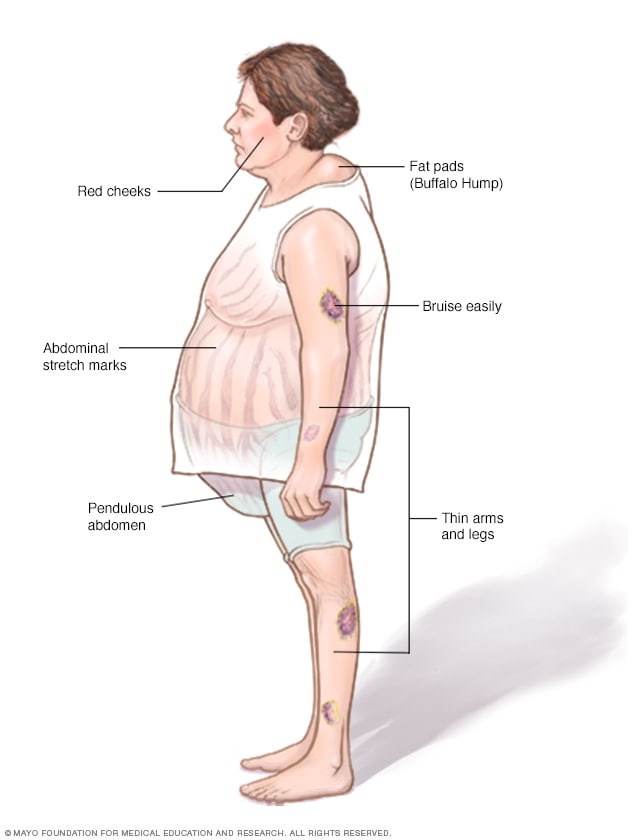
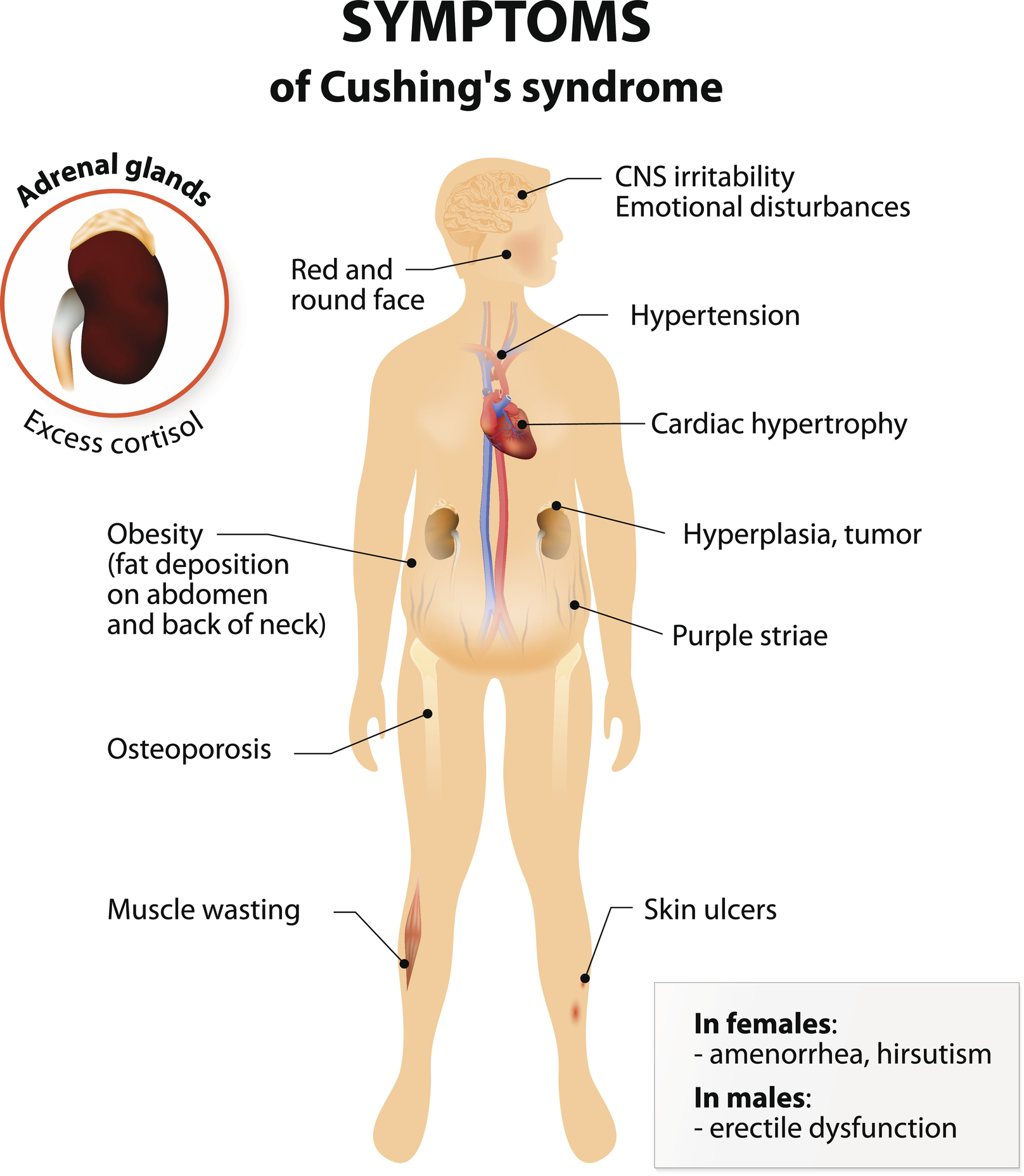
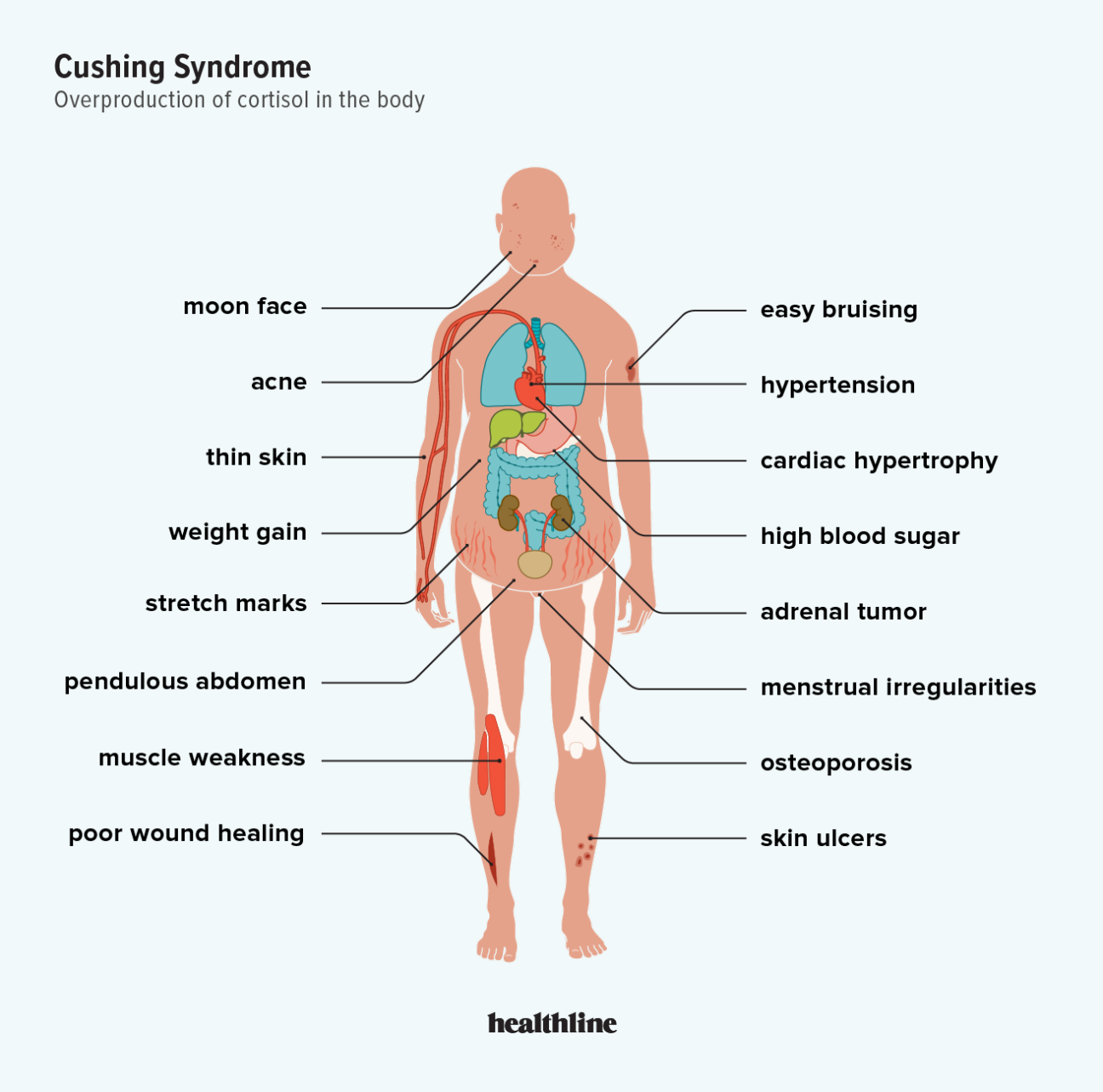
One of the most hallmark signs of Cushing’s disease is the redistribution of body fat. Patients often experience significant weight gain centered in the midsection and upper back, sometimes manifesting as a “buffalo hump” between the shoulders. Conversely, the arms and legs typically become thin and wasted due to muscle atrophy, as the body breaks down protein for fuel under the influence of high cortisol.
The skin also undergoes dramatic changes. Cortisol inhibits the production of collagen, leading to skin thinning, easy bruising, and the development of broad, purple or pink stretch marks (striae) that appear primarily on the abdomen, thighs, and breasts. In women, the hormonal imbalance can lead to hirsutism—excessive facial and body hair growth—and irregular menstrual cycles, which often prompt further investigation into endocrine health.
Metabolic and Psychological Impacts
Beyond the external physical markers, the internal metabolic toll is severe. Cushing’s disease is a leading cause of secondary hypertension, which is often resistant to conventional blood pressure medications. Furthermore, chronic hypercortisolism causes insulin resistance, frequently leading to secondary diabetes or impaired glucose tolerance.
The psychological impact is equally profound. Many individuals suffering from Cushing’s report significant changes in mood, including severe anxiety, depression, irritability, and “brain fog.” Because the brain is highly sensitive to cortisol levels, these neurological symptoms are often among the first noted by patients, yet they are frequently misdiagnosed as primary psychiatric disorders rather than symptoms of a systemic endocrine malfunction.
Diagnostic Protocols and Testing
Diagnosing Cushing’s disease is notoriously difficult. Because cortisol levels fluctuate throughout the day, a single blood test is rarely sufficient to confirm a diagnosis. Physicians must utilize a multi-faceted testing approach to prove both the presence of excess cortisol and the origin of the hormonal signal.
Confirming Hypercortisolism
The diagnostic journey usually begins with one of three primary screening tests:
- 24-Hour Urinary Free Cortisol Test: This requires the patient to collect urine over a full day to determine the total amount of cortisol produced by the kidneys.
- Late-Night Salivary Cortisol Test: Cortisol levels should be at their lowest at night. A high level in a saliva sample collected around midnight is a strong indicator of pathology.
- Low-Dose Dexamethasone Suppression Test: This involves taking a dose of dexamethasone (a synthetic steroid) to see if it suppresses cortisol production in the body. If the body fails to decrease cortisol in response to the drug, it confirms an abnormal feedback loop.
Identifying the Pituitary Source
Once high cortisol is confirmed, the next phase is to localize the source. This typically involves high-resolution MRI imaging of the pituitary gland. However, many pituitary adenomas are microadenomas—too small to be seen on standard imaging. In such cases, endocrinologists may perform an Inferior Petrosal Sinus Sampling (IPSS). This invasive procedure involves taking blood samples directly from the veins draining the pituitary gland to see if the ACTH concentration is higher there than in the rest of the body. This is widely considered the gold standard for confirming that the pituitary gland is the definitive source of the excess ACTH.
Treatment Strategies and Recovery
The goal of treatment for Cushing’s disease is to lower cortisol levels, eliminate the tumor, and manage the secondary health impacts resulting from years of hormone exposure. The management of this condition is inherently multidisciplinary, often involving endocrinologists, neurosurgeons, and, occasionally, radiation oncologists.
Surgical Intervention
The primary treatment for Cushing’s disease is transsphenoidal surgery. During this procedure, a neurosurgeon accesses the pituitary gland through the nasal cavity to excise the adenoma. When successful, this surgery removes the source of excess ACTH and allows the pituitary and adrenal glands to gradually return to normal function. The success of the surgery depends heavily on the size and location of the tumor, as well as the surgeon’s experience with specialized endoscopic techniques.
Long-Term Management and Remission
Even after successful surgery, recovery is not instantaneous. Patients often undergo a period of “adrenal insufficiency” following the operation, as the adrenal glands have been dormant due to the overproduction of cortisol by the pituitary. These patients may require hormone replacement therapy (hydrocortisone) for several months until their own HPA axis recovers.
For patients who are not candidates for surgery or in cases where the surgery does not result in full remission, medical management is required. This involves the use of specialized medications designed to block the production of cortisol at the adrenal level or to suppress the ACTH signal from the pituitary gland. Long-term follow-up is essential, as there is a risk of tumor recurrence, necessitating regular monitoring of hormone levels and annual MRI surveillance.
Living with the Impact of Cushing’s
Cushing’s disease is more than a hormonal imbalance; it is a systemic condition that necessitates a comprehensive approach to health. Beyond the surgical and pharmacological interventions, patients often benefit from integrated lifestyle support. Managing blood glucose levels, maintaining bone health through calcium and vitamin D supplementation to combat osteoporosis, and engaging in physical therapy to rebuild lost muscle mass are all vital components of the recovery process.
Ultimately, while the diagnosis of Cushing’s disease is life-altering, modern medicine offers effective paths toward normalization. Awareness, early intervention, and a dedicated partnership with a medical team experienced in endocrine disorders remain the most powerful tools in navigating the complexities of this condition. By understanding the intricate relationship between the pituitary gland and the adrenal response, patients can take informed control of their health journey, moving from a state of chronic, systemic stress to long-term stability and wellness.
aViewFromTheCave is a participant in the Amazon Services LLC Associates Program, an affiliate advertising program designed to provide a means for sites to earn advertising fees by advertising and linking to Amazon.com. Amazon, the Amazon logo, AmazonSupply, and the AmazonSupply logo are trademarks of Amazon.com, Inc. or its affiliates. As an Amazon Associate we earn affiliate commissions from qualifying purchases.