
The Cthulhu Mythos, a sprawling tapestry of cosmic horror, otherworldly dread, and forbidden knowledge, conjures images of ancient, slumbering entities, sanity-shattering revelations, and the insignificance of humanity in the face of vast, unknowable forces. While its origins lie in the fertile, and often fevered, imagination of H.P. Lovecraft, the Mythos has transcended its literary roots to permeate various aspects of popular culture, inspiring not only countless stories but also influencing how we understand and interact with the world around us, even in the realms of tech, branding, and finance.

At its core, the Cthulhu Mythos is not a single, rigidly defined narrative but rather a shared universe of interconnected tales, creatures, deities, and concepts. Lovecraft himself, a prolific writer of the early 20th century, laid the groundwork with his chilling stories, but he also fostered a community of fellow writers who contributed to and expanded upon his foundational ideas. This collaborative spirit is key to understanding the Mythos’ enduring power and its surprising relevance to modern-day concerns.
The Genesis of Cosmic Dread: Lovecraft and the Foundations of the Mythos
To truly grasp what the Cthulhu Mythos is, one must first acknowledge its creator and his unique vision. H.P. Lovecraft, driven by a profound sense of existential angst and a fascination with the universe’s unfathomable depths, crafted a mythology that sought to unnerve readers by stripping away humanity’s perceived centrality. His stories often feature protagonists who stumble upon ancient secrets, alien artifacts, or forgotten histories, leading them to confront truths that shatter their understanding of reality and often their sanity.
The Pantheon of the Old Ones and the Outer Gods
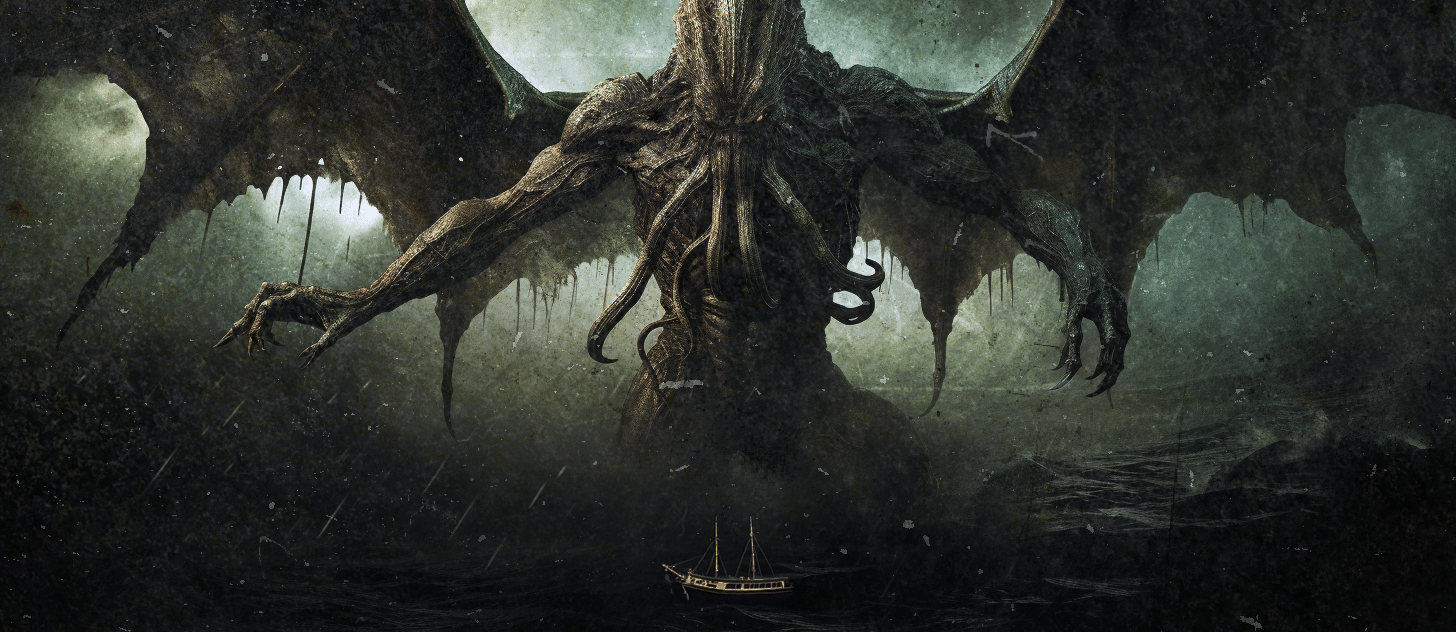
Central to the Mythos are the “Great Old Ones” and the “Outer Gods,” cosmic entities of immense power and alien intelligence that predate humanity and perhaps even life as we know it. These beings, such as Cthulhu, Nyarlathotep, Azathoth, and Yog-Sothoth, are not inherently evil in a human sense but are utterly indifferent to human concerns. Their existence and influence, however, can have devastating consequences for those who become aware of them. Cthulhu, a colossal, octopus-headed entity slumbering in the sunken city of R’lyeh, is perhaps the most iconic figure, his dreaming consciousness capable of influencing minds across the globe, sowing seeds of madness and anticipation for his eventual awakening.
Forbidden Tomes and the Seeds of Knowledge
The Mythos is also replete with ancient, forbidden texts that serve as conduits to this terrifying knowledge. The Necronomicon, penned by the mad Arab Abdul Alhazred, is the most famous of these tomes, containing rituals, incantations, and lore that can summon or appease these cosmic entities, or simply drive the reader to utter insanity. These books represent the dangerous allure of knowledge, the idea that some truths are too profound and too alien for the human mind to comprehend without catastrophic consequences.
Beyond the Page: The Mythos’ Influence on Contemporary Thought
The enduring appeal of the Cthulhu Mythos lies not just in its scares but in its exploration of profound philosophical themes. The insignificance of humanity, the vastness of the cosmos, the fragility of sanity, and the seductive danger of forbidden knowledge are all concepts that resonate deeply, especially in an era characterized by rapid technological advancement, evolving societal structures, and a constant influx of information.

The Digital Frontier and Eldritch Algorithms
The Cthulhu Mythos, with its emphasis on incomprehensible forces and hidden realities, offers a fascinating lens through which to view the modern technological landscape. The sheer complexity of modern software, the opaque workings of artificial intelligence, and the vast, interconnected nature of the internet can, in their own way, evoke a sense of the unknowable.
- AI and Unforeseen Consequences: Just as the Mythos warns of powers beyond human comprehension, so too does the rapid development of AI raise questions about its ultimate control and potential for unintended consequences. The pursuit of ever-more advanced AI could be seen as humanity’s modern-day quest for forbidden knowledge, with the potential for outcomes that are both revolutionary and terrifyingly unpredictable. Are we, in our quest for intelligent machines, inadvertently creating something that will eventually dwarf and perhaps even disregard us, much like the Outer Gods view humanity?
- The “Black Box” of Technology: Many advanced technological systems operate as “black boxes,” their internal mechanisms too complex for even their creators to fully understand. This mirrors the incomprehensible nature of the cosmic entities in the Mythos. Users interact with these systems, reaping their benefits, but without a true grasp of the intricate processes at play. This can lead to a sense of awe, but also a subtle unease, akin to the feeling of invoking something powerful without fully comprehending its implications.
- Digital Security and the Hidden Threats: The constant battle against cyber threats, from sophisticated malware to insidious phishing attacks, can feel like a struggle against unseen, insidious forces. These digital entities, operating in the shadows of the internet, seek to exploit vulnerabilities and sow chaos, much like the cultists and lesser horrors that serve the Great Old Ones. The constant vigilance required to maintain digital security echoes the paranoia and dread that permeates Lovecraft’s stories.
Branding in the Age of the Unknowable
The Cthulhu Mythos, surprisingly, offers insights into the world of branding and marketing, particularly in how brands navigate perception, authenticity, and the creation of a compelling narrative.
- The Allure of the Mysterious Brand: Just as the Mythos thrives on the allure of the unknown and the forbidden, brands can leverage mystery and intrigue to captivate audiences. A brand that hints at a deeper, more complex story, a hidden origin, or a unique philosophy can foster a sense of fascination and encourage consumers to delve deeper. This isn’t about being deceptive, but about crafting an aura that sparks curiosity.
- Building a “Cult Following”: The devoted followers of Cthulhu, drawn by promises of power or a shared understanding of hidden truths, can be seen as a metaphor for building a strong brand community. Brands that foster a sense of belonging, shared values, and a passionate user base can cultivate a loyal following that acts as powerful advocates. The Mythos’ exploration of cults and secret societies, while dark, highlights the power of collective belief and shared identity.
- Reputation Management and the Taint of Scandal: The Mythos often depicts characters whose reputations are irrevocably damaged by their encounters with the cosmic. Similarly, in the business world, a single scandal or a mishandled crisis can tarnish a brand’s reputation for years to come. The constant need for transparency and ethical conduct, to avoid attracting the “taint” of negative attention, is a modern-day battle against forces that can unravel carefully constructed brand identities.
Navigating the Financial Cosmos
The concepts of overwhelming scale, hidden risks, and the pursuit of elusive gains present in the Cthulhu Mythos can also be applied, albeit metaphorically, to the world of finance.
- The Volatility of the Markets and Cosmic Indifference: The stock market, with its often unpredictable swings and seemingly random fluctuations, can feel akin to the indifferent vastness of the cosmos. Economic forces are immense, often beyond the control of individuals, and can lead to immense gains or devastating losses, mirroring the way the Great Old Ones can impact human lives without any discernible malice.
- The Lure of “Get Rich Quick” Schemes and Forbidden Financial Knowledge: The Mythos warns against seeking forbidden knowledge that promises power but delivers ruin. Similarly, in finance, the allure of “get rich quick” schemes, dubious investment opportunities, or overly complex financial instruments can lead individuals down paths of financial ruin. The promise of easy riches, like the whispered promises of cult leaders, often masks hidden dangers and predatory practices.
- Diversification as a Shield Against the Unknowable: In the face of market volatility and unforeseen economic shifts, the concept of diversification in investing can be seen as a modern-day attempt to build resilience against the unknowable. Spreading investments across different asset classes acts as a safeguard, a way to mitigate the impact of any single catastrophic event, much like how characters in Lovecraft’s tales might try to prepare for the inevitable, albeit often futilely.
- The Dark Side of Financial Innovation: Just as ancient tomes contain dangerous spells, new financial technologies and instruments, while offering potential benefits, also carry inherent risks that may not be immediately apparent. The complex derivatives and rapid trading algorithms of the modern financial world can, in their intricacy and potential for systemic collapse, evoke a sense of the “other” – powerful forces that can impact economies on a global scale, sometimes with unforeseen and devastating consequences.
The Enduring Legacy of Cosmic Horror
The Cthulhu Mythos, born from the anxieties of a bygone era, continues to resonate because its core themes are timeless. The fear of the unknown, the exploration of humanity’s place in a vast universe, and the seduction of forbidden knowledge are all intrinsically human experiences.
In today’s rapidly evolving world, where technology offers unprecedented power and complexity, where brands constantly vie for attention in a crowded landscape, and where financial markets can feel like an inscrutable ocean, the lessons of the Cthulhu Mythos – of caution, of humility, and of an awareness of forces beyond our full comprehension – remain remarkably pertinent. It serves as a chilling reminder that while we strive for progress and understanding, there will always be depths to the universe, and to our own creations, that may forever remain shrouded in cosmic mystery, and perhaps, a touch of dread.
aViewFromTheCave is a participant in the Amazon Services LLC Associates Program, an affiliate advertising program designed to provide a means for sites to earn advertising fees by advertising and linking to Amazon.com. Amazon, the Amazon logo, AmazonSupply, and the AmazonSupply logo are trademarks of Amazon.com, Inc. or its affiliates. As an Amazon Associate we earn affiliate commissions from qualifying purchases.