
In the complex ecosystem of global finance, the relationship between government action and private enterprise is often a delicate balancing act. One of the most critical concepts for investors, business owners, and financial professionals to grasp is the “crowding-out effect.” At its core, crowding out occurs when increased government involvement in a sector of the market substantially affects the remainder of the market, specifically the private sector.
For anyone navigating the “Money” niche—whether you are managing a corporate budget, building a personal investment portfolio, or tracking interest rate trends—understanding crowding out is essential. It explains why a government’s decision to build a highway or fund a social program can inadvertently make it more expensive for you to get a mortgage or for a tech startup to secure a venture loan.
The Mechanics of the Crowding-Out Effect
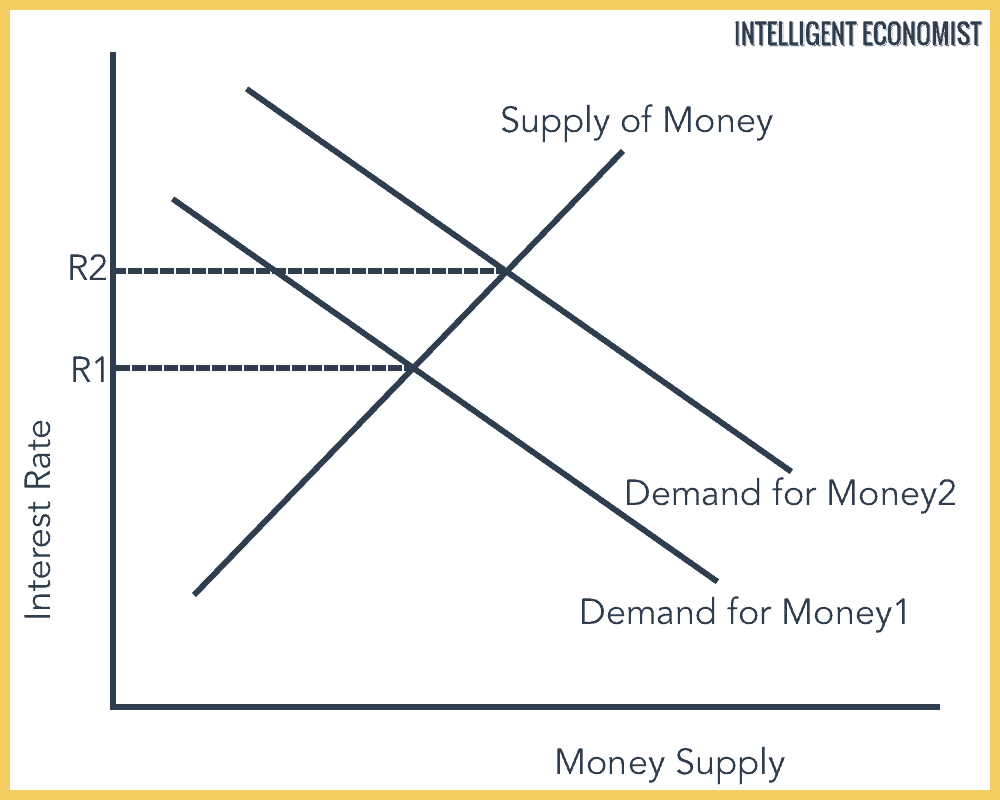
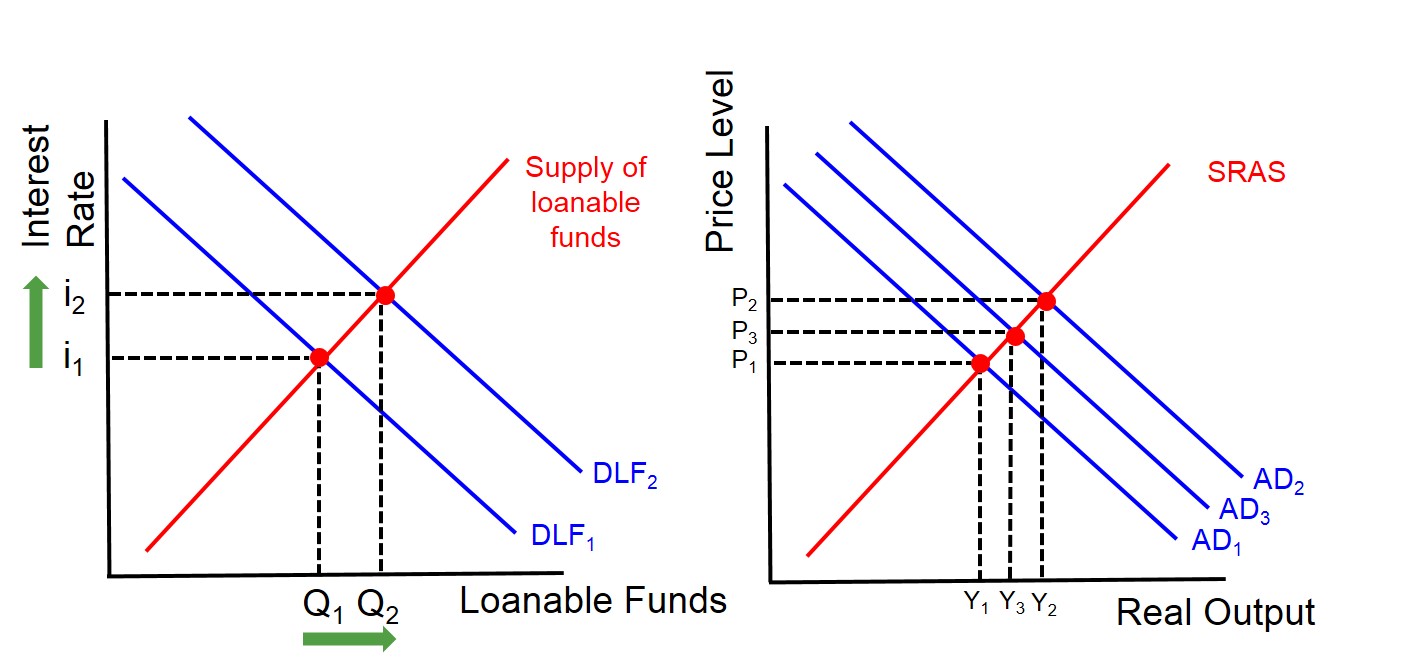
To understand crowding out, we must first look at the “Loanable Funds Market.” In this market, there is a limited supply of money available for borrowing, provided by savers and institutional investors. The demand for this money comes from households (for mortgages), businesses (for expansion), and the government (to fund budget deficits).
Government Spending and the Deficit
Most modern governments operate on a deficit, meaning they spend more than they collect in tax revenue. To bridge this gap, the government must borrow money. It does this by issuing Treasury bonds, notes, and bills. Because the government is seen as the safest possible borrower—backed by the power of taxation—its “demand” for capital is always met first. When the government increases its borrowing, it consumes a larger slice of the available “capital pie.”
The Impact on Interest Rates
In economics, when demand for a finite resource increases, the price of that resource rises. In the financial world, the “price” of money is the interest rate. When the government enters the market to borrow billions of dollars, it competes with private borrowers. To attract the necessary capital, the government may have to offer higher interest rates on its bonds. Consequently, banks and private lenders raise their rates across the board to stay competitive. This rise in interest rates is the primary mechanism through which the private sector is “crowded out” of the financial market.
The Theoretical Basis: Capital Scarcity
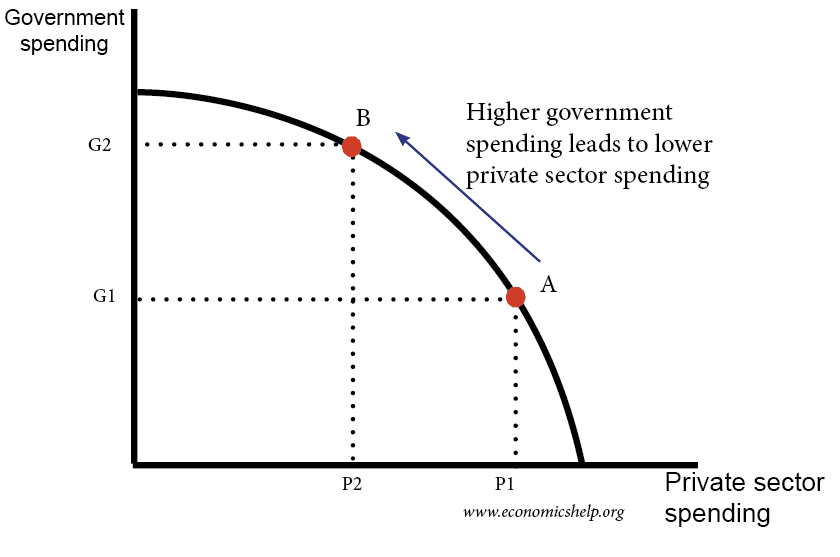
The fundamental premise of crowding out is that capital is a scarce resource. If the government uses $1 billion to fund a public project, that is $1 billion that is no longer available for private investment in new technologies, factories, or small business expansions. While the public project may have value, the “opportunity cost” is the lost innovation and efficiency that the private sector might have produced with that same capital.
Different Forms of Crowding Out
While the financial mechanism is the most discussed, crowding out can manifest in several ways that impact different sectors of the economy. Understanding these variations helps investors identify which assets might be at risk during periods of high government spending.
Financial Crowding Out
This is the most common form, occurring through the interest rate channel. As discussed, high government borrowing pushes up the cost of debt. For a business, this means the “hurdle rate”—the minimum return required on an investment—increases. If a company was planning to build a new warehouse with a projected 8% return, but interest rates jump from 4% to 7% due to government borrowing, the project may no longer be financially viable. The business cancels the project, and economic growth potentially slows.
Resource Crowding Out
Crowding out isn’t just about money; it’s also about “real” resources like labor and materials. If the government embarks on a massive infrastructure plan, it requires engineers, construction workers, steel, and concrete. In a full-employment economy, these resources are finite. By hiring these workers and buying these materials, the government leaves fewer resources for private developers. This leads to “input inflation,” where the private sector must pay significantly more to secure the same labor and materials, often making private projects prohibitively expensive.
International Crowding Out
In a globalized economy, crowding out can affect currency values. When a government borrows heavily and interest rates rise, the country’s currency often becomes more attractive to foreign investors seeking higher yields. As demand for the currency increases, its value rises. While a strong currency sounds positive, it makes exports more expensive and imports cheaper. This can “crowd out” domestic manufacturers who rely on selling goods abroad, leading to a widening trade deficit.
The Impact on Business Finance and Corporate Investment
For corporate treasurers and CFOs, the crowding-out effect is a constant consideration in strategic planning. The availability and cost of capital dictate the pace of corporate growth.
Rising Costs of Capital
When government bond yields rise, the entire yield curve shifts upward. Since corporate bonds are priced at a “spread” over Treasuries, a rise in the risk-free rate automatically increases the interest expense for corporations. This eats into net profit margins. For companies with high debt-to-equity ratios, even a small increase in interest rates can lead to a significant decrease in cash flow, forcing them to pivot from growth strategies to debt servicing.
Reduced Innovation and Expansion
Capital budgeting is a sensitive process. Businesses typically rank potential projects by their Internal Rate of Return (IRR). As crowding out pushes interest rates higher, the “cost of capital” increases. Many innovative, long-term projects—such as R&D for a new drug or the development of green energy tech—have uncertain or long-dated returns. When the cost of borrowing rises, these are the first projects to be cut. Over time, this reduction in private R&D can lead to stagnating productivity for the entire economy.
The “Wait and See” Approach for CFOs
High levels of government borrowing often create uncertainty regarding future tax policy and inflation. Business leaders, wary of the “crowding out” of future profits, may adopt a “wait and see” approach, hoarding cash rather than investing it. This stagnation in private investment is a secondary effect of crowding out that can lead to a “liquidity trap” where, despite money being available, it isn’t being used effectively to drive economic progress.
Crowding Out vs. Crowding In: The Great Debate
Not all economists agree that government spending always harms the private sector. There is a counter-theory known as “crowding in,” which suggests that under certain conditions, government spending can actually stimulate private investment.
When Government Spending Stimulates the Private Sector
The “crowding in” effect typically occurs during a deep recession when there is significant “slack” in the economy—meaning high unemployment and idle factories. In this scenario, private businesses are too afraid to spend. When the government steps in to build infrastructure or provide stimulus, it creates demand. A construction company might be “crowded in” to buy new equipment because of a government contract they received. In this case, the government spending acts as a catalyst rather than a competitor.
The Role of Economic Cycles
The validity of the crowding-out theory often depends on where we are in the economic cycle. During a period of full employment and high capacity utilization, crowding out is almost a certainty; any resources the government uses must be taken from somewhere else. However, during a downturn, the government may be using resources (like unemployed labor) that were otherwise sitting idle. For a business owner or investor, recognizing which phase of the cycle we are in is key to predicting whether government spending will be a headwind or a tailwind.
Strategic Implications for Investors and Personal Finance
As an individual investor or someone managing personal wealth, the crowding-out effect influences how you should allocate your assets and protect your purchasing power.
Adjusting Portfolio Allocations
When government deficits are high and crowding out is a risk, interest rates tend to have upward pressure. This environment is generally challenging for long-duration bonds, as bond prices move inversely to yields. Investors might look toward shorter-duration fixed income or “floating-rate” notes that adjust with market interest rates. On the equity side, companies with strong balance sheets and low debt are better positioned to weather the rising costs of capital than “growth” stocks that rely on heavy borrowing.
Fixed Income vs. Equity in a Crowded Market
In a classic crowding-out scenario, the “risk-free” rate (Treasury yield) becomes highly attractive. If you can get a 5% guaranteed return on a government bond, you might be less inclined to risk your money in the stock market for a potential 7% return. This shift in investor preference can lead to a contraction in P/E multiples for stocks. Understanding this helps you manage expectations for equity returns during periods of aggressive fiscal expansion.
Long-term Wealth Preservation Strategies
Crowding out can sometimes be a precursor to inflation if the central bank decides to “monetize the debt” (printing money to buy the government’s bonds and keep interest rates low). To protect your wealth in such an environment, diversifying into “real assets” such as real estate, commodities, or even inflation-protected securities (TIPS) can be a wise move. These assets often hold their value better when the competition for capital between the government and the private sector heats up.
In conclusion, while “crowding out” may sound like a dry academic term, its real-world implications are profound. It affects the interest rate on your credit card, the expansion plans of the companies you invest in, and the overall trajectory of the global economy. By staying informed about government fiscal policy and its pressure on capital markets, you can make more strategic, data-driven decisions for your financial future.
aViewFromTheCave is a participant in the Amazon Services LLC Associates Program, an affiliate advertising program designed to provide a means for sites to earn advertising fees by advertising and linking to Amazon.com. Amazon, the Amazon logo, AmazonSupply, and the AmazonSupply logo are trademarks of Amazon.com, Inc. or its affiliates. As an Amazon Associate we earn affiliate commissions from qualifying purchases.