
The Core Economic Concept
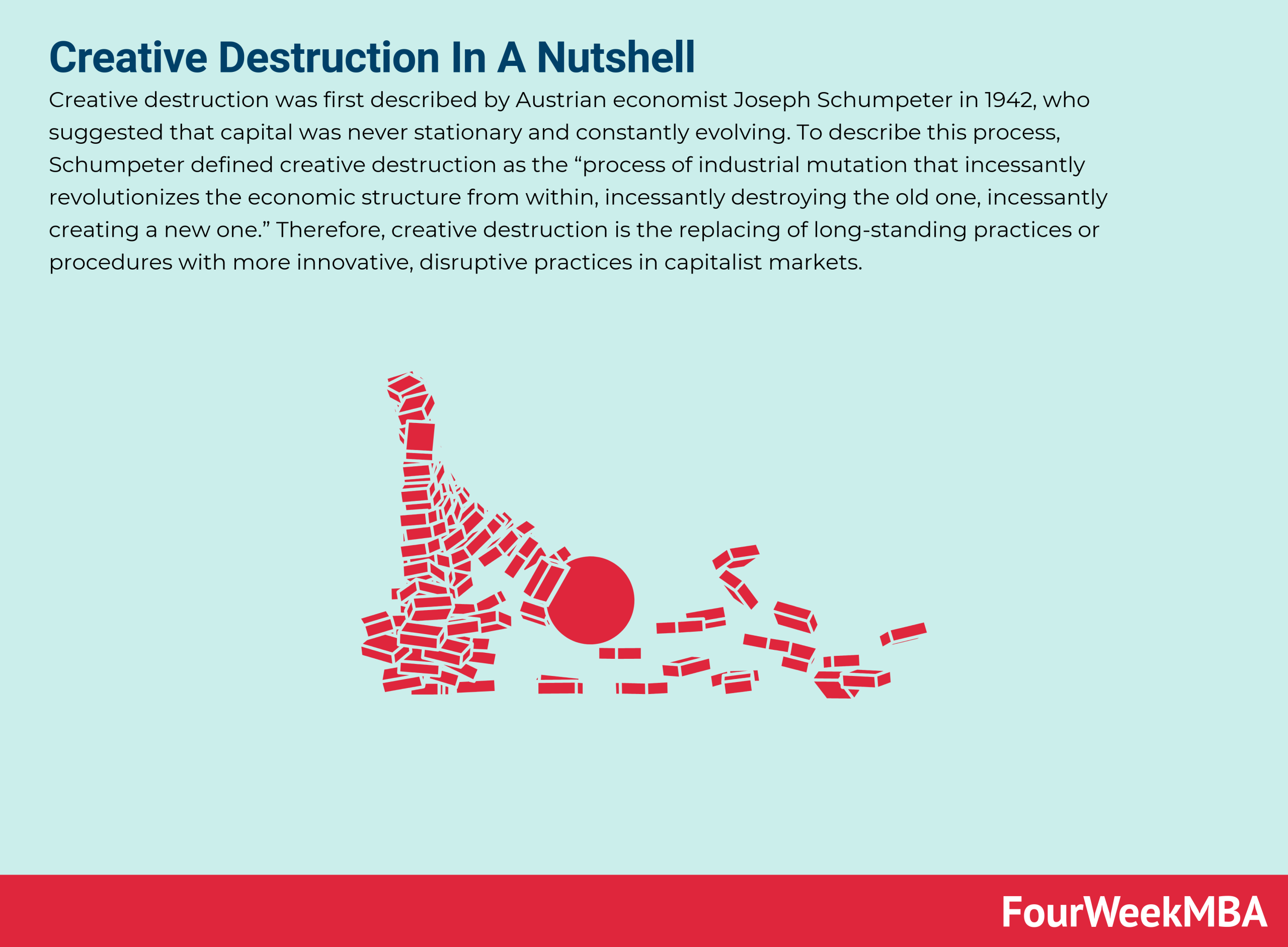
Creative destruction is a foundational concept in economics, particularly critical for understanding the dynamism of markets, business cycles, and long-term economic growth. Coined by economist Joseph Schumpeter in his 1942 work “Capitalism, Socialism and Democracy,” it describes the “process of industrial mutation that incessantly revolutionizes the economic structure from within, incessantly destroying the old one, incessantly creating a new one.” At its heart, it’s the engine of capitalism, driving progress by dismantling established structures and making way for innovative replacements.
Origins and Definition
Schumpeter viewed capitalism not as a static system in equilibrium, but as an evolutionary process characterized by continuous upheaval. The entrepreneur, in this view, is the key agent of creative destruction, introducing new combinations of production factors—new products, new production methods, new markets, new forms of organization. These innovations don’t merely add to existing economic activity; they fundamentally transform it, often rendering old industries, technologies, skills, and business models obsolete. The “destruction” aspect refers to the displacement of incumbent firms and industries that fail to adapt, while the “creation” refers to the emergence of new, often more efficient or valuable, alternatives. It’s a disruptive yet ultimately regenerative force.
A Continuous Cycle
This isn’t a one-time event or an occasional tremor; creative destruction is an ongoing, inherent dynamic of market economies. It’s a restless process where innovations emerge, disrupt the status quo, and eventually give way to further innovations. This continuous cycle means that industries and firms must constantly innovate and adapt to survive. Economic history is replete with examples: the transition from horse-drawn carriages to automobiles, landlines to mobile phones, physical media to digital streaming, and traditional retail to e-commerce. Each shift destroyed established market structures, investment portfolios, and job roles, while simultaneously creating new ones, leading to higher productivity and improved living standards over the long run. Understanding this relentless churn is vital for anyone engaged in business finance, investment, or strategic economic planning.
Drivers and Manifestations in Business Finance
The forces behind creative destruction are multifaceted, but often converge to exert immense pressure on existing business models and financial structures. Recognizing these drivers is paramount for businesses seeking to remain competitive and for investors aiming to allocate capital effectively.
Technological Innovation as a Catalyst
Perhaps the most visible driver of creative destruction today is technological innovation. Breakthroughs in digital transformation, artificial intelligence (AI), automation, biotechnology, and renewable energy are not merely incremental improvements; they are paradigm shifts. For instance, the rise of streaming services like Netflix fundamentally altered the entertainment industry, leading to the decline of traditional video rental stores like Blockbuster and challenging linear television broadcasting. E-commerce giants like Amazon revolutionized retail, forcing brick-and-mortar stores to adapt or face obsolescence. Similarly, the advent of AI tools is reshaping industries from manufacturing to customer service, automating tasks, increasing efficiency, and demanding new skills, thereby impacting labor markets and investment priorities. For business finance, this means constantly evaluating R&D spending, asset utilization, and the potential for technological disruption to either erode or create value.
Market Forces and Changing Consumer Preferences
Beyond technology, shifts in consumer preferences and broader market forces also play a significant role. Evolving societal values, such as increased demand for sustainability, convenience, and personalization, can trigger creative destruction. The automotive industry, for example, is undergoing a profound transformation driven by the shift towards electric vehicles (EVs) and autonomous driving, fueled by environmental concerns and technological advancements. This impacts not only vehicle manufacturers but also a vast ecosystem of suppliers, energy providers, and related services. Companies that fail to anticipate or respond to these changing demands risk losing market share and experiencing declining valuations. From a financial perspective, understanding these shifts is crucial for assessing market risk, forecasting demand, and making strategic investment decisions in new product lines or market segments.
Global Competition and Deregulation
Increased global competition, facilitated by international trade and improved communication, intensifies the process of creative destruction. Businesses are no longer just competing domestically but globally, pushing for greater efficiency, lower costs, and continuous innovation. Emerging economies can leverage lower labor costs or specialized expertise to disrupt established industries in developed nations. Furthermore, deregulation in certain sectors can open markets to new entrants, fostering competition and innovation. The telecommunications industry, for instance, saw significant changes after deregulation, leading to increased competition, lower prices, and a proliferation of new services. These forces compel companies to critically examine their operational efficiency, supply chains, and competitive advantages, often leading to restructuring, mergers, or divestitures to stay financially viable in a dynamic global landscape.
Strategic Implications for Businesses
For businesses navigating an era of persistent creative destruction, the strategic implications are profound, demanding constant vigilance, adaptability, and a proactive stance toward innovation. Financial health and long-term sustainability hinge on understanding and responding to these powerful economic currents.
The Imperative for Innovation and Adaptation
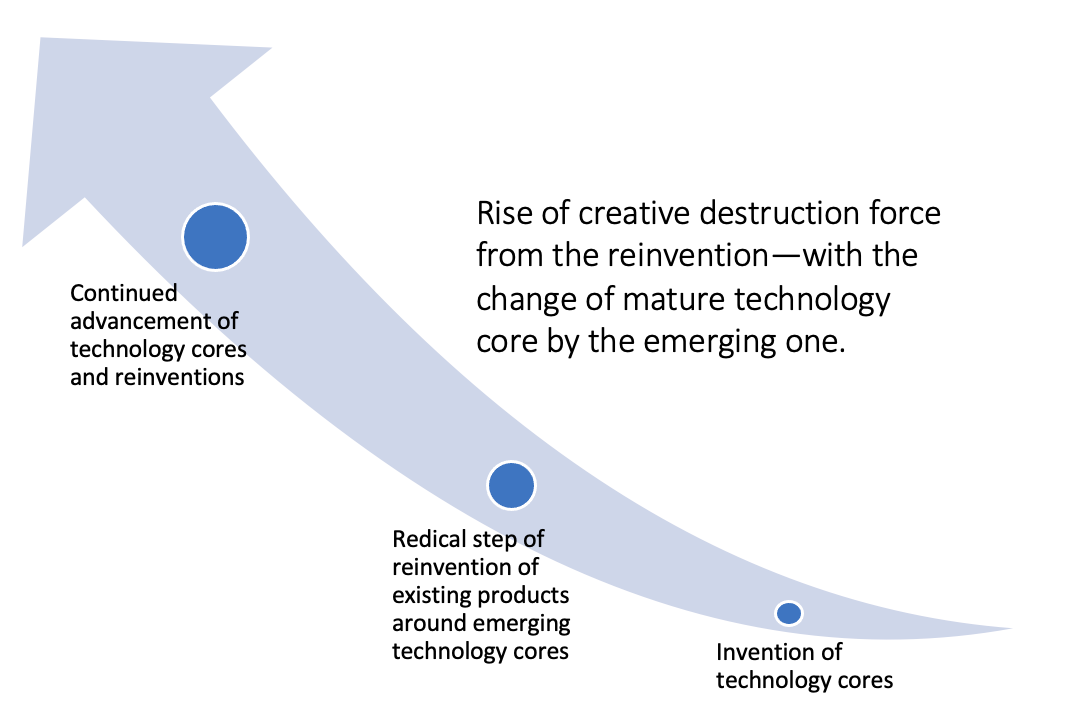
In a world shaped by creative destruction, the adage “innovate or die” rings truer than ever. Businesses can no longer rely solely on past successes or established market positions. Continuous innovation—whether in product development, service delivery, operational processes, or business models—is not just an advantage; it’s a prerequisite for survival. This necessitates significant and ongoing investment in research and development (R&D), fostering a culture of experimentation, and embracing agile methodologies to quickly pivot when market conditions change. Financially, this means budgeting for R&D as a core strategic expense, rather than a discretionary one, and being prepared for potential failures as part of the innovation process. Companies must also cultivate adaptive leadership and organizational structures that can swiftly respond to emerging threats and opportunities, reallocating human and capital resources as needed.
Managing Risk and Resource Reallocation
Creative destruction inherently involves risk. Companies that fail to adapt face the risk of obsolescence, declining revenues, and eventual bankruptcy. Managing this risk requires a forward-looking approach to asset management and resource reallocation. This includes strategically phasing out obsolete assets and technologies before they become a drag on profitability, and investing proactively in future-proof capabilities and emerging technologies. For example, a manufacturing firm might need to divest from legacy machinery and invest heavily in robotics and AI-driven automation. Financial officers must analyze capital expenditure decisions through the lens of long-term viability and disruptive potential, rather than just short-term returns. Furthermore, strategic partnerships, joint ventures, or mergers and acquisitions (M&A) can be critical tools to acquire new technologies, access new markets, or gain competitive capabilities that would be too slow or costly to develop organically. These financial moves are often a direct response to the pressures of creative destruction.
Impact on Valuation and Capital Structure
The process of creative destruction has a direct and often dramatic impact on company valuations and capital structures. Businesses operating in industries undergoing significant destruction face increasing difficulty in attracting capital, as investors perceive higher risks and lower growth prospects. Their stock prices may decline, and securing debt financing can become more challenging or expensive. Conversely, companies at the forefront of creation, those introducing disruptive innovations, can experience rapid growth in valuation and attract substantial investment capital, often through venture capital, IPOs, and secondary offerings. This can lead to rapid expansion but also requires careful financial management to ensure sustainable growth and avoid overextension. Strategic financial planning, including managing debt-to-equity ratios, cash flow projections, and investor relations, becomes even more critical in such dynamic environments to ensure the capital structure supports both innovation and stability.
Creative Destruction and Investment Strategy
For investors, creative destruction is a double-edged sword: it presents significant risks to established portfolios but also offers unparalleled opportunities for wealth creation. A nuanced understanding of this economic force is vital for crafting resilient and growth-oriented investment strategies.
Identifying Growth Sectors and Disruptors
Savvy investors actively seek to identify sectors and companies that are beneficiaries of creative destruction, rather than its victims. This involves looking beyond current market leaders to spot emerging technologies, new business models, and companies that are fundamentally challenging the status quo. Examples include investing in renewable energy companies as the world shifts away from fossil fuels, or in AI and biotechnology firms poised to revolutionize healthcare, manufacturing, and consumer services. Identifying these “disruptors” requires diligent research, an understanding of long-term trends, and the ability to differentiate between fleeting fads and genuine transformative innovations. Investors often prioritize companies with strong R&D pipelines, robust intellectual property, scalable business models, and agile management teams capable of navigating rapid change. This approach often leans towards growth investing, focusing on potential future earnings rather than current dividends.
Avoiding Value Traps and Declining Industries
Equally important is the ability to recognize and avoid “value traps”—companies or industries that appear cheap based on traditional metrics but are fundamentally threatened by creative destruction. These are often businesses with declining market share, outdated technology, or unsustainable cost structures that are unable to adapt to new competitive landscapes. Examples include legacy print media, certain segments of traditional retail, or industries heavily reliant on non-renewable resources without a clear transition strategy. Investing in such entities, even if they seem undervalued, can lead to permanent capital impairment. This aspect of investment strategy requires a keen understanding of industry life cycles, competitive dynamics, and the long-term viability of business models. It’s about recognizing when a “falling knife” is truly fundamentally broken, rather than temporarily undervalued.
Diversification and Long-Term Perspective
Given the unpredictable nature and swift pace of creative destruction, diversification across various industries, asset classes, and geographies becomes even more crucial for mitigating risk. A portfolio concentrated in a single sector, no matter how promising it seems today, could be highly vulnerable to the next wave of disruption. A diversified portfolio, conversely, hedges against the risk of any single industry or company being rendered obsolete. Furthermore, a long-term investment perspective is essential. The process of creative destruction unfolds over years, not months. While short-term market reactions can be volatile, the long-term trend often favors innovative firms and sectors. Patient investors who focus on fundamental shifts and robust business models, rather than speculative hype, are better positioned to capitalize on the wealth-generating aspects of creative destruction. This might also involve allocating a portion of capital to venture funds or private equity that specialize in early-stage disruptive technologies, accepting higher risk for potentially higher returns.
The Broader Economic Impact
Beyond individual businesses and investment portfolios, creative destruction serves as a vital, albeit often painful, mechanism for broader economic progress and societal evolution. It reshapes entire economies and influences public policy.
Economic Growth and Job Creation
While creative destruction can lead to job displacement in declining industries, its net effect over the long term is typically positive for economic growth and overall job creation. The new industries and technologies born from this process often create more productive, higher-skilled, and better-paying jobs. For example, while the advent of personal computers and the internet led to the decline of some manufacturing jobs, it simultaneously created millions of new jobs in software development, IT services, e-commerce, and digital marketing. Creative destruction drives increases in productivity, which is the ultimate engine of rising living standards and real wage growth. It forces resources—labor, capital, and raw materials—to move from less productive uses to more productive ones, optimizing resource allocation across the economy and fostering innovation that benefits consumers through better products and services at lower prices.

Policy Considerations
Understanding creative destruction is also critical for effective economic policymaking. Governments and policymakers face the challenge of facilitating this transformative process while mitigating its negative social impacts. Policies can aim to foster an environment conducive to innovation, such as investing in education and research, protecting intellectual property rights, and reducing unnecessary regulatory burdens that stifle entrepreneurship. Simultaneously, social safety nets, retraining programs, and unemployment benefits become crucial to support workers displaced by industrial change, helping them transition to new opportunities rather than being left behind. The goal is not to stop creative destruction—which would effectively halt economic progress—but to manage its effects, ensure a smoother transition for those affected, and maximize its benefits for society as a whole. Balancing the imperative for innovation with the need for social equity is a complex but essential task in an era defined by continuous economic transformation.
aViewFromTheCave is a participant in the Amazon Services LLC Associates Program, an affiliate advertising program designed to provide a means for sites to earn advertising fees by advertising and linking to Amazon.com. Amazon, the Amazon logo, AmazonSupply, and the AmazonSupply logo are trademarks of Amazon.com, Inc. or its affiliates. As an Amazon Associate we earn affiliate commissions from qualifying purchases.