
In the digital era, the intersection of advanced mathematics and computational logic forms the bedrock of every software application, graphic rendering engine, and artificial intelligence algorithm we interact with daily. While a query like “what is cos 90” might seem like a simple relic of high school trigonometry, it serves as a fundamental checkpoint for understanding how digital systems interpret reality. For developers, data scientists, and engineers working within the tech stack, the value of cos 90 is not just its numerical output, but the logic it represents in binary computation.
The Mathematical Foundation in Digital Logic
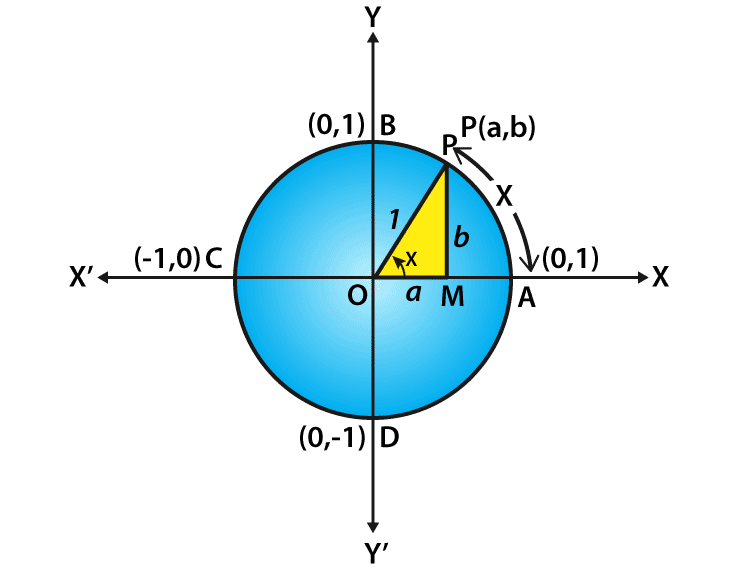
At its core, the cosine function is a trigonometric ratio representing the adjacent side of a right-angled triangle divided by the hypotenuse. When we look at the unit circle—the coordinate plane where the radius is equal to one—the cosine of an angle represents the x-coordinate of the point on the circle.
Calculating the Value
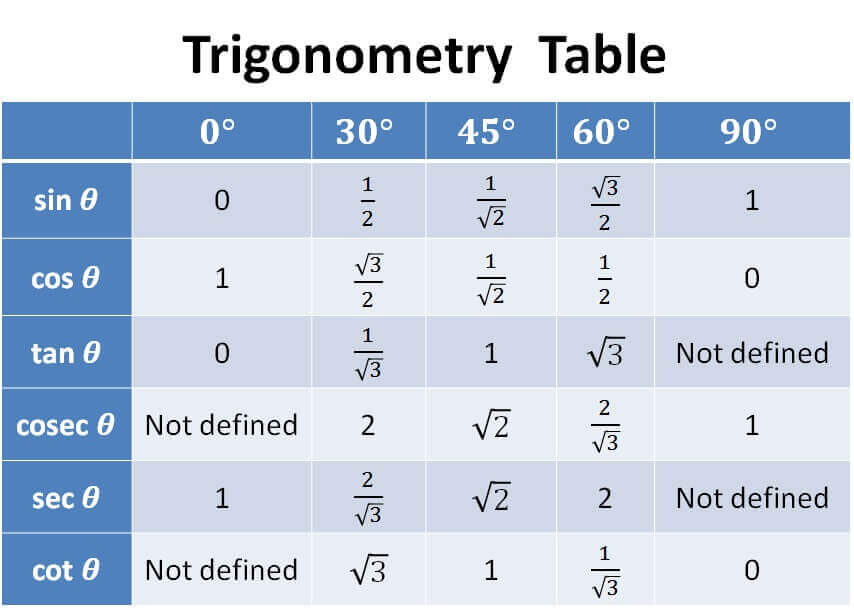
For an angle of 90 degrees (or $pi/2$ radians), the point on the unit circle lies directly on the positive y-axis at coordinates (0, 1). Because the cosine function specifically maps to the x-coordinate, the value of cos 90 is 0. This calculation is a cornerstone of vector mathematics. In software development, particularly when building physics engines for gaming or spatial analysis for augmented reality, this zero-value is critical. It defines perpendicularity, indicating that when two vectors are at 90 degrees to each other, their dot product—which relies on the cosine of the angle between them—becomes zero.
The Problem of Floating Point Precision
While the theoretical answer is exactly zero, computers often handle trigonometry with varying degrees of precision. If you were to run cos(90) in a standard programming language like Python, JavaScript, or C++, you might encounter a result like 6.123233995736766e-17. This infinitesimal value is not a mathematical error but a byproduct of floating-point arithmetic. Computers use the IEEE 754 standard to represent numbers, which struggles to perfectly represent $pi$. Since 90 degrees is $pi/2$ radians, the approximation of $pi$ leads to a result that is effectively zero but technically a very small decimal. Understanding this is essential for developers debugging complex geometric algorithms.
Trigonometry in Modern Software Engineering
The practical application of cos 90 goes far beyond classroom blackboard problems. It is woven into the fabric of computer graphics, digital signal processing, and robotics.
Graphics and Spatial Transformations
When rendering a 3D environment in engines like Unreal or Unity, the computer must constantly calculate the orientation of objects. Rotation matrices are used to transform the position of vertices. These matrices are populated with sine and cosine values. If an object is rotated by 90 degrees, the cosine terms in the rotation matrix become zero. This is a common point of failure for “Gimbal Lock,” a phenomenon where two axes of rotation align and lose a degree of freedom. By understanding that cos 90 equals zero, engineers can identify the exact coordinate points where these transformations might collapse and implement quaternions as a more stable alternative.
Signal Processing and Digital Audio
In digital signal processing (DSP), cosine functions are used to create the waveforms that define audio. Whether it is an equalizer adjusting frequencies or a synthesizer creating a new sound, the underlying logic is built on the Fourier Transform. The Fourier Transform essentially decomposes a signal into a sum of sine and cosine waves. Knowing the behavior of these waves at critical junctures—like 90 degrees—allows software to filter noise, compress audio files, and synthesize complex sounds with minimal computational overhead.
The Role of Trigonometry in AI and Machine Learning
Artificial Intelligence has moved from simple logical rules to complex neural network architectures. Within these networks, trigonometry acts as a silent regulator of information flow and model stability.
Activation Functions and Normalization
Modern AI models, particularly those involved in Natural Language Processing (NLP) like Transformers, utilize something called “Positional Encoding.” Because a Transformer processes tokens in parallel rather than sequentially, it has no inherent sense of order. To fix this, developers inject sinusoidal signals into the data. These signals rely on sine and cosine functions to give each word a unique position in space. The model uses the periodic nature of these functions to “understand” that the distance between word 1 and word 2 is the same as the distance between word 10 and word 11. The value of cos 90 serves as a crucial anchor point in these periodic patterns, ensuring that the spatial encoding remains consistent across the entire data set.
Optimization and Gradient Descent
When training a machine learning model, the objective is to find the minimum of a cost function—essentially the “valley” where the model’s error is lowest. Many optimization algorithms use directional gradients to move toward this minimum. If the gradient is orthogonal to the current trajectory, the cosine of the angle between them is 0. This informs the algorithm that it has reached a point where no further movement in that specific dimension will reduce the error. This is a vital logical check for algorithms that must “know” when to stop learning or when to change direction to avoid overfitting the data.
Best Practices for Implementing Math in Code
Because computers do not handle real-world numbers in the same way as human mathematicians, developers must follow rigorous best practices when implementing trigonometric operations.
Working with Radians vs. Degrees
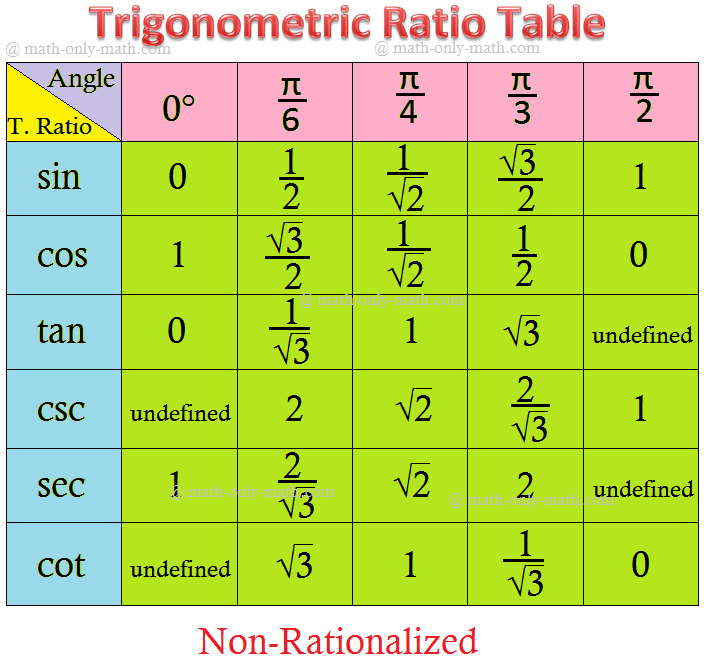
The most common mistake when calculating cos 90 in a programming context is using degrees instead of radians. Most standard math libraries in modern languages, such as Math.cos() in JavaScript or numpy.cos() in Python, expect the input to be in radians. 90 degrees converted to radians is $pi/2$. If a developer inputs 90 directly into a function expecting radians, they will get a nonsensical result, leading to bugs that are notoriously difficult to track down. Always ensure a conversion step—degrees * (Math.PI / 180)—is explicitly included in your codebase to maintain precision and accuracy.
Utilizing Constants and Approximation Libraries
For mission-critical software, relying on standard library approximations might be insufficient. Many high-performance applications use look-up tables or polynomial approximations (like the Taylor series) to calculate cosine values. By using a pre-calculated table of values, developers can avoid the heavy computational cost of floating-point trigonometry while maintaining a fixed, predictable level of precision. This is particularly relevant in embedded systems or IoT devices with limited processing power.
Testing for “Close-Enough”
Because of the floating-point precision issues mentioned earlier, a developer should never check for equality against zero when dealing with cosine results. Instead of if (cos(angle) == 0), use an epsilon check: if (Math.abs(cos(angle)) < 0.000001). This accounts for the tiny variations caused by binary floating-point representation, ensuring that your application logic remains robust even when the math is “technically” not quite reaching a perfect zero. This practice is the difference between a stable software release and one that crashes under edge-case scenarios.
The simplicity of “what is cos 90” belies the depth required to handle such values within the modern tech ecosystem. Whether you are building the next generation of generative AI, designing an immersive gaming engine, or simply optimizing a data pipeline, the way you interpret and implement trigonometric functions dictates the reliability and efficiency of your product. By respecting the nuances of floating-point arithmetic and understanding the role of trigonometry in spatial and algorithmic logic, you ensure that your code is not just functional, but optimized for the demands of high-performance digital environments.
aViewFromTheCave is a participant in the Amazon Services LLC Associates Program, an affiliate advertising program designed to provide a means for sites to earn advertising fees by advertising and linking to Amazon.com. Amazon, the Amazon logo, AmazonSupply, and the AmazonSupply logo are trademarks of Amazon.com, Inc. or its affiliates. As an Amazon Associate we earn affiliate commissions from qualifying purchases.