
In the vast landscape of digital entertainment, few titles have achieved the paradoxical status of being both remarkably simple and profoundly influential. When Julien “Orteil” Thiennot released Cookie Clicker in August 2013, the tech world witnessed the birth—or at least the popularization—of a new software paradigm: the incremental game. What began as a browser-based experiment written in JavaScript has evolved into a cultural phenomenon that challenges our understanding of game design, user engagement, and the technical architecture of “idle” software.
To understand what Cookie Clicker is, one must look beyond the literal act of clicking a digital cookie. It is a masterclass in feedback loops, mathematical scaling, and web-based software longevity. This article explores the technical foundations of Cookie Clicker, the psychological mechanics that drive its retention, and its lasting impact on the broader technology and gaming ecosystem.
The Architecture of an Addiction: Understanding Core Mechanics
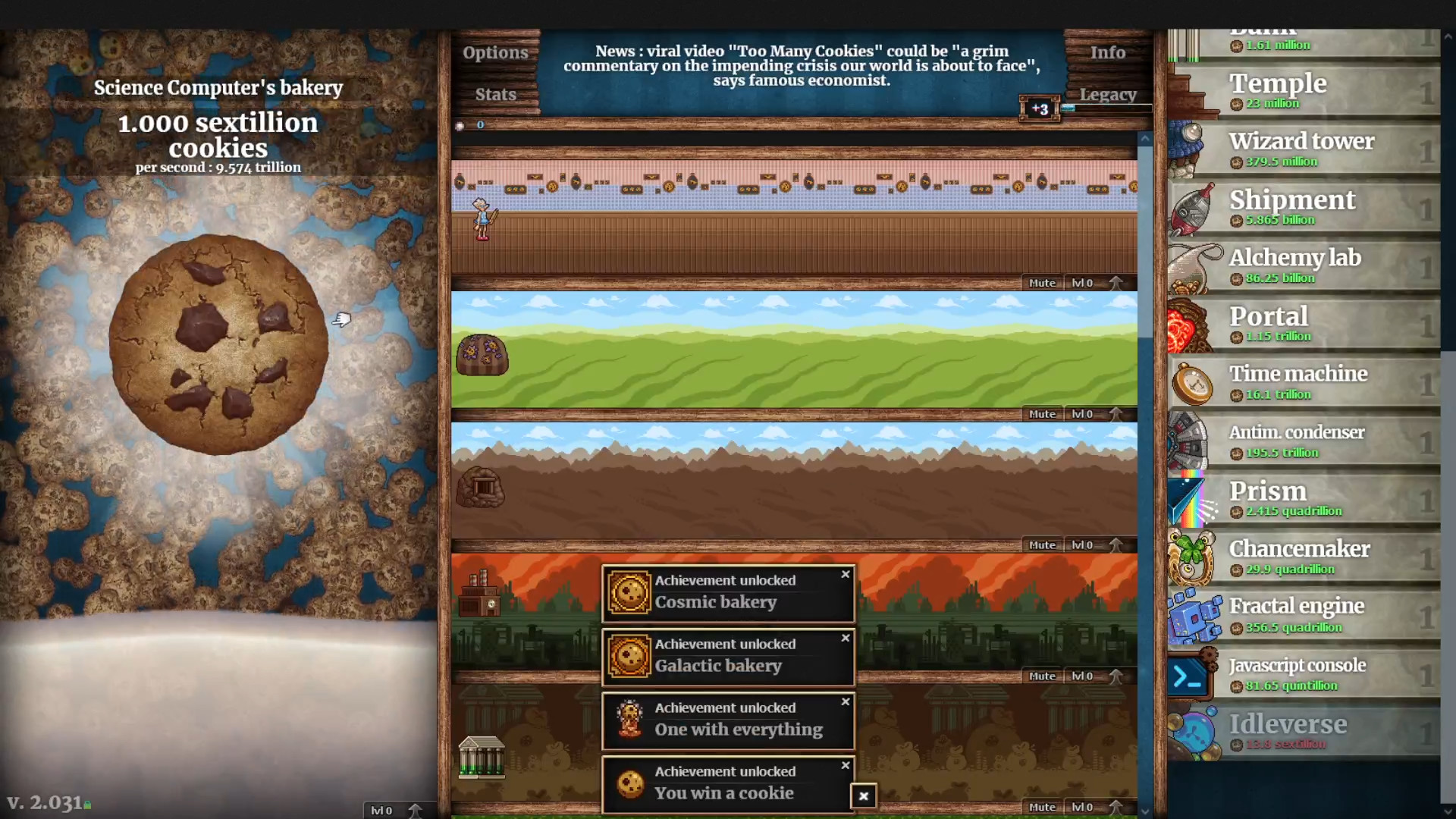
At its surface, Cookie Clicker is a game about clicking. A giant cookie sits on the left side of the screen; clicking it grants the player one cookie. However, the software quickly transitions from a manual task to an automated system. This shift represents the core appeal of incremental games: the transition from labor to management.
The Genesis of the Clicker Loop
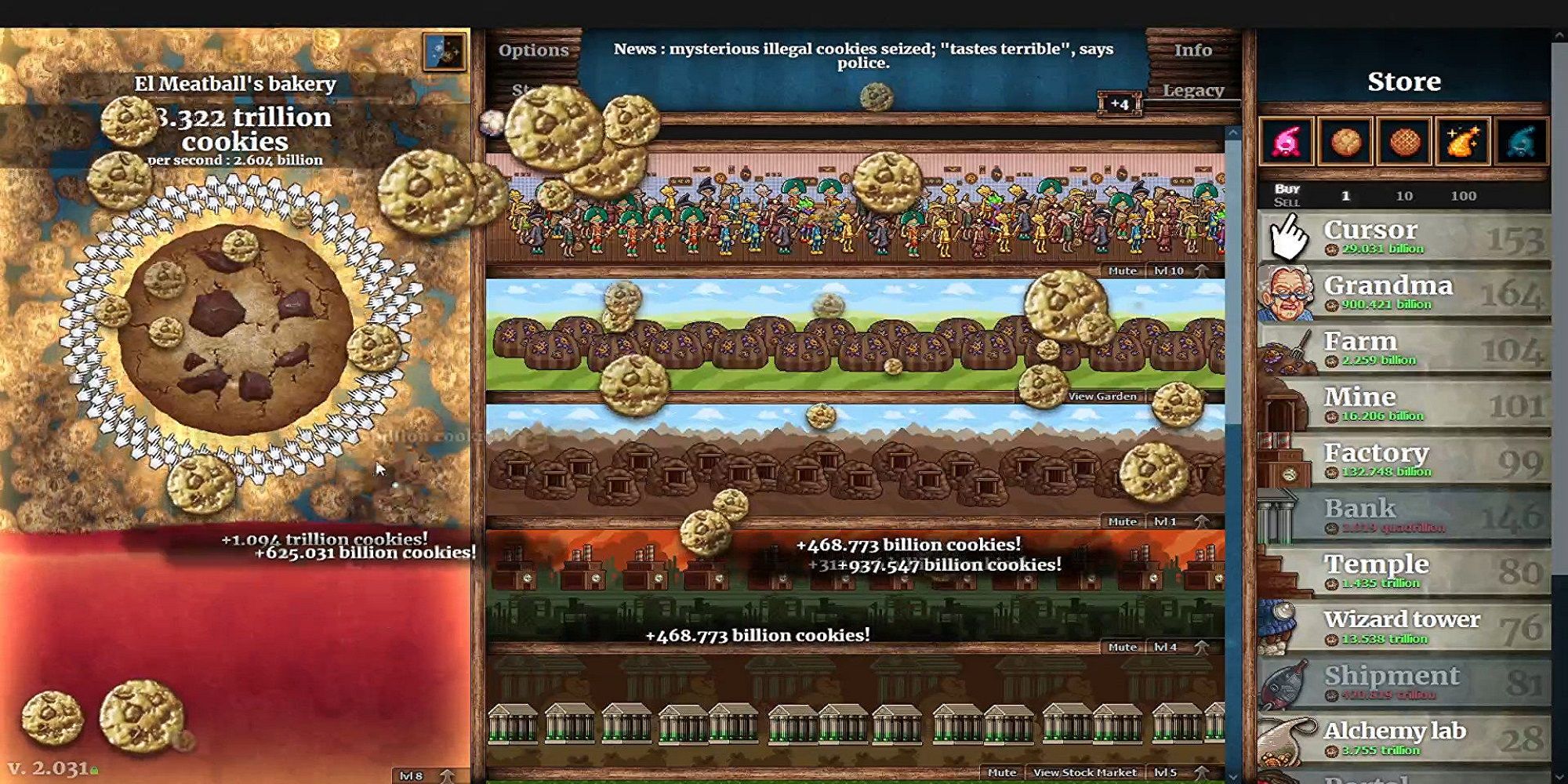
The game’s design is centered on a “Prestige” loop that is common in modern software and application design. Initially, the player’s interaction is high-frequency and low-reward. As the player accumulates currency (cookies), they purchase “buildings”—automated scripts like Cursors, Grandmas, Farms, and Mines—that generate cookies per second (CpS) without user intervention. This creates a secondary layer of interaction where the player is no longer a laborer but a systems optimizer, deciding which upgrades provide the highest return on investment (ROI).
Exponential Scaling and Algorithmic Growth
From a technical standpoint, Cookie Clicker is an exercise in managing exponential growth. Unlike traditional RPGs where level caps or diminishing returns are common, Cookie Clicker utilizes algorithms that allow numbers to reach the sextillions, septillions, and beyond. This presents a unique challenge in software engineering: handling “floating-point” math and ensuring the UI can display such gargantuan figures without breaking. The game uses specific formatting libraries to convert these massive integers into human-readable strings, a technique now standard in high-scaling data visualization tools.
Behind the Browser: The Technical Evolution of Cookie Clicker
While Cookie Clicker may look like a simple interactive website, its underlying technical structure has undergone significant evolution since its 2013 debut. It serves as a prime example of the capabilities—and limitations—of browser-based software.
JavaScript and the Power of Web-Based Gaming
The game is primarily built using JavaScript, HTML5, and CSS3. In its early days, it demonstrated how complex state management could be handled entirely on the client side. The game’s logic runs on a continuous loop, calculating cookie production every few milliseconds. This requires efficient code to ensure that as the number of automated buildings increases, the browser’s performance does not degrade. Thiennot’s use of the Document Object Model (DOM) to update thousands of visual elements in real-time was, at the time, a significant showcase of what modern browsers could handle without the need for Flash or dedicated plugins.
From Browser to Steam: The Porting Process
In 2021, Cookie Clicker made the jump from a free browser game to a paid version on the Steam platform. This transition required a significant technical overhaul. The Steam version utilizes the Electron framework, which essentially packages the web application into a standalone desktop executable by bundling it with a Chromium browser instance. This allowed the developer to maintain the core JavaScript logic while integrating Steam-specific features like Cloud Saves, Achievements, and Workshop support for modding. The success of this port highlighted a growing trend in the tech industry: the “web-to-desktop” pipeline, where successful web apps are repackaged as native software.
The Psychology of Progress: Software Design and User Retention
The success of Cookie Clicker is not accidental; it is built upon sophisticated psychological triggers that are now widely used across the tech industry, from social media apps to productivity software.
The Dopamine Feedback Loop in Digital Interfaces
Cookie Clicker excels at providing “micro-rewards.” Every click provides visual and auditory feedback, and every purchase results in a visible increase in the rate of production. This creates a dopamine loop that keeps the user engaged. In software design, this is often referred to as “gamification.” By providing a constant sense of progression—even when the player is not actively doing anything—the software maintains a high level of “stickiness.” This is the same principle used by fitness apps that award badges for steps or language learning apps that track daily “streaks.”
Gamification and the “Numbers Go Up” Philosophy
The game strips away the complexities of narrative and graphics to focus on a singular, compelling metric: growth. This “numbers go up” philosophy is a fundamental aspect of modern data-driven software. Whether it is a stock market tracker, a social media follower count, or a cloud storage bar, humans are evolutionarily hardwired to respond to increasing metrics. Cookie Clicker satirizes and celebrates this urge, presenting a UI that is essentially a dashboard for an absurd, fictional economy.
Legacy and the Future of Idle Gaming Software
Beyond the cookie, Julien Thiennot’s creation has left an indelible mark on the software industry. It didn’t just create a game; it defined a genre that has since become a multi-billion-dollar sector of the mobile app market.
Spawning a Sub-Genre: The “Clicker” Influence on App Development
Following the success of Cookie Clicker, the Apple App Store and Google Play Store saw an explosion of “Idle” or “Incremental” games, such as AdVenture Capitalist, Clicker Heroes, and Egg, Inc. These apps took the technical foundation of Cookie Clicker—automated resource generation and prestige mechanics—and optimized them for touch interfaces and monetization. The “idle” mechanic has even bled into other genres; many modern AAA titles now include “passive income” systems where players earn currency while the console is turned off, a direct lineage from the browser tab that stays open overnight to bake cookies.
Beyond Cookies: The Future of Incremental Software
The technical principles of Cookie Clicker are now being applied in serious software contexts. Incremental progress bars and automated feedback systems are being integrated into project management tools (like Jira or Trello) to increase worker engagement. Furthermore, the game’s modding community continues to push the boundaries of what browser-based JavaScript can do, creating complex add-ons that perform deep statistical analysis and optimization of the game’s economy.

Conclusion
Cookie Clicker is far more than a simple distraction; it is a seminal piece of software that bridged the gap between basic web scripts and complex game design. By leveraging the accessibility of JavaScript and the psychological power of incremental growth, it created a blueprint for user engagement that continues to influence developers across the globe.
As we look at the evolution of tech, Cookie Clicker stands as a reminder that profound impact often comes from the most unassuming places. It taught the industry that software doesn’t need high-end graphics or complex controls to capture the world’s attention—it just needs a compelling loop, a scalable architecture, and, perhaps, an endless supply of virtual cookies. Whether you view it as a tech experiment, a psychological study, or a simple game, its place in the history of digital development is as solid as a freshly baked chocolate chip cookie.
aViewFromTheCave is a participant in the Amazon Services LLC Associates Program, an affiliate advertising program designed to provide a means for sites to earn advertising fees by advertising and linking to Amazon.com. Amazon, the Amazon logo, AmazonSupply, and the AmazonSupply logo are trademarks of Amazon.com, Inc. or its affiliates. As an Amazon Associate we earn affiliate commissions from qualifying purchases.