
In the vast and interconnected landscape of modern technology, the concept of a “controller” is as fundamental as it is pervasive. Far from being a singular device or a narrowly defined software component, a controller represents a core principle of interaction, management, and automation that underpins virtually every technological system we encounter today. From the intricate workings of a smartphone to the vast networks powering global communication, and from the sophisticated robots on a factory floor to the seamless user experience of a video game, controllers are the orchestrators, the intermediaries, and the decision-makers that bring systems to life and enable them to perform their intended functions.

At its essence, a controller is any entity – be it hardware, software, or a combination thereof – designed to manage, regulate, direct, or manipulate the behavior of another system or component. Its primary role is to interpret input, process information, and generate appropriate output or actions to achieve a desired state or outcome. This can involve responding to user commands, monitoring environmental conditions, executing predetermined algorithms, or coordinating complex sequences of operations. Understanding “what is a controller” is therefore not about pinpointing a single device, but rather grasping a critical functional role that manifests in countless forms across the technological spectrum.
The Core Concept of Control in Technology
The notion of control is intrinsic to engineering and computer science, representing the deliberate manipulation of a system’s variables to achieve a specific objective. A controller embodies this principle, acting as the intelligent intermediary that bridges the gap between intent and execution. Without controllers, complex systems would be chaotic, unresponsive, or simply unable to perform their designated tasks.
Defining “Controller”: The Orchestrator of Action
To define a controller most broadly within a technological context, one might consider it as the component responsible for translating desired outcomes into actionable instructions. It receives signals or data – which could originate from user input, sensors, other software modules, or external systems – processes this information according to predefined logic or algorithms, and then sends commands or signals to actuators or other controlled components. These controlled components then perform the physical or logical actions that bring about the desired change. This feedback loop of input-process-output is a hallmark of effective control systems.
Consider a simple thermostat: it receives input from a temperature sensor, compares it to a desired setpoint, and then decides whether to activate or deactivate a heating or cooling system. Here, the thermostat is the controller, the sensor provides input, and the furnace/AC unit acts as the controlled component. This basic principle scales from the mundane to the highly sophisticated, forming the backbone of automation and interactive technology.
Ubiquity of Control Systems
The sheer ubiquity of control systems is what makes the concept of a controller so vital. They are present in almost every facet of our digital and physical world:
-
Consumer Electronics: Remote controls for TVs, touchscreens on smartphones, game consoles.
-
Automotive Industry: Engine control units (ECUs), anti-lock braking systems (ABS), cruise control.
-
Industrial Automation: Programmable Logic Controllers (PLCs) in factories, robotic arm controllers.
-
Information Technology: Network controllers managing data flow, server controllers, software application controllers.
-
Aerospace: Flight control systems, autopilot.
-
Medical Devices: Insulin pumps, diagnostic equipment.
This vast application space highlights that while the form and complexity of controllers vary immensely, their fundamental purpose—to manage, regulate, and direct—remains constant.
Controllers in Hardware and Physical Systems
One of the most tangible manifestations of controllers is in hardware, where they directly interact with the physical world or manage the flow of physical signals and data within a device. These hardware controllers are the silent workhorses that enable machines and devices to function autonomously or respond to human interaction.
Microcontrollers: The Brains of Embedded Systems
Perhaps the most fundamental hardware controller is the microcontroller (MCU). Often referred to as “computers on a chip,” microcontrollers are compact integrated circuits designed to govern specific tasks within embedded systems. Unlike general-purpose microprocessors found in PCs, MCUs are optimized for control applications, integrating a processor core, memory (RAM, ROM, Flash), and peripheral input/output (I/O) on a single chip.
They are the unseen brains behind countless everyday objects: washing machines, remote controls, smart home devices, automotive systems, medical instruments, and even simple toys. A microcontroller reads sensor data (e.g., temperature, pressure, light), executes a pre-programmed set of instructions, and then actuates outputs (e.g., turning on a motor, flashing an LED, sending a signal) to control the device’s behavior. Their low cost, low power consumption, and compact size make them indispensable for dedicated control functions.
Game Controllers: Interfacing with Digital Worlds
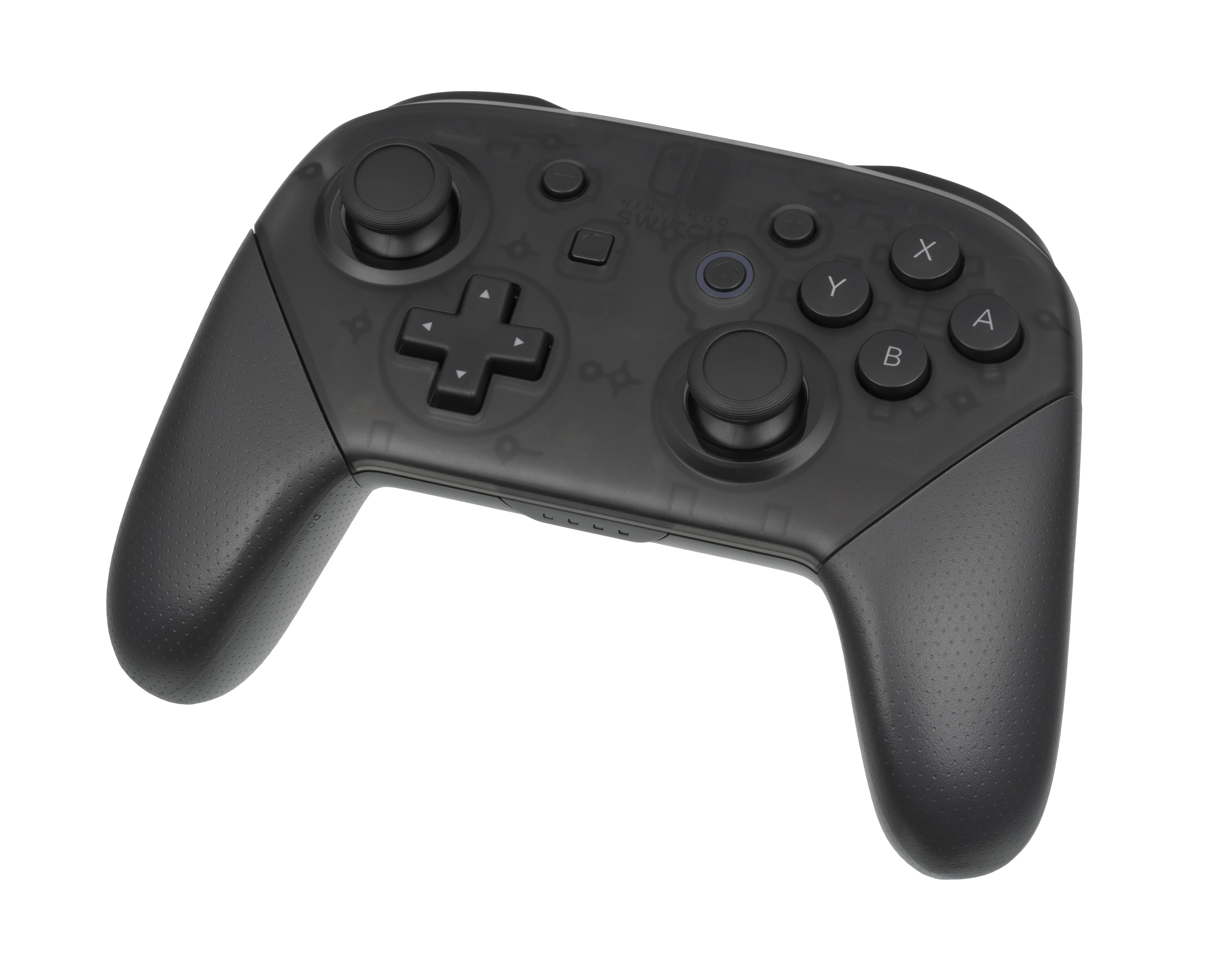
On a more interactive and consumer-facing level, game controllers are a prime example of hardware controllers designed for human-computer interaction. From the joysticks and buttons of classic arcade machines to the sophisticated haptic feedback and motion sensors of modern gaming consoles, these devices translate a player’s physical actions into digital commands.
A game controller acts as an input controller, capturing movements, button presses, and even voice commands, then sending these signals to the gaming system. The gaming system’s software interprets these inputs to manipulate virtual characters, navigate menus, or perform in-game actions. The evolution of game controllers reflects advancements in ergonomics, sensor technology (accelerometers, gyroscopes), wireless communication, and haptic feedback, all aimed at creating more intuitive and immersive user experiences.
Industrial Controllers: Automating the Physical Realm
In manufacturing and industrial settings, controllers take on robust, mission-critical roles. Programmable Logic Controllers (PLCs) are the bedrock of industrial automation. These specialized digital computers are designed for multiple inputs and outputs, extended temperature ranges, immunity to electrical noise, and resistance to vibration and impact. They execute control functions, monitor processes, and automate machinery in factories, power plants, and other industrial environments.
Beyond PLCs, other industrial controllers include Distributed Control Systems (DCS) for large-scale processes, Supervisory Control and Data Acquisition (SCADA) systems for monitoring and controlling geographically dispersed assets, and specialized robot controllers that manage the complex movements and tasks of robotic arms and autonomous vehicles. These controllers are essential for safety, efficiency, precision, and scalability in industrial operations.
I/O Controllers: Managing Data Flow in Computing
Within a computer system itself, I/O (Input/Output) controllers play a crucial role in managing the communication between the central processing unit (CPU) and various peripheral devices. These include disk controllers (for hard drives and SSDs), USB controllers, network interface controllers (NICs), and graphics processing units (GPUs), among others.
An I/O controller offloads the burden of directly managing peripheral devices from the CPU. It handles the specific protocols and timing requirements of each device, translating data between the CPU’s internal format and the device’s external format. This enables the CPU to focus on computational tasks while the I/O controller efficiently orchestrates data transfers, ensuring that data moves smoothly and reliably throughout the computer system.
Controllers in Software and Digital Architectures
Beyond physical hardware, the concept of a controller is equally, if not more, prevalent in software and digital architectures. Here, controllers are logical components or modules that manage the flow of data, enforce business logic, and orchestrate interactions between different parts of a software system.
Model-View-Controller (MVC) Architecture: Separating Concerns
One of the most foundational and widely adopted software design patterns that explicitly features a “controller” is Model-View-Controller (MVC). This architectural pattern is primarily used for developing user interfaces that divide an application into three interconnected components:
-
Model: Manages the data and business logic of the application. It knows nothing about the view or the controller.
-
View: Displays the data from the model to the user. It is responsible for the presentation layer.
-
Controller: Acts as an intermediary between the Model and the View. It receives user input (from the View), processes it (often by updating the Model), and then updates the View to reflect the changes.
The controller’s role in MVC is crucial for separating concerns, making applications more modular, maintainable, and scalable. By decoupling the data logic from the presentation logic, developers can modify one without significantly impacting the other. This pattern is foundational to many web frameworks (e.g., Ruby on Rails, Django, Spring MVC) and desktop application development.
Network Controllers: Directing Digital Traffic
In networking, a network controller refers to various components that manage and optimize data flow across a network. This can range from physical hardware like a Network Interface Controller (NIC) that allows a device to connect to a network, to sophisticated software-defined networking (SDN) controllers.
An SDN controller centralizes the control plane of a network, separating it from the data plane. Instead of individual network devices (routers, switches) making forwarding decisions independently, the SDN controller provides a global view of the network and dictates how traffic should flow. This centralization allows for greater programmability, automation, and efficiency in managing complex network infrastructures, enabling rapid deployment of services, dynamic traffic management, and enhanced security policies.
Domain Controllers: Centralizing IT Management
In enterprise IT environments, a Domain Controller is a server that responds to security authentication requests (logging in, checking permissions, etc.) within a computer network domain. It is the core component of Microsoft’s Active Directory service, though similar concepts exist in other directory services.
The domain controller stores user accounts, security policies, and other domain-specific data. When a user attempts to log into a computer within the domain, the request is sent to the domain controller for authentication and authorization. This centralization simplifies user and resource management, enforces consistent security policies, and provides a single point of administration for an entire network.
API Controllers: Gateways to Software Services
In modern software development, particularly with web services and microservices architectures, API (Application Programming Interface) controllers are common. These are specific software modules or functions that define the endpoints (URLs) for an API and handle incoming requests to those endpoints.
An API controller typically receives an HTTP request, validates the input, invokes appropriate business logic (often by interacting with a service layer or data model), and then formats and returns a response (e.g., JSON or XML) to the client. They act as the public interface for a software service, mediating interactions and ensuring that requests are handled correctly and efficiently, adhering to the API contract.
The Evolution and Future of Controllers
The concept of control has been a cornerstone of technology since its inception, evolving from simple mechanical regulators to highly sophisticated intelligent systems. The future promises even more intricate and autonomous controllers, driven by advancements in artificial intelligence, machine learning, and distributed computing.
From Simple Switches to Intelligent Agents
Early controllers were largely mechanical or electromechanical, relying on direct physical linkages or basic electrical circuits to regulate processes. The advent of transistors and then integrated circuits ushered in the era of digital controllers, offering programmability and greater complexity. Today, we are moving beyond mere programmability to true “intelligence.”
Modern controllers, especially those leveraging AI and ML, are not just executing predefined instructions; they are learning from data, adapting to changing conditions, and making autonomous decisions. This transformation from deterministic control to adaptive, intelligent control is a major paradigm shift, impacting everything from autonomous vehicles to personalized medical devices.
AI and Machine Learning in Controller Design
Artificial Intelligence (AI) and Machine Learning (ML) are profoundly reshaping the capabilities of controllers. ML algorithms can analyze vast datasets from sensors and system logs to identify patterns, predict future states, and optimize control strategies in real-time. For example, in smart homes, AI-powered controllers learn user preferences and environmental factors to optimize energy consumption. In robotics, ML enables robots to learn new tasks and adapt to unstructured environments.
AI-driven controllers can perform tasks like predictive maintenance (foreseeing equipment failure), anomaly detection (identifying unusual behavior), and adaptive optimization (fine-tuning system performance continuously). This makes systems more resilient, efficient, and capable of operating in complex, dynamic environments that are difficult to program explicitly.
Edge Computing and Decentralized Control
The rise of edge computing is also influencing the architecture of control systems. Traditionally, control logic might reside in a centralized cloud server. However, for applications requiring low latency, high bandwidth, or strict privacy, moving control closer to the data source—to the “edge” of the network—is crucial.
Edge controllers can process data locally, make real-time decisions, and actuate responses without needing to send all data back to a central cloud. This decentralization of control enhances responsiveness, reduces network bandwidth requirements, and improves reliability, especially for critical applications like autonomous driving or industrial automation where milliseconds can matter. This trend enables more robust, distributed, and resilient control systems.

The Human-Controller Interface: Ergonomics and Accessibility
As controllers become more sophisticated, the interface between humans and these control systems also evolves. Good interface design is paramount for usability, safety, and efficiency. This includes not just the physical buttons and screens but also the underlying software logic that interprets human intent.
Advancements in voice control, gesture recognition, augmented reality (AR), and brain-computer interfaces (BCI) are pushing the boundaries of how humans interact with and control technology. The focus is increasingly on making controllers more intuitive, accessible, and less obtrusive, allowing users to interact with complex systems naturally and effectively. The goal is to move towards interfaces that anticipate needs and respond proactively, blurring the lines between user input and system autonomy.
In conclusion, “what is a controller” reveals a multifaceted and essential concept within the realm of technology. Whether orchestrating the minute functions of an embedded device, managing the flow of data across a global network, or enabling immersive digital experiences, controllers are the unsung heroes that imbue technological systems with purpose, responsiveness, and intelligence. As technology continues its relentless march forward, the role of the controller will only grow in complexity and importance, shaping the future of how we interact with, manage, and automate our increasingly sophisticated world.
aViewFromTheCave is a participant in the Amazon Services LLC Associates Program, an affiliate advertising program designed to provide a means for sites to earn advertising fees by advertising and linking to Amazon.com. Amazon, the Amazon logo, AmazonSupply, and the AmazonSupply logo are trademarks of Amazon.com, Inc. or its affiliates. As an Amazon Associate we earn affiliate commissions from qualifying purchases.