
In the dynamic world of technology, where innovation constantly pushes the boundaries of what’s possible, understanding fundamental physical principles remains paramount. At the heart of how machines operate, how software simulates reality, and how next-generation gadgets interact with the physical world lie two core concepts: contact forces and non-contact forces. While seemingly basic physics, their application, manipulation, and mitigation are critical enablers for everything from robotics and AI to digital security and advanced sensor technology. This article delves into these essential forces, exploring their definitions and, more importantly, their profound impact and utility within the technological landscape.
The Foundational Physics Behind Technological Innovation
Every technological marvel, from the simplest circuit board to the most complex AI-driven robotic arm, is governed by the laws of physics. Forces, whether requiring direct touch or acting from a distance, are the unseen architects of functionality, dictating motion, stability, and interaction. For engineers, software developers, and AI researchers, a deep comprehension of these forces isn’t just academic; it’s a practical necessity for design, optimization, and problem-solving.
Defining Contact Forces: Direct Interaction in Machines and Systems
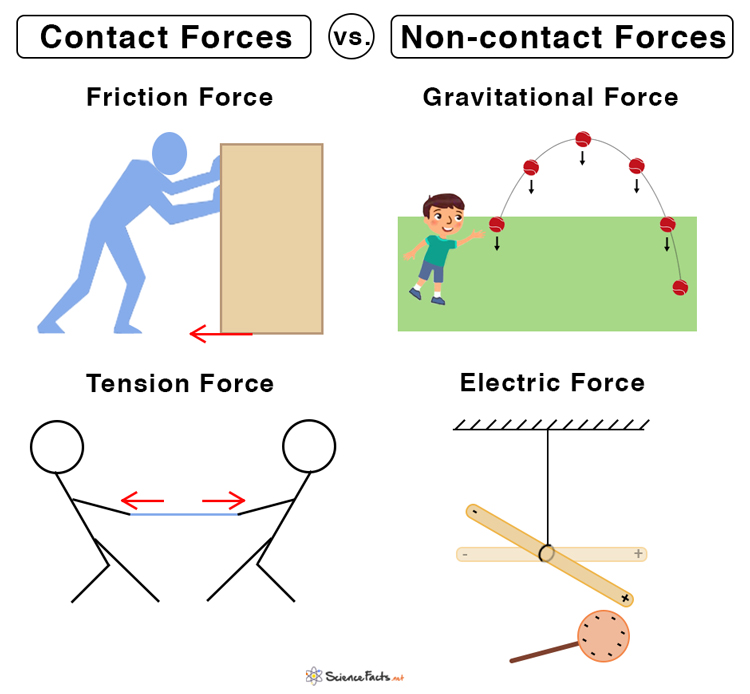
Contact forces are those that arise when two objects physically touch each other. These forces are direct, tangible manifestations of interaction that play a crucial role in the operation of virtually every mechanical and electromechanical system. In the realm of technology, understanding and precisely controlling contact forces is fundamental to ensuring efficiency, durability, and desired performance.
Common examples of contact forces in technology include:
-
Friction: This force opposes relative motion or tendency of motion between two surfaces in contact. In technology, friction can be both a friend and a foe. It’s essential for braking systems in autonomous vehicles, gripping mechanisms in robots, and ensuring stable movement in gears and conveyor belts. Conversely, engineers work to minimize unwanted friction in rotating parts using lubricants or magnetic bearings to improve efficiency and reduce wear in motors, hard drives, and other precision instruments.
-
Normal Force: When an object rests on a surface, the surface exerts an upward force perpendicular to it, preventing the object from falling through. This is vital in structural engineering for devices, the stability of electronic components on mounting boards, and the design of pressure sensors used in touchscreens or robotic manipulators to detect contact.
-
Applied Force: Any push or pull exerted by one object on another through direct contact. This is the operational force in many mechanical systems—a robot arm pushing a component, a stylus interacting with a digital tablet, or a printer head moving across paper. The precise application and control of these forces are key to the functionality of countless devices.
-
Tension: The pulling force transmitted axially by means of a string, cable, chain, or similar one-dimensional continuous object. In technology, tension is critical in wire-based systems, elevator cables, data transmission lines, and the internal mechanisms of 3D printers or plotters where precise movement is guided by taut belts.
The study of contact forces is essential for materials science, mechanical design, and the development of robust, reliable technological solutions. Without a deep understanding of how objects interact upon touching, designing functional and durable technology would be impossible.
Understanding Non-Contact Forces: Action at a Distance in Advanced Systems
Non-contact forces are those that act on an object without direct physical touch. These forces operate across space, influencing objects remotely. While perhaps less intuitively obvious than contact forces, non-contact forces are foundational to many of the most advanced and transformative technologies we use daily, from wireless communication to medical imaging and space exploration.
Key non-contact forces relevant to technology include:
-
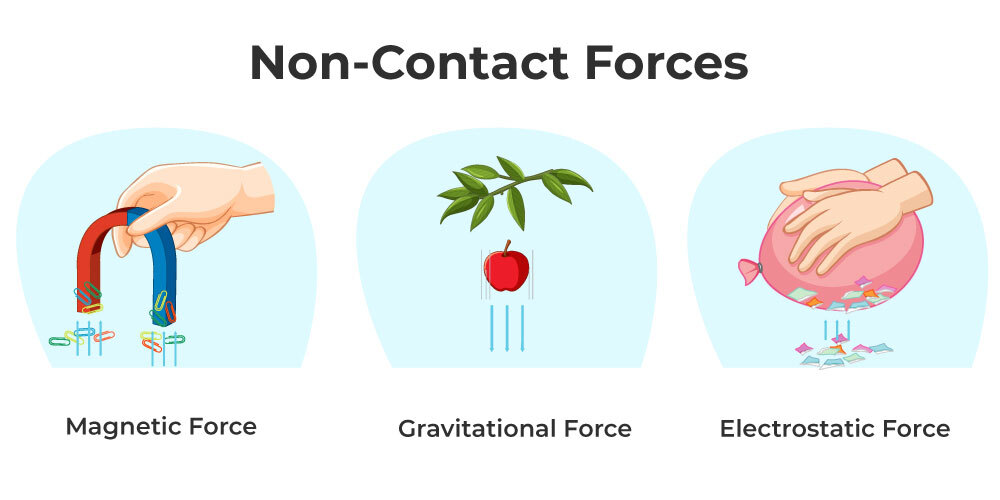
Gravitational Force: The universal attractive force between any two objects with mass. While often negligible at the scale of everyday gadgets, gravity is paramount in space technology (satellite orbits, rocket propulsion), GPS systems (relativity corrections), and even in the design of high-rise data centers where structural integrity against gravity is a constant consideration.
-
Electromagnetic Force: This is arguably the most pervasive and significant non-contact force in modern technology. It encompasses both electric and magnetic forces.
-
Electric Forces: Govern the interaction between charged particles. They are the driving force behind all electronics—from the flow of current in circuits, the storage of charge in capacitors, to the operation of transistors, microchips, and displays. Without electric forces, digital technology as we know it would not exist.
-
Magnetic Forces: Arise from moving electric charges and influence magnetic materials. These forces are critical for electric motors and generators, data storage (hard drives, magnetic tape), magnetic resonance imaging (MRI) in medical tech, and emerging technologies like magnetic levitation (Maglev trains) and wireless power transfer.
-
-
Nuclear Forces (Strong and Weak): While less directly manipulated in consumer technology, these forces are fundamental to the operation of nuclear power plants (for energy generation) and nuclear medicine (diagnostic imaging, radiation therapy), representing a highly specialized but critical technological application.
Non-contact forces enable communication across vast distances, store information, generate power, and provide entirely new modes of transportation and medical intervention. Their invisible influence underpins much of our interconnected and technologically advanced world.
Contact Forces in Engineering, Robotics, and Digital Interaction
The practical application and management of contact forces are central to the design and functionality of countless technological systems, ranging from intricate mechanical components to intuitive user interfaces.
Mechanical Design and Material Science
Engineers meticulously consider contact forces when designing anything that moves or bears weight. For instance, in designing gears for industrial machinery or robotics, engineers must select materials with appropriate hardness and lubricity to manage friction and wear, ensuring longevity and efficient power transfer. Similarly, the structural integrity of bridges, aircraft components, or even the casings of smartphones is determined by how well the chosen materials can withstand various contact stresses, such as compression, tension, and shear forces. Advanced material science contributes by developing alloys, composites, and ceramics that can exhibit desired contact force properties—for example, super-hard materials for cutting tools or compliant materials for damping vibrations.
Robotics: Gripping, Pushing, and Pulling
Robotics is perhaps the most direct manifestation of contact force management in technology. Robotic arms need to precisely apply contact forces to pick up delicate objects without crushing them, or exert significant force to weld heavy components. This involves sophisticated sensor arrays (force sensors, tactile sensors) that provide real-time feedback on the contact forces being exerted. AI algorithms then process this data to adjust the robot’s grip pressure or movement trajectory, allowing for adaptive interaction with various objects and environments. From manufacturing assembly lines to surgical robots, the precise control of contact forces defines the capability and dexterity of robotic systems.
User Interfaces and Haptic Feedback
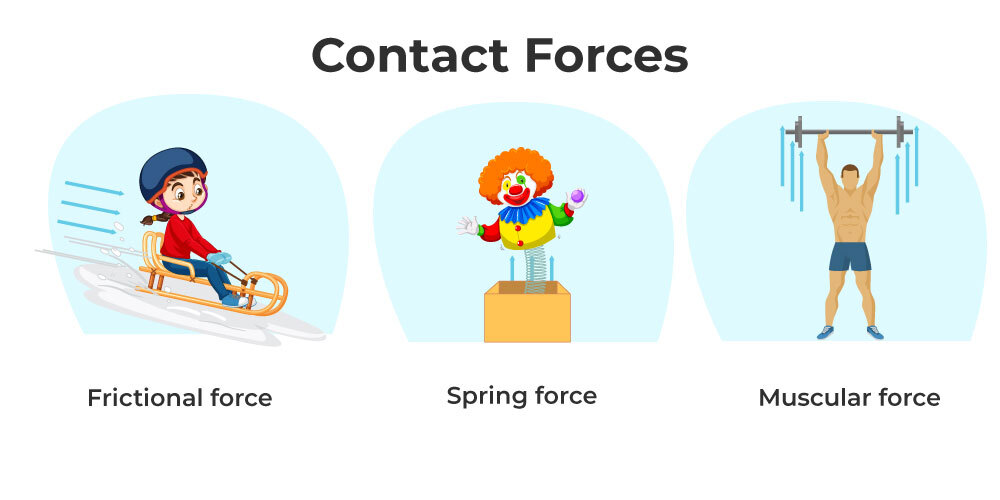
Beyond heavy machinery, contact forces are crucial in human-computer interaction. Touchscreens rely on direct contact to register input. The design of physical keyboards, mice, and game controllers involves optimizing the tactile feedback (a type of contact force perception) to enhance user experience and reduce fatigue. More advanced haptic feedback systems use subtle vibrations and resistance to simulate textures, impacts, or the sensation of pressing a physical button on a purely digital interface, enriching user immersion in virtual reality or providing critical alerts in medical devices. These systems precisely modulate contact forces to communicate information non-visually.
Non-Contact Forces Driving Modern Technology
While contact forces govern tangible interactions, non-contact forces orchestrate an unseen symphony that powers much of our digital infrastructure and futuristic innovations.
Electromagnetic Principles in Electronics and Data Storage
Electromagnetic forces are the lifeblood of electronics. The electric force drives electrons through circuits, enabling computation, data processing, and communication. Transistors, the fundamental building blocks of microprocessors, work by controlling the flow of electric current using electric fields. Inductors and capacitors store energy using magnetic and electric fields, respectively. In data storage, magnetic forces are used in traditional hard disk drives (HDDs) to write and read data by magnetizing tiny regions on a platter. Flash memory, while not relying on magnetism, uses electric fields to trap and release electrons, thereby storing binary information. Wireless communication, from Wi-Fi to cellular networks, is entirely dependent on the propagation of electromagnetic waves through space.
Gravitational Forces in Space Exploration and GPS
At a larger scale, gravity is a critical non-contact force in space technology. Satellites orbit Earth due to the balance between their inertia and Earth’s gravitational pull. Understanding and calculating gravitational forces with extreme precision is essential for launching rockets, navigating spacecraft, and deploying constellations of satellites like those used for the Global Positioning System (GPS). GPS systems, in particular, rely on precise timing signals from satellites, which are subtly affected by both gravitational time dilation (as predicted by Einstein’s theory of relativity) and the satellites’ orbital velocity. Engineers must account for these relativistic effects to ensure the accuracy of location data, showcasing a sophisticated application of gravitational physics.
Advanced Applications: Magnetic Levitation and Sensor Technology
Magnetic levitation (Maglev) technology is a prime example of harnessing magnetic non-contact forces for transportation. By using powerful electromagnets, trains can be lifted above their tracks, eliminating friction and allowing for incredibly high speeds and reduced maintenance. This demonstrates a transformative application of controlling non-contact forces to overcome the limitations of contact forces (friction). Similarly, many advanced sensors rely on non-contact principles. Hall effect sensors detect magnetic fields, proximity sensors use magnetic or electric fields to detect the presence of objects without touching them, and lidar/radar systems use electromagnetic waves to map environments, crucial for autonomous vehicles and drone navigation.
Simulating Forces: The Role of Software and AI
The theoretical understanding and practical application of contact and non-contact forces are significantly amplified by modern software and artificial intelligence, enabling engineers to predict, analyze, and optimize their behavior in complex systems without physical prototyping.
Physics Engines in Software Development
Physics engines are software components that provide realistic simulations of physical phenomena within digital environments. Used extensively in video games, virtual reality (VR), and computer-aided design (CAD) software, these engines calculate the effects of forces (both contact like collisions and friction, and non-contact like gravity or magnetism) on virtual objects. This allows developers to create immersive virtual worlds where objects behave realistically, or enables engineers to test product designs under various force loads before committing to manufacturing. For instance, simulating how a robotic arm interacts with a delicate component, or how a new building design withstands wind (aerodynamic forces), becomes feasible and cost-effective through these sophisticated computational tools.
AI and Machine Learning for Force Prediction and Control
Artificial intelligence and machine learning are revolutionizing how we interact with and control forces in technology. AI models can be trained on vast datasets to predict material fatigue under various contact stresses or to optimize the trajectory of a robotic arm to minimize energy expenditure while performing a task requiring precise force application. In fields like computational fluid dynamics (CFD), AI helps analyze complex non-contact forces like air resistance or fluid flow, critical for designing more aerodynamic vehicles or efficient pumping systems. Furthermore, AI-powered control systems can adaptively adjust actuator outputs to compensate for unpredictable contact variations or environmental non-contact forces, leading to more robust and intelligent machines.
The Convergence: Leveraging Both Forces for Future Tech
The future of technology lies in an ever-more sophisticated understanding and integration of both contact and non-contact forces. Engineers and researchers are constantly seeking new ways to exploit their unique properties and even combine them to create unprecedented capabilities.
Smart Materials and Adaptive Systems
The development of smart materials, such as shape-memory alloys or piezoelectric materials, offers new ways to manage forces. These materials can change their properties or generate electric charges in response to applied contact forces, or conversely, deform under electric fields (a non-contact force). This leads to adaptive systems: wings that change shape mid-flight to optimize aerodynamics (non-contact forces), or haptic interfaces that precisely control contact feedback based on user input and environmental data. Future robots might have “skin” embedded with sensors that not only detect contact forces but also respond intelligently, mimicking biological systems.
Enhancing User Experience and Safety
From a user experience perspective, the synergy of contact and non-contact forces will lead to more intuitive and safer interactions with technology. Imagine touchscreens that offer variable resistance, giving the user a physical “feel” for digital objects, or augmented reality systems that use electromagnetic fields to provide tactile feedback without actual physical contact. In safety-critical applications, such as autonomous vehicles, a comprehensive understanding of both forces—how tires maintain contact friction with varying road surfaces and how radar/lidar (non-contact) sensors detect obstacles—is paramount for developing reliable decision-making algorithms and preventing accidents.
In conclusion, contact and non-contact forces are not merely academic concepts; they are the fundamental language of technological interaction. From the macroscopic world of heavy machinery and space travel to the microscopic realm of microchips and quantum computing, these forces dictate how technology is built, how it operates, and how it continues to evolve. As we push the boundaries of innovation, a deeper, more nuanced mastery of these physical principles will remain the bedrock upon which the next generation of transformative technologies is constructed, making our digital and physical worlds smarter, safer, and more seamlessly integrated.
aViewFromTheCave is a participant in the Amazon Services LLC Associates Program, an affiliate advertising program designed to provide a means for sites to earn advertising fees by advertising and linking to Amazon.com. Amazon, the Amazon logo, AmazonSupply, and the AmazonSupply logo are trademarks of Amazon.com, Inc. or its affiliates. As an Amazon Associate we earn affiliate commissions from qualifying purchases.