
In an era defined by data and digital innovation, understanding personal health metrics has transcended traditional methods. For millions, the menstrual cycle is a fundamental aspect of health, and recognizing what constitutes an “irregular period” is crucial for well-being. Today, technology plays an increasingly pivotal role in demystifying these biological rhythms, offering precision, personalization, and powerful insights previously unavailable. From sophisticated tracking applications to advanced AI diagnostics and wearable sensors, digital tools are redefining how individuals monitor, analyze, and communicate about their menstrual health. This digital revolution helps women and gender-diverse individuals identify irregularities, understand their potential causes, and engage more effectively with healthcare providers, transforming a historically subjective area into one supported by objective, actionable data.
Leveraging Digital Tools for Menstrual Health Tracking
The advent of accessible digital health platforms has fundamentally reshaped how individuals monitor their menstrual cycles. No longer reliant solely on manual calendars or memory, users can now leverage a suite of tech tools that automate tracking, predict cycles, and flag potential anomalies. These tools empower users with a granular view of their physiological patterns, contributing significantly to the early identification of what might be considered an irregular period.
The Rise of Period Tracking Apps
Period tracking applications have become ubiquitous, transforming the personal management of menstrual health. These apps, available on smartphones and tablets, allow users to log a comprehensive array of data points: start and end dates of menstruation, flow intensity, mood fluctuations, physical symptoms (cramps, headaches, bloating), sexual activity, basal body temperature (BBT), and ovulation test results. Beyond simple logging, these applications utilize algorithms to predict future periods, fertile windows, and ovulation days. By analyzing consistent deviations from predicted patterns, such as periods arriving significantly earlier or later than expected, or changes in cycle length, these apps serve as a primary indicator of irregularity. Many also provide educational content, helping users understand common menstrual patterns and what signs might warrant medical attention. The sheer volume of data collected over time provides a robust baseline against which any changes can be accurately assessed, shifting the definition of “irregular” from a vague concept to a data-backed observation.
Wearable Technology and Biomarker Monitoring
Beyond smartphone apps, wearable technology is increasingly integrated into menstrual health tracking. Smartwatches, fitness trackers, and specialized sensors continuously monitor various physiological biomarkers that correlate with cycle phases. These include heart rate variability (HRV), skin temperature, sleep patterns, and activity levels. For instance, a subtle increase in resting skin temperature can indicate ovulation, while persistent changes in sleep quality or HRV might signal hormonal shifts. Advanced wearables can detect trends that suggest an impending period or identify deviations that point towards an irregular cycle, often before the user consciously notices physical symptoms. By passively collecting continuous data, wearables offer a more objective and less intrusive method of monitoring, filling in gaps that manual logging might miss. This continuous stream of biometric data allows for the early detection of anomalies, providing objective evidence to support a suspected irregular period and enabling timely intervention or consultation with a healthcare professional.
AI and Machine Learning in Identifying Irregularity
The sheer volume of data generated by digital tracking tools presents an ideal environment for artificial intelligence (AI) and machine learning (ML) algorithms. These advanced computational techniques are now being deployed to move beyond simple pattern recognition, offering predictive insights and diagnostic support in understanding menstrual health irregularities.
Predictive Analytics for Menstrual Cycles
AI-powered predictive analytics tools are revolutionizing how individuals and clinicians anticipate menstrual cycles and identify irregularities. Unlike traditional algorithms that rely on averages of past cycles, AI models can learn from complex, individualized data sets, incorporating multiple variables such as age, BMI, activity levels, stress markers, and even environmental factors. These models can predict cycle onset, duration, and ovulation windows with greater accuracy, even for individuals with naturally varying cycles. Crucially, AI excels at identifying subtle, long-term trends or gradual shifts that might escape human observation or simpler statistical methods. For example, an AI might detect a creeping increase in cycle length over several months, or a pattern of missed periods linked to specific lifestyle changes, classifying these as indicators of an irregular period before they become overtly problematic. This proactive identification allows for earlier investigation and potential management.
AI-Powered Diagnostic Support Systems

Beyond prediction, AI is also emerging as a powerful tool in diagnostic support for menstrual health. By analyzing vast databases of de-identified patient data, including cycle logs, symptoms, medical history, and even genetic markers, AI systems can assist healthcare providers in identifying potential underlying causes of irregular periods. These systems can correlate specific patterns of irregularity (e.g., very long cycles, absent periods, heavy bleeding) with known conditions such as Polycystic Ovary Syndrome (PCOS), thyroid disorders, or perimenopause. While AI does not replace clinical judgment, it serves as an intelligent assistant, flagging potential diagnoses for further investigation, suggesting relevant tests, and highlighting critical patterns that might inform treatment pathways. This capability is particularly valuable in complex cases where symptoms might be ambiguous or overlap, offering a more data-driven approach to understanding “what is considered irregular period” in the context of individual health.
Understanding Irregularity Through Data-Driven Insights
The true power of digital health technology lies not just in data collection but in its ability to transform raw data into actionable insights. For menstrual health, this means moving beyond a subjective feeling of “something being off” to a clear, data-supported understanding of what constitutes an irregular period and what that might signify.
Defining “Normal” vs. “Irregular” with Digital Precision
Historically, defining a “normal” menstrual cycle has involved broad parameters: a cycle length of 21-35 days, lasting 2-7 days, with relatively consistent timing. However, individual variations within these ranges are vast. Digital tools, by collecting extensive personal data, allow for the development of a highly individualized baseline. What might be considered a normal 28-day cycle for one person could be an irregular shift for another whose typical cycle is 24 days. Apps and wearables establish a personal average and standard deviation, then flag departures from this individual norm. For example, an app might define an irregular period for a user if their cycle consistently falls outside their personal 3-day typical window for three consecutive cycles, rather than simply flagging anything under 21 or over 35 days. This personalized approach to defining “normal” provides greater accuracy in identifying when a cycle truly becomes “irregular” for that specific individual.
Identifying Underlying Patterns and Trends
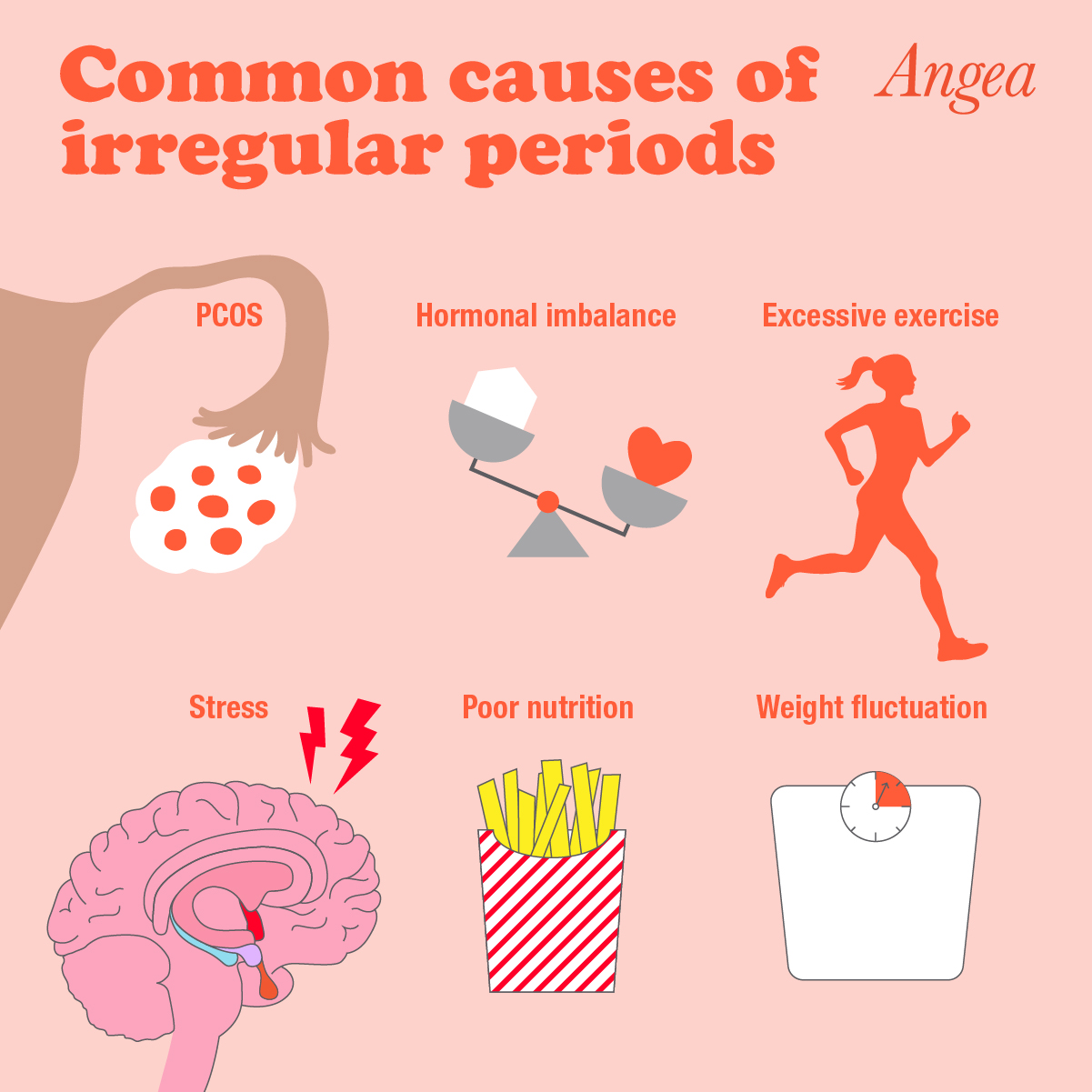
Digital platforms excel at visualizing and analyzing long-term patterns and trends in menstrual health data. Users can review charts and graphs illustrating changes in cycle length, flow intensity, symptom frequency, and hormonal markers over months or even years. This longitudinal perspective is critical for uncovering subtle irregularities that might otherwise be overlooked. For instance, a gradual shortening of the cycle could indicate perimenopause, while increasingly heavy or painful periods might signal conditions like endometriosis or fibroids. Furthermore, correlation analysis can identify links between lifestyle factors (e.g., stress levels, exercise intensity, sleep deprivation) and menstrual irregularities. By identifying these deeper patterns and trends through data visualization and analytical tools, individuals gain a more comprehensive understanding of their body’s signals, allowing them to pinpoint potential causes for an irregular period and empowering them to take informed steps toward better health management.
Enhancing Communication with Healthcare Providers Through Technology
One of the most significant benefits of digital menstrual health tracking is its capacity to bridge the communication gap between individuals and their healthcare providers. Armed with precise, longitudinal data, discussions about irregular periods become more objective, efficient, and ultimately more effective.
Digital Health Records and Telemedicine
Integrated digital health records and telemedicine platforms are transforming how menstrual health data is shared and interpreted. Users can often export detailed cycle logs from their tracking apps, which can then be directly uploaded to electronic health records (EHRs) or shared securely with their doctors during virtual or in-person appointments. This provides clinicians with an immediate, comprehensive overview of a patient’s menstrual history, including the exact dates of irregular periods, associated symptoms, and any potential triggers. Telemedicine consultations, facilitated by these digital records, allow for efficient remote assessment of irregular cycles, reducing the need for in-person visits for initial evaluations. A doctor can review months of data before even speaking to the patient, enabling a more informed and targeted discussion, leading to faster and more accurate diagnoses of what is considered an irregular period and its potential causes.

Personalized Health Dashboards
Many advanced digital health platforms offer personalized dashboards that aggregate and visualize all relevant health data, not just menstrual cycle information. These dashboards can present correlations between an individual’s cycle, sleep, activity, stress levels (measured via HRV), and even diet. This holistic view provides healthcare providers with a rich context for understanding irregular periods. For example, if a patient presents with amenorrhea (absent periods), the dashboard might highlight a recent drastic increase in exercise intensity combined with significant weight loss, immediately suggesting potential links between lifestyle and hormonal disruption. Such comprehensive, data-driven insights allow for a more personalized approach to care, moving beyond generalized advice to specific interventions tailored to the individual’s unique physiological and lifestyle patterns, thereby making the management of irregular periods more precise and effective.
aViewFromTheCave is a participant in the Amazon Services LLC Associates Program, an affiliate advertising program designed to provide a means for sites to earn advertising fees by advertising and linking to Amazon.com. Amazon, the Amazon logo, AmazonSupply, and the AmazonSupply logo are trademarks of Amazon.com, Inc. or its affiliates. As an Amazon Associate we earn affiliate commissions from qualifying purchases.