
Defining what constitutes a “small business” might seem straightforward, yet it is a multifaceted concept with significant implications across finance, regulation, and public policy. There isn’t a universal, one-size-fits-all answer; rather, the definition often depends on the specific context, the governing body, and the industry in question. For entrepreneurs, understanding these distinctions is crucial for accessing appropriate funding, qualifying for government contracts, and benefiting from various support programs designed to foster growth and stability within the small business sector.
The Elusive Definition: Why Size Matters for Business Finance
The primary reason for formally defining a small business stems from the need to differentiate smaller economic entities from larger corporations. This distinction is vital for tailoring financial instruments, tax policies, and regulatory frameworks. Without a clear definition, programs intended to support nascent enterprises could be co-opted by established giants, undermining their effectiveness.
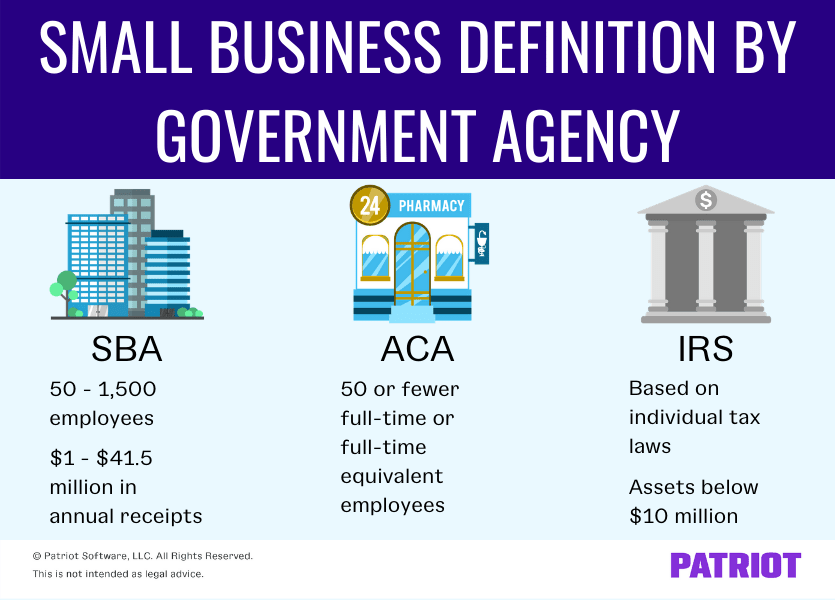
For instance, access to capital is often a major hurdle for new or growing businesses. Financial institutions, government agencies, and venture capitalists frequently use “small business” criteria to determine eligibility for loans, grants, and equity investments that carry specific terms or advantages. Similarly, tax codes may offer incentives, deductions, or simplified compliance procedures exclusively for businesses below certain thresholds, aiming to reduce the financial burden on smaller operations. Understanding these parameters is a cornerstone of effective business finance and strategic planning.
Key Metrics: Revenue, Employees, and Industry Codes
The most common criteria used to define a small business revolve around financial performance and workforce size. However, the specific thresholds vary significantly, primarily dictated by the industry and the agency setting the definition.
Employee Headcount Thresholds
Perhaps the most intuitive metric, employee headcount refers to the number of full-time, part-time, or equivalent employees a business has. Many definitions set an upper limit on the number of employees. For instance, a common threshold for many general small business classifications might be 500 employees. However, this can fluctuate wildly. A manufacturing firm might be considered small with up to 500 or even 1,000 employees, while a professional service firm, due to its less capital-intensive and more human-capital-intensive nature, might have a limit as low as 50 or 100 employees.
The U.S. Small Business Administration (SBA), a key federal agency supporting small businesses, provides specific size standards based on NAICS (North American Industry Classification System) codes. These standards vary widely by industry. For example:
- Manufacturing: Typically, 500 or 1,500 employees.
- Wholesale Trade: Often 100 employees.
- Retail Trade: Based on annual receipts, not employees, for most sectors.
- Service Industries: Can range from 25 to 1,500 employees depending on the specific service provided.
These distinctions are vital for businesses seeking SBA loans or government contracting preferences, as meeting the employee threshold is a primary determinant of eligibility.
Annual Receipts (Revenue) Limits
Another critical financial metric is annual receipts, which typically refer to the total income or gross revenue of a business over a fiscal year. This measure is particularly relevant for service-oriented businesses, retail establishments, and other sectors where asset value or employee count might not accurately reflect the business’s scale.
Again, the SBA uses NAICS codes to assign varying annual receipts thresholds. These can range from under $1 million for some specialized consulting services to over $40 million for certain wholesale trades or heavy construction. For example:
- Many Service Sectors: Might have limits around $8 million to $20 million.
- Retail Trade: Can be as high as $35 million or more.
- Finance and Insurance: Often have higher thresholds, sometimes exceeding $40 million.
Businesses must carefully track their annual receipts to ensure they remain within these limits, especially if they are growing rapidly, as exceeding the threshold could impact their eligibility for small business-specific financial benefits and programs.
NAICS Codes and Industry Specificity
The North American Industry Classification System (NAICS) is a standard used by federal statistical agencies in classifying business establishments. It categorizes businesses based on their primary economic activity. The granular detail provided by NAICS codes is essential because it allows regulatory bodies like the SBA to apply context-specific size standards. A business involved in “Heavy and Civil Engineering Construction” will have a different set of size standards (e.g., $39.5 million in annual receipts) than a “Bookkeeping, Tax Preparation, and Payroll Services” firm (e.g., $12 million in annual receipts). This industry specificity ensures that a definition of “small” is relevant to the competitive landscape and operational characteristics of that particular sector, which is fundamental for equitable financial policy.
Beyond the Numbers: Other Qualifying Factors
While employee count and annual receipts are the primary quantitative measures, other qualitative and structural factors can also play a role in how a business is classified. These elements often come into play when considering financial independence and market influence.

Business Structure and Ownership
The legal structure of a business (sole proprietorship, partnership, LLC, S-corp, C-corp) itself doesn’t typically define “small business” status. However, ownership can be a factor. For certain set-aside programs (e.g., those for women-owned, veteran-owned, or historically underutilized business zone (HUBZone) businesses), the business must be at least 51% owned and controlled by one or more individuals who meet the specific demographic criteria and are also U.S. citizens. These programs often require the business to also meet the general small business size standards. This layered approach ensures that financial support reaches not only small enterprises but also those owned by traditionally underserved populations.
Independence and Dominance
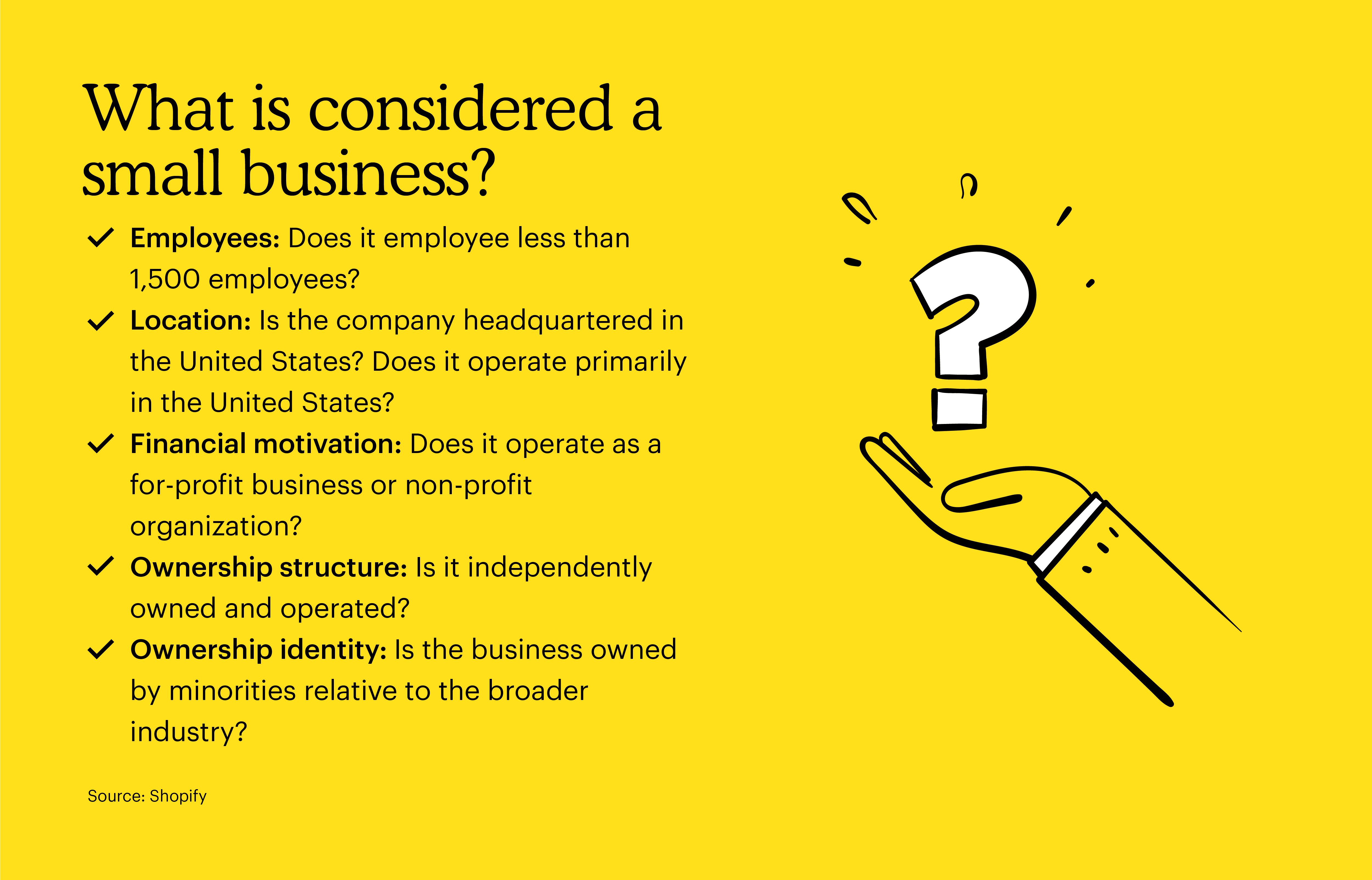
A crucial aspect of the SBA’s definition is that a small business must not be “dominant in its field of operation.” This means it cannot exert undue influence on a national or even regional scale. Furthermore, a small business must generally be independently owned and operated. If a business is a subsidiary of a larger, non-small parent company, or is unduly influenced by a larger entity, it might not qualify as “small” even if it meets the employee or revenue thresholds. This prevents large corporations from segmenting their operations to exploit small business benefits. This independent nature is critical for ensuring that financial aid targets truly distinct and vulnerable economic entities.
Geographic Scope and Market Share
While less common as an explicit definitional criterion, the geographic scope and market share can implicitly affect the “dominance” factor. A local bakery with a handful of employees is undeniably small. A regional chain of bakeries with 50 employees might still be small in the context of the national food industry but could be dominant in its specific regional market. The intent behind “small business” classifications often implicitly targets businesses that operate locally or regionally and do not command a significant share of a national market.
Financial and Strategic Implications of Small Business Status
Qualifying as a small business carries substantial financial and strategic advantages that can be crucial for survival and growth. These benefits are specifically designed to level the playing field against larger competitors.
Access to Funding and Loans
One of the most significant advantages is enhanced access to capital. The SBA, for instance, guarantees a large percentage of loans made by commercial lenders to small businesses. This guarantee reduces the risk for banks, making them more willing to lend to smaller entities that might otherwise struggle to secure financing due to limited collateral or shorter operating histories. These SBA loans (such as the 7(a) Loan Program, 504 Loan Program, and Microloan Program) often come with more favorable terms, lower down payments, and longer repayment periods than conventional loans. Furthermore, many state and local governments offer grants and specialized loan programs exclusively for small businesses, facilitating investment in equipment, expansion, or working capital.
Tax Incentives and Benefits
Many tax codes offer specific provisions to support small businesses. These can include simplified accounting methods, more favorable depreciation schedules for equipment, credits for hiring certain types of employees, or deductions for start-up costs. In some jurisdictions, small businesses may also qualify for reduced tax rates or exemptions from certain taxes. These financial incentives are designed to free up capital that small businesses can reinvest in their operations, hire more staff, or manage cash flow more effectively.
Government Contracting Opportunities
The federal government, as the world’s largest buyer of goods and services, has a statutory goal to award a certain percentage of its prime contract dollars to small businesses (currently 23%). To achieve this, numerous contracts are “set aside” exclusively for small businesses. Within these set-asides, there are further preferences for businesses owned by women, veterans, individuals in historically underutilized business zones (HUBZones), and socially and economically disadvantaged individuals. For many small businesses, securing government contracts can provide a stable revenue stream and a significant boost to credibility and growth, but it critically depends on meeting the established small business size standards.
Regulatory Relief and Compliance
Smaller businesses often face disproportionately high compliance costs for regulations designed with large corporations in mind. Recognizing this, regulatory bodies sometimes offer exemptions, simplified reporting requirements, or phased implementation schedules for small businesses. This regulatory relief aims to reduce administrative burdens and allow small business owners to focus more on operations and growth rather than navigating complex compliance frameworks, thereby improving their financial viability.
Navigating the Nuances: Self-Assessment and Future Outlook
For any entrepreneur or business owner, understanding the definition of a small business is not merely academic; it’s a critical component of strategic financial planning. Regular self-assessment against the latest SBA size standards and other relevant criteria is essential, especially as a business grows. Growth that pushes a business beyond a small business threshold can lead to the loss of significant financial benefits and opportunities, requiring a pivot in strategy.
The definition of “small business” is dynamic, often adjusted by economic conditions, legislative changes, and evolving industry structures. Staying informed about these changes is paramount for maximizing eligibility for support programs, optimizing tax strategies, and leveraging all available financial resources to foster sustainable success. Ultimately, being recognized as a small business is about unlocking access to a specific ecosystem of support designed to champion entrepreneurship and drive economic resilience.
aViewFromTheCave is a participant in the Amazon Services LLC Associates Program, an affiliate advertising program designed to provide a means for sites to earn advertising fees by advertising and linking to Amazon.com. Amazon, the Amazon logo, AmazonSupply, and the AmazonSupply logo are trademarks of Amazon.com, Inc. or its affiliates. As an Amazon Associate we earn affiliate commissions from qualifying purchases.