
The concept of a “conditional statement” is fundamental to how we think, process information, and build systems. At its core, a conditional statement is a declaration that asserts something is true if another thing is true. It’s the backbone of logical reasoning, decision-making, and even the programming languages that power our digital world. While the term might sound technical, its principles permeate our everyday lives and hold significant implications across the diverse realms of Technology, Brand, and Money. Understanding conditional statements isn’t just an academic exercise; it’s a key to unlocking efficiency, strategic advantage, and better decision-making in these crucial areas.
The Building Blocks of Logic: Understanding Conditional Statements
At its simplest, a conditional statement takes the form of an “if-then” proposition. We can represent this formally as “If P, then Q,” where P is the antecedent (the condition) and Q is the consequent (the result or conclusion that follows if the condition is met).
- Antecedent (P): This is the hypothesis, the premise, or the condition that must be true for the statement to hold.
- Consequent (Q): This is the conclusion or the outcome that is asserted to be true if the antecedent is true.
Consider a straightforward example: “If it is raining (P), then the ground will be wet (Q).” Here, “it is raining” is the antecedent, and “the ground will be wet” is the consequent. The statement asserts a relationship: the act of raining directly leads to the ground becoming wet.
However, it’s crucial to understand the nuances of conditional statements:
- Truth Value: A conditional statement is only considered false in one specific scenario: when the antecedent (P) is true, but the consequent (Q) is false. In all other cases (P true, Q true; P false, Q true; P false, Q false), the conditional statement is considered true. This might seem counterintuitive, especially when the antecedent is false. For instance, “If the moon is made of cheese (P is false), then I am a millionaire (Q is false).” This statement is logically true because the condition (moon made of cheese) is false, meaning the statement doesn’t make any false claims.
- Implication vs. Causation: While often used interchangeably in everyday language, logical implication (what a conditional statement expresses) is not always the same as causation. “If I eat too much ice cream (P), then I will feel sick (Q)” implies causation. However, “If the stock market crashes (P), then the sky will turn green (Q)” is a logically true conditional statement if the sky never turns green, even though there’s no causal link. The truth of the consequent in this case is independent of the antecedent.
- Converse, Inverse, and Contrapositive: These are related logical statements derived from an original conditional statement.
- Converse: “If Q, then P.” (Reverses the antecedent and consequent).
- Inverse: “If not P, then not Q.” (Negates both the antecedent and consequent).
- Contrapositive: “If not Q, then not P.” (Reverses and negates both).
The contrapositive is logically equivalent to the original conditional statement. If “If P, then Q” is true, then “If not Q, then not P” is also true, and vice-versa. This has significant implications in problem-solving and proof.
Conditional Statements in Technology: The Engine of Software and AI
The world of technology is built on a foundation of conditional logic. From the simplest app to the most sophisticated AI, conditional statements are the invisible threads that dictate behavior, process data, and enable functionality.
Software Development: The Heartbeat of Code
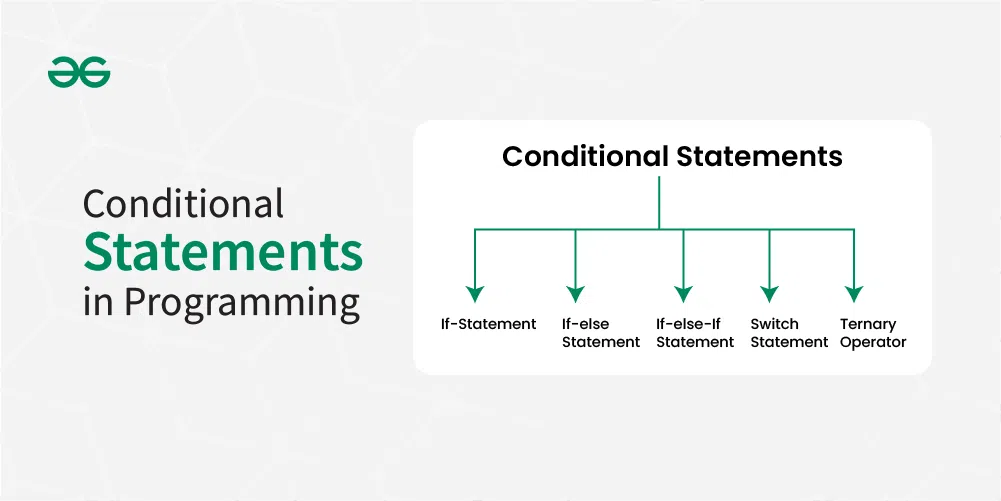
In programming, conditional statements are fundamental control flow structures. They allow programs to make decisions based on different conditions, leading to dynamic and responsive software.
ifStatements: The most basic form. “If a certain condition is true, then execute this block of code.” For example, in an e-commerce application, anifstatement might check: “If the user is logged in, then display their personalized dashboard.”elseStatements: These provide an alternative path when theifcondition is false. “If a certain condition is true, then execute block A; otherwise (else), execute block B.” For example: “If the user has items in their cart, then show the ‘Checkout’ button; else, show the ‘Continue Shopping’ button.”else if(orelif) Statements: Allow for multiple conditions to be checked sequentially. “If condition A is true, do this. Else if condition B is true, do that. Else if condition C is true, do something else.” This is crucial for handling complex scenarios. Imagine a pricing system: “If the customer is a premium member, apply a 20% discount. Else if they have a discount code, apply a 10% discount. Else, apply no discount.”switchorcaseStatements: A more structured way to handle multiple conditions based on the value of a single variable. They are often more readable and efficient than long chains ofelse ifstatements when checking against a finite set of discrete values.
These conditional structures are not merely theoretical constructs; they are the very mechanisms that enable:
- User Interface Interactivity: Buttons changing appearance on hover, forms validating input, menus appearing based on user actions – all rely on conditional logic.
- Data Processing and Filtering: Sorting data, filtering search results, and performing calculations based on specific criteria are driven by conditional statements.
- Error Handling: Detecting and responding to errors is a prime use case. “If a file cannot be opened, then display an error message to the user.”
- Game Development: AI behaviors, character interactions, and game progression are heavily reliant on complex conditional logic.
Artificial Intelligence: The Brains Behind Intelligent Systems
Conditional statements are absolutely essential for the functioning of Artificial Intelligence, particularly in machine learning and rule-based systems.
- Rule-Based AI: Many early AI systems and expert systems relied heavily on a vast network of “if-then” rules. For instance, in a medical diagnostic system: “If the patient has a fever and a cough, and their blood pressure is high, then consider the possibility of pneumonia.”
- Decision Trees: These are graphical models used in machine learning to make predictions. Each node in the tree represents a test on an attribute (the antecedent), and each branch represents the outcome of the test. The leaves of the tree represent the final decision or prediction (the consequent). Building these trees involves iteratively applying conditional logic to partition data.
- Natural Language Processing (NLP): Understanding human language involves recognizing patterns and applying rules. Conditional statements help in identifying grammatical structures, sentiment, and intent. For example: “If a sentence contains words like ‘disappointed’ or ‘terrible,’ then classify the sentiment as negative.”
- Machine Learning Model Logic: While deep learning models learn complex patterns through neural networks, the underlying decision-making processes within these networks can be viewed through a lens of conditional probabilities. The activation of neurons is conditional on the inputs they receive.
The ability to create systems that can adapt their behavior based on a multitude of conditions is what makes technology truly powerful and transformative.
Conditional Statements in Branding: Shaping Perception and Strategy
While seemingly less direct, conditional logic plays a significant role in how brands are built, managed, and perceived. Brand strategy, marketing, and reputation management all involve understanding and leveraging conditional relationships.
Brand Strategy and Messaging: Crafting the “If-Then” Promise
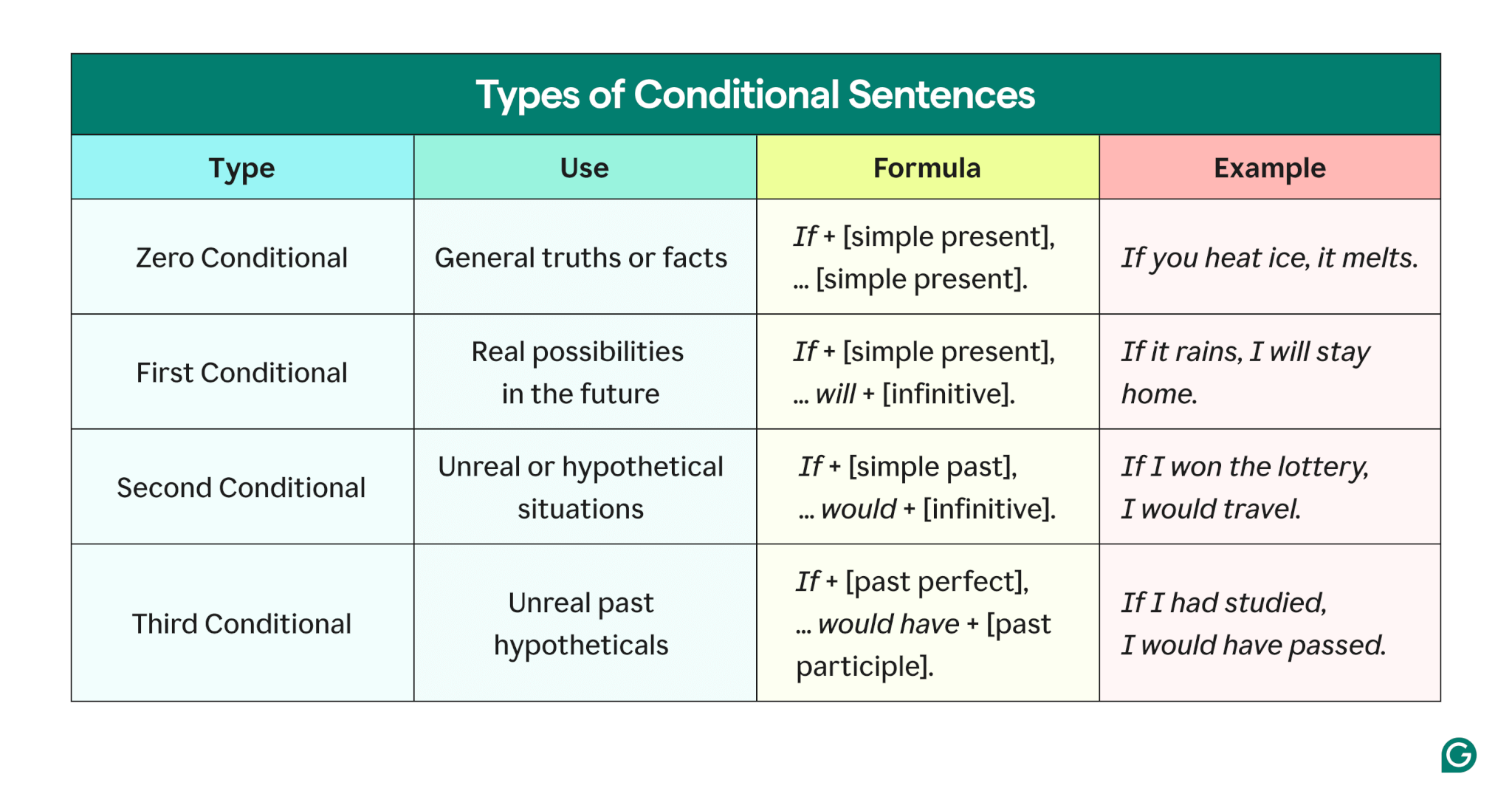
A strong brand promise is, in essence, a conditional statement. It tells customers what to expect if they choose that brand.
- Value Proposition: “If you choose our product, then you will experience superior quality and reliability.” This statement sets an expectation that the brand must consistently meet.
- Customer Service Commitments: “If you encounter an issue with our service, then we will resolve it within 24 hours.” This sets a clear conditional promise for customer support.
- Marketing Campaigns: Advertising often implicitly or explicitly uses conditional statements. “If you want to achieve effortless style, then wear our clothing.” The effectiveness of the campaign hinges on whether consumers believe the antecedent (desire for effortless style) and accept the conditional link to the product.
Personal Branding: Defining Your “If-Then” Identity
For individuals, personal branding also involves articulating a clear conditional value.
- Professional Reputation: “If you need expert advice on [specific field], then you should consult me.” This positions an individual as the solution to a particular problem or need.
- Skill Demonstration: A portfolio showcasing past work is a visual representation of a conditional statement: “If you need to see evidence of my ability to [perform a task], then examine these projects.”
Reputation Management: Responding to Conditions
Managing a brand’s reputation is an ongoing process of monitoring conditions and responding appropriately.
- Crisis Communication: When a negative event occurs (an unmet condition), the brand’s response is a consequent action. “If a product recall is necessary, then we will immediately inform our customers and offer full refunds.” The speed and effectiveness of this conditional response are critical to mitigating damage.
- Customer Feedback Loops: Brands use feedback to refine their offerings. “If customers consistently report dissatisfaction with [feature], then we will prioritize its improvement in the next update.” This demonstrates a conditional commitment to customer satisfaction.
The strategic application of conditional thinking helps brands build trust, differentiate themselves, and effectively communicate their value proposition in a crowded marketplace.
Conditional Statements in Money: Navigating Finance and Investment
Personal finance, investing, and business operations are inherently driven by conditional logic. Every financial decision, from budgeting to major investment choices, involves weighing potential outcomes based on specific conditions.
Personal Finance: Budgeting and Goal Setting
For individuals managing their finances, conditional statements are the framework for responsible decision-making.
- Budgeting: “If my income is $X, then I can allocate $Y to savings and $Z to expenses.” This establishes a conditional framework for spending and saving. Deviations from this framework require re-evaluation of the conditions.
- Debt Management: “If I pay an extra $100 on my mortgage each month, then I will save $X in interest over the life of the loan.” This conditional insight motivates specific financial actions.
- Emergency Funds: “If an unexpected expense arises (e.g., medical bill, job loss), then I can draw from my emergency fund to cover it without going into debt.” This conditional readiness is a cornerstone of financial security.
Investing and Trading: The Language of Risk and Reward
The world of investing is a continuous exercise in evaluating conditional probabilities and potential outcomes.
- Stock Market Analysis: Investors analyze market conditions (antecedents) to predict future stock performance (consequents). “If inflation continues to rise, then interest rates are likely to increase, which could negatively impact growth stocks.”
- Investment Strategies: Many investment strategies are built on conditional logic. “If a company’s earnings report exceeds expectations, then its stock price is likely to rise.”
- Options Trading: Options contracts are themselves conditional. A call option gives the holder the right, but not the obligation, to buy an asset at a specific price by a certain date. This is a conditional bet on the asset’s price increasing.
- Risk Management: “If the market experiences a significant downturn, then I will adjust my portfolio to reduce exposure to volatile assets.” This is a conditional plan to mitigate losses.
Business Finance: Operational Efficiency and Growth
Businesses rely on conditional statements to optimize operations, manage risk, and drive growth.
- Sales Forecasting: “If we increase our marketing spend by 15%, then we project a 10% increase in sales.” This is a conditional forecast that informs resource allocation.
- Inventory Management: “If sales of product X increase by 20% in the next quarter, then we need to increase our production order by Y units.” This ensures supply meets demand.
- Pricing Strategies: “If competitor A lowers their price for a similar service, then we will consider matching their price to maintain market share.”
- Loan Applications: Banks and financial institutions meticulously analyze conditional statements presented by businesses seeking loans. “If the business demonstrates consistent profitability and a strong balance sheet, then the loan will be approved.”
In the realm of money, understanding the conditional relationships between actions, market forces, and outcomes is paramount to achieving financial stability, growth, and informed decision-making.

Conclusion: The Ubiquitous Power of the “If-Then”
From the intricate algorithms that power our smartphones to the strategic decisions that define successful brands, and the financial planning that secures our futures, conditional statements are an indispensable tool. They provide the logical framework for reasoning, problem-solving, and prediction. By mastering the principles of conditional logic, we gain a deeper understanding of how systems work, how to build more effective technologies, craft more compelling brands, and navigate the complex landscape of finance with greater confidence and success. The simple yet profound “if-then” structure is, in reality, a cornerstone of intelligence and a driver of progress across all facets of our modern world.
aViewFromTheCave is a participant in the Amazon Services LLC Associates Program, an affiliate advertising program designed to provide a means for sites to earn advertising fees by advertising and linking to Amazon.com. Amazon, the Amazon logo, AmazonSupply, and the AmazonSupply logo are trademarks of Amazon.com, Inc. or its affiliates. As an Amazon Associate we earn affiliate commissions from qualifying purchases.