
In the landscape of modern engineering, we often find ourselves captivated by the latest silicon chips, neural networks, and high-capacity batteries. However, some of the most critical components of our technological evolution are rooted in classical physics. One such foundational element is the concave mirror. While it might appear as a simple curved surface, the concave mirror—or converging mirror—is an sophisticated optical tool that facilitates everything from deep-space exploration to the precision sensors found in autonomous vehicles.
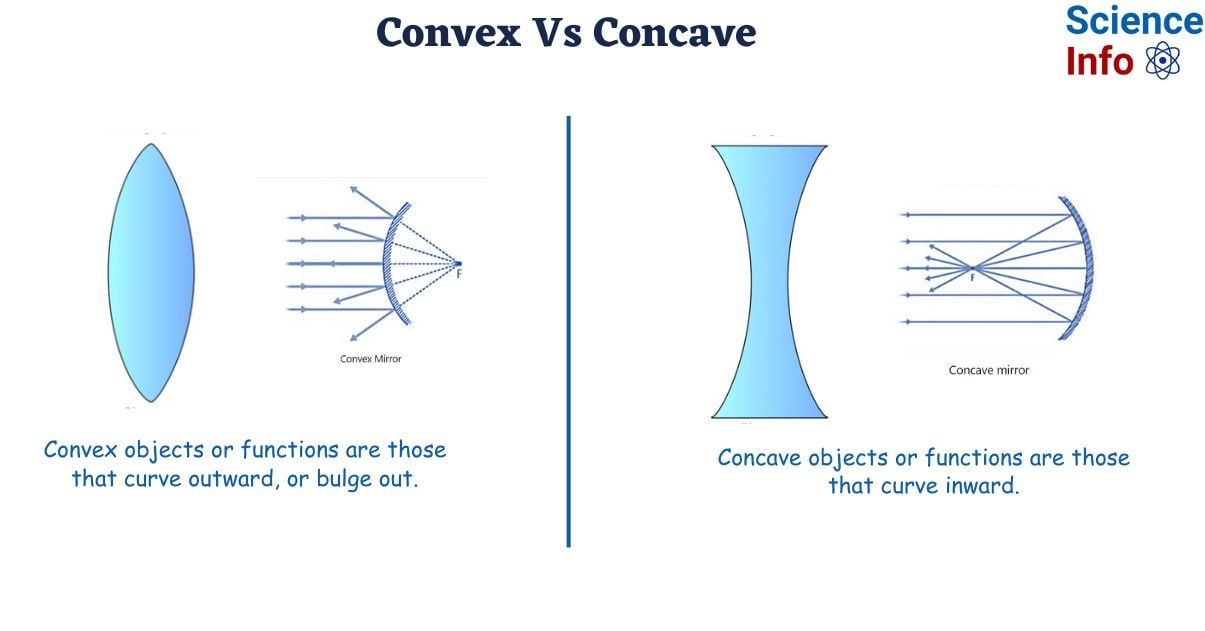
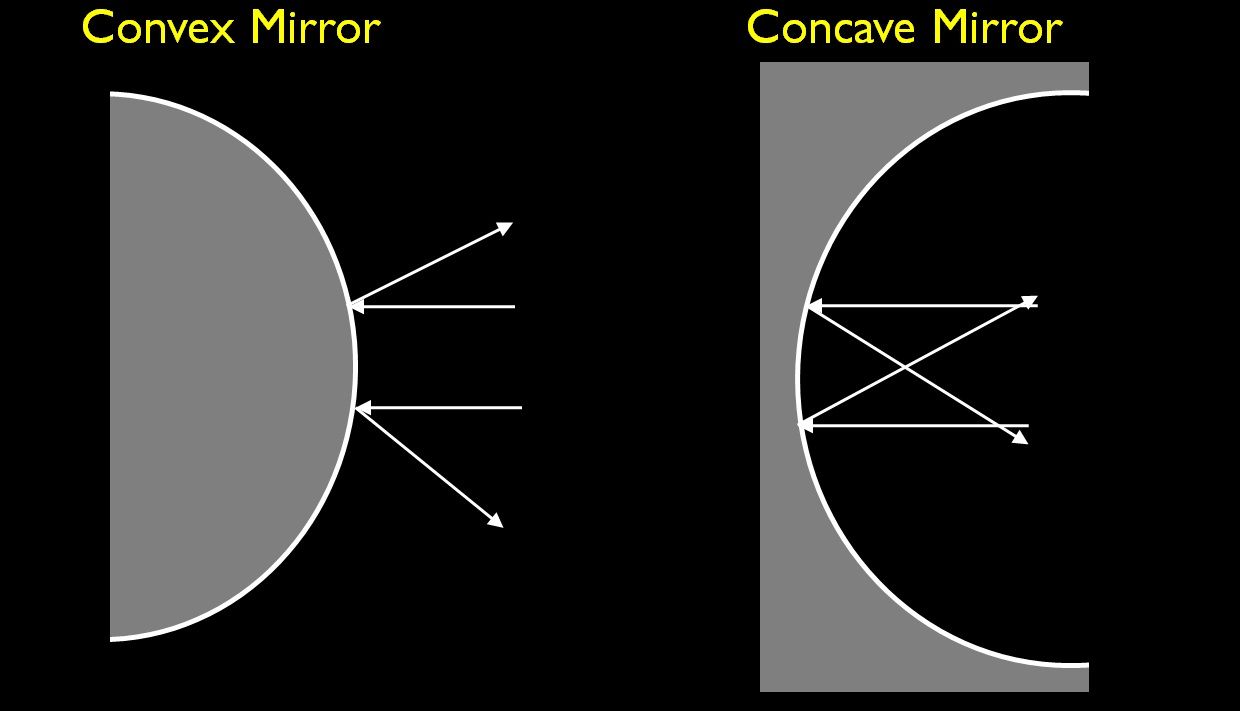
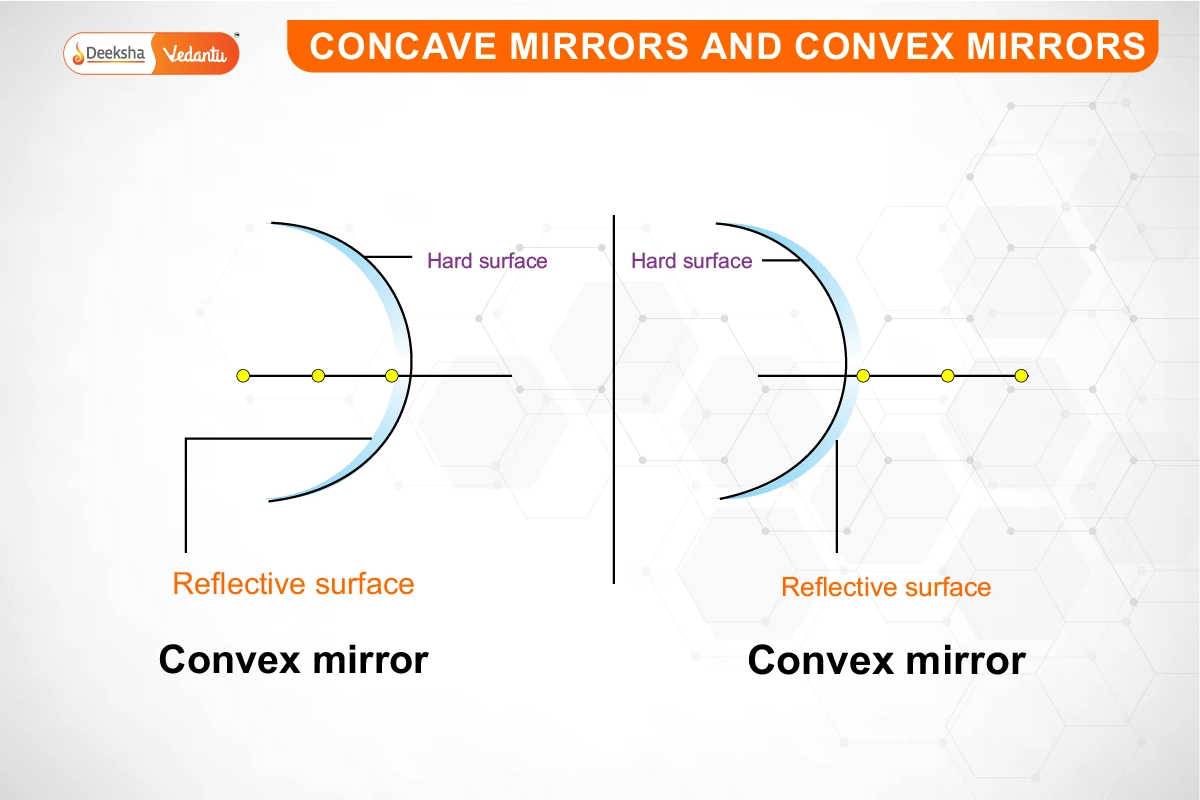
A concave mirror is defined by its inward-curving reflective surface, resembling the interior of a bowl. Unlike its convex counterpart, which diverges light, the concave mirror is designed to collect and focus electromagnetic radiation toward a single point. This ability to concentrate energy and manipulate light paths makes it an indispensable asset in the global “Tech” niche.
Understanding the Fundamentals: Science Meets Engineering
To appreciate the role of concave mirrors in modern hardware, one must first understand the precision engineering required to manufacture them. In the tech industry, these are not mere “mirrors” but precisely ground optical substrates coated with reflective materials like aluminum, silver, or gold, depending on the wavelength of light they are intended to manage.
How Concave Geometry Manipulates Light
The primary function of a concave mirror is convergence. When parallel rays of light—such as those coming from a distant star or a laser source—strike the surface of the mirror, they are reflected inward. These rays meet at a specific location known as the focal point (F). The distance from the center of the mirror to this point is the focal length, a critical metric in designing optical gadgets.
In a technological context, this convergence allows for the amplification of signals. Whether the “signal” is a beam of light, a radio wave, or infrared heat, the concave shape acts as a physical amplifier, concentrating a large area of input into a small, high-intensity output.
Key Terminology: Real vs. Virtual Images in Tech
From a hardware design perspective, concave mirrors are versatile because they can produce two types of images. When an object is placed beyond the focal point, the mirror creates a “real image” that can be projected onto a sensor or screen. This is the principle behind high-end projection tech and cinema hardware. Conversely, when an object is very close to the mirror, it produces a magnified “virtual image,” which is the foundation for precision tools used in micro-soldering and digital hardware repair.
Concave Mirrors in Modern Hardware and Gadgets
The transition from theoretical physics to consumer tech is most visible in how we capture and view images. While lenses (refractive optics) are common, mirrors (reflective optics) often offer superior performance in high-stakes technology due to their lack of chromatic aberration—a common distortion where colors fail to focus at the same point.
High-End Photography and Optical Lenses
In the world of professional photography and cinematography, catadioptric lenses—often called “mirror lenses”—utilize concave surfaces to achieve massive focal lengths in a compact body. By bouncing light back and forth within the lens housing using a series of concave mirrors, manufacturers can create a 1000mm telephoto lens that is half the size of a traditional glass-only lens. This is a crucial innovation for tech journalists, sports photographers, and surveillance professionals who require portability without sacrificing magnification power.
The Backbone of Astronomical Exploration
Perhaps the most famous application of concave technology is the James Webb Space Telescope (JWST). Unlike older telescopes that used heavy glass lenses, modern space tech relies on massive, gold-coated concave mirrors. The JWST’s primary mirror is a 6.5-meter concave array that collects faint infrared light from the edge of the observable universe. By focusing these photons onto highly sensitive digital sensors, the concave geometry allows humanity to process data that would otherwise be invisible to the human eye.
The Role of Concave Optics in Automotive and Industrial Tech
As we move toward an era of “Smart Cities” and autonomous transport, the humble concave mirror has been reimagined as a high-tech sensor housing. The automotive industry, in particular, has integrated these optical principles into safety and navigation systems.
Headlamp Optimization and Safety Systems
Modern LED and laser headlights in premium vehicles do not simply shine light forward. They use complex concave reflectors to shape the beam. By placing the light source at the focal point of a parabolic concave mirror, engineers can project a perfectly parallel beam of light that illuminates the road hundreds of meters ahead without blinding oncoming traffic. This precision is managed by onboard computers that adjust the mirror’s orientation in real-time based on steering input.
LiDAR and the Future of Autonomous Driving
Light Detection and Ranging (LiDAR) is the “eyes” of self-driving cars. These systems pulse laser light to map the surroundings in 3D. Many LiDAR units utilize internal concave mirrors to rotate and focus these laser pulses. The mirror ensures that the laser signal remains coherent over long distances and that the reflected “echo” is accurately captured by the sensor. Without the focusing power of concave geometry, the signal-to-noise ratio would be too high for the AI to distinguish between a pedestrian and a mailbox.
Sustainable Tech: Solar Energy and Concentrated Power
As the tech sector pivots toward green energy, concave mirrors have become a cornerstone of “Cleantech.” Large-scale solar farms are moving beyond standard photovoltaic panels to incorporate Concentrated Solar Power (CSP).
Harnessing the Sun through Parabolic Troughs
In a CSP plant, thousands of long, concave-shaped mirrors (parabolic troughs) track the sun throughout the day. These mirrors focus sunlight onto a central pipe filled with synthetic oil or molten salt. The intense concentration of light—achieved purely through the geometry of the concave mirror—heats the fluid to temperatures exceeding 400°C. This thermal energy is then used to drive steam turbines, generating electricity. This is a “hardware-first” solution to the energy crisis, proving that optical tech can solve thermodynamic problems.
Improving Efficiency in Green Tech Solutions
On a smaller scale, concave reflectors are being integrated into “Smart Windows” and concentrated photovoltaic (CPV) cells. By using micro-concave arrays, tech companies can focus sunlight onto tiny, high-efficiency solar chips, reducing the amount of expensive semi-conductor material needed while increasing the power output. This fusion of material science and optical physics is driving down the cost of renewable energy.
Emerging Trends: AI Vision and Micro-Optics
The future of the concave mirror lies in the “Micro-Tech” and “AI” sectors. As we shrink our gadgets, we must also shrink our optical components.
Micro-Electro-Mechanical Systems (MEMS)
In the realm of AR (Augmented Reality) and VR (Virtual Reality), tech giants are experimenting with MEMS-based concave mirrors. These are microscopic mirrors, often no wider than a human hair, that can be tilted thousands of times per second using electronic signals. By reflecting a laser off a vibrating concave micro-mirror, devices like the Microsoft HoloLens can “paint” a digital image directly onto the user’s retina. This represents the pinnacle of concave mirror technology: a marriage of ancient geometry and cutting-edge digital processing.
Enhancing AI Vision Systems
AI requires high-quality data to function. In industrial automation, robots use “Catadioptric Vision Systems” which employ concave mirrors to provide a 360-degree field of view with a single camera sensor. By looking into a specially shaped concave mirror, the AI can see in all directions simultaneously. This reduces the need for multiple expensive sensors and simplifies the data processing load on the AI, making hardware more efficient and cost-effective.
Conclusion: The Timeless Relevance of Optical Hardware
While the term “concave mirror” might evoke memories of introductory physics, its application in the modern tech ecosystem is nothing short of revolutionary. From the telescopes that map the stars to the LiDAR sensors that navigate our streets, the ability to focus energy and information is the hallmark of advanced technology.
As we look toward the future—be it through the lens of a folding smartphone, the visor of an AR headset, or the sensors of a Mars rover—we find the concave mirror at the center of the innovation. It remains a testament to the fact that in the world of high-tech, sometimes the most powerful tools are those that allow us to simply see more clearly. For developers, engineers, and tech enthusiasts, understanding these optical foundations is not just a lesson in history, but a roadmap for the hardware of tomorrow.
aViewFromTheCave is a participant in the Amazon Services LLC Associates Program, an affiliate advertising program designed to provide a means for sites to earn advertising fees by advertising and linking to Amazon.com. Amazon, the Amazon logo, AmazonSupply, and the AmazonSupply logo are trademarks of Amazon.com, Inc. or its affiliates. As an Amazon Associate we earn affiliate commissions from qualifying purchases.