
In the landscape of global economics, the term “communism” often evokes historical imagery and political debate. However, from a financial and business perspective, communism represents a specific model of resource management, wealth distribution, and centralized governance. When we examine what communism in government entails, we are essentially looking at a command economy—a system where the state plays the role of the ultimate CEO, CFO, and board of directors. For anyone interested in personal finance, investing, or business strategy, understanding the mechanics of this system is crucial for comprehending how capital flows (or stops) within a centralized framework.
The Core Economic Principles of Communist Governance
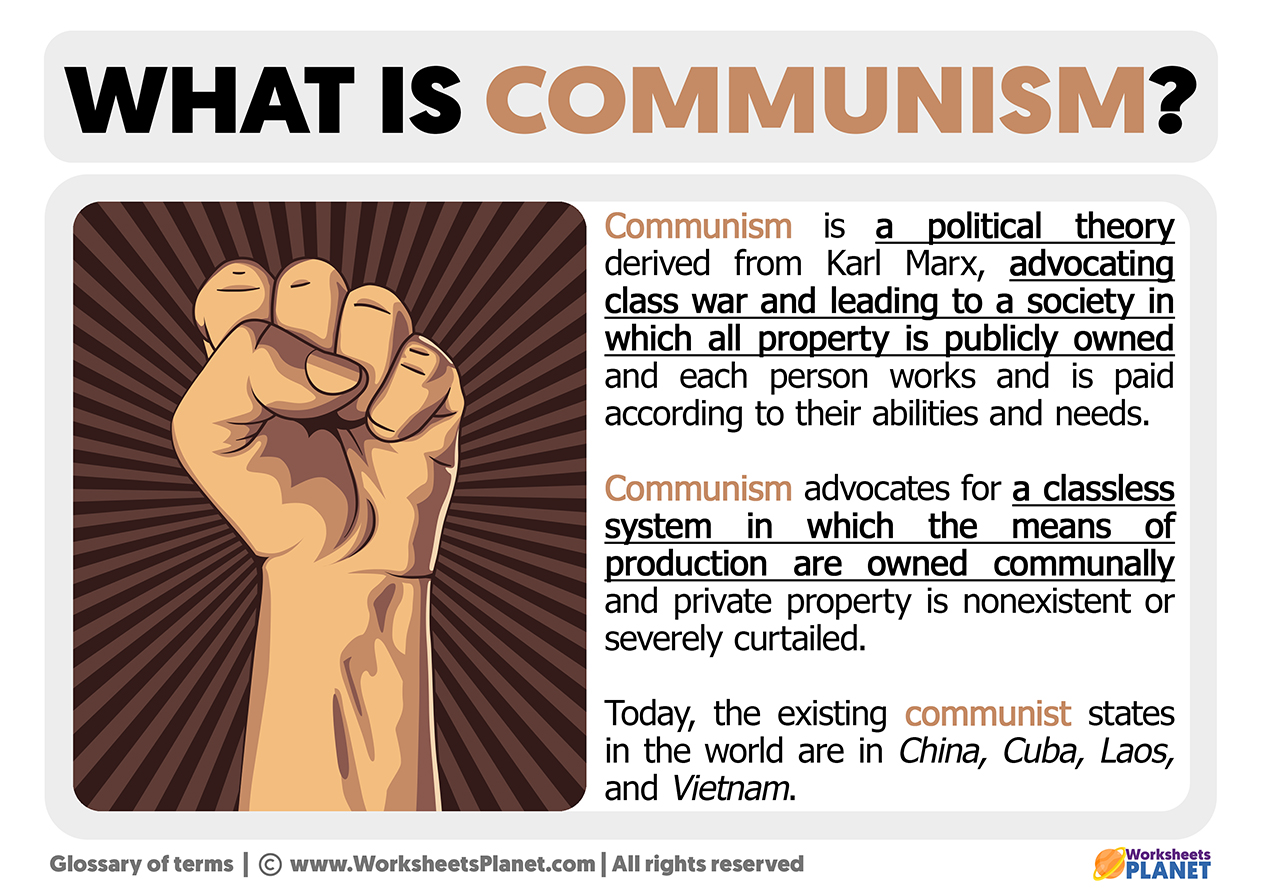
At its heart, communism is an economic theory that advocates for a classless society in which all property and resources are collectively owned by the government instead of by individual citizens. This fundamentally redefines the concept of “Money” and “Value” as understood in a market-based economy.
The Abolition of Private Property and Personal Finance
In a traditional capitalist economy, personal finance is built on the foundation of private ownership. You earn income, you own that income, and you choose how to invest or save it. Under a communist government, the concept of private property is largely replaced by public or state ownership. This shift has a profound impact on the individual’s financial lifecycle.
When the government owns the means of production—the factories, the land, and the technology—the individual’s ability to build personal wealth through traditional means, such as real estate or equity markets, is restricted. Instead of “wealth building,” the focus shifts to “resource allocation.” The government provides essential services—housing, healthcare, and education—eliminating the need for some types of personal saving while simultaneously removing the opportunity for significant capital accumulation.
Centralized Planning vs. Market Dynamics
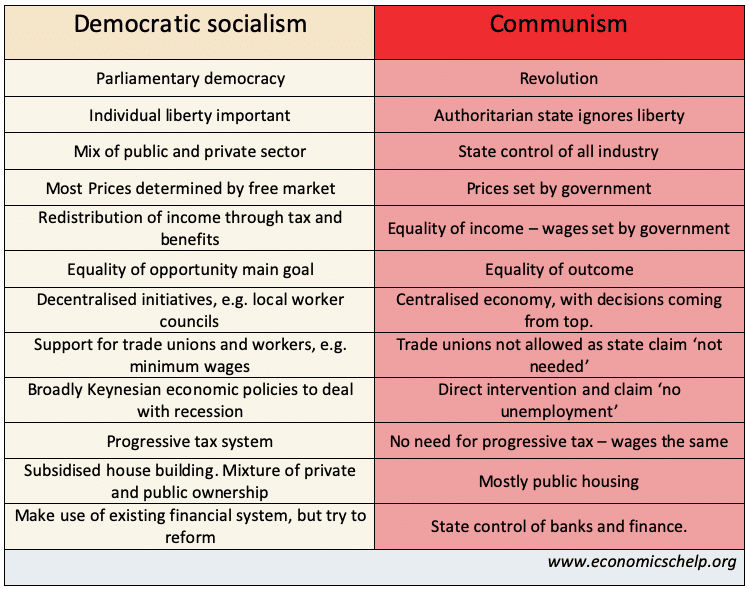
In market economies, prices are determined by the invisible hand of supply and demand. In a communist government, this is replaced by centralized planning. The state determines what goods are produced, how much of them are produced, and at what price they are sold.
From a business finance perspective, this removes the “market signal.” In a standard economy, if a product is in high demand, its price rises, signaling to businesses that they should produce more. In a command economy, a central planning committee decides production quotas years in advance. This can lead to significant inefficiencies, such as surpluses of goods nobody wants or severe shortages of essential items. For the student of finance, this highlights the critical importance of price discovery in maintaining a healthy, balanced economy.
Financial Implications of a Command Economy
The financial structure of a nation governed by communist principles differs drastically from a liberal democracy. The state’s role as the sole economic arbiter changes how money is circulated and how value is perceived.
Wealth Distribution and the Role of the State
The primary goal of a communist government’s financial policy is the elimination of wealth inequality. In theory, the surplus value created by workers is not taken as profit by private owners but is instead collected by the state and redistributed to the population.
However, this redistribution model changes the nature of “income.” In a market economy, income is often tied to productivity, skill level, or market demand. In a communist system, wages are often standardized across various sectors to ensure “equity.” While this provides a high floor for the most vulnerable citizens, it can also lower the ceiling for high performers, potentially dampening the incentive for financial advancement. For those focused on “Side Hustles” or “Online Income,” such activities often exist only in “grey markets” or are strictly regulated by the state to prevent the emergence of a new “capitalist” class.
Investment and Innovation in a Non-Competitive Landscape
Investing is the process of allocating capital with the expectation of a future return. In a communist government, “investing” is done exclusively by the state. There is no stock market in the traditional sense, as there are no private companies to own shares in.
Innovation, which drives long-term economic growth and stock market returns in the West, is funded by government grants rather than venture capital. While this allows for massive investment in specific state goals (such as space exploration or heavy industry), it often lacks the “fail-fast” efficiency of the private sector. Without the competitive pressure to stay profitable, state-run enterprises may lack the financial discipline required to optimize operations or innovate at the pace of global competitors.
Business Finance and Production under Communist Rule
To understand communism in government, one must look at how “businesses” (or state-owned enterprises) operate. Without the metric of “profitability,” the very definition of a successful business changes.
The State as the Sole Entrepreneur
In a communist framework, the government is the only entrepreneur. Business finance is not about managing cash flow to satisfy shareholders; it is about managing resources to meet the state’s socio-economic targets. This means that a state-owned factory might continue to operate even if it is losing “money” (in a traditional sense) because it provides employment or produces a necessary staple for the population.
For financial analysts, this makes evaluating the health of an economy difficult. Traditional metrics like ROI (Return on Investment) or P/E (Price-to-Earnings) ratios are often irrelevant. Instead, success is measured by the fulfillment of the “Five-Year Plan”—a set of production targets established by the central government.
Resource Allocation and Supply Chain Management
In a market economy, supply chains are optimized for cost and speed. In a communist government, supply chains are often optimized for control and stability. Because the state controls all sectors—from raw materials to logistics to retail—the entire economy is essentially one massive supply chain.
While this can lead to high levels of coordination, it is also prone to systemic bottlenecks. If the central planners miscalculate the amount of steel needed for the year, every industry downstream—from construction to appliance manufacturing—suffers. In a market economy, a shortage in steel would lead to higher prices, which would attract more suppliers or encourage the use of alternative materials. In a command economy, the “financial tool” of price adjustment is absent, meaning shortages can persist for years.
Modern Perspectives: Transitioning Markets and Financial Hybrids
Today, pure communism is rare. Most nations that began with a strict communist ideology have transitioned into “hybrid” models or “state capitalism.” Understanding these shifts is vital for modern investors and business leaders.
The Shift Toward State Capitalism
Countries like China and Vietnam have maintained the political structure of a communist government while adopting many features of a market economy. This is often referred to as “Socialism with Chinese Characteristics” or “State Capitalism.” In this model, the government allows for private property, stock markets, and international investment, but maintains a heavy hand in the “commanding heights” of the economy—sectors like banking, energy, and telecommunications.
For the global investor, this creates a unique environment. You can invest in these markets, but you must account for “political risk.” The government can intervene in the private sector at any time to align corporate goals with national interests. This hybrid model shows that while the “ideal” of communism in government remains focused on collective control, the practical reality often requires market mechanisms to generate the wealth necessary for the state to function.
Impact on Global Investing and Emerging Markets
Investors looking for growth often turn to emerging markets, many of which are governed by parties with communist roots. The financial reality in these regions involves navigating a landscape where the state is both a regulator and a competitor.
When investing in such environments, the “Money” focus shifts to understanding government policy as much as corporate earnings. In a traditional market, you look at a company’s balance sheet. In a state-influenced economy, you look at the government’s next five-year plan. The ability to align one’s investment strategy with the state’s economic goals becomes the primary driver of financial success.
Conclusion: The Financial Reality of Centralized Governance
“Communism in government” is more than a political label; it is a distinct economic operating system. By prioritizing collective ownership and centralized planning over individual capital accumulation and market competition, it fundamentally changes how money functions within a society.
For the individual, it means a trade-off: a higher degree of social security and wealth equality in exchange for reduced opportunities for personal financial growth and entrepreneurship. For the business leader or investor, it represents a world where political directives carry more weight than market signals. Understanding these dynamics is essential for navigating the complex global financial landscape of the 21st century, where the lines between state control and market freedom continue to blur.
aViewFromTheCave is a participant in the Amazon Services LLC Associates Program, an affiliate advertising program designed to provide a means for sites to earn advertising fees by advertising and linking to Amazon.com. Amazon, the Amazon logo, AmazonSupply, and the AmazonSupply logo are trademarks of Amazon.com, Inc. or its affiliates. As an Amazon Associate we earn affiliate commissions from qualifying purchases.