
Commercial umbrella insurance is a vital, yet often misunderstood, layer of protection for businesses of all sizes. It acts as an excess liability policy, providing an additional layer of coverage above the limits of a business’s primary insurance policies. Think of it as a safety net that kicks in when the costs of a serious claim exceed the financial capabilities of your foundational insurance. In the complex world of business operations, where unforeseen events can lead to significant financial exposure, understanding and securing commercial umbrella insurance is not just prudent; it’s essential for long-term financial health and stability.
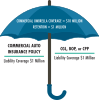
This type of insurance is designed to protect businesses from catastrophic liability claims. These are claims that could potentially bankrupt a company if they exceed the coverage limits of their general liability, commercial auto, or employer’s liability policies. While these primary policies are crucial, they have specific limits, and some lawsuits or settlements can easily surpass those amounts. This is where commercial umbrella insurance steps in, offering a substantial financial buffer.
The need for commercial umbrella insurance arises from the inherent risks of doing business. Whether it’s a slip and fall accident on your premises, a product liability claim, a vehicle accident involving a company car, or a severe employee injury, the potential for costly litigation and damages is ever-present. Without adequate umbrella coverage, a single devastating event could wipe out a business’s assets, reputation, and future prospects.
Understanding the Fundamentals of Commercial Umbrella Insurance
Commercial umbrella insurance is not a standalone policy; it is an extension of other liability coverages. This means it requires underlying policies to be in place, such as commercial general liability (CGL), commercial auto liability, and employer’s liability insurance. The umbrella policy then sits on top of these, providing an additional layer of coverage once the limits of the underlying policies have been exhausted.
The Layered Approach to Liability Protection
The concept of layered protection is central to understanding commercial umbrella insurance. Imagine a pyramid of coverage. The base of the pyramid represents your foundational insurance policies:
- Commercial General Liability (CGL): This policy covers bodily injury and property damage to third parties that occurs as a result of your business operations, products, or on your premises. It also covers personal and advertising injury.
- Commercial Auto Liability: If your business owns, leases, or uses vehicles, this policy covers bodily injury and property damage caused by those vehicles.
- Employer’s Liability Insurance: This is typically part of your workers’ compensation policy and covers liability for employee injuries or illnesses that are not covered by workers’ compensation.
The commercial umbrella policy forms the next layer, sitting directly above these. It provides an additional sum of money that can be used to pay claims that exceed the limits of these underlying policies. For example, if your CGL policy has a limit of $1 million, and a lawsuit results in a $3 million judgment against your business, the CGL policy would pay out $1 million, and the commercial umbrella policy would then cover the remaining $2 million (up to its own limit).
Key Features and Coverage Triggers
Commercial umbrella insurance is designed to provide broad coverage across various liability scenarios. The triggers for this coverage are generally situations where the underlying policy limits are exhausted.
- Bodily Injury and Property Damage: This is the most common trigger. If a third party suffers a serious injury or their property is significantly damaged due to the actions or negligence of your business, and the claim exceeds your CGL limits, the umbrella policy can respond.
- Personal and Advertising Injury: This covers offenses such as libel, slander, false arrest, malicious prosecution, copyright infringement in advertising, and wrongful eviction. If a claim related to these offenses exceeds your CGL limits, the umbrella policy can provide additional coverage.
- Commercial Auto Liability: If a severe accident involving a business vehicle results in damages and lawsuits that surpass your commercial auto policy limits, the umbrella policy will extend coverage.
- Employer’s Liability: In cases of severe employee injury or illness where the employer is found liable beyond the scope of workers’ compensation, the umbrella policy can offer supplementary protection.
It’s important to note that commercial umbrella insurance often includes coverage for legal defense costs. These costs, such as attorney fees, court costs, and expert witness fees, can be substantial and can be paid in addition to the policy’s limits or erode the policy limits, depending on the specific policy wording. Understanding how defense costs are handled is crucial when evaluating different umbrella policies.
Why Businesses Need Commercial Umbrella Insurance
The need for commercial umbrella insurance is driven by the potential for substantial financial loss stemming from liability claims. In today’s litigious environment, even seemingly minor incidents can escalate into costly legal battles. Businesses that fail to adequately protect themselves against these risks are exposing themselves to significant financial peril.
Mitigating Catastrophic Financial Loss
The primary benefit of commercial umbrella insurance is its ability to protect a business from catastrophic financial loss. A single large claim that exceeds the limits of primary policies can have devastating consequences, including:
- Bankruptcy: The inability to pay a large judgment can force a business into bankruptcy, leading to the loss of ownership and assets.
- Liquidation of Assets: To cover a significant liability, a business might be forced to sell off valuable assets, impacting its operations and future growth.
- Personal Liability for Business Owners: In some business structures, especially sole proprietorships and partnerships, the personal assets of the owners can be at risk to satisfy business debts and judgments.
- Damage to Reputation: A protracted and costly lawsuit can also severely damage a business’s reputation, affecting customer trust and market standing.
Commercial umbrella insurance acts as a crucial buffer against these devastating outcomes, providing the financial resources to navigate major liability events without jeopardizing the entire enterprise.
Addressing Gaps in Primary Coverage
While primary insurance policies are essential, they are not designed to cover every possible scenario or extreme event. Commercial umbrella insurance fills these potential gaps and extends coverage beyond standard limits.
- Underinsured Lawsuits: As mentioned, lawsuits can easily result in judgments that far exceed the limits of CGL or commercial auto policies. Umbrella coverage ensures that the business isn’t left footing the bill for the difference.
- Emerging Risks: The business landscape is constantly evolving, and new risks can emerge. While primary policies may not specifically address these, umbrella coverage often provides a broader safety net for unforeseen liability exposures.
- Specific Industry Risks: Certain industries inherently carry higher liability risks. For businesses in these sectors, the standard limits of primary policies may simply not be sufficient. An umbrella policy provides the necessary additional coverage to match the elevated risk profile.
By layering this additional coverage, businesses can achieve a more robust and comprehensive liability protection strategy, giving them greater peace of mind.
How Commercial Umbrella Insurance Works in Practice
Understanding the practical application of commercial umbrella insurance is key to appreciating its value. It’s not just about having a policy; it’s about knowing how and when it will be utilized.
The Triggering Event and Claims Process
When a liability claim arises that has the potential to exceed the limits of a business’s primary policies, the commercial umbrella insurance policy is triggered. The process generally unfolds as follows:
- Initial Claim: A third party files a claim against your business for bodily injury, property damage, or another covered liability.
- Investigation: Your primary insurer investigates the claim.
- Exhaustion of Primary Limits: If the investigation concludes that the business is liable and the damages awarded or settlement reached exceed the limits of your CGL, commercial auto, or employer’s liability policy, the primary insurer will pay up to its policy limit.
- Umbrella Policy Activation: Once the primary policy’s limits are exhausted, the commercial umbrella insurer takes over. They will then cover the remaining amount of the claim, up to the limits specified in the umbrella policy.
- Defense Costs: As mentioned, defense costs are a critical component. In many umbrella policies, defense costs are paid in addition to the policy limit. However, some policies may include defense costs within the policy limit, meaning that as defense costs accrue, they reduce the amount available to pay a judgment or settlement. It’s crucial to clarify this aspect with your insurance provider.
The efficient handling of claims by both primary and umbrella insurers is vital to minimizing disruption and financial strain on the business.
Factors Affecting Premiums and Policy Terms
The cost of commercial umbrella insurance, like any insurance policy, is determined by a variety of factors. Insurers assess these elements to calculate the premium and define the terms of coverage.
- Industry and Business Operations: Businesses in higher-risk industries (e.g., construction, manufacturing, transportation) will typically pay higher premiums than those in lower-risk sectors. The nature of a business’s operations, including the services it provides or products it sells, also plays a significant role.
- Size of the Business: The revenue, number of employees, and overall size of a business are key considerations. Larger businesses generally have a greater potential for liability exposure.
- Claims History: A business with a history of frequent or severe liability claims will likely face higher premiums. A strong claims history can lead to more favorable pricing.
- Underlying Policy Limits: The limits of your primary insurance policies directly influence umbrella premiums. Higher underlying limits may sometimes lead to slightly lower umbrella premiums, as they demonstrate a commitment to robust foundational coverage.
- Desired Umbrella Coverage Limits: The amount of coverage you choose for your umbrella policy is a primary driver of cost. Higher limits naturally result in higher premiums. Common umbrella limits range from $1 million to $5 million, and can go much higher for large corporations.
- Risk Management Practices: Businesses that demonstrate strong risk management protocols, such as comprehensive safety training, robust security measures, and clear operational procedures, may be able to negotiate more favorable premiums.
When reviewing policy terms, it’s essential to pay close attention to exclusions, deductibles (often referred to as self-insured retentions or SIRs for umbrella policies), and any specific endorsements or limitations that might apply.
Who Needs Commercial Umbrella Insurance?
The question of “who needs commercial umbrella insurance” is not a one-size-fits-all answer, but rather a risk assessment based on business activities. While some businesses are at a higher risk than others, almost any organization that interacts with the public, owns assets, or employs individuals can benefit from this protection.
Essential for Businesses with Public Interaction
Any business that has direct contact with customers, clients, or the general public faces inherent liability risks. This includes:
- Retail Stores: Customers can slip and fall on wet floors, trip over merchandise, or suffer injuries from faulty products.
- Restaurants and Bars: Foodborne illnesses, patron altercations, and slips and falls are common concerns.
- Service Providers: Businesses that send employees to client locations (e.g., plumbers, electricians, landscapers, cleaning services) risk causing property damage or injury at those sites.
- Professional Services: While professional liability (E&O) covers errors in services, commercial umbrella can cover the bodily injury or property damage aspects that might arise from a service-related incident.
In essence, if your business has a physical presence where the public can access it, or if your employees regularly interact with the public, commercial umbrella insurance is a strong consideration.

Crucial for Businesses with Significant Assets or High-Risk Operations
Businesses that hold substantial assets or operate in industries with elevated risks have an even greater imperative to secure umbrella coverage.
- Manufacturers: Product liability claims can be incredibly costly if a defective product causes widespread harm or damage.
- Construction Companies: The inherent dangers of construction sites, potential for property damage to adjacent structures, and the use of heavy machinery increase liability exposure.
- Transportation Companies: Trucking, delivery services, and taxi companies face significant risks from auto accidents, which can involve multiple vehicles and severe injuries.
- Property Owners/Landlords: Businesses that own or manage commercial real estate have liability for tenants and visitors on their properties.
- Businesses with Large Contracts: Companies that enter into significant contracts with larger entities may be required by those contracts to carry higher levels of liability insurance, including umbrella coverage.
Ultimately, commercial umbrella insurance is a strategic financial tool. It’s an investment in the longevity and stability of a business, providing a critical safety net against the unpredictable nature of liability and ensuring that the business can continue to operate even in the face of severe and unexpected claims. By understanding its function, benefits, and triggers, business owners can make informed decisions to protect their enterprise effectively.
aViewFromTheCave is a participant in the Amazon Services LLC Associates Program, an affiliate advertising program designed to provide a means for sites to earn advertising fees by advertising and linking to Amazon.com. Amazon, the Amazon logo, AmazonSupply, and the AmazonSupply logo are trademarks of Amazon.com, Inc. or its affiliates. As an Amazon Associate we earn affiliate commissions from qualifying purchases.