
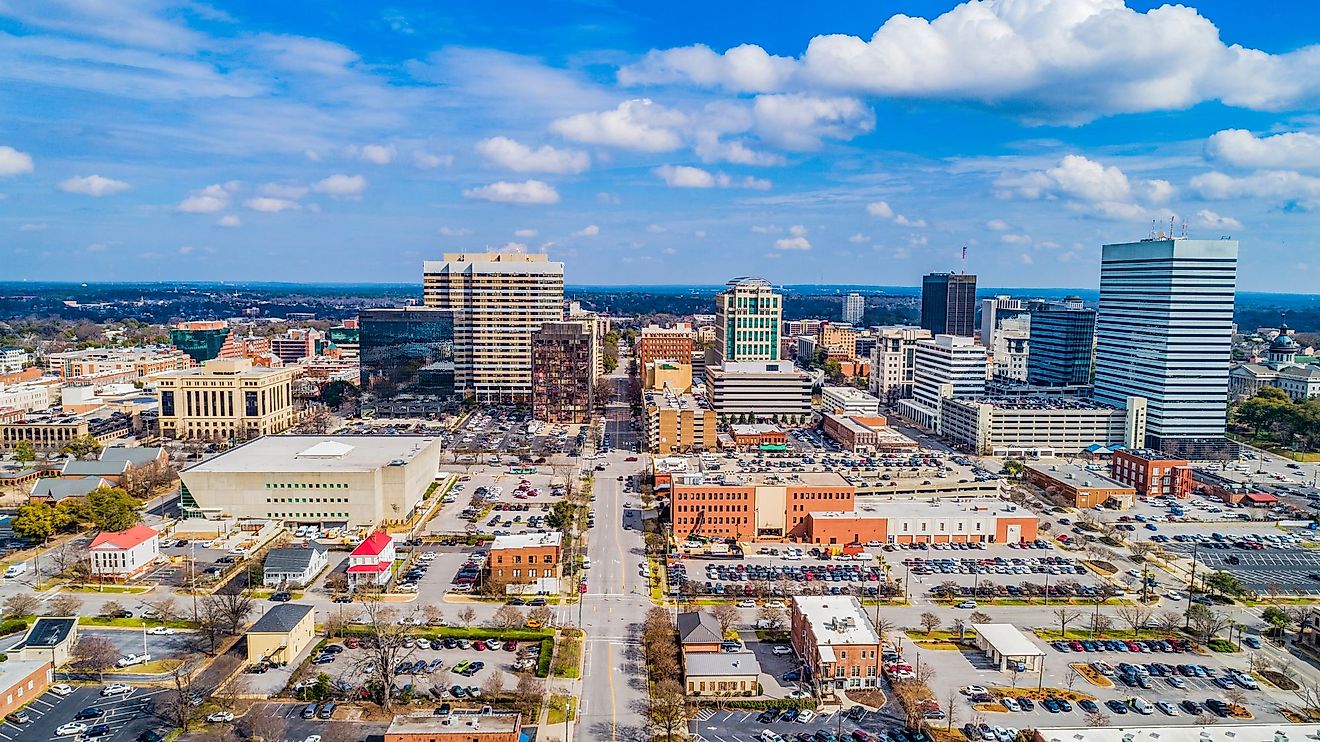
Columbia, South Carolina, often referred to as the “Soda City” or the heart of the Midlands, is frequently recognized for its rich history and its status as the state capital. However, for those looking through the lens of finance, investment, and business development, Columbia represents something far more significant: a stable, high-yield environment underpinned by recession-resistant institutional anchors. While neighboring cities like Charleston and Charlotte often dominate the headlines for tourism and banking respectively, Columbia has quietly carved out a reputation as a powerhouse of economic resilience and strategic financial opportunity.

To understand what Columbia is known for in a modern economic context, one must look past the palmetto trees and historic architecture to see a city defined by diversified revenue streams, a booming real estate market, and a business-friendly climate that attracts both corporate giants and agile entrepreneurs.
The Strategic Economic Landscape of the Palmetto State’s Capital
At its core, Columbia’s economy is defined by “The Big Three”: state government, the University of South Carolina, and the military. In financial terms, these three pillars provide a level of stability that is rare in the volatile landscape of the modern American economy. When private sectors face downturns, these institutional anchors continue to provide steady employment and consistent cash flow into the local ecosystem.
Government and Education as Recession-Proof Pillars
As the seat of South Carolina’s state government, Columbia is home to thousands of public sector employees. This provides a steady tax base and a consistent demand for local services. However, the true economic engine is the University of South Carolina (USC). With over 35,000 students and thousands of faculty members, USC is not just an educational institution; it is a massive economic driver.
The university’s research initiatives, particularly in aerospace, engineering, and health sciences, attract millions of dollars in federal and private grants annually. For investors, this creates a perpetual demand for student housing, retail services, and professional offices. The “knowledge economy” produced by USC ensures a steady pipeline of talent, making the city an attractive destination for companies looking to minimize recruitment costs while maximizing human capital.
The Military’s Role in Fiscal Stability
What many outside the region do not realize is that Columbia is home to Fort Jackson, the U.S. Army’s largest and most active Initial Entry Training center. The financial impact of Fort Jackson on the Midlands is measured in billions of dollars. The base supports thousands of jobs, both on-site and through local contractors. From a financial perspective, the military presence creates a unique “shadow economy” of specialized services and stable consumer spending that is largely insulated from national economic fluctuations.
Real Estate and Property Investment: Why the Numbers Add Up
In the world of personal finance and real estate investing, Columbia is known for its high “Price-to-Rent” ratio and lower-than-average entry costs. While property values in coastal South Carolina have skyrocketed to levels that often price out entry-level investors, Columbia offers a more accessible pathway to wealth building through real estate.
The Rental Market and the Student Housing Effect
Columbia’s real estate market is heavily influenced by its massive student population. For real estate investors, this translates into a highly predictable rental market. The demand for off-campus housing remains consistently high, allowing for aggressive rental yields. Investors who focus on the “walkable” districts surrounding the university, such as Five Points and the Vista, often see higher-than-average appreciation rates and zero vacancy periods.
Furthermore, the city has seen a shift toward luxury student living and multi-family developments. This trend has attracted institutional investors and private equity firms, signaling that Columbia is no longer just a “college town,” but a sophisticated urban market with long-term growth potential.
Commercial Growth and the BullStreet District
One cannot discuss Columbia’s financial landscape without mentioning the BullStreet District. This is one of the largest urban redevelopment projects in the United States, transforming the former State Hospital grounds into a massive mixed-use complex.

Known for its billion-dollar potential, BullStreet is a case study in public-private partnerships. For business owners and commercial investors, this district represents the future of Columbia’s economy—integrating tech hubs, retail, residential spaces, and a minor league baseball stadium. This project is a primary reason why Columbia is gaining a reputation among venture capitalists as a city ripe for urban revitalization and capital appreciation.
Business Finance and Entrepreneurial Incentives
South Carolina is frequently ranked as one of the best states for business, and Columbia sits at the epicenter of this pro-growth environment. The city is known for a fiscal policy that favors corporate relocation and small business development through aggressive tax incentives and a low cost of doing business.
Tax Credits and Corporate Relocation Benefits
The South Carolina Department of Commerce, headquartered in Columbia, offers a variety of statutory incentives that reduce the tax burden for companies that create new jobs. These include job tax credits, investment tax credits, and corporate income tax moratoriums for certain counties.
Columbia has successfully used these tools to attract major players in the insurance and financial services sectors. Companies like Aflac, Colonial Life, and BlueCross BlueShield of South Carolina have established massive operations in the Midlands. The city has effectively branded itself as an “Insurance Hub,” a niche that provides high-paying professional jobs and contributes to a robust corporate tax base.
The Small Business Ecosystem and Side Hustle Potential
Beyond the corporate giants, Columbia is a fertile ground for the “solopreneur” and the small business owner. The cost of commercial leases in Columbia is significantly lower than in Tier-1 cities like Atlanta or Nashville. This allows entrepreneurs to bootstrap their operations with less capital risk.
The city also boasts several incubators and co-working spaces, such as the USC-Columbia Technology Incubator, which provides startups with the resources needed to scale. For those looking to generate online income or launch a digital side hustle, the low cost of living in Columbia means that your “runway”—the amount of time you can survive while building a business—is much longer than in traditional tech hubs.
Personal Finance: Cost of Living and Wealth Retention
For the individual professional or family, Columbia is known for its ability to facilitate wealth retention. In high-cost areas, a significant portion of income is diverted toward housing and taxes. In Columbia, the financial math works differently, allowing for a higher rate of savings and investment.
Comparing Purchasing Power
The cost of living in Columbia is consistently lower than the national average. Housing, in particular, remains affordable for the middle class. A professional earning $100,000 in Columbia typically enjoys a standard of living that would require $160,000 or more in cities like New York or San Francisco.
From a personal finance perspective, this “geographic arbitrage” is a powerful tool. By living in a market where the dollar stretches further, residents can maximize their contributions to 401(k)s, IRAs, and brokerage accounts. Columbia is known as a city where you can live well while simultaneously building a substantial net worth.
Future Outlook: The ROI of the Midlands
As the “Sun Belt” migration continues, Columbia is positioned to capture a significant share of the population moving away from the Northeast and the West Coast. The influx of new residents brings with it new capital, increasing demand for services and driving up property values.
Investors looking at the long-term horizon see Columbia as a “buy and hold” market. It does not experience the dramatic “boom and bust” cycles of Florida or Nevada. Instead, it offers a steady upward trajectory. Whether it is the expansion of the Port of Charleston impacting logistics in the Midlands or the growth of the green energy sector (with massive investments in EV battery manufacturing nearby), the financial forecast for Columbia is exceptionally bright.
In conclusion, while the average traveler might know Columbia for its university or its heat, the savvy financial mind knows it for its stability, its strategic growth, and its high ROI. It is a city where tradition meets a forward-thinking fiscal strategy, making it one of the most compelling locations in the Southeast for building and maintaining wealth.
aViewFromTheCave is a participant in the Amazon Services LLC Associates Program, an affiliate advertising program designed to provide a means for sites to earn advertising fees by advertising and linking to Amazon.com. Amazon, the Amazon logo, AmazonSupply, and the AmazonSupply logo are trademarks of Amazon.com, Inc. or its affiliates. As an Amazon Associate we earn affiliate commissions from qualifying purchases.