
The world around us is a complex tapestry of substances, often categorized by their physical states and how their components interact. While we are familiar with solids, liquids, and gases, there exists a fascinating intermediate realm that plays a crucial role in countless natural phenomena and industrial processes: colloids. Understanding colloids isn’t just an academic exercise; it’s key to appreciating the science behind everything from the milk we drink to the paints we use, and increasingly, to unlocking new frontiers in technology. This article delves into the fundamental nature of colloids, exploring their defining characteristics, classification, and the profound impact they have across various technological applications.

The Nature of Colloidal Dispersions
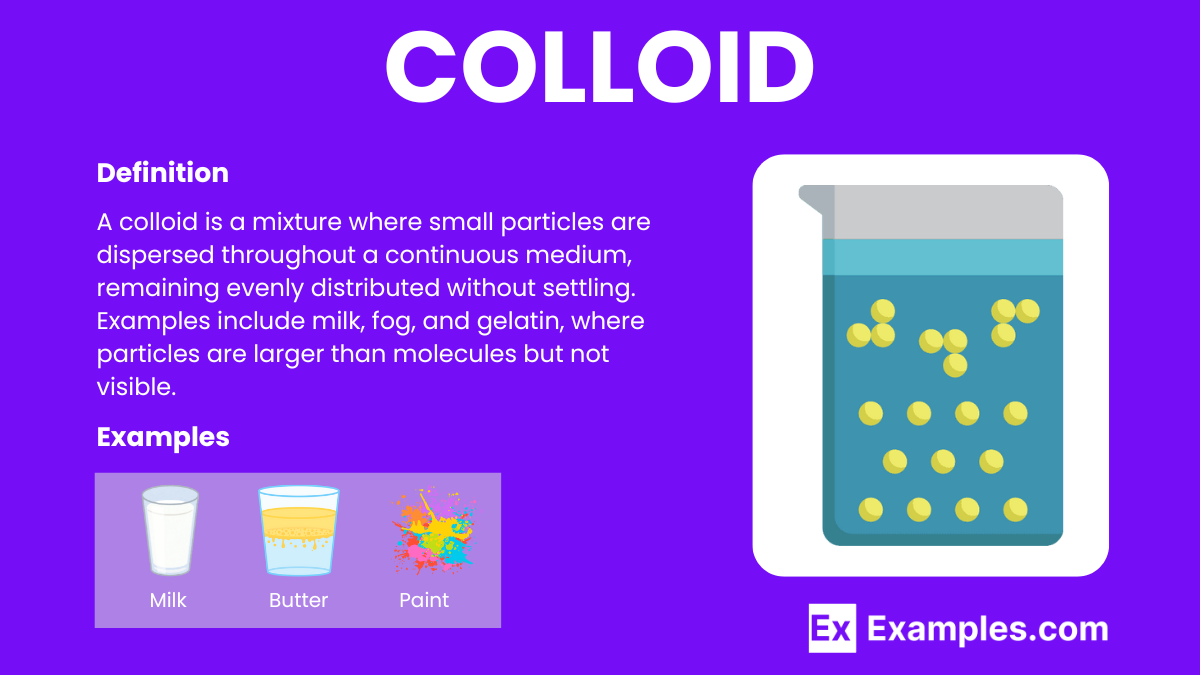
At its core, a colloid is a type of mixture where one substance is dispersed evenly throughout another. However, unlike a true solution where the solute particles are dissolved at a molecular or ionic level, or a suspension where particles are large enough to settle out, colloidal particles exist in a size range that grants them unique properties. These particles are larger than individual molecules but too small to be seen with the naked eye or to settle out under gravity.
Particle Size: The Defining Threshold
The defining characteristic of a colloid lies in the size of its dispersed particles. Generally, this size range falls between 1 nanometer (nm) and 1 micrometer (µm). To put this into perspective, a nanometer is one billionth of a meter, and a micrometer is one millionth of a meter. For comparison, the diameter of an atom is typically around 0.1 nm, while the smallest bacteria are around 200 nm. This intermediate size dictates how colloidal particles behave, influencing their optical properties, stability, and interactions with surrounding media.
The reason this specific size range is so critical is that it leads to a significantly high surface area to volume ratio for the dispersed particles. This large surface area allows for substantial interactions between the dispersed phase and the dispersion medium, contributing to phenomena like adsorption and the electrostatic repulsion that keeps particles suspended.
Dispersion Medium and Dispersed Phase
Every colloidal system consists of two key components: the dispersed phase and the dispersion medium. The dispersed phase refers to the substance that is distributed in the form of small particles. The dispersion medium, also known as the continuous phase, is the substance in which the dispersed phase is scattered. The nature of these two phases – whether they are solids, liquids, or gases – leads to different types of colloidal systems. For instance, milk is a colloid where liquid fat globules (dispersed phase) are suspended in water (dispersion medium). Fog is another example, with liquid water droplets (dispersed phase) dispersed in air (dispersion medium).
Stability and Brownian Motion
One of the most striking features of colloids is their inherent stability. Unlike suspensions, colloidal particles do not settle out over time due to gravity. This stability is primarily attributed to two factors:
- Electrostatic Repulsion: Colloidal particles often carry an electric charge, either positive or negative. This charge is typically acquired through the adsorption of ions from the dispersion medium or through the dissociation of surface groups. The like charges on the dispersed particles create a repulsive force that prevents them from aggregating and settling. This electrical double layer around each particle acts as a protective shield.
- Brownian Motion: Colloidal particles are constantly bombarded by the molecules of the dispersion medium. This random, erratic movement, known as Brownian motion, provides enough kinetic energy to counteract the force of gravity, keeping the particles suspended. The continuous jostling prevents the particles from coalescing into larger masses that would eventually sediment.
The absence of settling and the perpetual random movement of particles are hallmarks of a true colloidal dispersion.
Classification of Colloids
Colloidal systems can be classified based on several criteria, including the physical state of the dispersed phase and dispersion medium, and the nature of interaction between them. This classification helps in understanding their diverse applications.
Classification by Physical State
The combination of the dispersed phase and dispersion medium can yield eight possible types of colloids (excluding the case where both are gases, which forms a true solution):
- Sol (Solid dispersed in Liquid): This is a very common type. Examples include paints, ink, and solutions of proteins or starches in water.
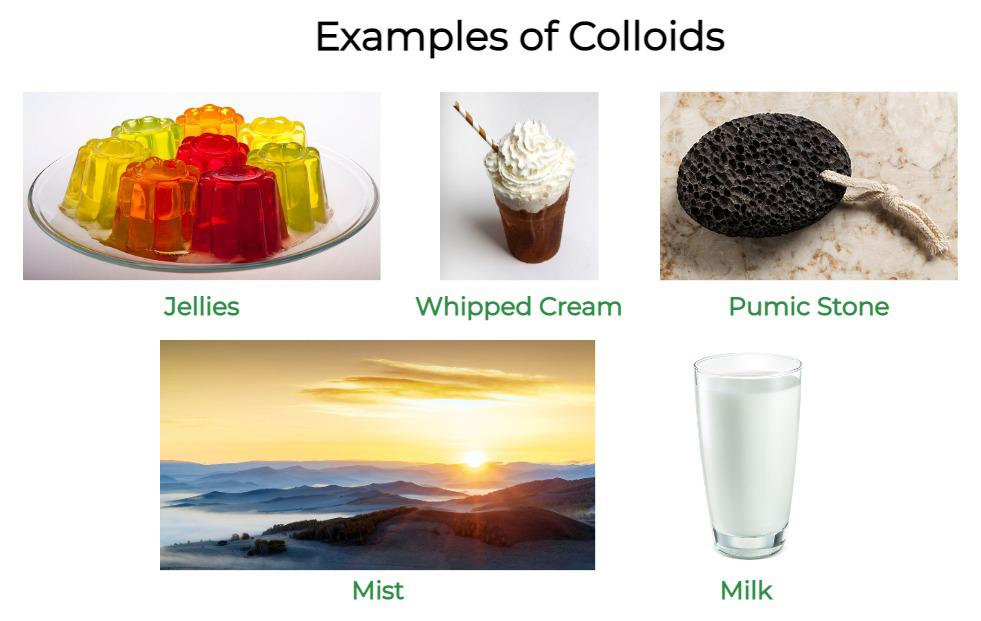
- Emulsion (Liquid dispersed in Liquid): In an emulsion, tiny droplets of one liquid are dispersed in another immiscible liquid. Milk is a classic example of an oil-in-water emulsion, while butter is a water-in-oil emulsion. Mayonnaise is another well-known emulsion.
- Foam (Gas dispersed in Liquid): Foams are formed when gas bubbles are dispersed in a liquid. Whipped cream, shaving cream, and the froth on beer are examples.
- Solid Sol (Solid dispersed in Solid): This is less common but exists. Gemstones like rubies (chromium oxide in aluminum oxide) and sapphires (iron and titanium in aluminum oxide) can be considered solid sols. Colored glass is another example.
- Solid Emulsion (Liquid dispersed in Solid): This type involves liquid droplets dispersed within a solid matrix. Opal, with its dispersed water droplets in silica, is a prime example.
- Solid Foam (Gas dispersed in Solid): These are materials with a cellular structure where gas is trapped within a solid. Pumice stone and aerogels are examples.
- Aerosol (Solid dispersed in Gas): These are dispersions of solid particles in a gas. Smoke (solid particles in air) and dust are examples.
- Liquid Aerosol (Liquid dispersed in Gas): These are dispersions of liquid droplets in a gas. Mist (water droplets in air) and fog are common examples.
Classification by Interaction
Beyond the physical state, colloids can also be categorized by the nature of the interaction between the dispersed phase and the dispersion medium:
- Lyophilic Colloids (Solvent-loving): These are colloids in which the dispersed phase particles have a strong affinity for the dispersion medium. They are generally stable and can be easily prepared by simply mixing the dispersed phase with the dispersion medium. Examples include gelatin, starch, and proteins in water. These are often reversible, meaning they can be reconstituted by adding the dispersion medium.
- Lyophobic Colloids (Solvent-hating): In these colloids, the dispersed phase particles have little or no affinity for the dispersion medium. They are generally less stable and require special methods for preparation and stabilization, often involving stabilizing agents that create an electrical or steric barrier. Examples include metal sols (like gold or silver sols) and metal sulfide sols. These are typically irreversible.
- Association Colloids (Micelles): These are formed by substances that behave as normal solutes at low concentrations but aggregate to form colloidal-sized particles (micelles) at higher concentrations (above the critical micelle concentration or CMC). Surfactants, such as soaps and detergents, are prime examples. In water, soap molecules arrange themselves into spherical structures with their hydrophobic tails pointing inward and their hydrophilic heads facing outward, forming micelles that can solubilize oils and grease.
Colloidal Phenomena and Their Significance
The unique size and behavior of colloidal particles lead to several observable phenomena that are fundamental to their applications. Understanding these phenomena unlocks the potential of colloidal systems in various technological fields.
The Tyndall Effect
The Tyndall effect is the scattering of light as a light beam passes through a colloidal dispersion. When a beam of light is directed through a colloidal system, the light rays become visible because the colloidal particles are large enough to scatter the light. This effect is not observed in true solutions, as the solute particles are too small to scatter light. The Tyndall effect is a crucial test for distinguishing between true solutions and colloidal dispersions. It is also the reason why beams of light are visible in dusty air or fog. The color of the scattered light can depend on the wavelength of the incident light and the size and nature of the colloidal particles.
Adsorption
Adsorption is the process by which atoms, ions, or molecules from a substance are bound to the surface of a solid or liquid. Colloidal particles, with their high surface area to volume ratio, exhibit significant adsorption properties. This phenomenon is central to many industrial applications, including:
- Purification: Activated charcoal, a highly porous form of carbon, is used to adsorb impurities from water and air due to its vast surface area.
- Catalysis: Many catalysts are colloidal in nature or operate via adsorption onto a large surface area. For instance, finely divided platinum acts as a catalyst in catalytic converters, adsorbing reactant gases and facilitating their conversion into less harmful substances.
- Coloration: Many dyes used in textiles are adsorbed onto the fabric fibers. Similarly, pigments in paints are colloidal particles that adsorb onto the binder.
Electrophoresis and Electroosmosis
These phenomena are related to the electrical properties of colloidal particles:
- Electrophoresis: This is the movement of colloidal particles towards an electrode under the influence of an applied electric field. Since colloidal particles often carry a charge, they migrate towards the oppositely charged electrode. This technique is widely used in biotechnology and forensics for separating charged molecules like DNA and proteins.
- Electroosmosis: This is the movement of the dispersion medium relative to a stationary charged colloid under an applied electric field. It is the reverse of electrophoresis. Electroosmosis is utilized in applications like dewatering sludge and in microfluidic devices.
Technological Applications of Colloids
The unique properties of colloids make them indispensable in a vast array of modern technologies and industries. From everyday consumer products to cutting-edge scientific research, colloidal science is a driving force for innovation.
Materials Science and Nanotechnology
Colloids are at the forefront of materials science, particularly in the realm of nanotechnology. Nanoparticles, which fall within the colloidal size range, exhibit quantum mechanical and surface-dependent properties that differ significantly from their bulk counterparts. This has led to the development of:
- Advanced Coatings: Colloidal dispersions are used to create self-cleaning surfaces, scratch-resistant coatings, and anti-corrosion paints. The uniform distribution of nanoparticles within the coating matrix provides enhanced functionality.
- Nanocomposites: By dispersing nanoparticles into polymers or ceramics, engineers can create materials with significantly improved mechanical, electrical, and thermal properties. For example, carbon nanotubes can be dispersed in polymers to create stronger and lighter materials.
- Drug Delivery Systems: Liposomes and polymeric nanoparticles are examples of colloidal structures used to encapsulate and deliver therapeutic agents to specific targets within the body, improving drug efficacy and reducing side effects.
Food Science and Biotechnology
The food industry relies heavily on the understanding and manipulation of colloidal systems:
- Emulsifiers: Ingredients like lecithin in egg yolks are natural emulsifiers that stabilize emulsions in products like mayonnaise and salad dressings, preventing separation.
- Thickeners and Stabilizers: Gums, starches, and proteins are used as colloidal additives to control the viscosity and texture of foods, creating creamy textures in ice cream and yogurts.
- Fermentation: Yeast and bacteria, which are colloidal in nature, are essential for many fermentation processes, from baking bread to producing cheese and alcoholic beverages.
Environmental Applications
Colloids play a significant role in environmental science and remediation:
- Water Purification: Coagulation and flocculation, processes involving the aggregation of colloidal particles to facilitate their removal, are vital in treating drinking water and wastewater.
- Pollutant Removal: Colloidal particles in soil and water can bind to and transport pollutants. Understanding their behavior is crucial for designing effective remediation strategies.
- Atmospheric Science: Aerosols, which are colloidal dispersions of solid or liquid particles in air, influence air quality, cloud formation, and climate change.
Electronics and Displays
The development of modern electronic devices and displays has been significantly impacted by colloidal science:
- Inkjet Printing: The inks used in inkjet printers are sophisticated colloidal dispersions, carefully formulated for particle size, viscosity, and stability to ensure precise droplet formation.
- Quantum Dots: These are semiconductor nanocrystals that exhibit tunable optical and electronic properties based on their size. They are used in advanced displays (like QLED TVs), solar cells, and bio-imaging due to their bright and efficient light emission.
- Conductive Inks: Colloidal dispersions of metallic nanoparticles (like silver or copper) are used to create conductive traces on flexible substrates for electronics.
In conclusion, colloids represent a fundamental and pervasive aspect of matter. Their unique size range and resulting properties, such as stability, the Tyndall effect, and adsorption, underpin countless natural processes and technological innovations. From the microscopic interactions that govern their behavior to the macroscopic applications that shape our world, the study of colloids continues to be a vibrant and essential field, promising even more groundbreaking advancements in the future.
aViewFromTheCave is a participant in the Amazon Services LLC Associates Program, an affiliate advertising program designed to provide a means for sites to earn advertising fees by advertising and linking to Amazon.com. Amazon, the Amazon logo, AmazonSupply, and the AmazonSupply logo are trademarks of Amazon.com, Inc. or its affiliates. As an Amazon Associate we earn affiliate commissions from qualifying purchases.