
In the rapidly evolving landscape of artificial intelligence and software engineering, the bridge between machine logic and human cognition is becoming the most critical design frontier. While engineers traditionally focused on computational efficiency, the modern development cycle demands a deep understanding of cognitive behavior—the mental processes through which users perceive, process, and react to digital interfaces. By aligning algorithmic outputs with human psychological patterns, developers can create tools that feel more intuitive, predictive, and inherently usable.
The Cognitive Architecture of Human-Computer Interaction
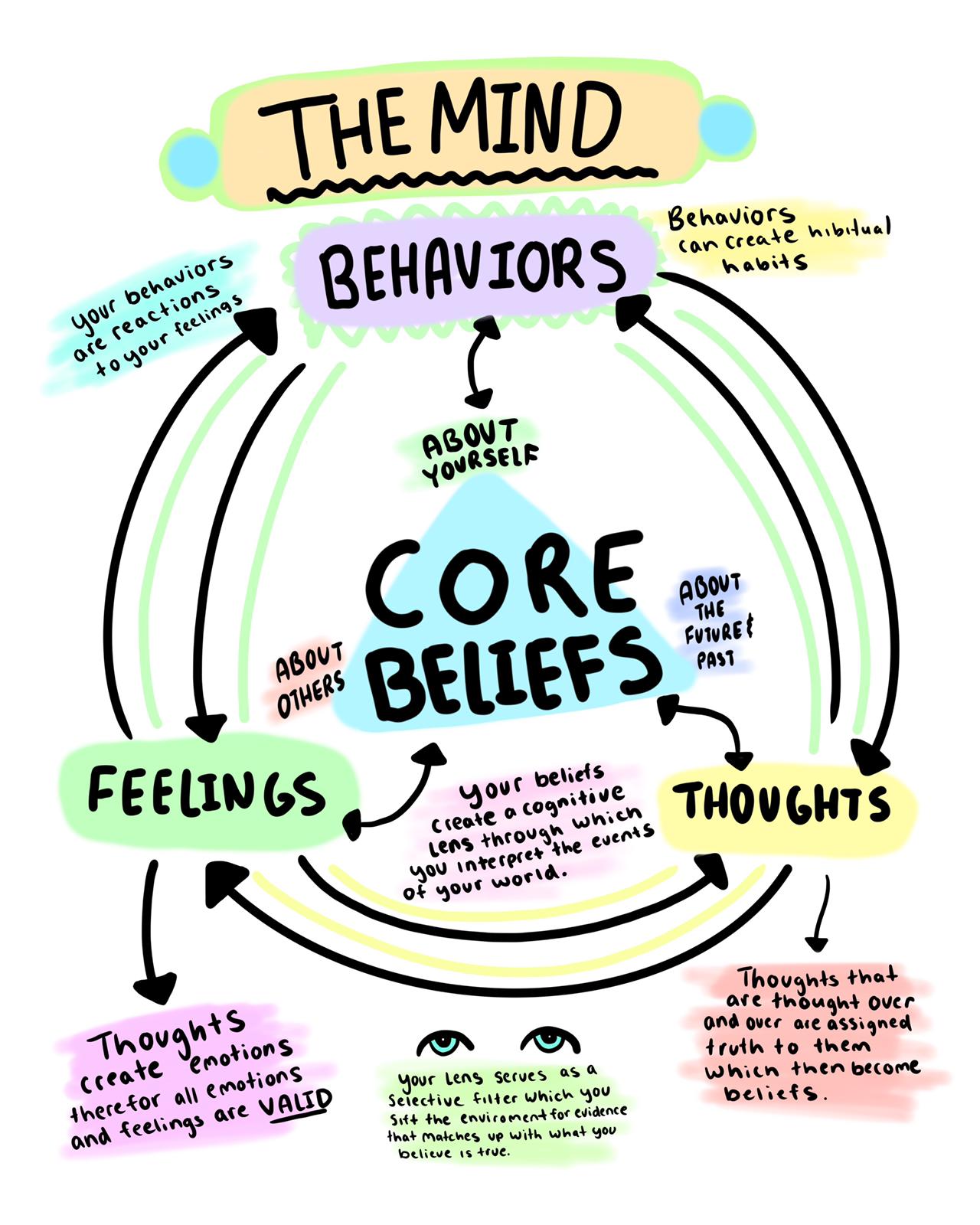
At its core, cognitive behavior refers to how an individual’s thoughts influence their actions and emotional responses. In the context of digital technology, this manifests as a cycle: a user encounters a software interface, interprets the visual cues, forms a mental model of how the tool should function, and acts accordingly. When the digital design aligns with these latent mental models, the user experiences “flow.” When it diverges, friction occurs, leading to abandonment or frustration.

Reducing Cognitive Load Through Design
The human brain has a limited capacity for processing information at any given moment. This is known as cognitive load. In software development, the objective is to minimize extraneous cognitive load—the unnecessary mental effort required to navigate an app. By utilizing familiar UI patterns, such as standardized navigation menus or predictive search bars, developers leverage existing neural pathways. When a user doesn’t have to “learn” how to use a basic function, their cognitive resources remain available for complex problem-solving within the software, resulting in a superior user experience.
Mental Models and Expectation Management
Every user brings a “mental model” to a new application, based on their history with previous software. If a user expects a “Save” icon to be a floppy disk and it is replaced by an abstract symbol, the cognitive dissonance creates a barrier to entry. AI tools, in particular, must respect these models to succeed. If a large language model or an AI-driven automation tool deviates too far from the standard input-output behavior users expect, even the most powerful algorithm will be deemed “difficult to use.” Success lies in making advanced technology feel familiar through cognitive-focused design.
How AI Tools Influence and Adapt to Cognitive Patterns
Artificial intelligence has shifted the paradigm from static design to adaptive interaction. We are no longer just building tools; we are building systems that learn the user’s cognitive behavior to optimize the experience in real-time. This dynamic shift represents the future of software development, where the interface molds itself to the user’s decision-making style.
Predictive Interfaces and Anticipatory Design
Modern AI tools leverage predictive algorithms to anticipate user intent before it is explicitly stated. By tracking a user’s sequence of actions, the software can proactively surface the tools, documents, or data points needed next. This is the practical application of cognitive behavior in tech: by observing patterns in user choices, the machine creates a “cognitive shortcut.” This reduces the need for the user to search through complex hierarchies, effectively offloading the mental burden of navigation to the software itself.
The Role of Feedback Loops
Cognitive behavior is governed by feedback. When a user performs an action, the machine’s response reinforces or discourages that behavior in the future. In AI design, this is called Reinforcement Learning from Human Feedback (RLHF). By studying how users interact with AI-generated suggestions—whether they accept, edit, or reject them—developers can refine the model to mirror human reasoning more closely. This creates a symbiotic relationship: the user learns how to prompt the AI, and the AI learns the user’s specific cognitive preferences.
Ethics and the Psychology of Persuasive Technology
As we gain the ability to map and predict cognitive behavior through sophisticated algorithms, ethical considerations become paramount. Technology is not neutral; it is designed to guide human attention. Understanding the cognitive biases that drive user behavior—such as the scarcity effect, social proof, or the need for immediate gratification—allows developers to build more engaging platforms, but it also carries significant responsibility.
Combating Dark Patterns
“Dark patterns” are interface design choices specifically intended to trick users into doing things they did not intend to do, such as signing up for recurring subscriptions or sharing data unintentionally. These patterns exploit cognitive biases and the tendency for users to “autopilot” through digital tasks. A professional approach to cognitive-based design rejects these manipulations. Instead, it utilizes psychological insights to foster transparency and autonomy, building long-term user trust rather than short-term conversion metrics.
Designing for Digital Wellbeing
Recognizing that constant notifications and infinite-scroll interfaces can trigger dopamine-driven cognitive cycles, forward-thinking tech companies are now pivoting toward “calm technology.” This involves designing software that respects the user’s cognitive bandwidth rather than competing for it. By providing “quiet” periods, offering clear exit points in workflows, and ensuring that AI interactions are purposeful rather than overwhelming, developers can build products that are sustainable for the human brain. This is the next frontier of software strategy: measuring success not just by time-on-app, but by the quality of the user’s cognitive engagement.
Future Horizons: Neuro-Adaptive Software
The next decade will likely see the integration of neuro-adaptive technologies—software that adjusts its complexity based on the user’s current cognitive state. If a system can detect signs of user fatigue or confusion through input latency or mouse movement patterns, it could automatically switch to a simplified “basic mode” or offer guided tutorials.
The Intersection of Biometrics and AI
With the rise of wearable tech and eye-tracking interfaces, the gap between cognitive behavior and software response is shrinking. We are moving toward a reality where digital systems can interpret cognitive load in real-time. A browser that detects a user’s ocular focus and simplifies the page layout to reduce visual noise is no longer science fiction; it is the logical conclusion of applying cognitive psychology to tech development.

Building Sustainable Digital Ecosystems
As AI continues to handle the “heavy lifting” of data analysis and task execution, the primary value of the software developer will shift toward the orchestration of human-machine collaboration. By focusing on the cognitive behavior of the user, developers can ensure that these powerful tools remain extensions of human potential rather than replacements. The most successful software in the coming years will be those that feel “human-centered”—not because they have human-like faces, but because they intuitively understand the cognitive workflows, limitations, and aspirations of the people who use them.
In conclusion, understanding cognitive behavior is not merely an academic pursuit for psychologists; it is a fundamental pillar of modern technical competency. Whether building a consumer app, an enterprise SaaS platform, or a complex AI model, the product’s ultimate success depends on how well it resonates with the fundamental architecture of the human mind. By prioritizing clarity, respecting mental models, and embracing ethical design, we can craft a digital future that is not only highly functional but deeply compatible with the way we think, learn, and interact with the world.
aViewFromTheCave is a participant in the Amazon Services LLC Associates Program, an affiliate advertising program designed to provide a means for sites to earn advertising fees by advertising and linking to Amazon.com. Amazon, the Amazon logo, AmazonSupply, and the AmazonSupply logo are trademarks of Amazon.com, Inc. or its affiliates. As an Amazon Associate we earn affiliate commissions from qualifying purchases.