
Navigating the intricacies of a credit report can often feel like deciphering a complex financial puzzle. Among the various line items, status codes, and history notations, the term “closed account” frequently sparks questions for consumers. At its simplest level, a closed account is a credit line—such as a credit card, personal loan, or mortgage—that is no longer active and cannot be used for new transactions. However, the implications of that status on your financial health, your credit score, and your future borrowing power are far more nuanced than a simple “on” or “off” switch.
Understanding the nature of closed accounts is a cornerstone of effective personal finance management. Whether an account was closed by you or by the lender, it remains a part of your financial narrative for years. To master your credit profile, you must understand why accounts move to this status, how they influence the mathematical models used by FICO and VantageScore, and how to manage them strategically to maintain a robust credit standing.
The Mechanics of a Closed Account Status
A closed account on a credit report represents a finalized contractual relationship regarding a specific line of credit. When an account is open, it is dynamic; the balance fluctuates, payments are made monthly, and the available credit contributes to your real-time financial capacity. Once it is marked as closed, the account becomes a historical record. It effectively moves from the “active” ledger to the “history” ledger of your credit file.
There are two primary ways an account reaches this status, and the distinction is often noted in the remarks section of your report.
Closed by the Consumer
This occurs when you proactively contact a lender to shut down a credit card or when you pay off an installment loan (like an auto loan or a mortgage) in full. For revolving accounts like credit cards, choosing to close the account might be a strategic move to simplify your finances, avoid annual fees, or prevent overspending. On your credit report, this is typically annotated as “Account closed at consumer’s request.” This is generally viewed neutrally by future lenders, as it indicates you were in control of the decision.
Closed by the Grantor
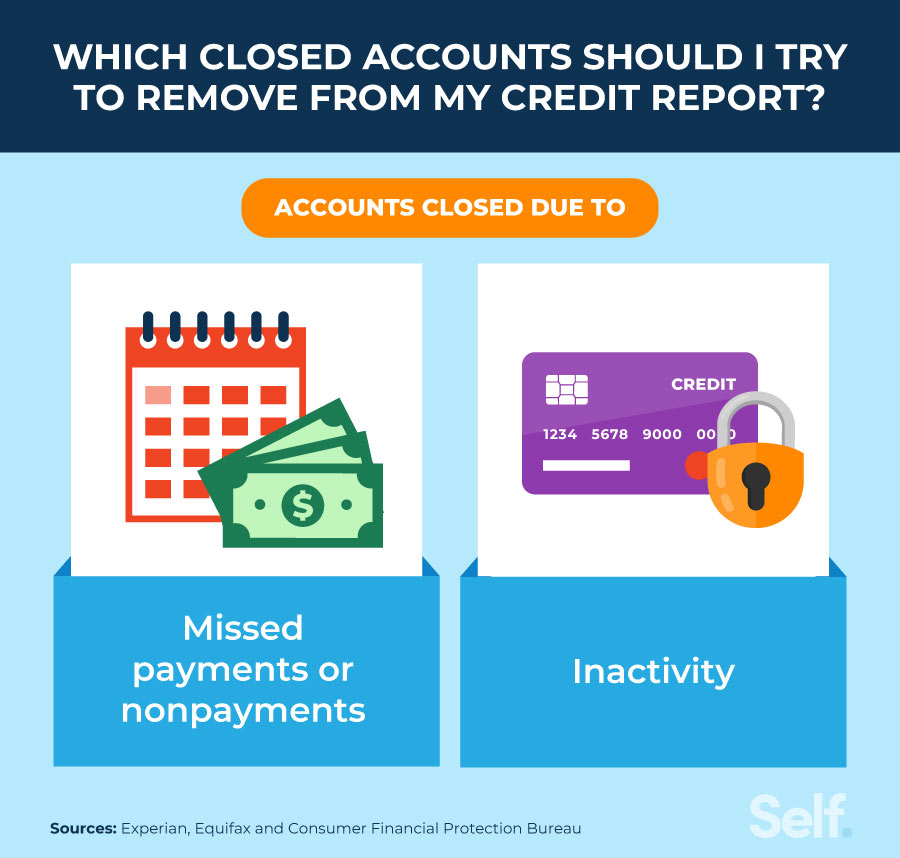
Lenders have the right to close accounts at their discretion, often for reasons that have nothing to do with your creditworthiness. Common reasons include prolonged inactivity, the lender discontinuing a specific card product, or internal shifts in the bank’s risk appetite. However, a grantor may also close an account due to “adverse action,” such as repeated late payments or a significant drop in your credit score elsewhere. If an account is closed by the grantor, it is vital to check the reasoning. While “closed by grantor” isn’t a direct negative factor in credit scoring models, a human underwriter reviewing your report might look more closely if they see multiple accounts closed by lenders rather than by the borrower.
The Direct and Indirect Impact on Credit Scores
The most common misconception regarding closed accounts is that they immediately disappear from your credit score calculation. In reality, the impact of a closed account is multifaceted, affecting several different components of the credit scoring algorithm simultaneously.
The Credit Utilization Ratio
For revolving credit, such as credit cards, the most immediate and often most dramatic impact of closing an account is the change in your credit utilization ratio. This ratio is calculated by dividing your total credit card balances by your total available credit limits. It accounts for approximately 30% of your FICO score.
When you close a credit card, you lose the credit limit associated with that card. If you carry balances on other cards, your overall utilization percentage will rise because your total available “ceiling” has lowered. For example, if you have two cards with $5,000 limits each ($10,000 total) and a $2,000 balance on one, your utilization is 20%. If you close the empty $5,000 card, your utilization instantly jumps to 40% ($2,000 balance out of $5,000 limit). This spike can cause a significant, immediate drop in your credit score.
Length of Credit History
The age of your accounts makes up about 15% of your credit score. Scoring models look at the average age of all accounts, the age of your oldest account, and the age of your newest account. Contrary to popular belief, a closed account in good standing does not stop contributing to your “age of credit” immediately.
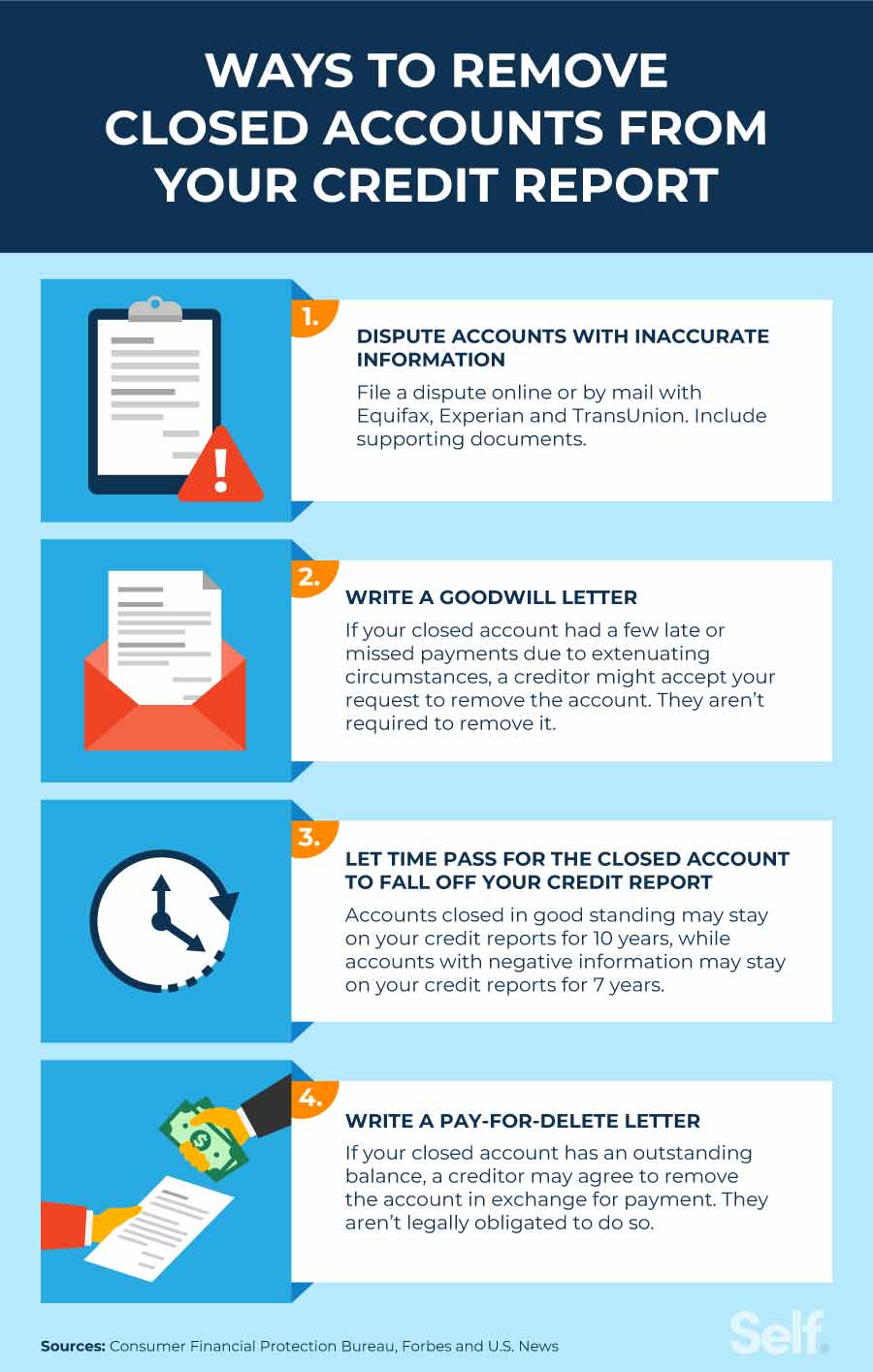
Under current FICO models, a closed account that was paid on time will remain on your report and continue to be factored into your average age of accounts for up to 10 years. However, once that 10-year window expires and the account falls off the report entirely, you may see a secondary dip in your score if that was one of your older accounts.
Credit Mix
Lenders like to see that you can manage different types of credit, such as revolving accounts (credit cards) and installment accounts (loans). This “credit mix” accounts for 10% of your score. If you close your only installment loan or your only credit card, your credit mix becomes less diverse, which could result in a slight decrease in your total score.
The Timeline of Visibility: How Long Do They Last?
Closed accounts do not remain on your credit report indefinitely. The duration of their visibility is determined by the Fair Credit Reporting Act (FCRA) and depends heavily on the status of the account at the time of closure.
Positive Accounts (Closed in Good Standing)
If you managed an account well—meaning you made payments on time and never defaulted—the account is considered “positive.” When a positive account is closed, it remains on your credit report for 10 years from the date of the closure. This is a benefit to the consumer, as it allows the positive payment history and the age of the account to continue boosting your credit score long after the account is gone.
Negative Accounts (Closed with Delinquencies)
Accounts that were closed with a history of late payments, or those that were “charged off” by the lender due to non-payment, are treated differently. These negative records generally stay on your report for 7 years from the date of the original delinquency that led to the closure. While the account is closed and you can no longer use it, the derogatory mark continues to weigh down your score until it reaches the 7-year expiration mark.
The Role of the “Date of Last Activity”
It is a common error to think the 7-year or 10-year clock resets every time the account is sold or reviewed. For negative accounts, the “seven-year rule” is strictly tied to the “original delinquency date.” For positive accounts, the ten-year period is tied to the “date of closure.” Monitoring these dates on your credit report is essential for ensuring that old, negative information is purged correctly by the credit bureaus (Equifax, Experian, and TransUnion).
Strategic Management of Closed Accounts
Given how closed accounts interact with your credit score, how should a savvy consumer manage them? Managing closed accounts is less about what you do once they are closed and more about the strategy you employ before the closure happens.
When to Keep an Account Open
Generally, it is financially advantageous to keep credit card accounts open, even if you do not use them frequently. By keeping them open, you maintain a higher total credit limit (which helps your utilization ratio) and you ensure the account continues to age as an “active” line, which is slightly more beneficial than a closed line.
If an account has no annual fee, there is rarely a mathematical reason to close it. To prevent the lender from closing it due to inactivity, consider placing one small recurring charge on the card—such as a streaming service subscription—and setting up autopay.
When Closing an Account is Necessary
There are legitimate reasons to close an account despite the potential score dip. If a credit card has a high annual fee that provides no corresponding value, closing it may be a sound financial decision. Additionally, if you find that having a high credit limit is a temptation that leads to unmanageable debt, the psychological and practical benefits of closing the account far outweigh a temporary hit to your credit score. In cases of divorce or the dissolution of a business partnership, closing joint accounts is a critical step in protecting your individual financial liability.
What to Do if an Account is Closed Unexpectedly
If a lender closes your account due to inactivity or a change in their internal policy, you can often call their customer service line to request a “reinstatement.” If your credit profile is still strong, many lenders are willing to reopen the account, preserving your credit limit and history. If they refuse, focus on managing your remaining balances to ensure your utilization ratio doesn’t skyrocket.
Disputing Errors on Closed Accounts
Finally, you must regularly audit the “Closed Accounts” section of your credit report. Look for inaccuracies such as:
- Accounts marked “Closed by Grantor” when you were the one who closed them.
- Closed accounts that still show an outstanding balance when they were paid in full.
- Negative closed accounts that have remained on the report for longer than seven years.
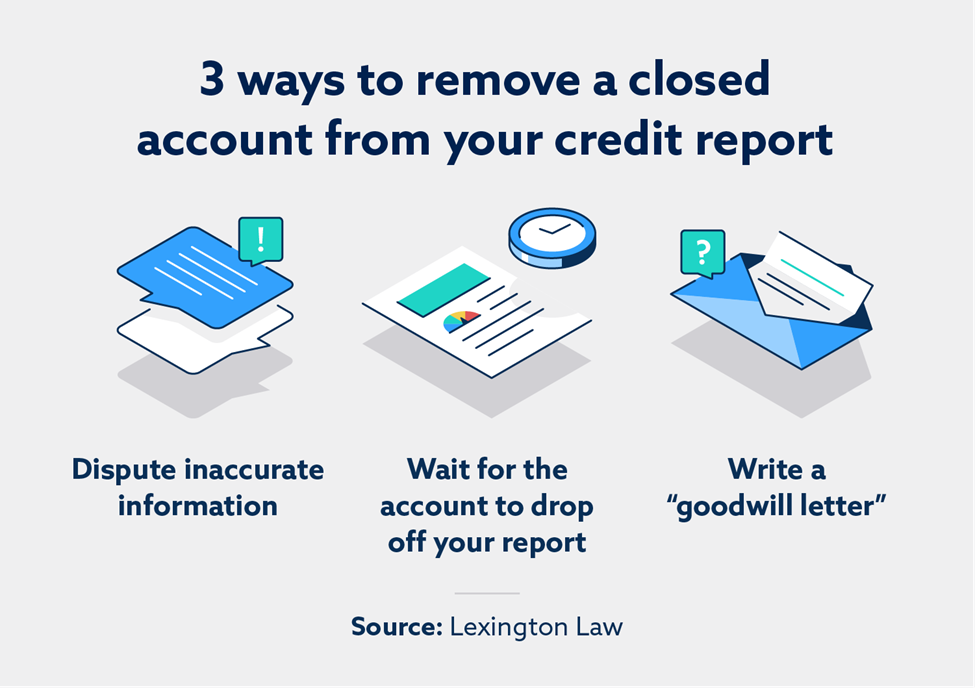
Inaccurate reporting on closed accounts can subtly erode your creditworthiness. Under the FCRA, you have the right to dispute these errors with the credit bureaus, who are legally obligated to investigate and correct or remove inaccurate information.
A closed account is far from a dead entry on your financial record. It is a lingering influence that continues to shape how lenders perceive your reliability and how scoring models calculate your risk. By understanding the lifecycle of these accounts, you can make informed decisions that protect your score and strengthen your long-term financial position.
aViewFromTheCave is a participant in the Amazon Services LLC Associates Program, an affiliate advertising program designed to provide a means for sites to earn advertising fees by advertising and linking to Amazon.com. Amazon, the Amazon logo, AmazonSupply, and the AmazonSupply logo are trademarks of Amazon.com, Inc. or its affiliates. As an Amazon Associate we earn affiliate commissions from qualifying purchases.