
When discussions turn to fertility treatments, the spotlight often shines on women. However, the landscape of reproductive health is equally complex for men, and certain medications play a crucial role in addressing male infertility. One such medication, frequently mentioned in this context, is Clomid, or clomiphene citrate. While its use in women for ovulation induction is widely recognized, its application and efficacy in men represent a distinct yet equally significant area of medical treatment. This article delves into the world of Clomid for men, exploring its mechanisms, applications, potential benefits, and the considerations involved. We’ll navigate the science behind its use, its role in addressing male reproductive health challenges, and what men considering this treatment should be aware of, all within the broader context of understanding human physiology and technological advancements in healthcare.

Understanding the Endocrine System and Male Fertility
To grasp how Clomid functions in men, it’s essential to understand the intricate workings of the endocrine system, particularly as it pertains to male reproductive health. The endocrine system is a complex network of glands that produce and secrete hormones, chemical messengers that regulate a vast array of bodily functions, including growth, metabolism, and reproduction. In men, the primary reproductive hormones are produced and regulated by a sophisticated feedback loop involving the hypothalamus, the pituitary gland, and the testes.
The Hypothalamic-Pituitary-Gonadal (HPG) Axis
At the core of male reproductive function is the Hypothalamic-Pituitary-Gonadal (HPG) axis. This axis acts as a critical communication pathway, ensuring the timely and appropriate production of hormones necessary for sperm development and testosterone production.
- The Hypothalamus: Located in the brain, the hypothalamus releases Gonadotropin-Releasing Hormone (GnRH). GnRH acts as a signal to the pituitary gland, prompting it to release two other crucial hormones.
- The Pituitary Gland: Situated at the base of the brain, the pituitary gland, upon receiving signals from the hypothalamus, secretes Luteinizing Hormone (LH) and Follicle-Stimulating Hormone (FSH). These hormones travel through the bloodstream to the testes.
- The Testes: In the testes, LH plays a pivotal role in stimulating the Leydig cells to produce testosterone, the primary male sex hormone responsible for the development of secondary sexual characteristics, libido, and importantly, sperm production. FSH, on the other hand, targets the Sertoli cells in the testes, where it is essential for spermatogenesis, the process of sperm creation.
This delicate hormonal balance is vital. When this system functions optimally, it leads to the production of adequate sperm counts and healthy testosterone levels. However, disruptions in this axis can lead to various forms of male infertility.
Hormonal Imbalances Affecting Male Fertility
Several hormonal imbalances can impede male fertility. One of the most common is hypogonadism, a condition characterized by the testes not producing enough testosterone. This can stem from issues originating in the hypothalamus, the pituitary, or the testes themselves. Symptoms of hypogonadism can include low libido, erectile dysfunction, fatigue, and, critically, reduced sperm production and quality.
Another scenario where hormonal imbalance can impact fertility is when the body’s feedback mechanisms are not functioning correctly. For instance, if testosterone levels are low, the hypothalamus and pituitary should ideally respond by increasing GnRH, LH, and FSH production to stimulate the testes. However, in some cases, this compensatory mechanism might be insufficient or impaired, leading to persistent low testosterone and, consequently, poor sperm production.
Understanding this intricate hormonal interplay is the foundation for appreciating how a medication like Clomid, which is designed to modulate these hormonal signals, can be utilized in the management of male reproductive health. The effectiveness of Clomid in men hinges on its ability to influence this HPG axis to correct specific hormonal deficiencies or dysregulations.
How Clomid Works in Men: A Hormonal Reset
Clomid, or clomiphene citrate, is classified as a selective estrogen receptor modulator (SERM). While it has estrogen-blocking properties in some tissues, its primary mechanism of action in men for fertility treatment relies on its ability to act as an estrogen antagonist in the hypothalamus and pituitary gland. This seemingly paradoxical action is key to its therapeutic benefit.
The Estrogen Feedback Loop and Clomid’s Intervention
In the male endocrine system, estrogen, although often associated with female hormones, is also present in men and plays a role in regulating testosterone production through a negative feedback loop. Elevated levels of estrogen in the body can signal to the hypothalamus and pituitary gland that there is sufficient testosterone production, leading to a decrease in the release of GnRH, LH, and FSH. This, in turn, reduces testosterone and sperm production.
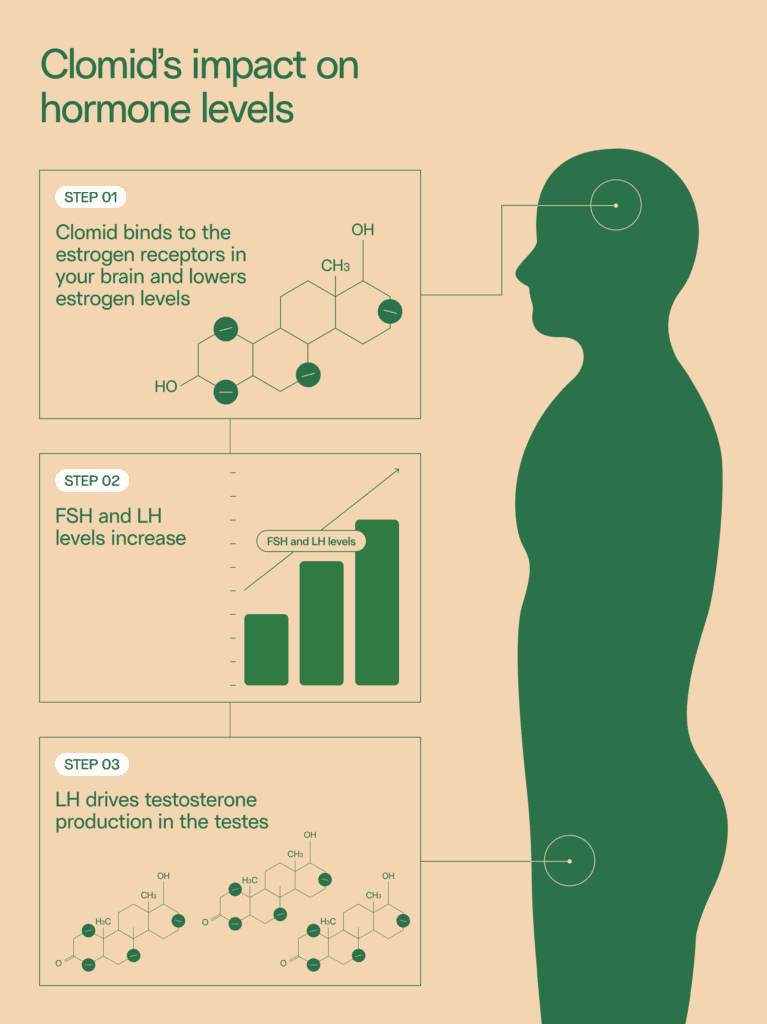
Clomid’s role is to block the binding of estrogen to estrogen receptors in the hypothalamus and pituitary. By preventing estrogen from exerting its negative feedback effect, Clomid essentially “tricks” the brain into thinking that estrogen (and therefore testosterone) levels are lower than they actually are. This perceived hormonal deficiency then prompts the hypothalamus to increase GnRH secretion, and consequently, the pituitary gland to release more LH and FSH.
The Cascade Effect: Increased LH and FSH
The increased production of LH and FSH by the pituitary gland is the direct intended outcome of Clomid administration in men.
- Increased LH: The surge in LH levels directly stimulates the Leydig cells in the testes to produce more testosterone. This rise in testosterone is crucial for improving various aspects of male reproductive health, including libido, erectile function, and critically, the environment within the testes that supports spermatogenesis.
- Increased FSH: Similarly, the elevated FSH levels stimulate the Sertoli cells in the testes, which are directly responsible for supporting the development and maturation of sperm cells. Improved FSH signaling can lead to an increase in sperm count, motility (the ability of sperm to move effectively), and morphology (the shape and structure of sperm).
In essence, Clomid acts as a catalyst, initiating a cascade of hormonal events designed to restore or enhance the body’s natural reproductive hormone production. It doesn’t directly provide hormones but rather stimulates the body to produce more of its own. This approach is often preferred as it aims to re-establish a more natural hormonal equilibrium. The success of Clomid in men is therefore highly dependent on whether their infertility is linked to a deficiency in LH or FSH, or a condition where boosting testosterone and stimulating spermatogenesis through these pathways is beneficial.
Clinical Applications of Clomid in Men
The primary clinical application of Clomid in men is the treatment of infertility, particularly when a hormonal imbalance contributing to low sperm count or low testosterone levels is identified. It is not a universal cure for all forms of male infertility, but rather a targeted therapy for specific conditions.
Treating Hypogonadism and Low Testosterone
One of the most significant uses of Clomid in men is to address hypogonadism, especially when the hypogonadism is considered “secondary” or “central.” This means the problem originates not from the testes themselves but from the hypothalamus or pituitary gland’s inability to produce sufficient GnRH, LH, or FSH. In these cases, Clomid can effectively stimulate the testes to produce more testosterone. This can lead to:
- Improved Sperm Production: By increasing LH and FSH, Clomid directly supports spermatogenesis, potentially leading to a higher sperm count, better sperm motility, and improved sperm morphology.
- Restored Testosterone Levels: For men experiencing symptoms of low testosterone, such as low libido, fatigue, and erectile dysfunction, Clomid can help raise testosterone levels back into the normal range, alleviating these symptoms. This is often a preferred method over direct testosterone replacement therapy (TRT) for men who wish to preserve or improve their fertility, as TRT can suppress natural sperm production.
Clomid in Idiopathic Oligozoospermia
Idiopathic oligozoospermia refers to a condition where a man has a low sperm count for which no specific cause can be identified after thorough medical investigation. In some of these cases, even without a clearly identifiable hormonal deficiency, Clomid has been observed to improve sperm parameters. The theory is that subtle imbalances within the HPG axis, not overtly detectable through standard testing, might be present and responsive to Clomid’s modulatory effects. While the success rates can vary, it is often considered a treatment option for men with unexplained low sperm counts.
Considerations for Use and Potential Side Effects
While Clomid can be a highly effective treatment, it’s crucial for men to be aware of its potential side effects and the importance of medical supervision.
- Monitoring is Key: The use of Clomid in men requires careful monitoring by a healthcare professional. This typically involves regular blood tests to track hormone levels (LH, FSH, testosterone, and estrogen) and sperm analysis to assess the impact on sperm production.
- Potential Side Effects: Although generally well-tolerated, Clomid can cause side effects. These may include:
- Visual disturbances: Blurred vision, flashing lights, or blind spots are among the more serious, though rare, side effects. It’s essential to report any visual changes immediately to a doctor.
- Mood changes: Some men may experience mood swings, irritability, or depression.
- Gynecomastia: Development of breast tissue in men.
- Acne and increased body hair: Due to altered hormone levels.
- Nausea and vomiting: Less common, but possible.
- Headaches: A frequent complaint for some individuals.
The dosage and duration of Clomid treatment are highly individualized and determined by a doctor based on the specific condition being treated, the patient’s response, and ongoing monitoring. It is not a medication that should be self-administered or used without professional medical guidance. The goal is to achieve the desired therapeutic effect while minimizing potential risks and side effects.
The Role of Technology and Diagnostics in Clomid Treatment
The efficacy and safety of Clomid treatment in men are significantly enhanced by advancements in diagnostic technologies and a deeper understanding of male reproductive physiology, often facilitated by insights from various fields including tech and advanced research.
Advanced Diagnostic Tools
Before initiating Clomid therapy, a comprehensive diagnostic workup is essential. This typically involves:
- Hormonal Blood Tests: These are paramount for assessing the baseline levels of hormones like LH, FSH, testosterone, and sometimes estradiol (a form of estrogen). These tests help identify potential hormonal imbalances that Clomid can address.
- Semen Analysis: A detailed semen analysis is crucial. It measures sperm count, motility, morphology, and volume, providing a baseline and allowing for tracking of improvements during treatment.
- Scrotal Ultrasound: In some cases, an ultrasound of the testes may be performed to rule out physical abnormalities, such as varicoceles (enlarged veins in the scrotum), which can affect sperm production.
- Genetic Testing: For cases of severe infertility, genetic testing might be recommended to identify any underlying chromosomal abnormalities.
The interpretation of these diagnostics is becoming increasingly sophisticated, with AI tools beginning to play a role in analyzing complex datasets from these tests to identify subtle patterns or predict treatment responses.
Personalized Treatment Strategies
The application of Clomid is not a one-size-fits-all approach. Modern medicine, informed by scientific research and often aided by data analysis, allows for personalized treatment strategies.
- Tailored Dosages: Based on initial hormone levels and the response observed in follow-up tests, physicians can adjust Clomid dosages to optimize its effect while minimizing side effects.
- Duration of Treatment: The length of treatment varies. It can range from a few months to over a year, depending on the individual’s response and the physician’s judgment.
- Combination Therapies: In some instances, Clomid might be used in conjunction with other treatments or lifestyle modifications to enhance fertility outcomes. This might include supplements, dietary changes, or addressing other contributing factors to infertility.

Monitoring and Future Directions
Continuous monitoring is a cornerstone of effective Clomid therapy. This involves regular check-ups and repeat testing to ensure the treatment is progressing as expected and to identify any adverse reactions promptly.
Looking ahead, ongoing research continues to explore the nuances of male reproductive endocrinology. Advancements in our understanding of the HPG axis, alongside the development of new diagnostic tools and therapeutic agents, may lead to even more targeted and effective treatments for male infertility. The integration of technology, from sophisticated analytical software to potentially advanced drug delivery systems, promises to further refine how medications like Clomid are utilized, making treatments safer, more personalized, and ultimately, more successful for men seeking to improve their reproductive health.
In conclusion, Clomid plays a vital role in addressing specific types of male infertility by modulating hormonal signals. Its effective use relies on accurate diagnostics, personalized treatment plans, and close medical supervision. As technology and our understanding of male reproductive health continue to evolve, the management of conditions requiring treatments like Clomid will undoubtedly become even more refined and effective.
aViewFromTheCave is a participant in the Amazon Services LLC Associates Program, an affiliate advertising program designed to provide a means for sites to earn advertising fees by advertising and linking to Amazon.com. Amazon, the Amazon logo, AmazonSupply, and the AmazonSupply logo are trademarks of Amazon.com, Inc. or its affiliates. As an Amazon Associate we earn affiliate commissions from qualifying purchases.